
Loading, please wait...
LOT 0429
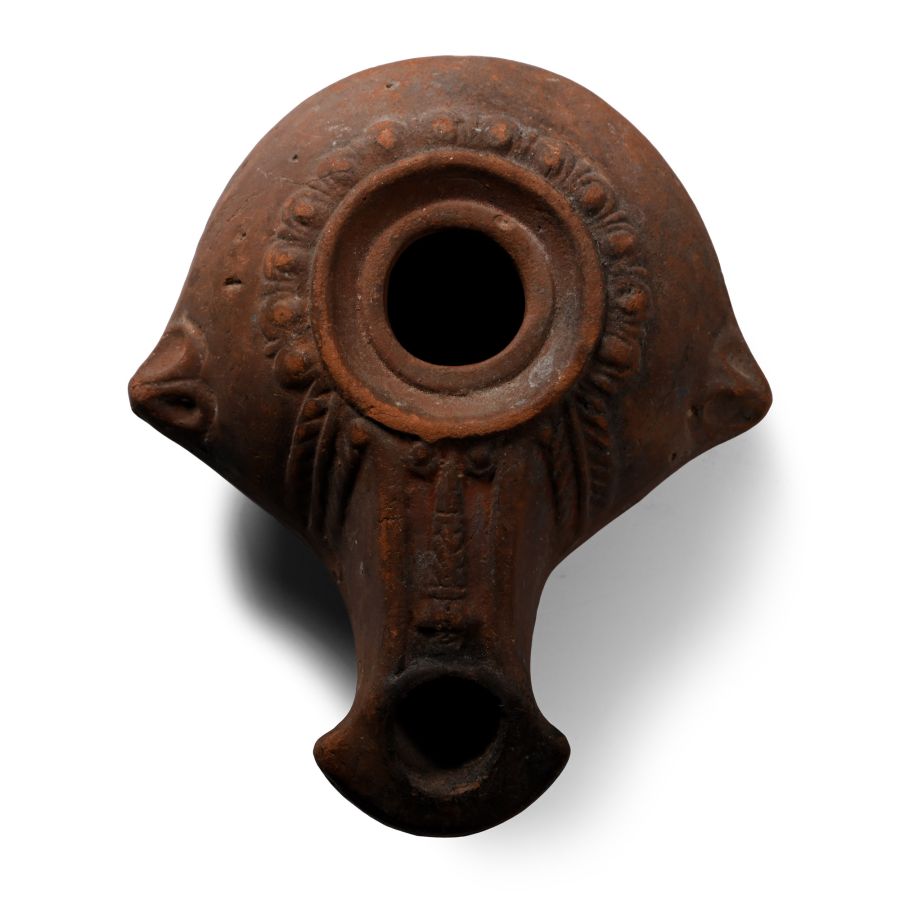
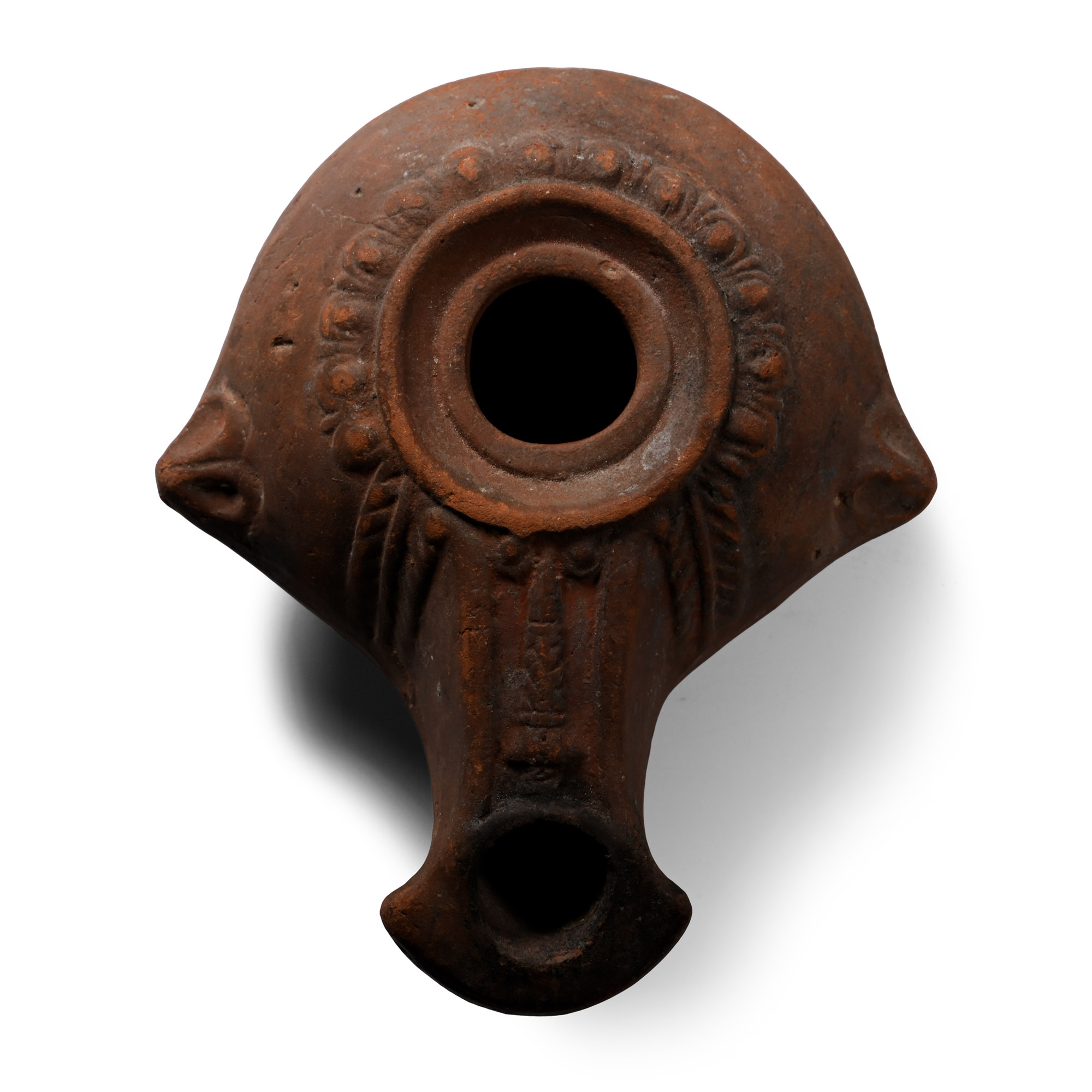
Egyptian Terracotta Oil Lamp
PTOLEMAIC PERIOD, CIRCA 200-50 B.C.
3 5/8 in. (60 grams, 92 mm).
Rounded body with large filler hole and two pointed lugs on the shoulder, the rim with a low-relief ovolo decoration, elongated nozzle with a low-relief pillar motif; low basal ring.
Provenancewith Galerie Rhéa, Zurich, Switzerland.
This lot is accompanied by an illustrated lot declaration signed by the Head of the Antiquities Department, Dr Raffaele D'Amato.
Cf. Młynarczyk, J., Alexandrian and Alexandria-influenced mould-made lamps of the Hellenistic period, Bar International Series 677, Oxford, 1997, pp.54-57, Type G, fig. 67, for the type; a terracotta oil lamp of similar form and design dated to 150 B.C. belongs in the Emeritus Collection (no. EF24).
CONDITIONTimeLine Auctions follows a vetting process to ensure the authenticity and legality of all items, reinforcing our commitment to integrity and responsible trading. Each antiquity, antique, and coin lot undergoes thorough examination by a vetting committee of at least ten external specialists, professional trade association members, scientists, and archaeologists: Our Vetting Process
AUCTIONS:
TimeLine is a leading auction house specialising in antiquities, ancient art, collectables, natural history, coins, medals, and books. Our auctions offer museums, collectors, historians, and enthusiasts the opportunity to acquire unique and historically significant pieces.
-
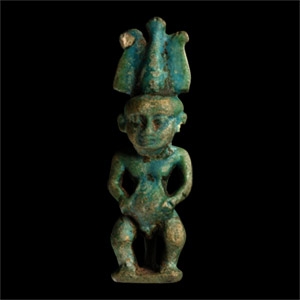
Egyptian Blue Glazed Pataikos Statuette
Third Intermediate Period, 1069-702 B.C.Estimate: £600 - 800 (+bp*)
Opening Bid: £300
Modelled in the round standing nude on a D-shaped base with atef crown, dorsal pillar with loop. 13.68 grams, 73 mm
Acquired on the German art market, 1989-1995. with The Museum Gallery, 19 Bury Place, London, WC1, UK, 1998-2003. Property of a London based academic, 2003 to present. This lot is accompanied by an illustrated lot declaration signed by the Head of the Antiquities Department, Dr Raffaele D'Amato.
Herodotus mentions Pataikos as a dwarf-like representation of Ptah, although the ancient Egyptian name of the god remains unclear. These diminutive amulets symbolise Ptah’s immense magical power, which serves to protect the wearer from dangerous creatures such as snakes and crocodiles. The role of the deity in the funerary sphere is explained in Spell 164 of the Book of the Dead, where Pataikos is used to protect the deceased’s heart from enemy attacks and the putrefaction of the body. The atef crown worn by this example, clearly links the figure to the underworld god, Osiris. -
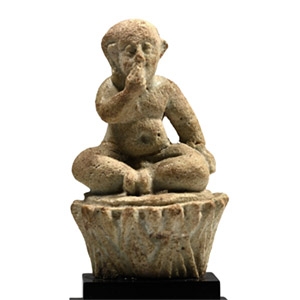
Egyptian Green Glazed Faience Figure of Somtous
Late Period, circa 664-332 B.C.Estimate: £1,000 - 1,400 (+bp*)
Opening Bid: £500
Modelled in the round, the nude seated figure of the child Somtous, with one hand to his lips and a prominent sidelock, emerging from a lotus flower; mounted on a custom-made stand. 39.7 grams total, 68 mm including stand
with Noriuchi Horiuchi, Tokyo, Japan. Private collection, London, UK, acquired from the above in 1993. This lot is accompanied by an illustrated lot declaration signed by the Head of the Antiquities Department, Dr Raffaele D'Amato.
The earliest attestations of the cult of Somtous, known as Sematawy in ancient Egyptian, date back to the New Kingdom, although it became particularly popular during the Late Period. Associated with Horus (Horsomtous), the symbol of the child emerging from the lotus represented the (re)birth of the sun god. Thus, Somtous was regarded as a life-giving amuletic symbol, sometimes even referred to as 'Sematawy the child who gives life.' -
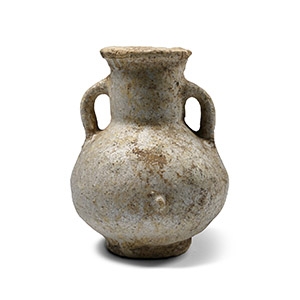
Egyptian Faience Juglet
Late Period, 664-332 B.C.Sold for (Inc. bp): £91
With squat body, broad neck with thickened rim, two strap handles to the shoulders. 88 grams, 85 mm
Acquired in the 1990s. Ex Abelita family collection. This lot is accompanied by an illustrated lot declaration signed by the Head of the Antiquities Department, Dr Raffaele D'Amato.
