
Loading, please wait...
LOT 1961
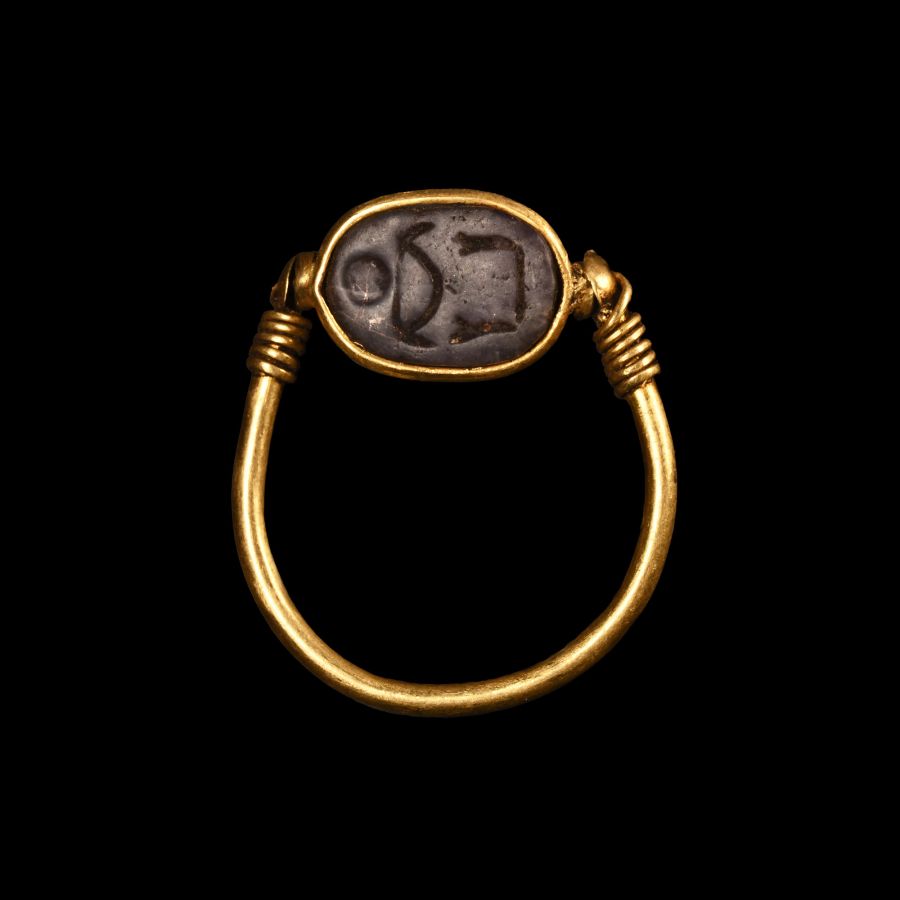
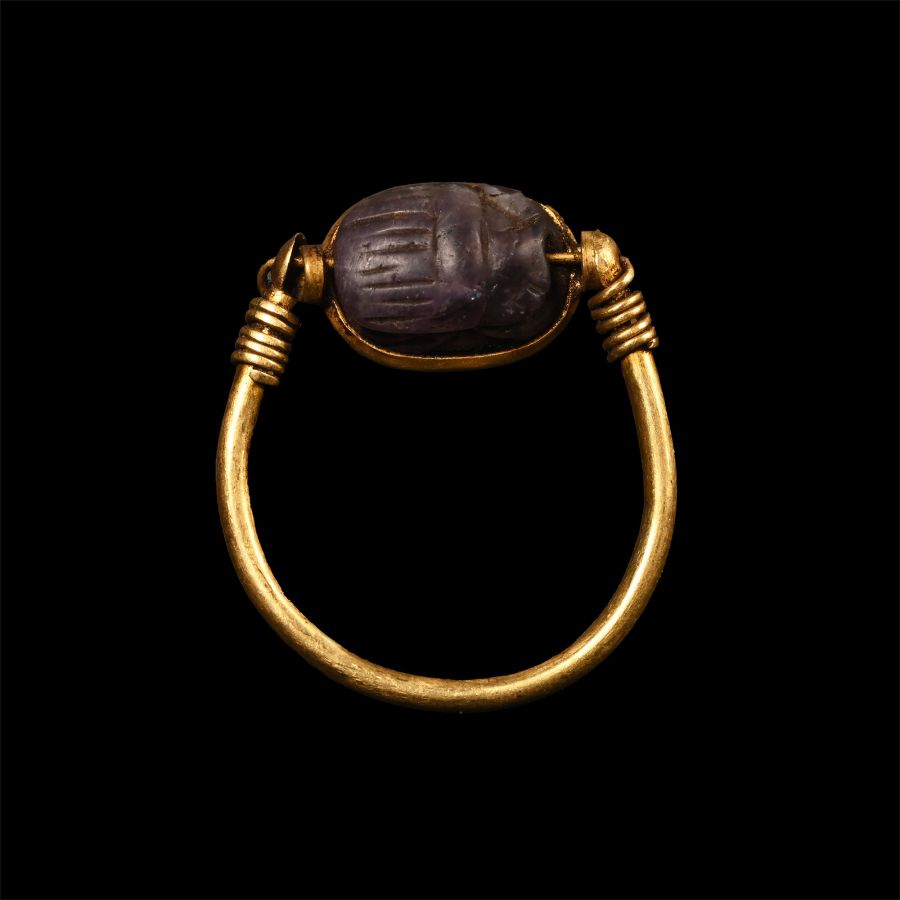
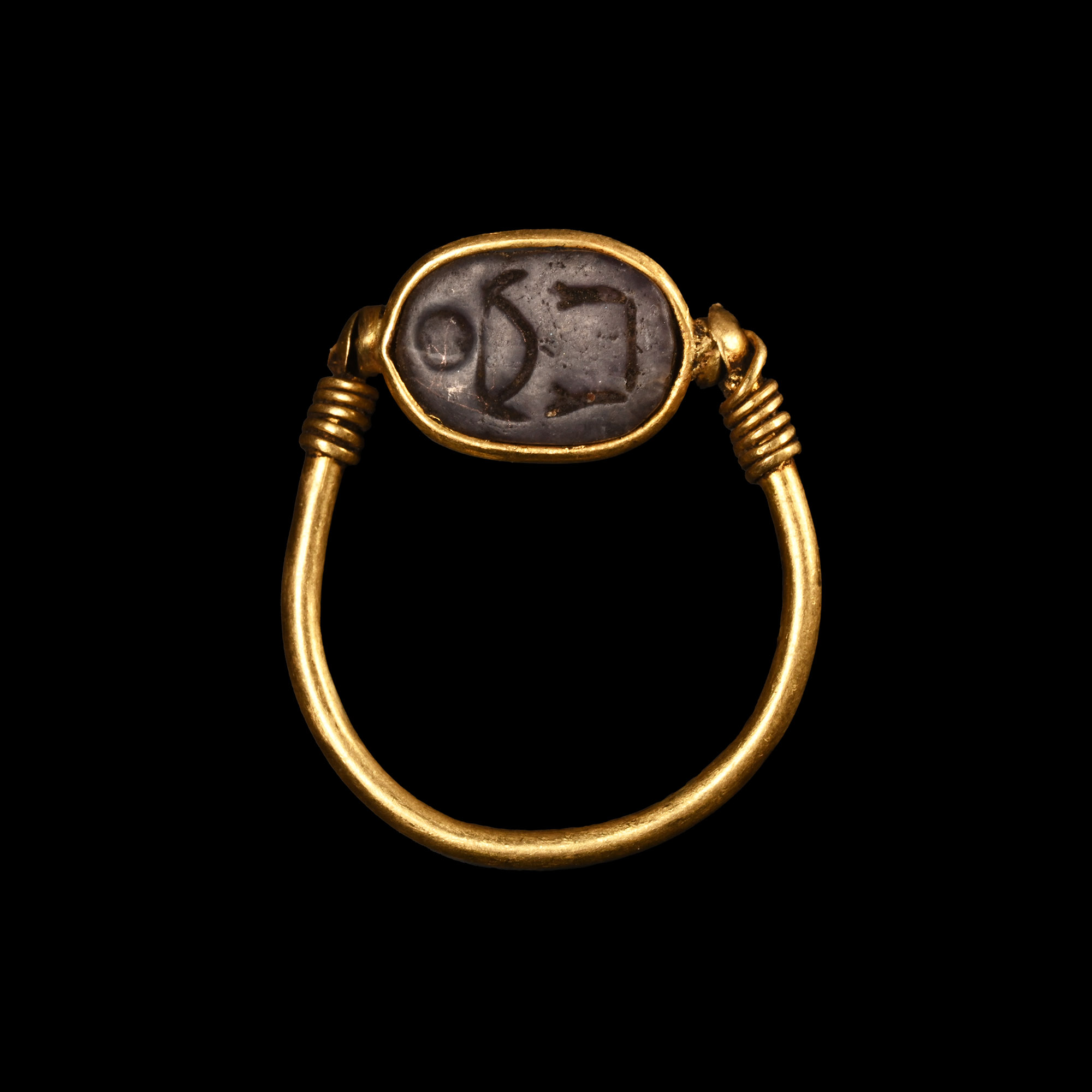
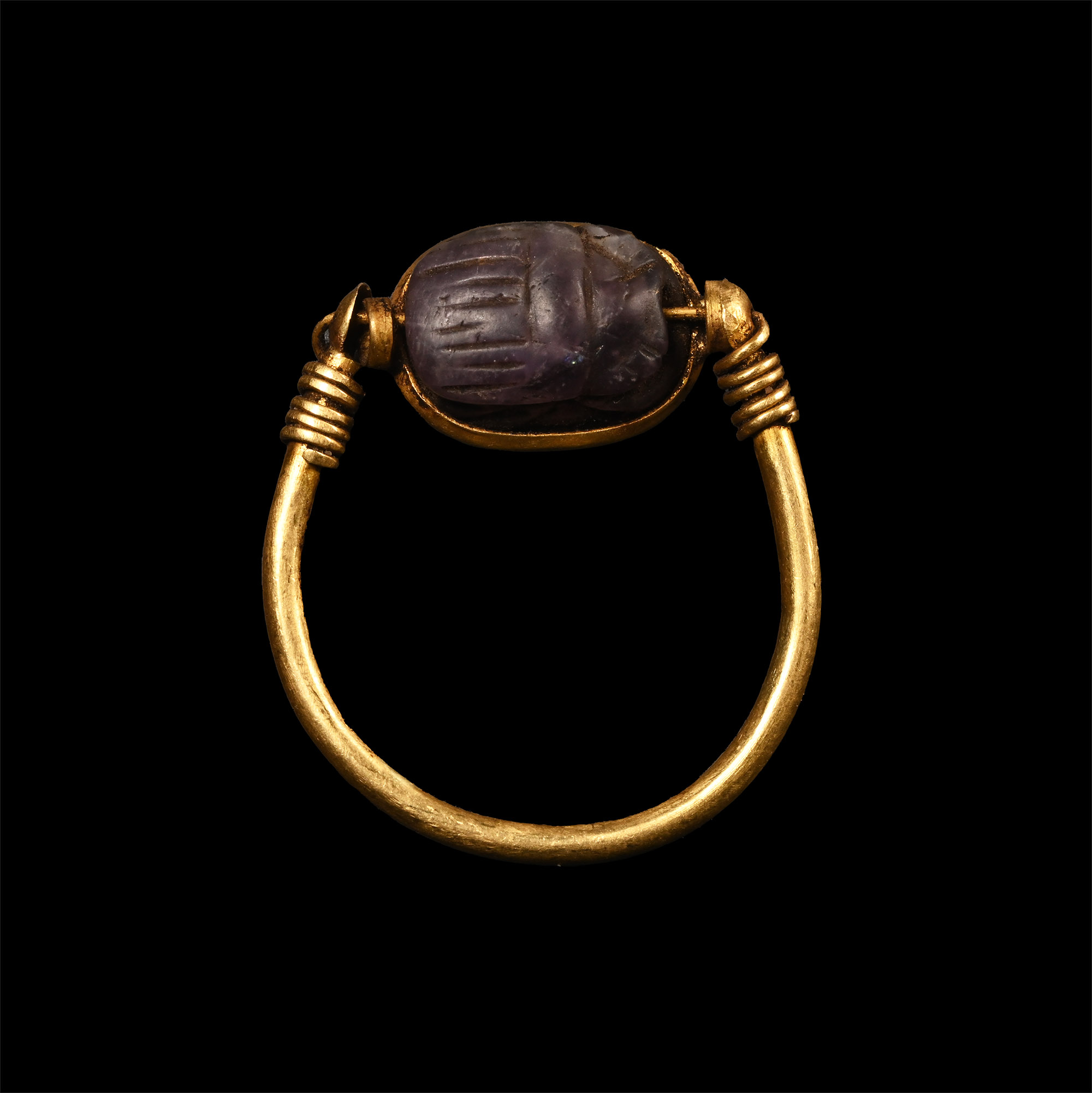
Egyptian Style Swivel Ring with Scarab
20TH CENTURY A.D.
1 in. (2.94 grams, 26.27 mm overall, 19.48 mm internal diameter (approximate size British S, USA 9, Europe 20, Japan 19)).
Comprising a narrow round-section hoop and a swivel mount set with a scarab, hieroglyphs to the underside. [No Reserve]
ProvenanceFrom the family collection of a Hampstead gentleman; formerly acquired in the 1980s.
This lot is accompanied by an illustrated lot declaration signed by the Head of the Antiquities Department, Dr Raffaele D'Amato.
TimeLine Auctions follows a vetting process to ensure the authenticity and legality of all items, reinforcing our commitment to integrity and responsible trading. Each antiquity, antique, and coin lot undergoes thorough examination by a vetting committee of at least ten external specialists, professional trade association members, scientists, and archaeologists: Our Vetting Process
AUCTIONS:
TimeLine is a leading auction house specialising in antiquities, ancient art, collectables, natural history, coins, medals, and books. Our auctions offer museums, collectors, historians, and enthusiasts the opportunity to acquire unique and historically significant pieces.
-
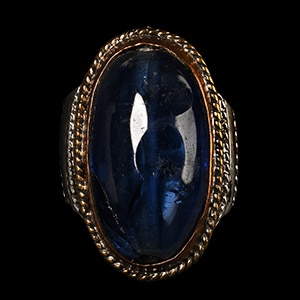
Large Silver-Coloured Metal Ring with Blue Glass Cabochon
20th century A.D.Sold for (Inc. bp): £85
With a flat-section hoop, expanding openwork shoulders with applied wire decoration; oval bezel set with blue glass cabochon fashioned from a bead. 14.65 grams, 30.32 mm overall, 19.14 mm internal diameter (approximate size British S, USA 9, Europe 20, Japan 19)
From the family collection of a Hampstead gentleman; formerly acquired in the 1980s. This lot is accompanied by an illustrated lot declaration signed by the Head of the Antiquities Department, Dr Raffaele D'Amato. -
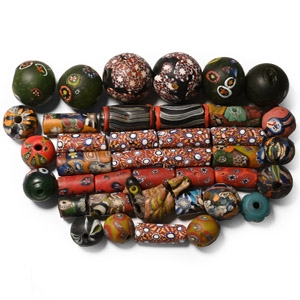
Mixed Elaborate Glass Bead Collection
20th century A.D.Sold for (Inc. bp): £111
Comprising a colourful mix of cylindrical and spherical beads, including some millefiori examples. 454 grams total, 18-32 mm
From the family collection of a Hampstead gentleman; formerly acquired in the 1980s. This lot is accompanied by an illustrated lot declaration signed by the Head of the Antiquities Department, Dr Raffaele D'Amato. -
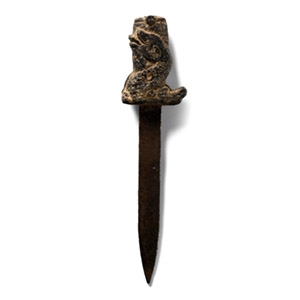
Roman Style Bronze Model Knife
18th century A.D. or laterEstimate: £100 - 140 (+bp*)
Opening Bid: £50
With narrow tongue-shaped iron blade and copper-alloy hilt formed as a hippocamp. 10.7 grams, 87 mm
From the collection of a gentleman, acquired on the London art market in the 1990s. This lot is accompanied by an illustrated lot declaration signed by the Head of the Antiquities Department, Dr Raffaele D'Amato.
