
Loading, please wait...
LOT 2038
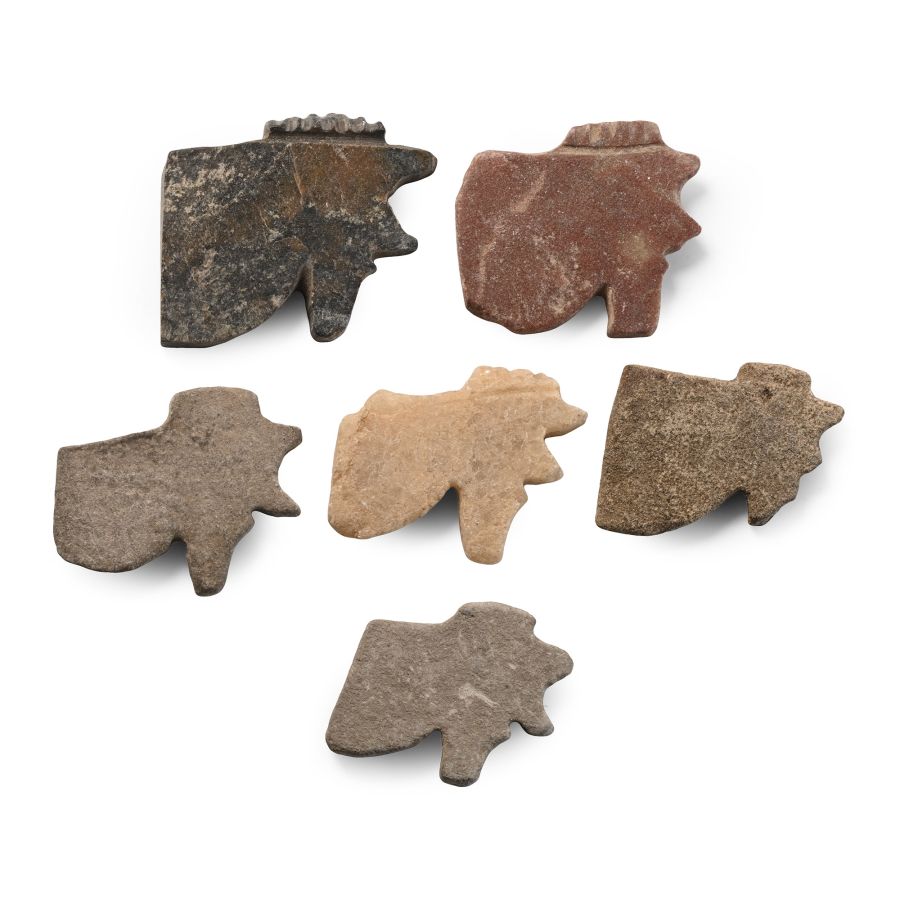
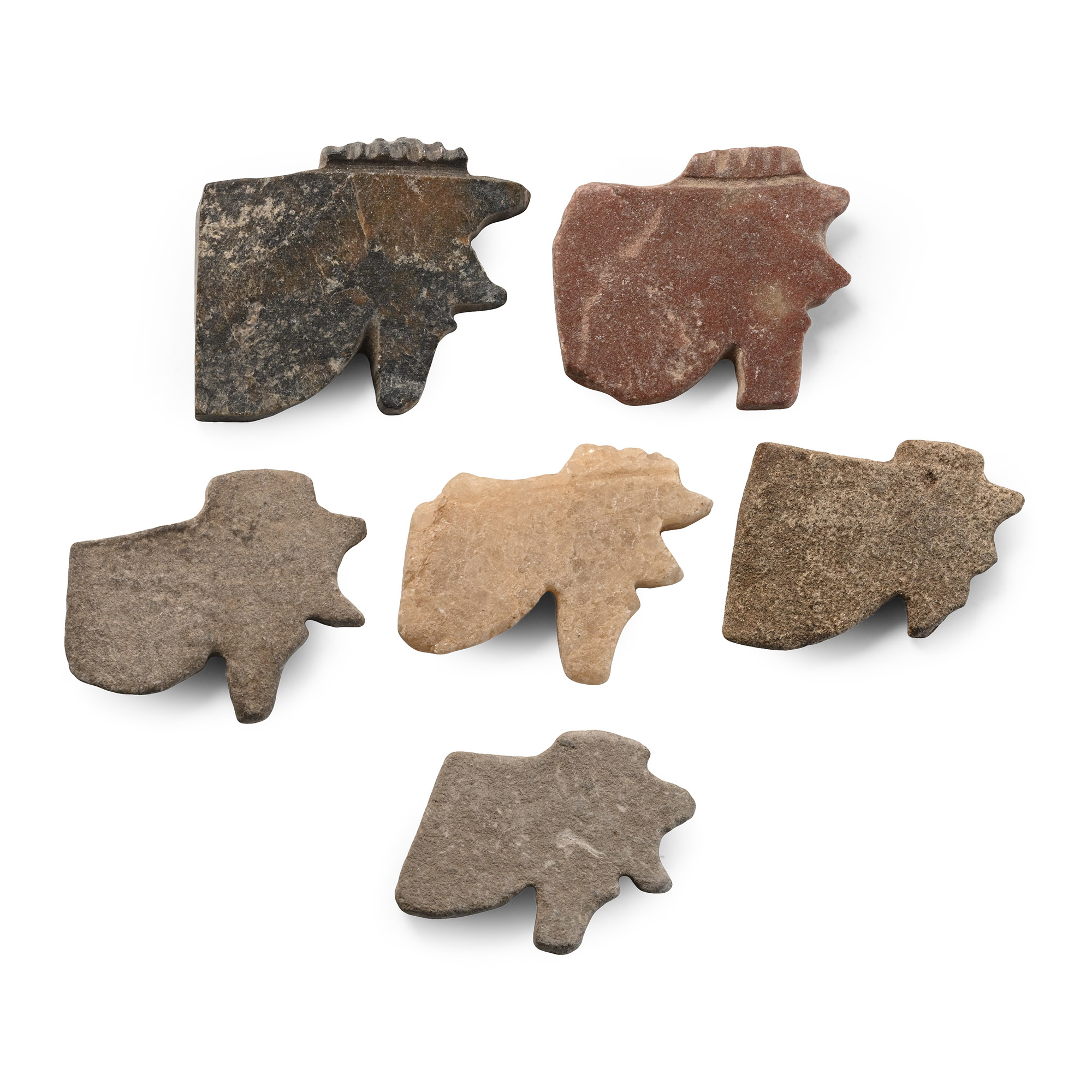
Egyptian Style Stone Wedjat Eye Amulet Collection
20TH CENTURY A.D.
3/4 - 1 in. (14.9 grams total, 21-25 mm).
Amuletic plaques in various materials, each in the form of the wedjat Eye of Horus. [6, No Reserve]
Provenancewith Archaeologia, Switzerland, before 1983.
Ex private North American collection.
London private collection, 2016.
TimeLine Auctions follows a vetting process to ensure the authenticity and legality of all items, reinforcing our commitment to integrity and responsible trading. Each antiquity, antique, and coin lot undergoes thorough examination by a vetting committee of at least ten external specialists, professional trade association members, scientists, and archaeologists: Our Vetting Process
AUCTIONS:
TimeLine is a leading auction house specialising in antiquities, ancient art, collectables, natural history, coins, medals, and books. Our auctions offer museums, collectors, historians, and enthusiasts the opportunity to acquire unique and historically significant pieces.
-
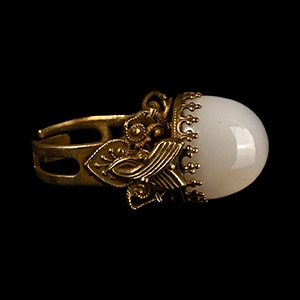
Post Medieval Brass Ring with Chrysoberyl Gemstone
19th-20th century A.D.Sold for (Inc. bp): £59
With openwork expanding hoop, floral detailing to shoulders, bezel with claw setting and inset ovoid gemstone displaying asterism. 10.31 grams, 36.00 mm overall, 17.40 x 19.00 mm internal diameter (approximate size British O, USA 7, Europe 14.98, Japan 14)
From the collection of William Kearney. From the property of a late Lincolnshire, UK, gentleman. -
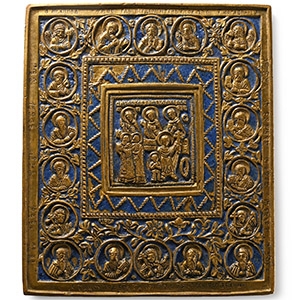
Russian Orthodox Enamelled Bronze Travel Icon with Saint Julitta, Cyricus and Deesis
19th century A.D.Estimate: £300 - 400 (+bp*)
Opening Bid: £150
With blue enamel and framed by a raised border; Saint Julitta and her son, Cyricus, Saint Gregory the Theologian and Saint John the Chrysostom standing beside them at the centre; three half-length figures above: St. Paraskeva (right), Eudokia, and Barbara (left); OCS inscriptions identifying the saints framing the scene; on the top a deesis, with Christ Pantokrator at the centre, flanked by Saint Mary and Saint John the Precursor; at the top left corner Archangel Michael, on the top right corner the Archangel Gabriel; beneath Saint Gabriel, in vertical order, Saint Paul, Saint Gregory the Theologian, Saint Nicholas of Myra, Saint Demetrios; beneath Saint Michael, in vertical order, Saint Peter, Saint Basil the Great, Saint John Chrysostomos and Saint George; in the last row, nearby Saint Andrew, at the centre, the Archangel Raphael, with sword and cross. 360 grams, 14 cm
Acquired from Chris Martin-Zakheim, Iconastas, 5 Piccadilly Arcade, London SW1. From the private collection of a West London, UK, gentleman, formed since the early 2000s.
This icon was intended for private devotion, often carried by pilgrims and Orthodox believers for spiritual protection. St. Julyttas and her son Cyricus (Ки́рик и Иули́тта), among the most venerated figures in Russian tradition, are depicted in the centre, surrounded by other saints, a symbol of the communion of the righteous in front of the Divine Deesis. -
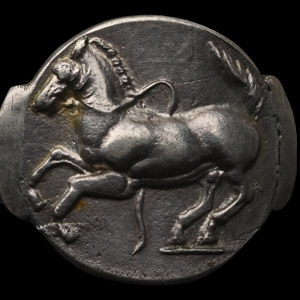
Post Medieval Silver Ring with Maroneia Horse
20th century A.D.Sold for (Inc. bp): £65
Substantial hoop with overlapping finials, large discoid bezel with low-relief image of a prancing horse, modelled after depictions on ancient Greek coins from the city of Maroneia in Thrace. 9.21 grams, 23.72 mm overall, 20.73 mm internal diameter (approximate size British U, USA 10, Europe 22.52, Japan 21)
Ex German art market, 2000s. Acquired from an EU collector living in London. From the collection of a Surrey, UK, gentleman.
