
Loading, please wait...
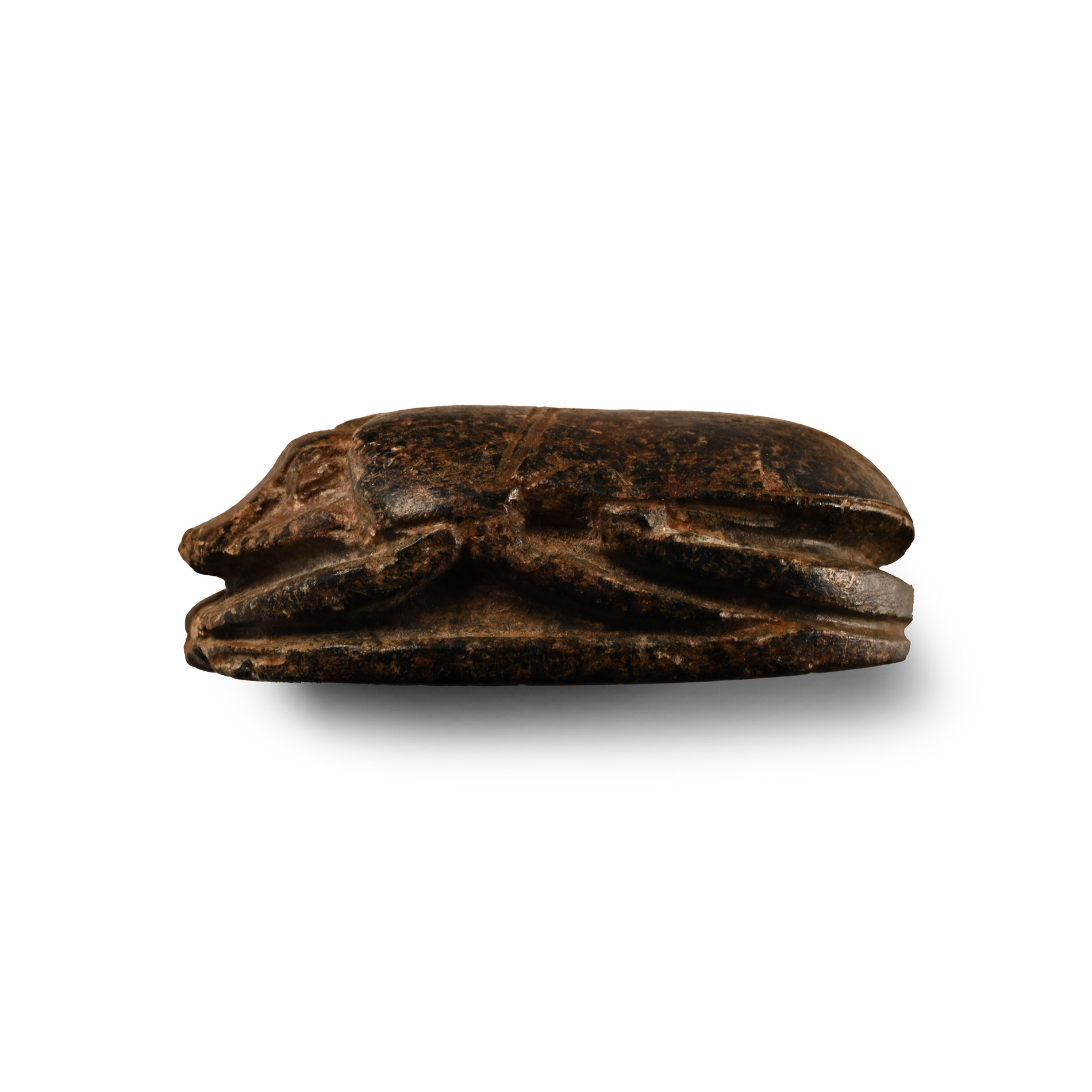
LOT 0458
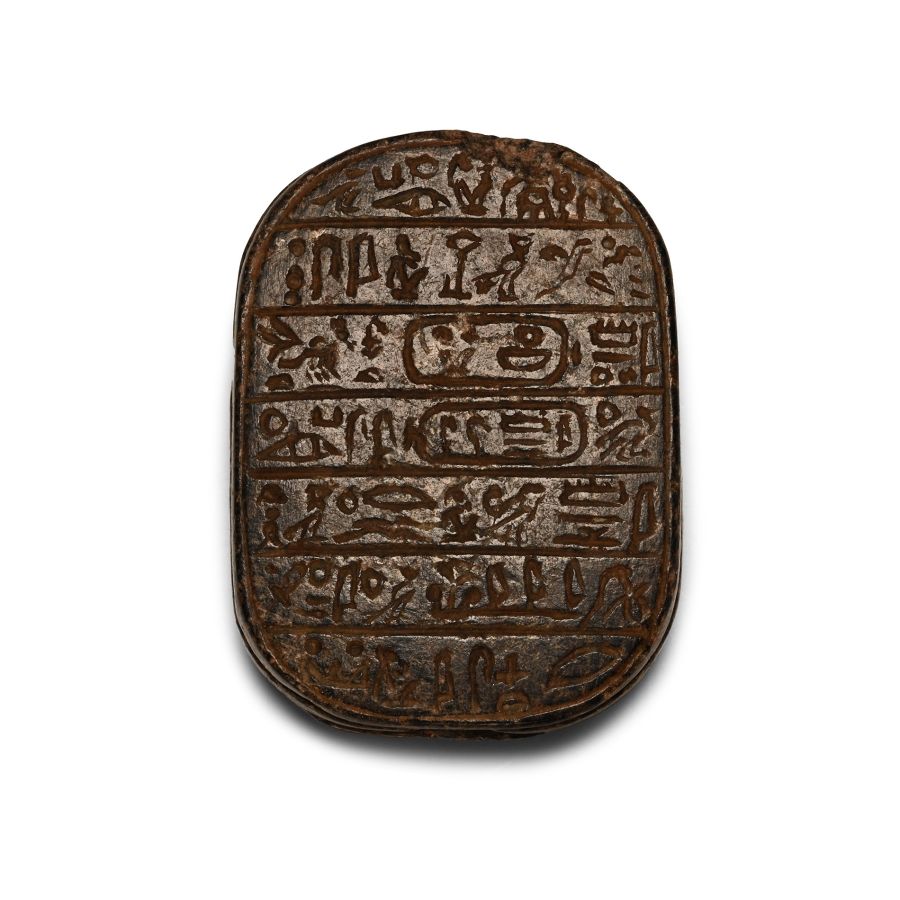
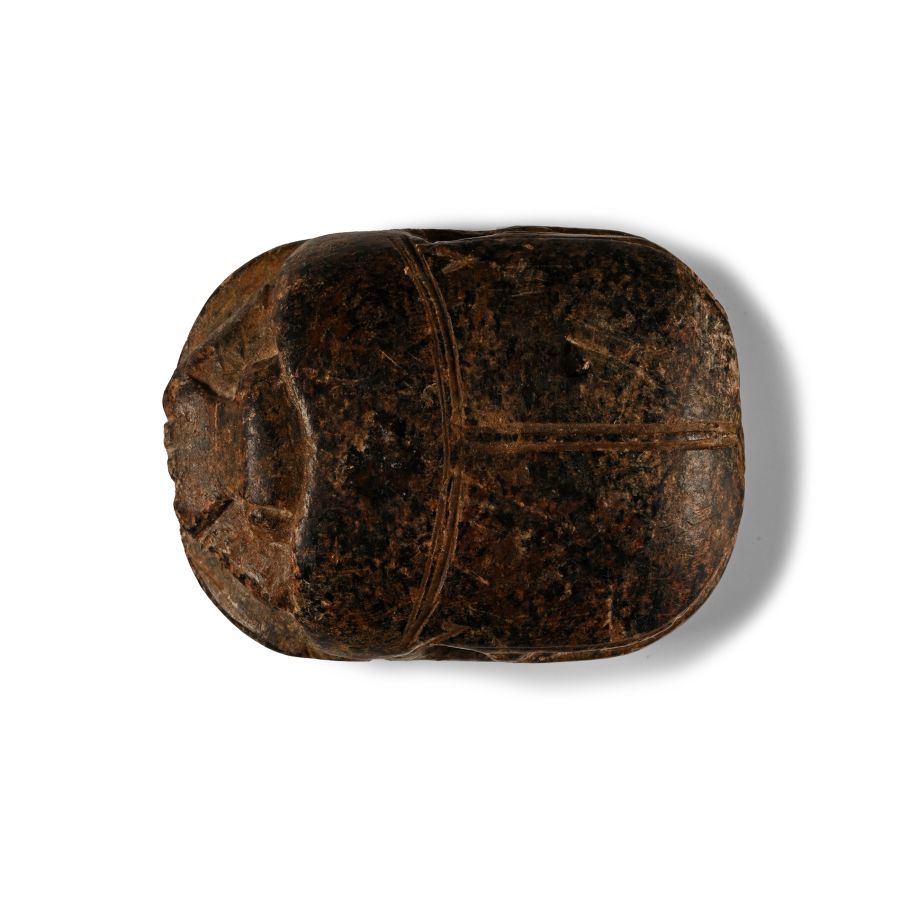
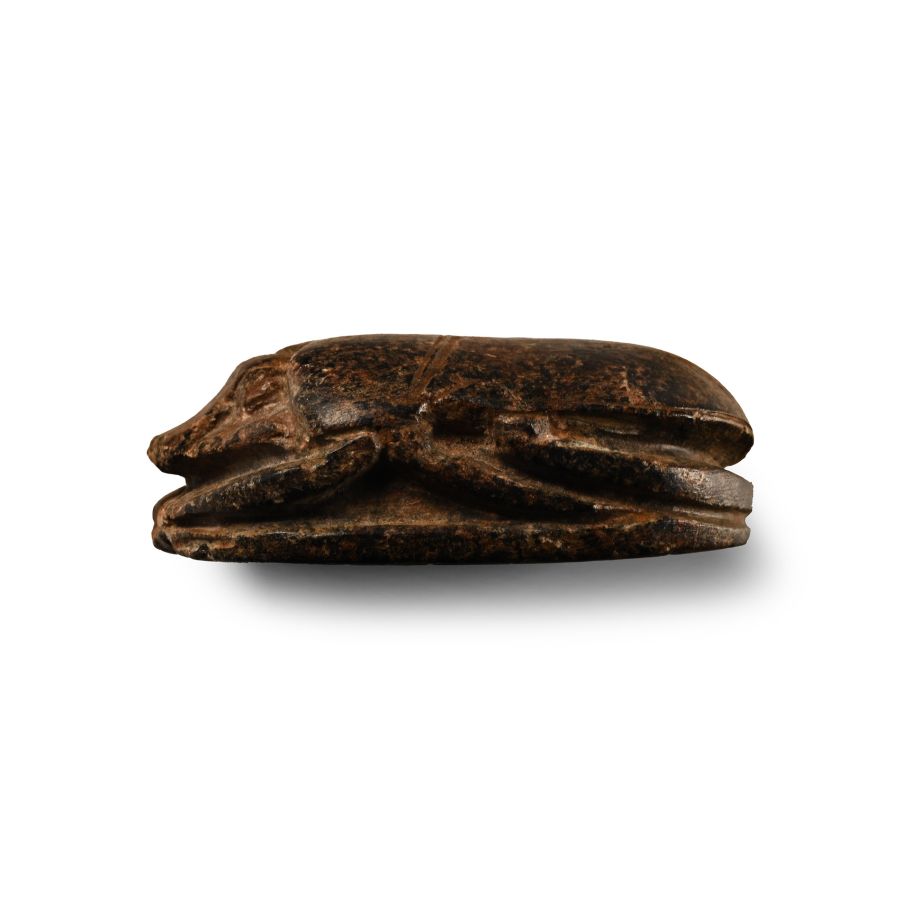
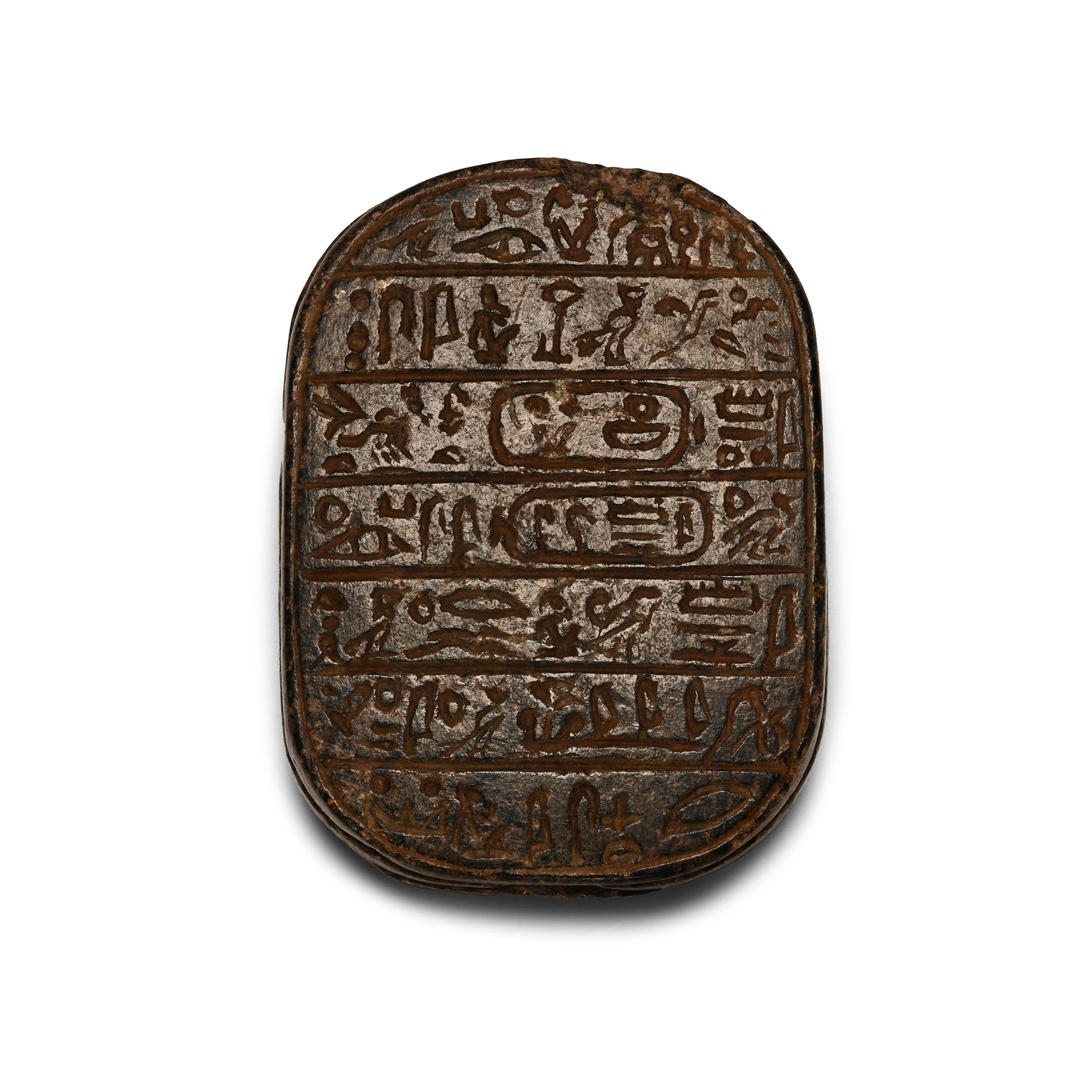
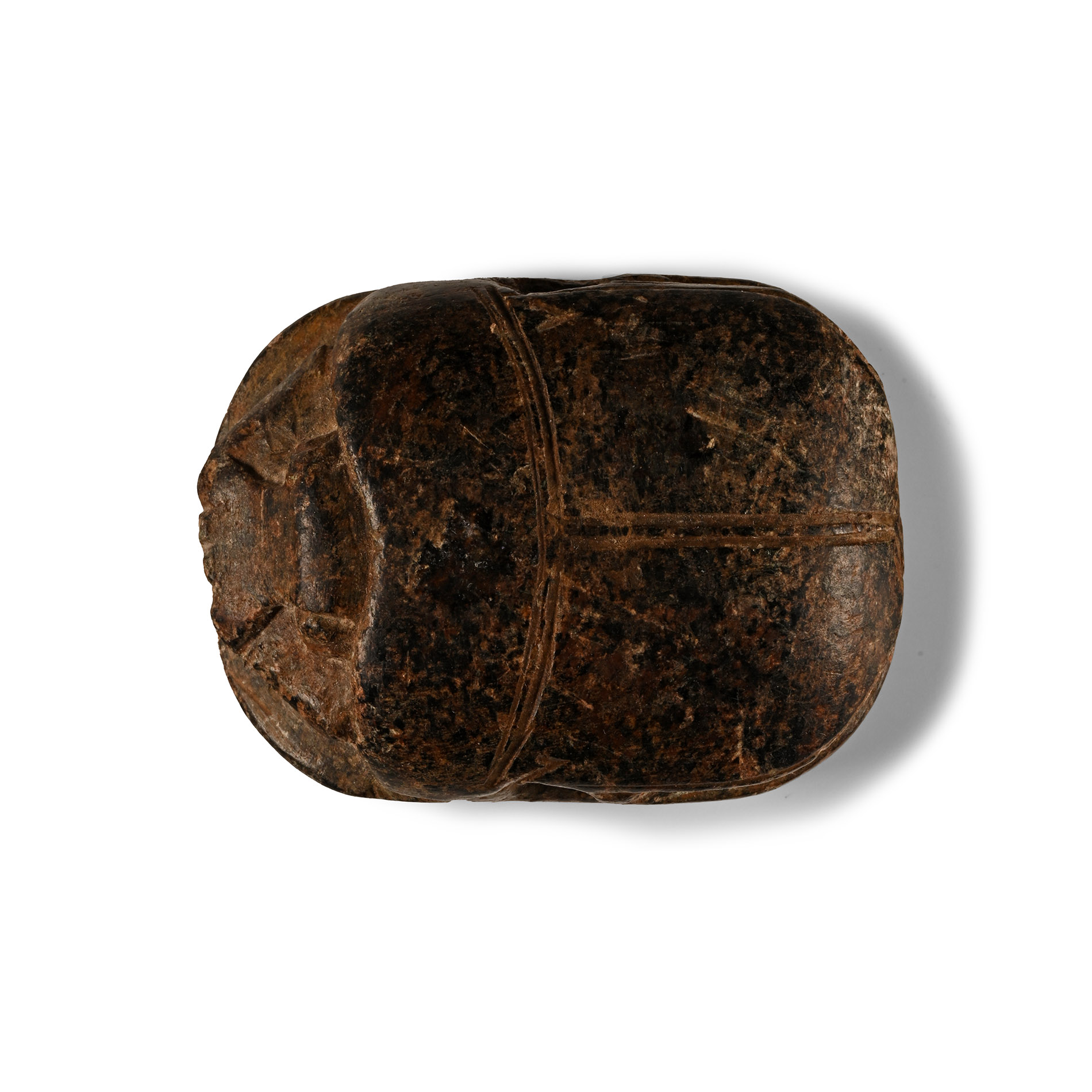
Egyptian Style Heart Scarab with Hieroglyphs
LATE 19TH-EARLY 20TH CENTURY A.D.
2 in. (72 grams, 50 mm.).
Substantial carved scarab with detailed carapace; underside with seven columns of hieroglyphic text, including two cartouches.
ProvenancePrivate collection, UK; acquired prior to 2013.
CONDITIONTimeLine Auctions follows a vetting process to ensure the authenticity and legality of all items, reinforcing our commitment to integrity and responsible trading. Each antiquity, antique, and coin lot undergoes thorough examination by a vetting committee of at least ten external specialists, professional trade association members, scientists, and archaeologists: Our Vetting Process
AUCTIONS:
TimeLine is a leading auction house specialising in antiquities, ancient art, collectables, natural history, coins, medals, and books. Our auctions offer museums, collectors, historians, and enthusiasts the opportunity to acquire unique and historically significant pieces.
-
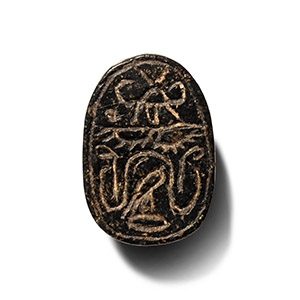
Egyptian Black Stone Scarab with Uraei and Falcon
New Kingdom-Late Period, 1550-332 B.C.Sold for (Inc. bp): £286
Scarab with carapace detailing, falcon figure to the underside. 3.09 grams, 18 mm
Ex North London gentleman's collection, 1990s. Property of a Cambridgeshire, UK, gentleman. -
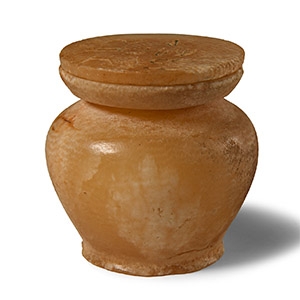
Egyptian Alabaster Kohl Pot
Middle Kingdom, circa 2035-1665 B.C.Sold for (Inc. bp): £715
Barrel-shaped with broad flat rim; with later hieroglyphic inscription to the lid. 115 grams, 47 mm high with lid
Acquired in the mid 1980s-1990s. From the family collection of Mr S.A., Switzerland, thence by descent. Private collection since the late 1990s. -
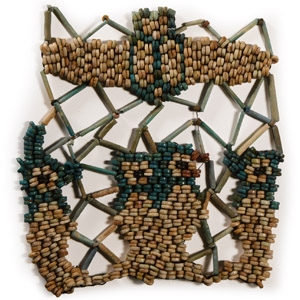
Egyptian Beaded Mummy Mask Panel with Four Sons of Horus
Ptolemaic Period, 332-30 B.C.Sold for (Inc. bp): £117
Openwork restrung panel depicting Imsety, Hapy, Duamutef, and Qebehsenuef, the Four Sons of Horus with a winged scarab above; restrung with some later beads. 57 grams, 16 cm
Ex Mariaud de Serres, Paris, France, 1980-1990s. From a London, UK, collection. Accompanied by an old collection ticket.
The Four Sons of Horus were deities responsible for protecting the internal organs of the deceased. The human-headed Imsety protected the liver, the baboon-headed Hapy protected the lungs, the jackal-headed Duamutef protected the stomach, and the falcon-headed Qebehsenuef protected the intestines.
