
Loading, please wait...
LOT 1959
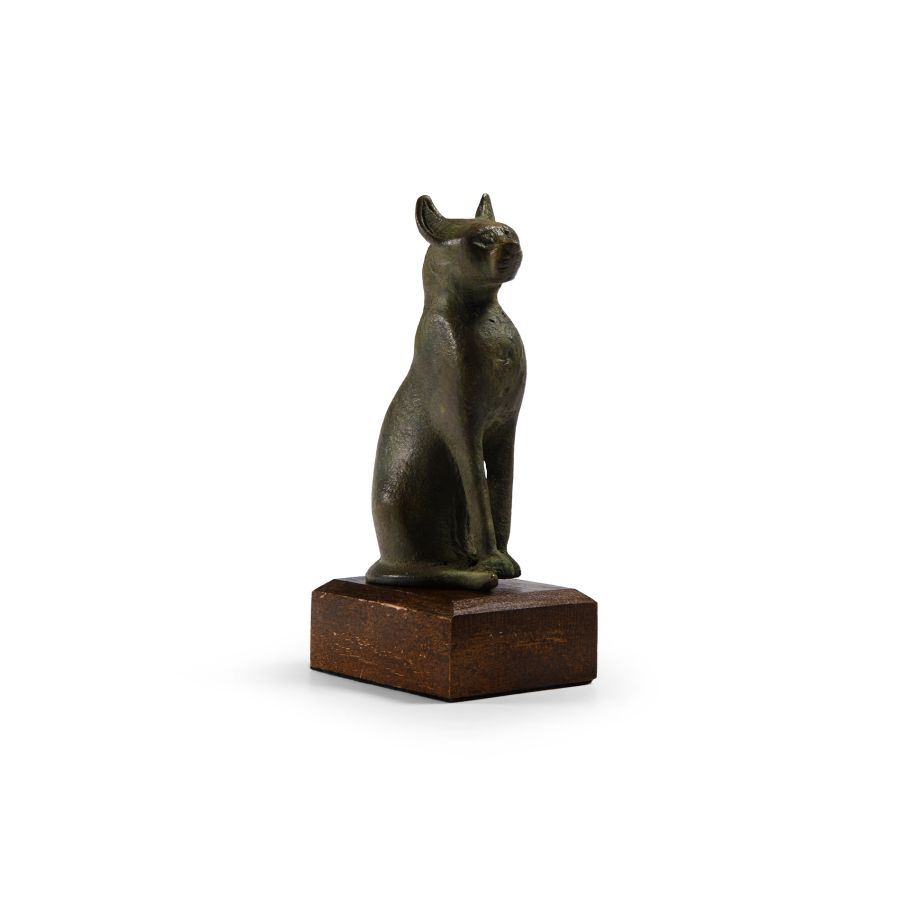
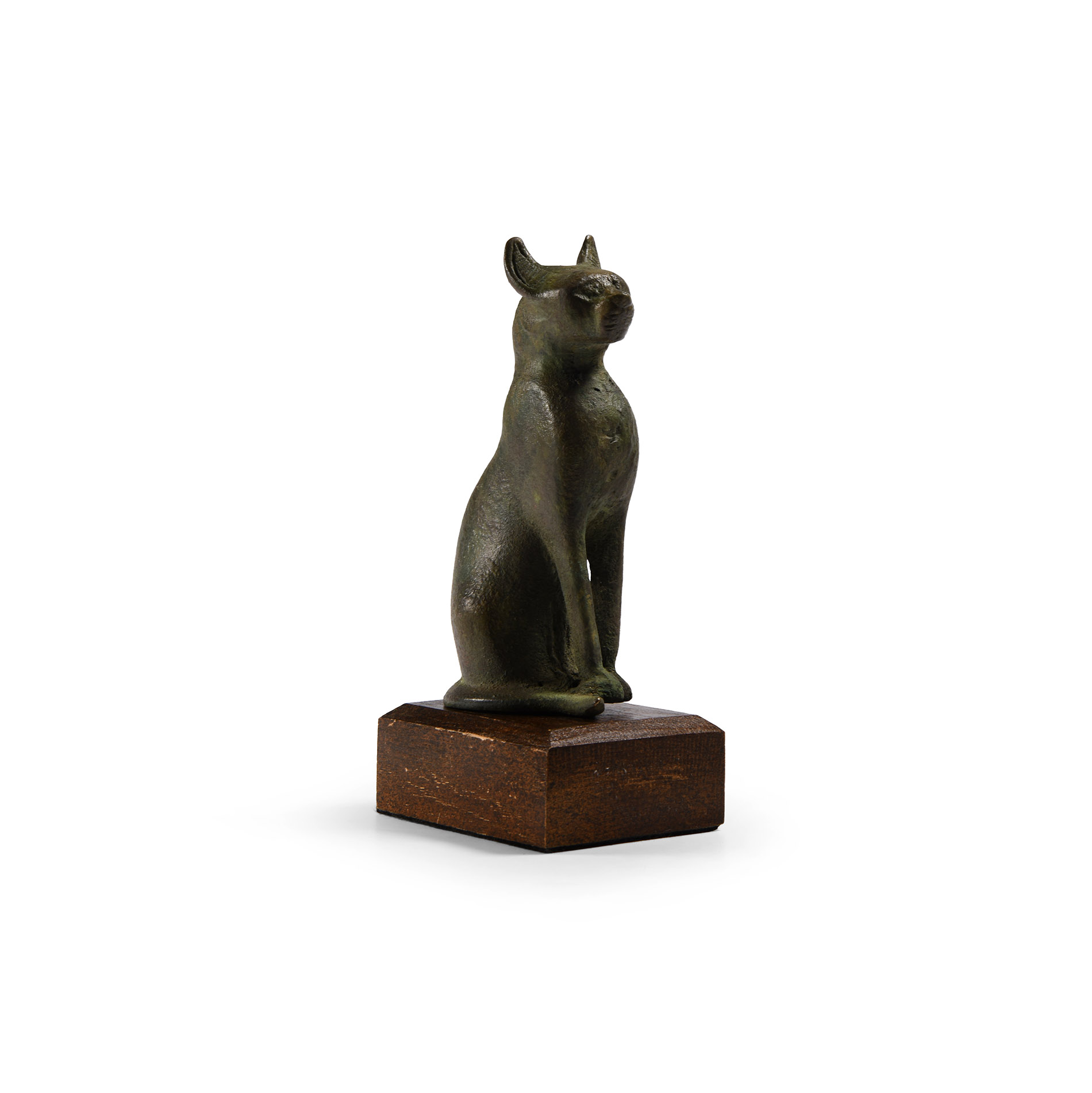
Egyptian Style Bronze Seated Cat
20TH CENTURY A.D.
7 1/8 in. (598 grams total, 17.9 cm (including base)).
Modelled in the round with semi-naturalistic anatomical detailing, tail wrapped around one side of the body; mounted on a custom-made display stand. [No Reserve]
ProvenanceEx French collection, acquired prior to 1980.
CONDITIONTimeLine Auctions follows a vetting process to ensure the authenticity and legality of all items, reinforcing our commitment to integrity and responsible trading. Each antiquity, antique, and coin lot undergoes thorough examination by a vetting committee of at least ten external specialists, professional trade association members, scientists, and archaeologists: Our Vetting Process
AUCTIONS:
TimeLine is a leading auction house specialising in antiquities, ancient art, collectables, natural history, coins, medals, and books. Our auctions offer museums, collectors, historians, and enthusiasts the opportunity to acquire unique and historically significant pieces.
-
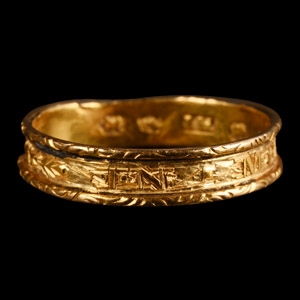
Georgian Gold Memento Mori Ring
Dated 12 October 1847 A.D.Sold for (Inc. bp): £390
With everted upper and lower rim engraved with foliate motifs to the front faces, recessed central band engraved with a floral panel and inscription 'IN MEMORY OF', with continued inscription to the interior in cursive script 'O. Coates Obt. 12. Oct 1847, aet 54', followed by the hallmarks comprising: HI or IH maker's mark, anchor for Birmingham, 18 carat mark, duty mark and date letter 'Gothic A' for 1824; field to exterior keyed to receive enamel; seemingly an older ring with later inscription. 1.50 grams, 19.63 mm overall, 17.78 mm internal diameter (approximate size British O, USA 7, Europe 14.98, Japan 14)
Found Romney Marsh area, Kent, UK. Property of a Kent gentleman. -
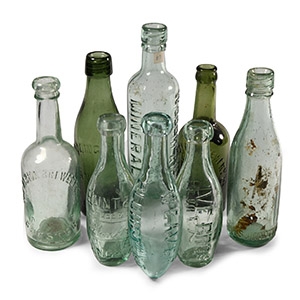
Post Medieval Mixed Glass Drinks Bottles Group
19th-early 20th century A.D.Sold for (Inc. bp): £13
In green, clear and aqua glass including 'Weaver Plumstead', 'Ive Bros Henley', 'Woodhead's Canonbury Minerals' and other types. 3.5 kg total, 17-24 cm high
Acquired UK market. Ian Roper collection. -
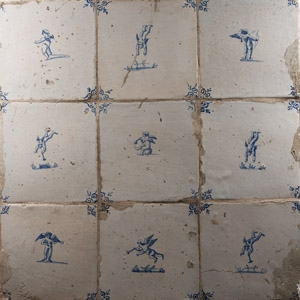
Post Medieval Ceramic Tile Group with Scenes of Erotes
17th century A.D.Sold for (Inc. bp): £117
Displayed in a wooden frame, comprising nine scenes of Erotes or winged putti engaged in various pursuits. 4.7 kg, 42 x 42 cm
Acquired 1990s-early 2000s. East Anglian private collection.
