
Loading, please wait...
LOT 1986
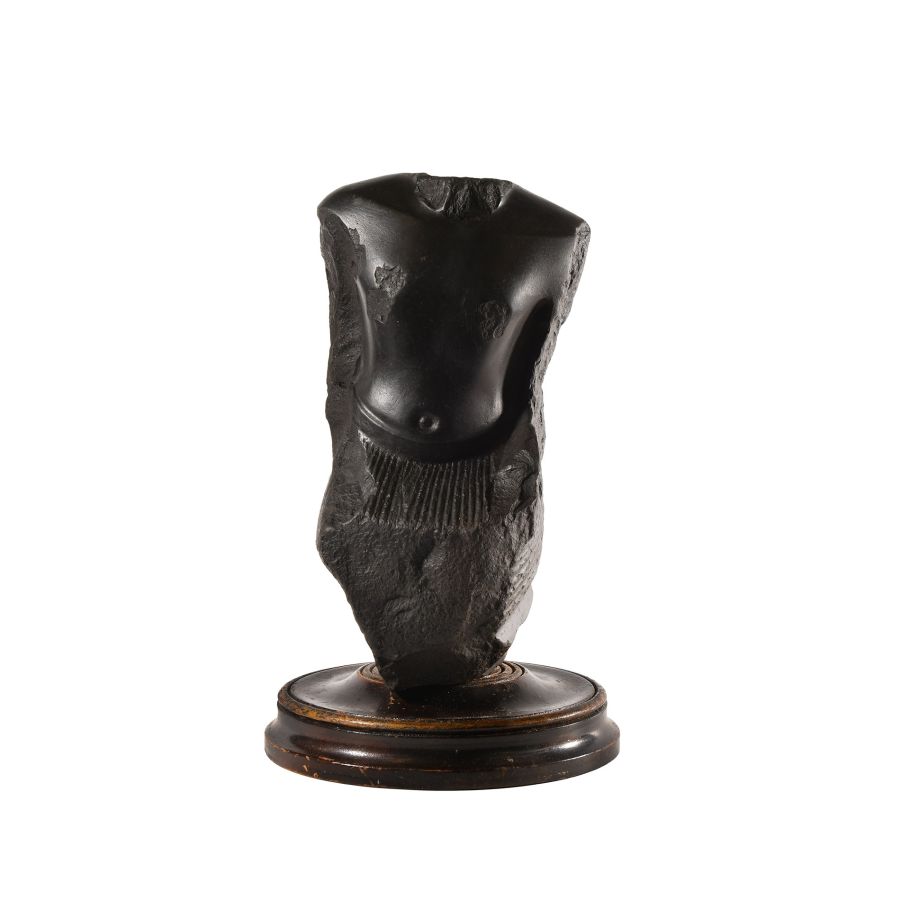
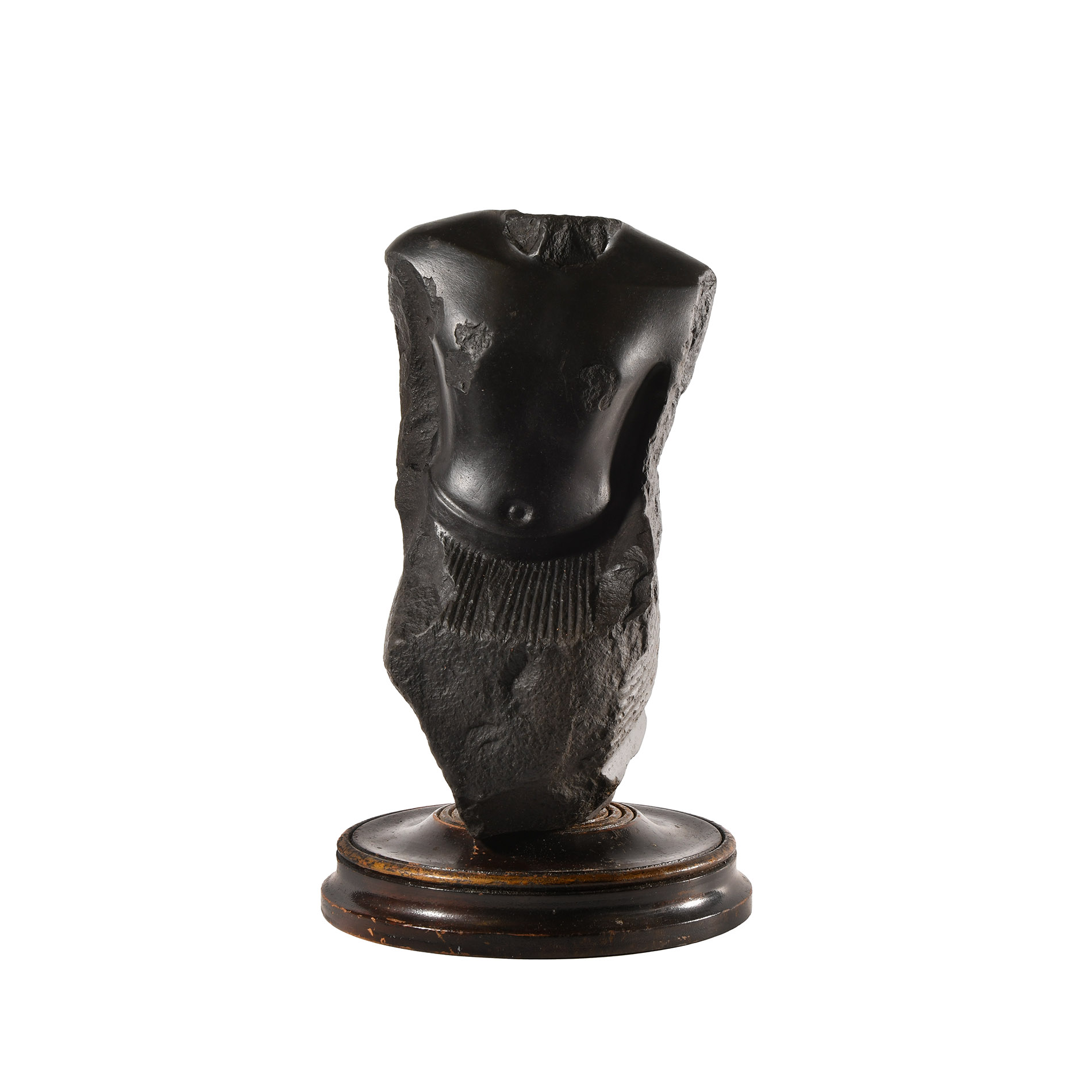
Egyptian Style Basalt Torso of a Pharaoh
19TH-20TH CENTURY A.D.
13 3/4 in. (11.2 kg total, 35 cm high including stand).
Seated and bare-chested, wearing a pleated kilt, arms to the sides and hands resting on the knees; mounted on a wooden display stand.
ProvenanceAcquired 1970s onwards.
Private collection of Michael O'Hara, Cambridgeshire, UK.
Ex private collection of Benjamin Hyde-Smith, Hertfordshire, UK.
TimeLine Auctions follows a vetting process to ensure the authenticity and legality of all items, reinforcing our commitment to integrity and responsible trading. Each antiquity, antique, and coin lot undergoes thorough examination by a vetting committee of at least ten external specialists, professional trade association members, scientists, and archaeologists: Our Vetting Process
AUCTIONS:
TimeLine is a leading auction house specialising in antiquities, ancient art, collectables, natural history, coins, medals, and books. Our auctions offer museums, collectors, historians, and enthusiasts the opportunity to acquire unique and historically significant pieces.
-
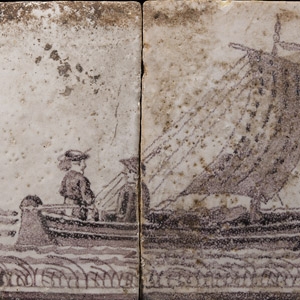
Post Medieval Dutch Ceramic Tiles with Boating Scene
Circa 17th-18th century A.D.Sold for (Inc. bp): £104
Mauve-glazed and depicting a couple in a boat on a lake, a duck in the water. 548 grams total, 13 x 13 cm each
Acquired 1990s-early 2000s. East Anglian private collection. -
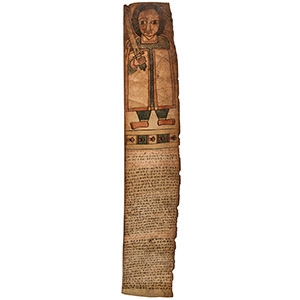
Ethiopian Magic Scroll with Archangel Michael
Early 19th century A.D.Sold for (Inc. bp): £59
Comprising a folded length of thin leather or vellum, with lines of Ge'ez text in black and red ink, coloured figural illuminations at the top depicting the winged Archangel Michael brandishing a sword, wearing a richly decorated lembd as a covering cloak. 32 grams, 35 cm
Stephen Keynes collection (1927-2017). Ex central London gallery.
Ethiopian phylacteries or parchment scrolls combined apotropaic prayers and images. These ‘magic scrolls’ utilise only a few designs that derive from Christian imagery, namely the holy rider, the sword-bearing angel Michael, and the cross. Here the text asks intervention and protection from Saint Michael, commander of the heavenly Host. Interestingly, the accoutrement of the Angel reflects that of the military Ethiopian elite in 19th century A.D. -
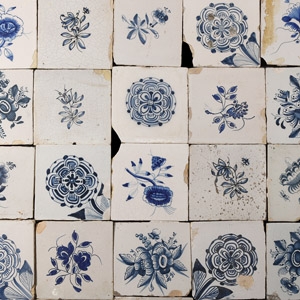
Post Medieval Dutch Glazed Ceramic Tile Group
Circa 17th-18th century A.D.Estimate: £100 - 140 (+bp*)
Opening Bid: £40
Displaying various designs in blue and white glaze, including insects visiting flowers and floral displays in various styles, including some single plants. 5.3 kg total, 12 x 12.5 - 13 x 13 cm
Acquired 1990s-early 2000s. East Anglian private collection.
