
Loading, please wait...

LOT 0471
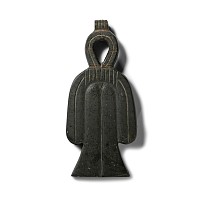
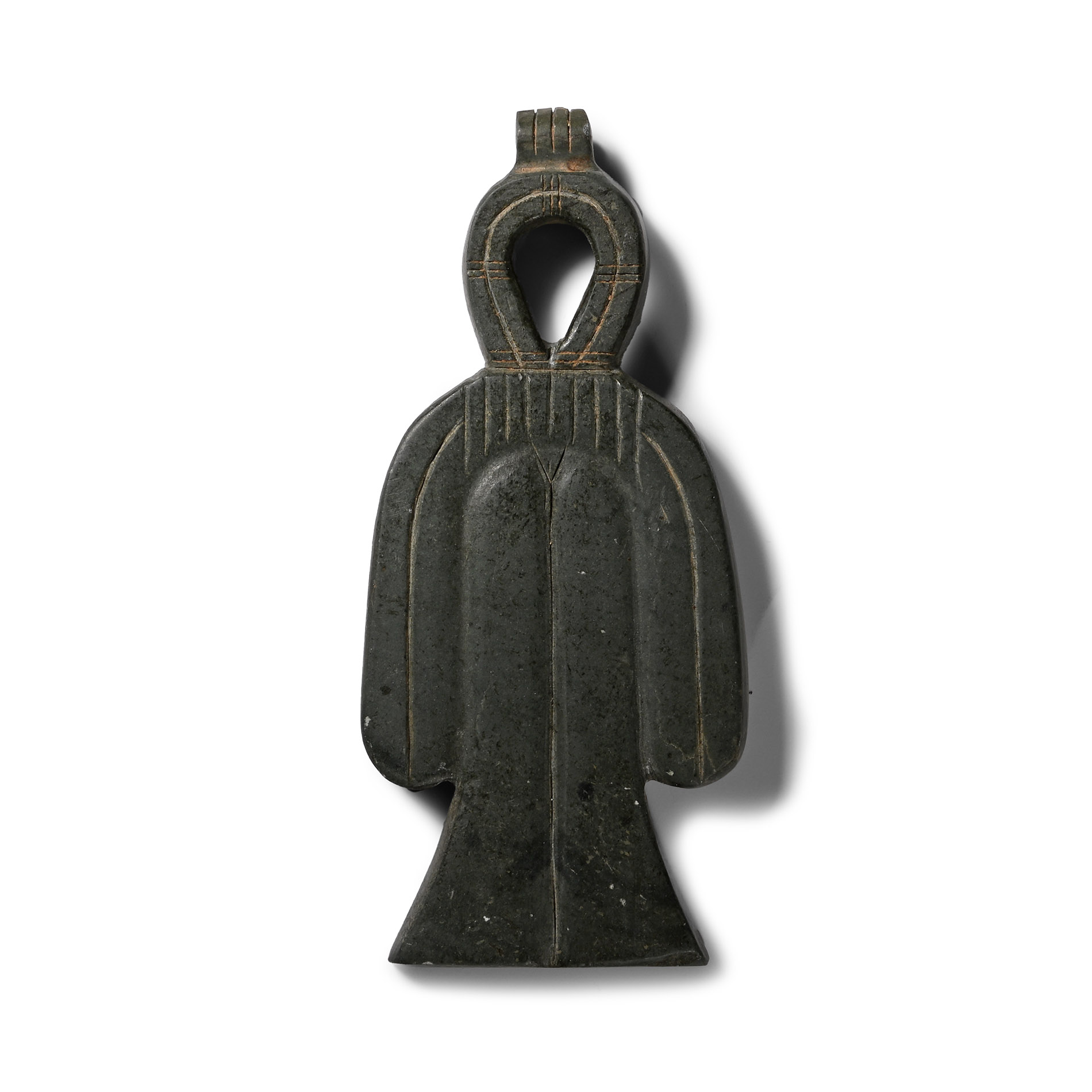
Egyptian Stone Tyet Amulet
THIRD INTERMEDIATE PERIOD-LATE PERIOD, CIRCA 743-332 B.C.
3 1/4 in. (38.9 grams, 81 mm).
Finely carved tyet amulet with incised internal detailing and ribbed suspension loop at the top.
ProvenanceAcquired in the mid 1980s-1990s.
Private collection, Switzerland, thence by descent.
Private collection, since the late 1990s.
This lot is accompanied by an illustrated lot declaration signed by the Head of the Antiquities Department, Dr Raffaele D'Amato.
Cf. Reisner, G.A., Catalogue général des antiquités égyptiennes du Musée du Caire, Nos.5218-6000 et 12001-12527, Vol. I, Amulets, Cairo, 1907, pl.VII (CG12036), for an amulet of similar styling.
FootnotesThe tyet amulet was associated with the goddess Isis and was often referred to as the 'knot' or 'girdle' of Isis. Some believe that it represents a bandage used to absorb menstrual blood. It was commonly placed within the mummy wrappings on the upper torso of the deceased, with the belief that it would invoke Isis' protection and safeguard the body, thus ensuring their rebirth in the afterlife.
CONDITIONTimeLine Auctions follows a vetting process to ensure the authenticity and legality of all items, reinforcing our commitment to integrity and responsible trading. Each antiquity, antique, and coin lot undergoes thorough examination by a vetting committee of at least ten external specialists, professional trade association members, scientists, and archaeologists: Our Vetting Process
AUCTIONS:
TimeLine is a leading auction house specialising in antiquities, ancient art, collectables, natural history, coins, medals, and books. Our auctions offer museums, collectors, historians, and enthusiasts the opportunity to acquire unique and historically significant pieces.
-
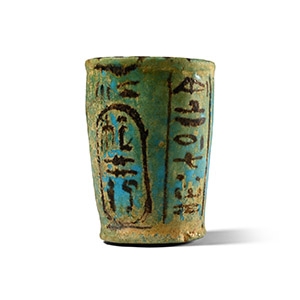
Egyptian Blue Glazed Libation Cup of Ramesses III
New Kingdom, 20th Dynasty, circa 1183-1152 B.C.Sold for (Inc. bp): £1,235
Ritual cup with sides tapering towards the base; the black glazed rectangular panel containing two columns of text: 'Lord of Appearances, Ramesses ruler of Heliopolis (Ramses heqa Iwnw) given life, beloved of Osiris, Lord of Rosetau'. 50 grams, 53 mm
with Hoshigaoka Gallery Co. Ltd, Japan. Private collection, London, acquired from the above on the 26th September 1981. This lot has been checked against the Interpol Database of stolen works of art and is accompanied by a search certificate number no.12637-235085. This lot is accompanied by an illustrated lot declaration signed by the Head of the Antiquities Department, Dr Raffaele D'Amato. -
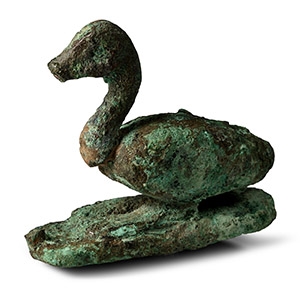
Egyptian Bronze Ibis Attachment
Late Period, 664-332 B.C. or laterEstimate: £180 - 240 (+bp*)
Opening Bid: £90
Modelled in the round squatting on an ellipsoid base, lug to the underside, repaired. 114 grams, 60 mm
From the collection of a gentleman, acquired on the London art market in the 1990s. This lot is accompanied by an illustrated lot declaration signed by the Head of the Antiquities Department, Dr Raffaele D'Amato.
The ibis, particularly the sacred species known as the Egyptian ibis (Threskiornis aethiopicus), held a prominent place in ancient Egyptian religion and culture as a manifestation of the god Thoth. Revered as the deity of wisdom, writing, and knowledge, Thoth was often depicted in human form with the head of an ibis. During the Late Period onwards, the practice of mummifying ibises became widespread, leading to the creation of vast necropolises dedicated to these sacred birds. In places like Saqqara and Hermopolis, thousands of ibis mummies have been discovered in specially constructed catacombs. The mummification of these birds was not merely a ritual act; it was seen as a sacred offering to Thoth, meant to honour the god and seek his favour. Egyptians believed that by preserving the ibis through mummification, they could ensure its safe passage to the afterlife, establishing a direct connection between the earthly realm and the divine. These mummies were often accompanied by votive offerings, like this bronze figurine, further emphasising the relationship between the ibises and Thoth. -
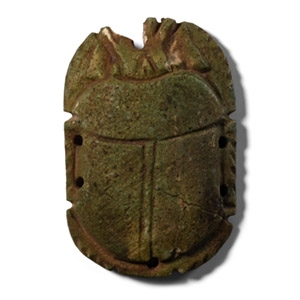
Large Egyptian Faience Heart Scarab
Late Period, 664-332 B.C.Sold for (Inc. bp): £169
Green-glazed with anatomical detailing, pierced through the outer edge. 48 grams, 73 mm
From an early 20th century collection London and Home counties, UK. This lot is accompanied by an illustrated lot declaration signed by the Head of the Antiquities Department, Dr Raffaele D'Amato.
The heart scarab served to protect the individual by silencing the heart so it would not testify against its owner. Many heart scarabs, especially those intended for elite burials, were mounted with outstretched wings—symbols of divine protection and rebirth. These wings echoed the iconography of protective deities like Isis and Nephthys, enhancing the amulet’s power to safeguard the soul on its journey to eternal life. The pierced holes on the side of this example were likely for the attachment of such wings.
