
Loading, please wait...
LOT 0060
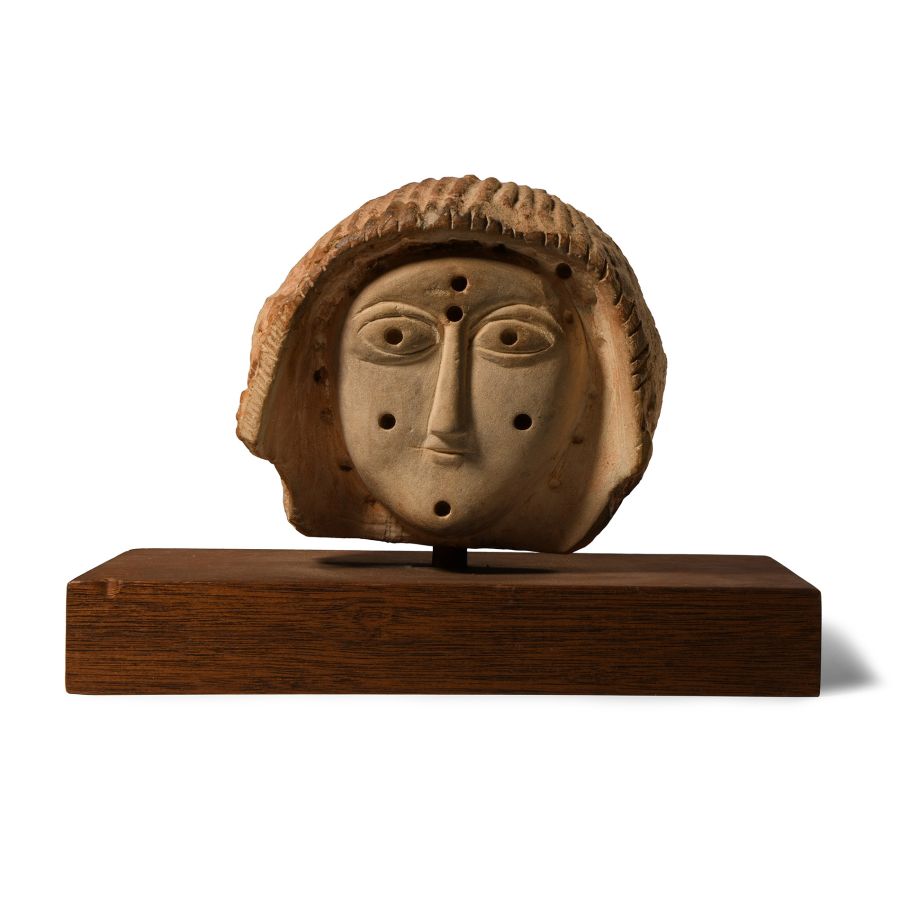
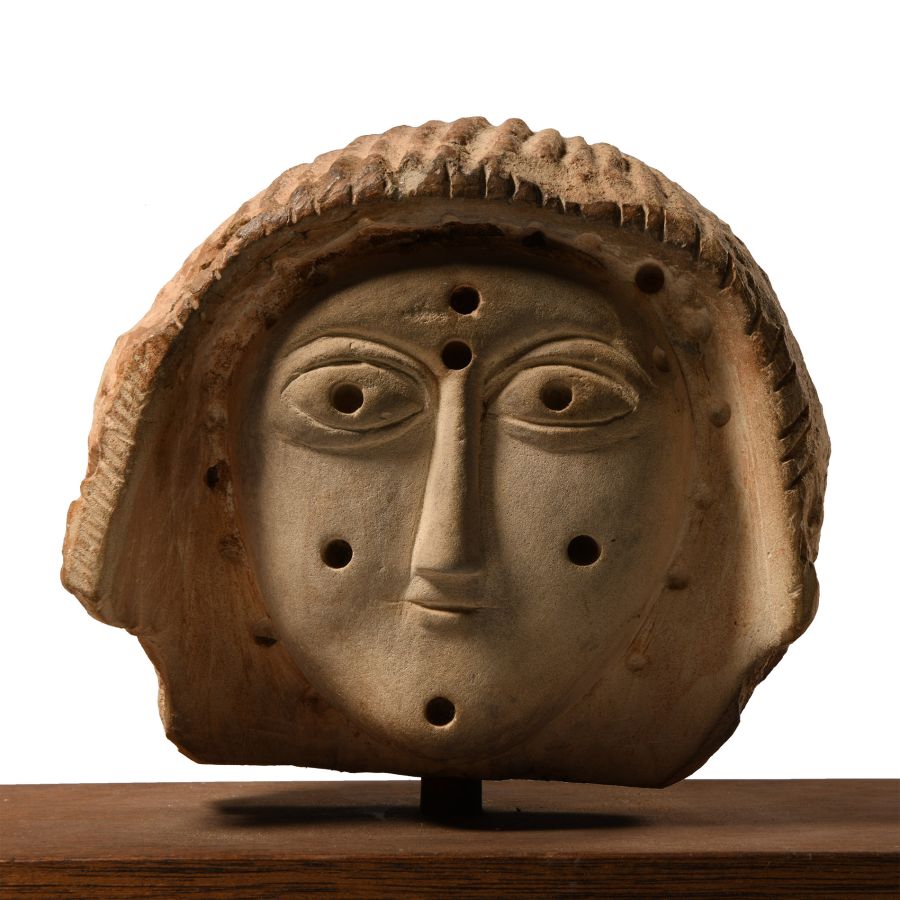
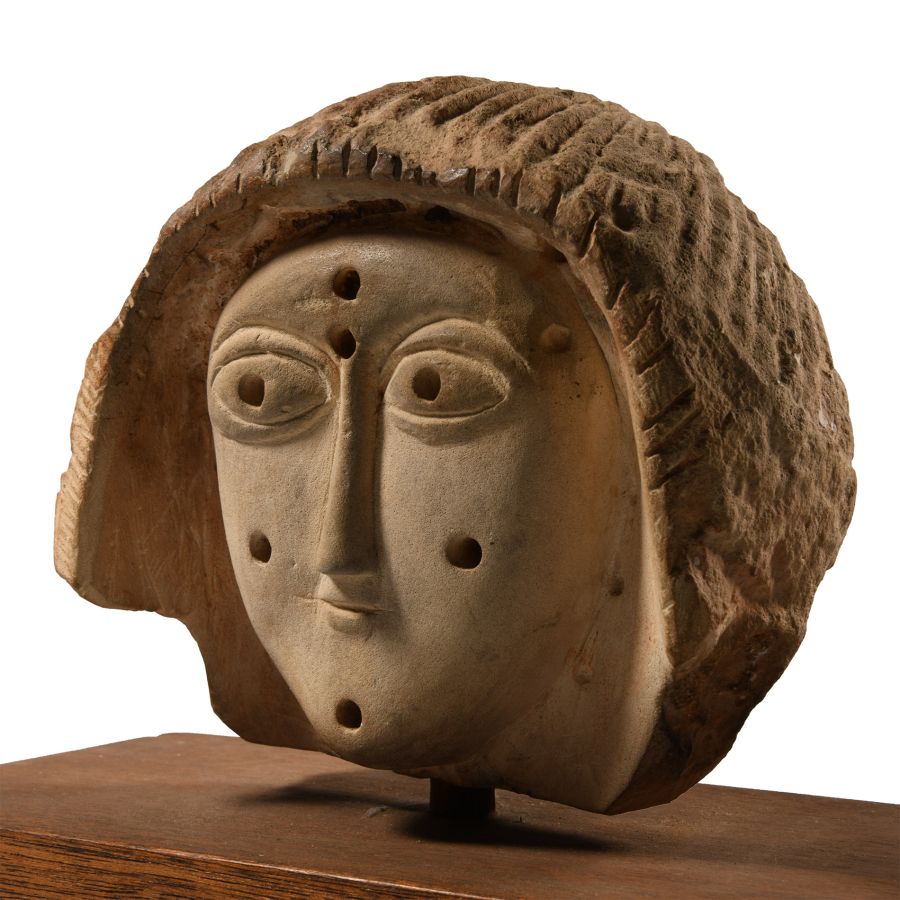
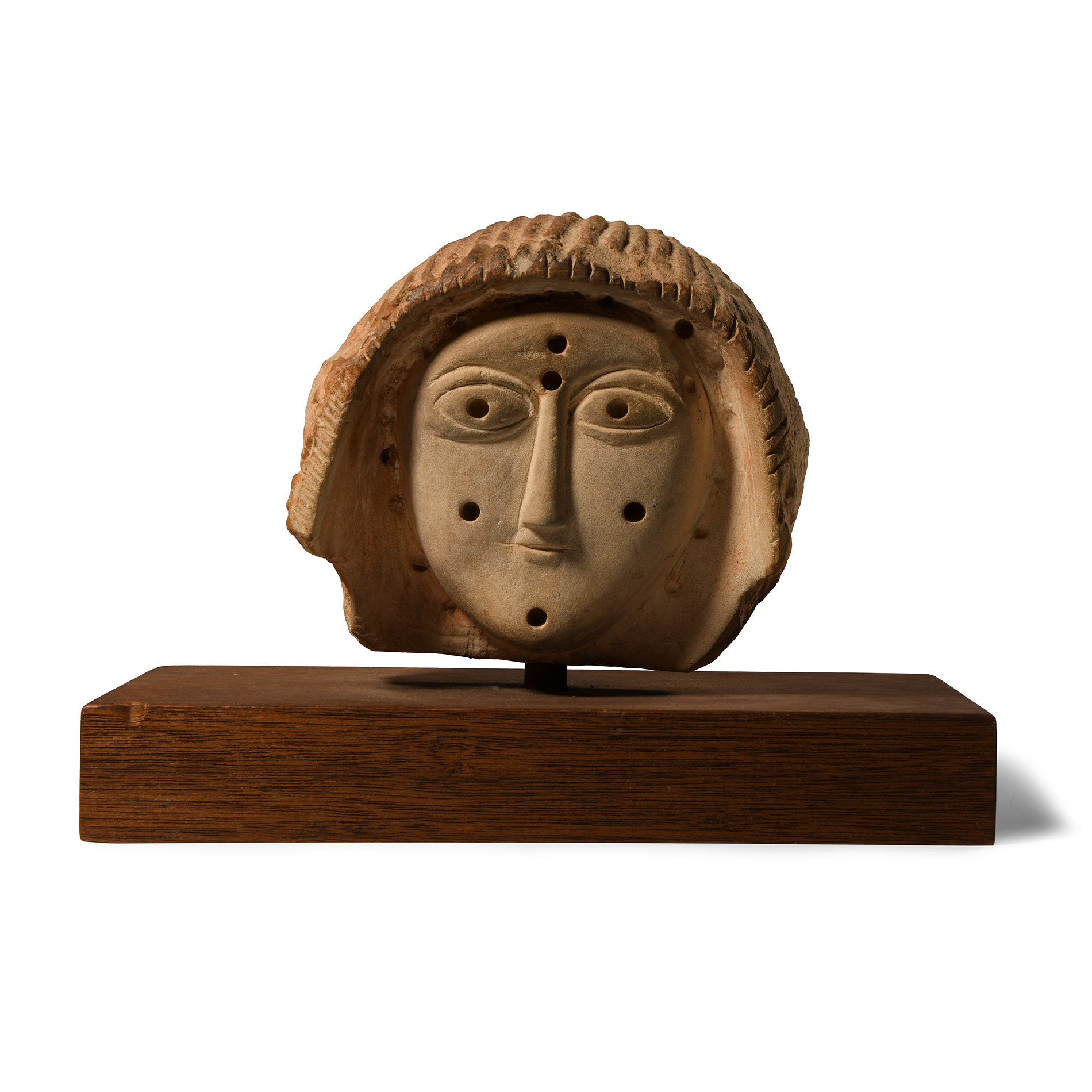
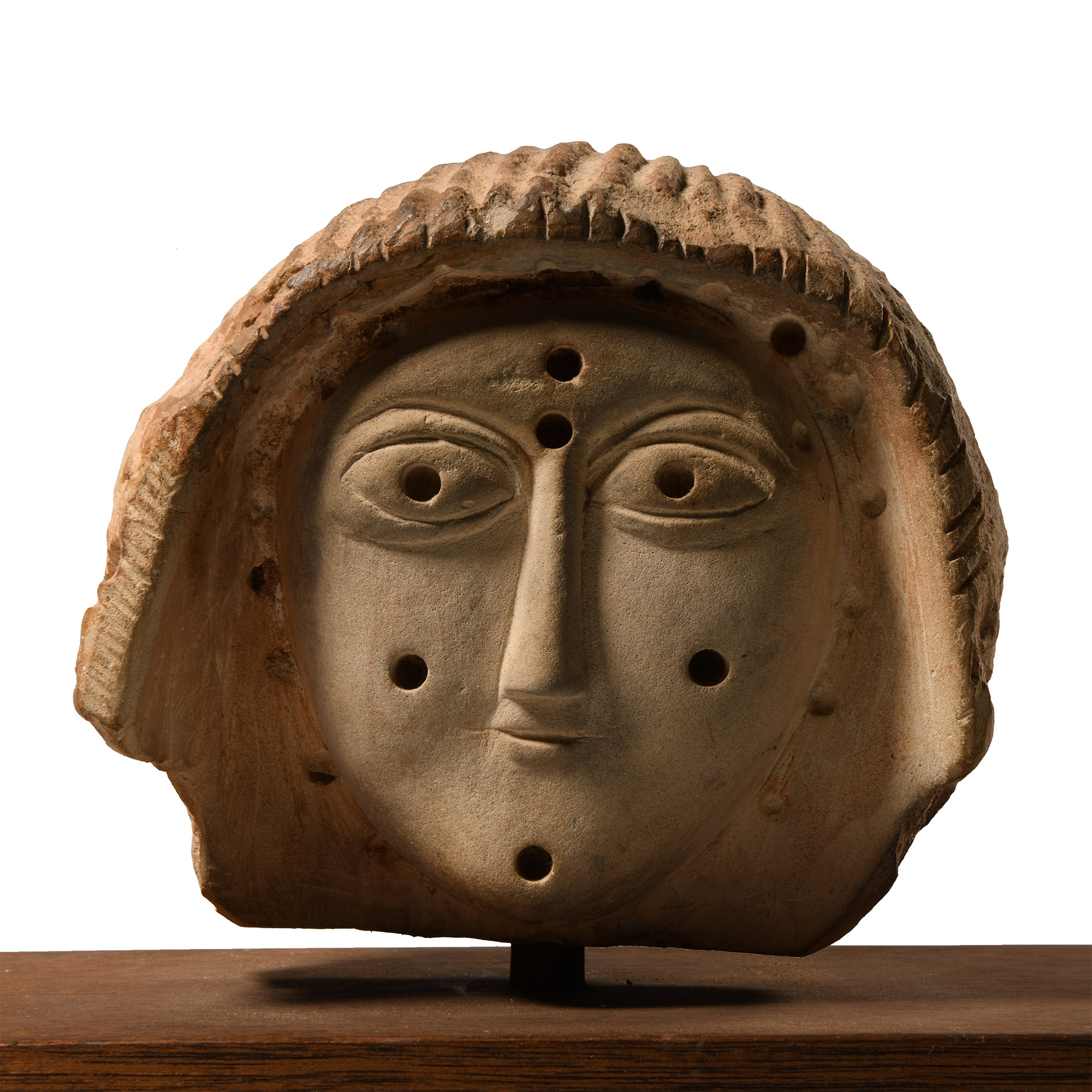
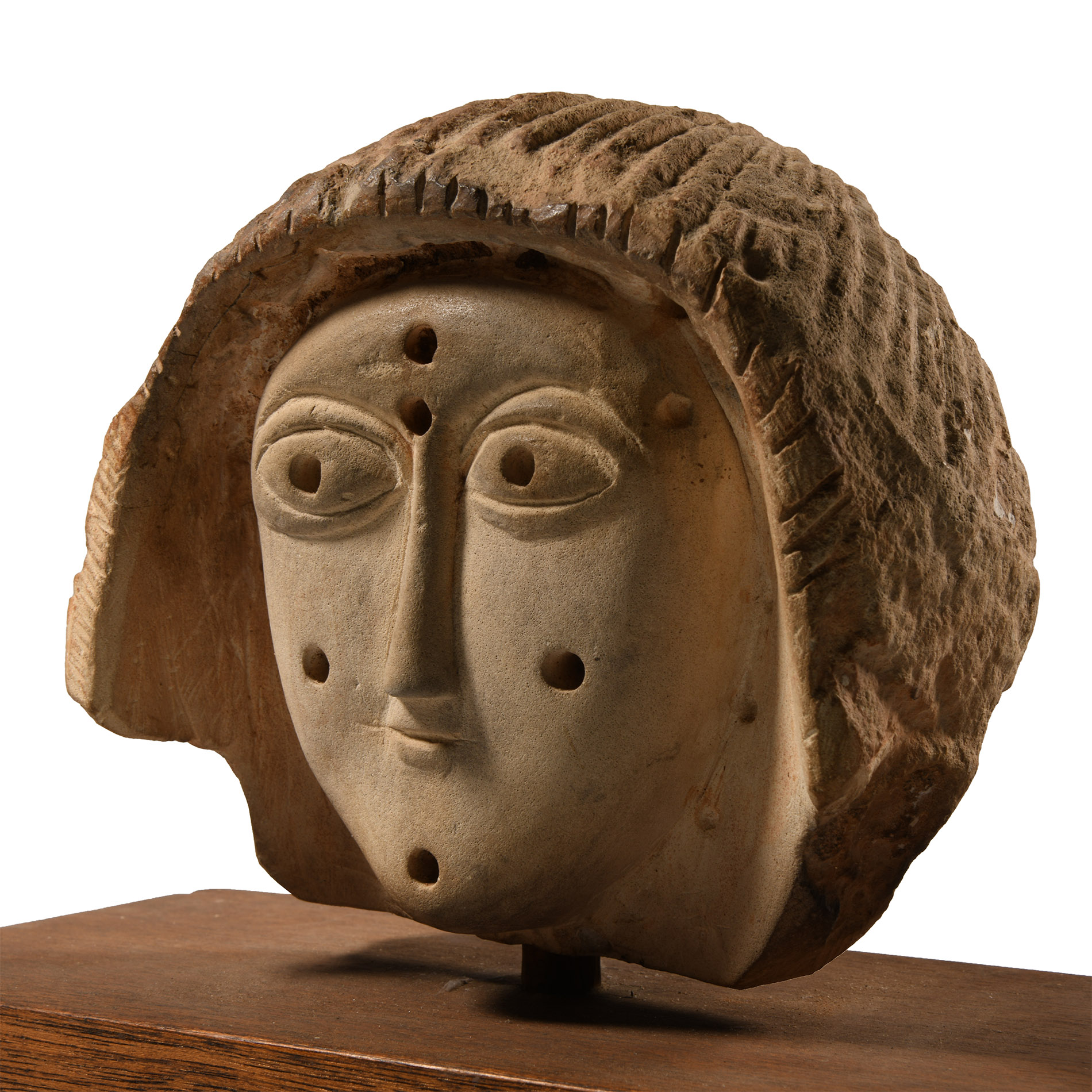
Egyptian Stone Head
COPTIC, CIRCA 6TH CENTURY A.D.
11 1/2 in. (2.92 kg total, 29 cm wide including stand).
Stylised face with broad surrounding hood with corrugated texture to the outer face; lentoid face with reserved almond eyes, D-section nose and slit mouth; with arc of drilled holes around the inner edge of the hood to accept inset ornaments, more holes to the forehead, eyes, cheeks and chin; mounted on a custom-made stand. [No Reserve]
ProvenanceFrom a collection acquired on the UK art market from various auction houses and collections mostly before 2000.
From an important Cambridgeshire estate; thence by descent.
Cf. similar head of less refined workmanship in the Metropolitan Museum of Art, New York, under accession no.25.10.20.58.
CONDITIONTimeLine Auctions follows a vetting process to ensure the authenticity and legality of all items, reinforcing our commitment to integrity and responsible trading. Each antiquity, antique, and coin lot undergoes thorough examination by a vetting committee of at least ten external specialists, professional trade association members, scientists, and archaeologists: Our Vetting Process
AUCTIONS:
TimeLine is a leading auction house specialising in antiquities, ancient art, collectables, natural history, coins, medals, and books. Our auctions offer museums, collectors, historians, and enthusiasts the opportunity to acquire unique and historically significant pieces.
-
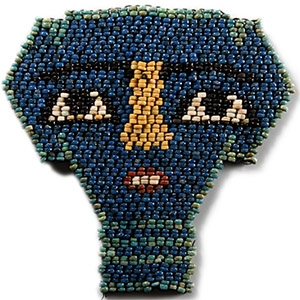
Egyptian Faience Mummy Bead Mask
Ptolemaic Period, 332-30 B.C. and laterSold for (Inc. bp): £169
Restrung beadwork panel of exceptional colour depicting a mummy face mask with false beard; restrung with some later beads. 17.3 grams, 89 mm
Ex Mariaud de Serres, Paris, France, 1980-1990s. From a London, UK, collection. -
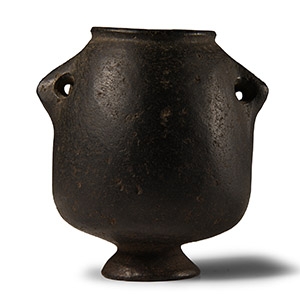
Egyptian Predynastic Basalt Vase
Naqada I-II, circa 3900-3300 B.C.Estimate: £5,000 - 7,000 (‡+bp*)
Opening Bid: £2,500
Barrel-shaped in profile with tapering neck and trumpet-shaped foot, two lateral pierced lug handles, flared rim (damaged). 330 grams, 86 mm
French private collection. From the 'Yvelines Department', Northern France. with Mme Digard, Drouot, Paris, 7 February 2011, no.107. Accompanied by a copy of a French cultural passport. This lot has been checked against the Interpol Database of stolen works of art and is accompanied by a search certificate number no.12072-218133. -
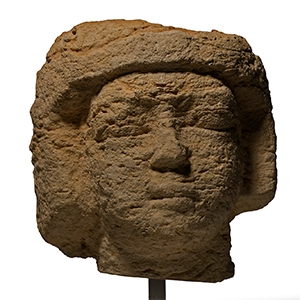
Egyptian Limestone Male Head Fragment
Old Kingdom, 4th-early 5th Dynasty, circa 2640-2480 B.C.Sold for (Inc. bp): £3,380
Wearing a short wig, the eyes with incised cosmetic lines; mounted on a custom-made display stand. 4.58 kg total, 26.5 cm including stand
with Sotheby's, London, 5 July 1982, no.190. with Sotheby's, London, 13-14 December 1990, no.18. Acquired from the above sale by the late Robert Browne. Property of Ms L.F., London, UK. Accompanied by a copy of an Art Loss Register certificate no.S00243674. This lot has been checked against the Interpol Database of stolen works of art and is accompanied by a search certificate number no.12073-217362.
