
Loading, please wait...
LOT 0462
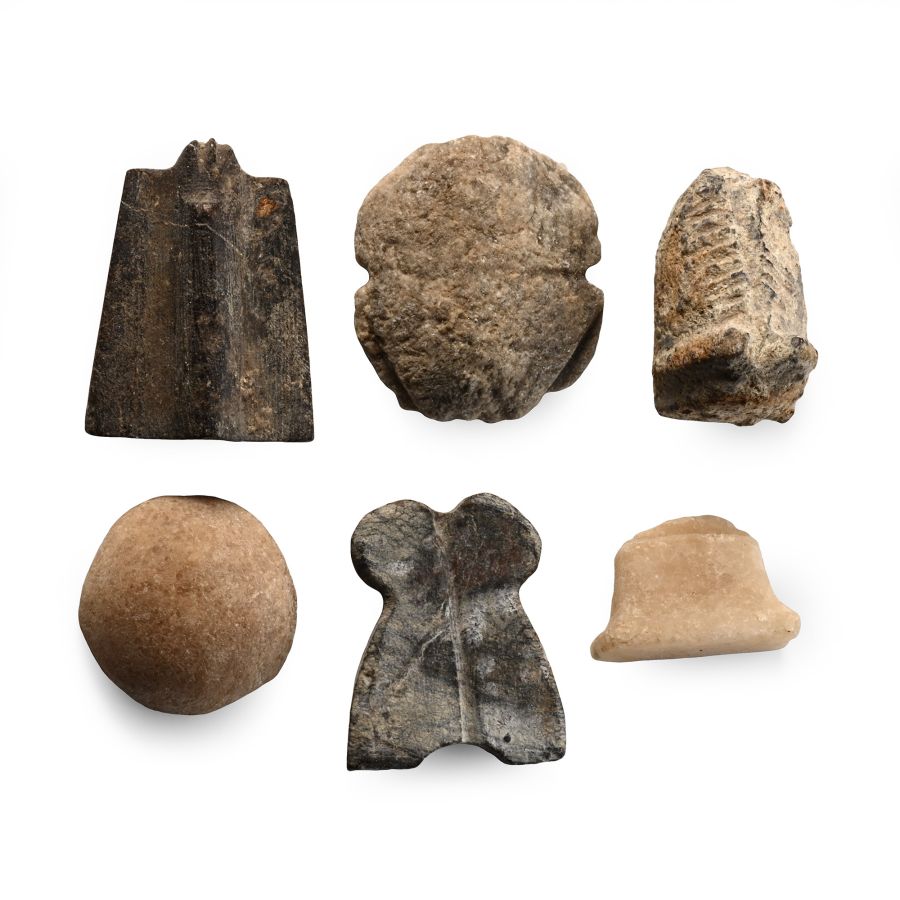
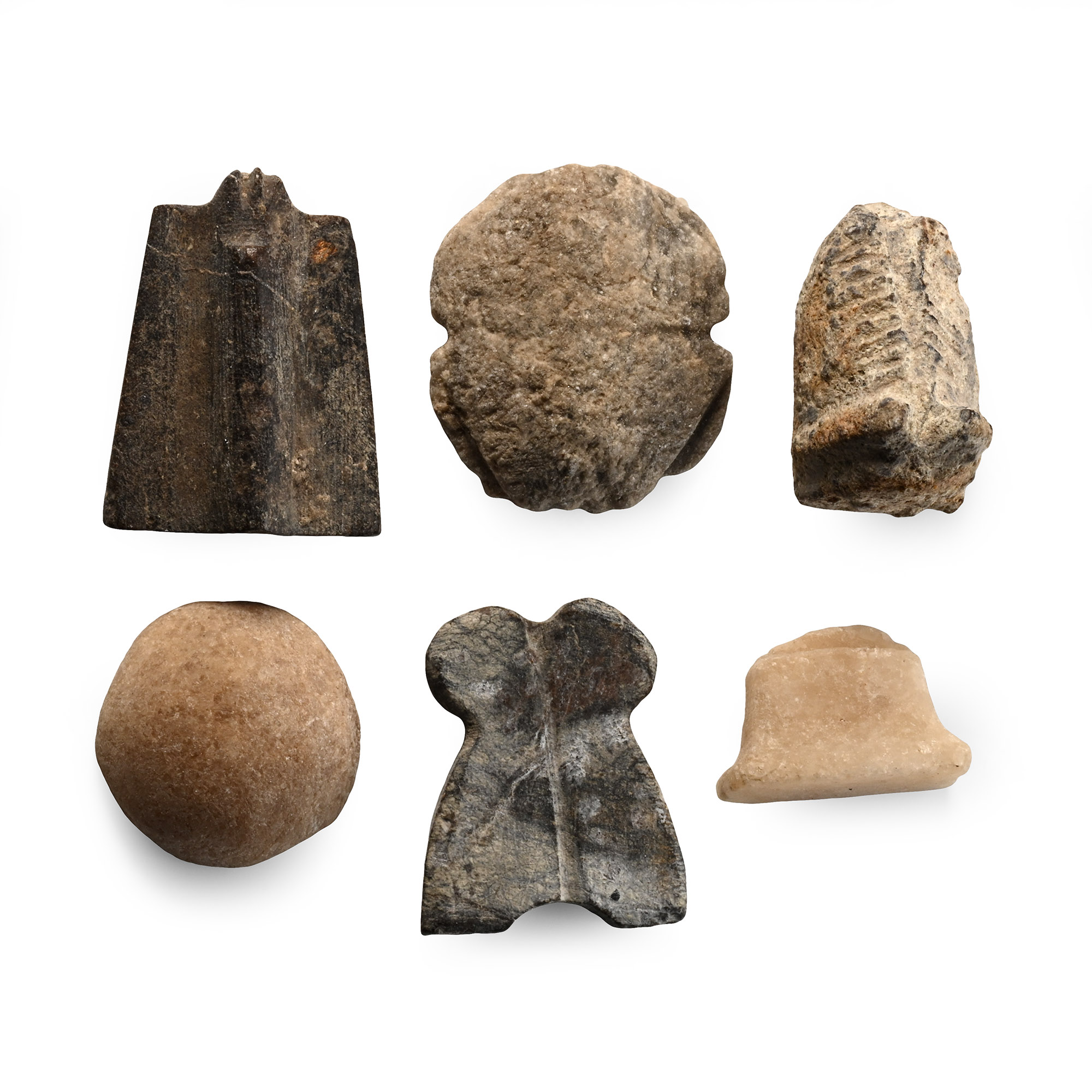
Egyptian Stone Amulet Collection
LATE PERIOD, 664-332 B.C.
1/2 - 3/4 in. (18 grams total, 14-21 mm).
Including scarab, pedestal-base and other types. [6, No Reserve]
Provenancewith Archaeologia, Switzerland, before 1983.
Ex private North American collection.
London private collection, 2016.
TimeLine Auctions follows a vetting process to ensure the authenticity and legality of all items, reinforcing our commitment to integrity and responsible trading. Each antiquity, antique, and coin lot undergoes thorough examination by a vetting committee of at least ten external specialists, professional trade association members, scientists, and archaeologists: Our Vetting Process
AUCTIONS:
TimeLine is a leading auction house specialising in antiquities, ancient art, collectables, natural history, coins, medals, and books. Our auctions offer museums, collectors, historians, and enthusiasts the opportunity to acquire unique and historically significant pieces.
-
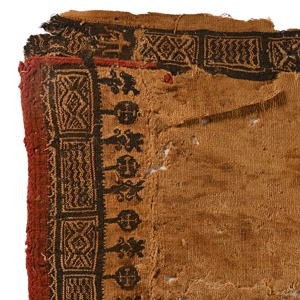
Large Egyptian Coptic Textile Fragment
Circa 5th-9th century A.D.Sold for (Inc. bp): £494
A very large tunic fragment from the upper part of the garment, in purple and red wool over linen, S torsion, a horizontal band with geometric patterns alternating with zig-zag lines, and descending on the breast with two clavi, patterned in similar way; red border with cords in the upper part, dentilled border with floral and vegetal ornaments (plants, flowers and buds with cross) in the lower part. 103 grams total including package, 36 cm
Acquired 1970s-1996. Property of a North American collector. London collection, 2016.
These decorative bands had a ground weave in purple wool, with natural linen and red forming the inlaid design of formal sprigs and zig-zag patterns. The double woven selvedge of the tunic’s neck has been preserved in the upper part. -
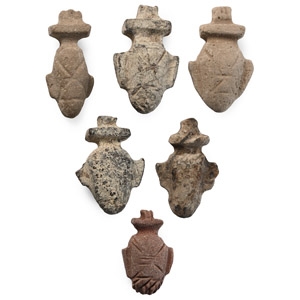
Egyptian Amulet Collection
Late Period, 664-332 B.C.Sold for (Inc. bp): £117
Mainly heart-type amulets in various materials. 14.85 grams total, 20-26 mm
with Archaeologia, Switzerland, before 1983. Ex private North American collection. London private collection, 2016. -
.jpg)
Egyptian Turquoise Scarab
Late Period, 664-332 B.C.Estimate: £400 - 600 (+bp*)
Opening Bid: £200
Carved in the round with longitudinal piercing, ellipsoid base. 1.21 grams, 15 mm
Ex Belinda Elliston collection, a member of the Egyptian Exploration Society, 1940s onwards.
