
Loading, please wait...
LOT 0507
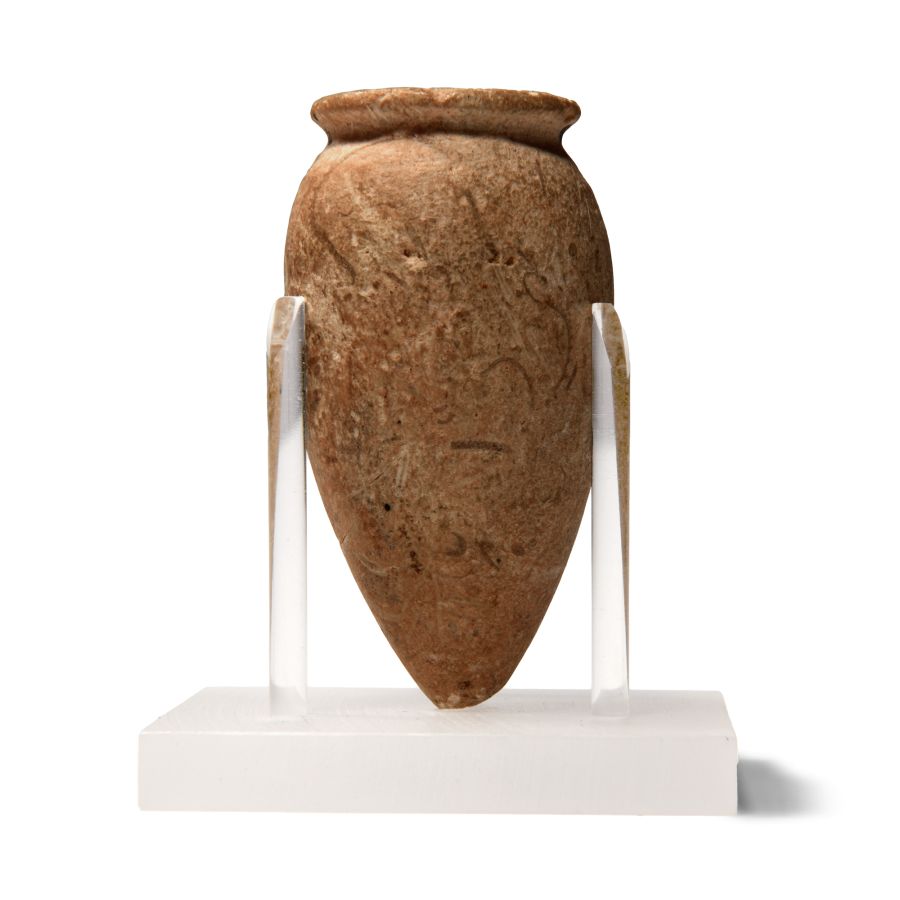
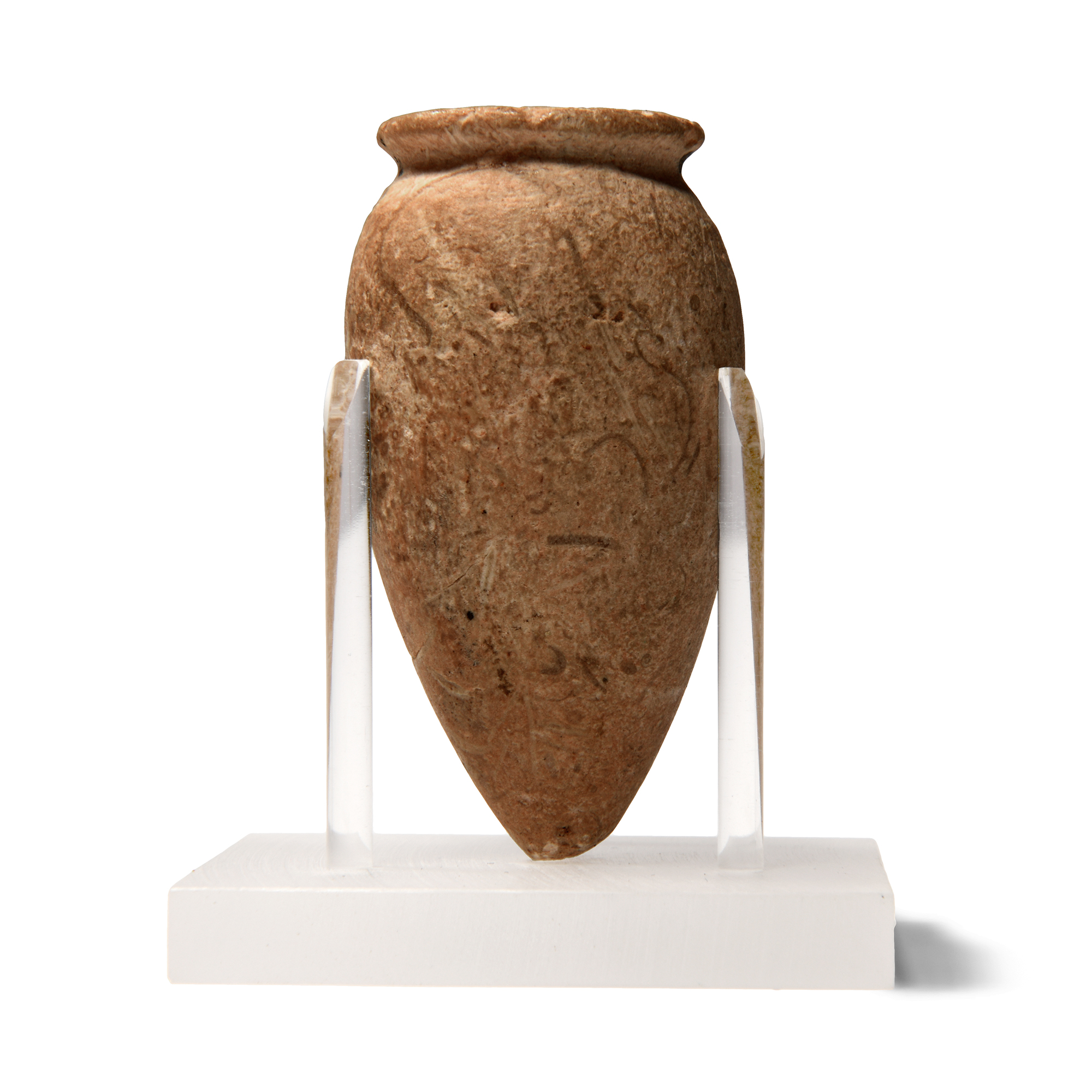
Egyptian Stone Alabastron
LATE OLD KINGDOM, CIRCA 2300 B.C.
1 7/8 in. (2 1/8 in.) (34.2 grams, 48 mm high (48.9 grams, 55 mm including stand)).
The body with rounded shoulders, convex outer face and pointed base, everted rim; accompanied by a custom-made display base.
ProvenanceAcquired in Europe before 1994.
European collection.
Cf. Guidotti, M.C., Vasi dall’epoca protodinastica al Nuovo Regno, Museo Egizio di Firenze, Rome, 1991, p.99, no.68, for similar vessel.
CONDITIONTimeLine Auctions follows a vetting process to ensure the authenticity and legality of all items, reinforcing our commitment to integrity and responsible trading. Each antiquity, antique, and coin lot undergoes thorough examination by a vetting committee of at least ten external specialists, professional trade association members, scientists, and archaeologists: Our Vetting Process
AUCTIONS:
TimeLine is a leading auction house specialising in antiquities, ancient art, collectables, natural history, coins, medals, and books. Our auctions offer museums, collectors, historians, and enthusiasts the opportunity to acquire unique and historically significant pieces.
LOT 0507
Egyptian Stone Alabastron
Estimate £250 - 350€290 - 410 (for guidance only)$340 - 470 (for guidance only)
-
Egyptian Stone Alabastron
Late Old Kingdom, circa 2300 B.C.Estimate: £250 - 350 (‡+bp*)
Opening Bid: £135
The body with rounded shoulders, convex outer face and pointed base, everted rim; accompanied by a custom-made display base. 34.2 grams, 48 mm high (48.9 grams, 55 mm including stand)
Acquired in Europe before 1994. European collection. -
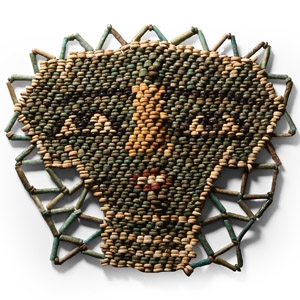
Egyptian Faience Mummy Bead Mask
Ptolemaic Period, 332-30 B.C.Sold for (Inc. bp): £286
A panel of small glazed composition beads in various colours representing a mummy face mask with false beard with netted border; restrung with some later beads. 42 grams, 13.5 cm
Ex Mariaud des Serres, Paris, France, 1990s. -
.jpg)
Egyptian Granite Head of a Dignitary
New Kingdom, 1552-1069 B.C.Sold for (Inc. bp): £28,600
Carved with soft facial features and carefully executed cosmetic lines around the eye, earring, and carefully detailed duplex wig with gently wavy curls; likely from the Ramesside Period; mounted on a custom-made stand. 4.23 kg total, 20 cm including stand
Private collection, France. with Christie’s, New York, 18 December 1996, no.60. Acquired by the present owner from the above. Accompanied by an academic report by Egyptologist Paul Whelan. This lot has been checked against the Interpol Database of stolen works of art and is accompanied by search certificate number no.12202-222169.
The shape of the eyes, raised upper and lower cosmetic lines, brows, and mouth on the TimeLine head present a similar countenance to that of the cube statue of Hori, dated to the reign of Ramesses II, now in the Musée du Louvre (inv. no. Louvre E11275). An even closer parallel can be seen in another non-royal statue of Paaha in the British Museum (inv. no. EA 501).
