
Loading, please wait...
LOT 0473
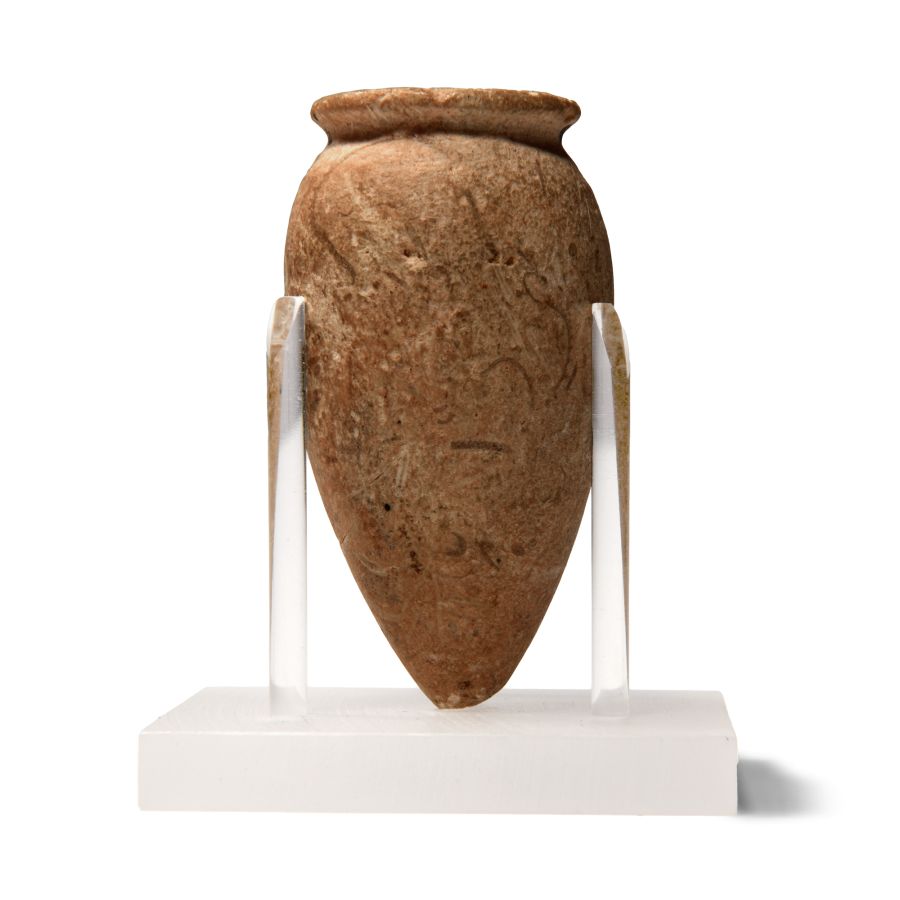
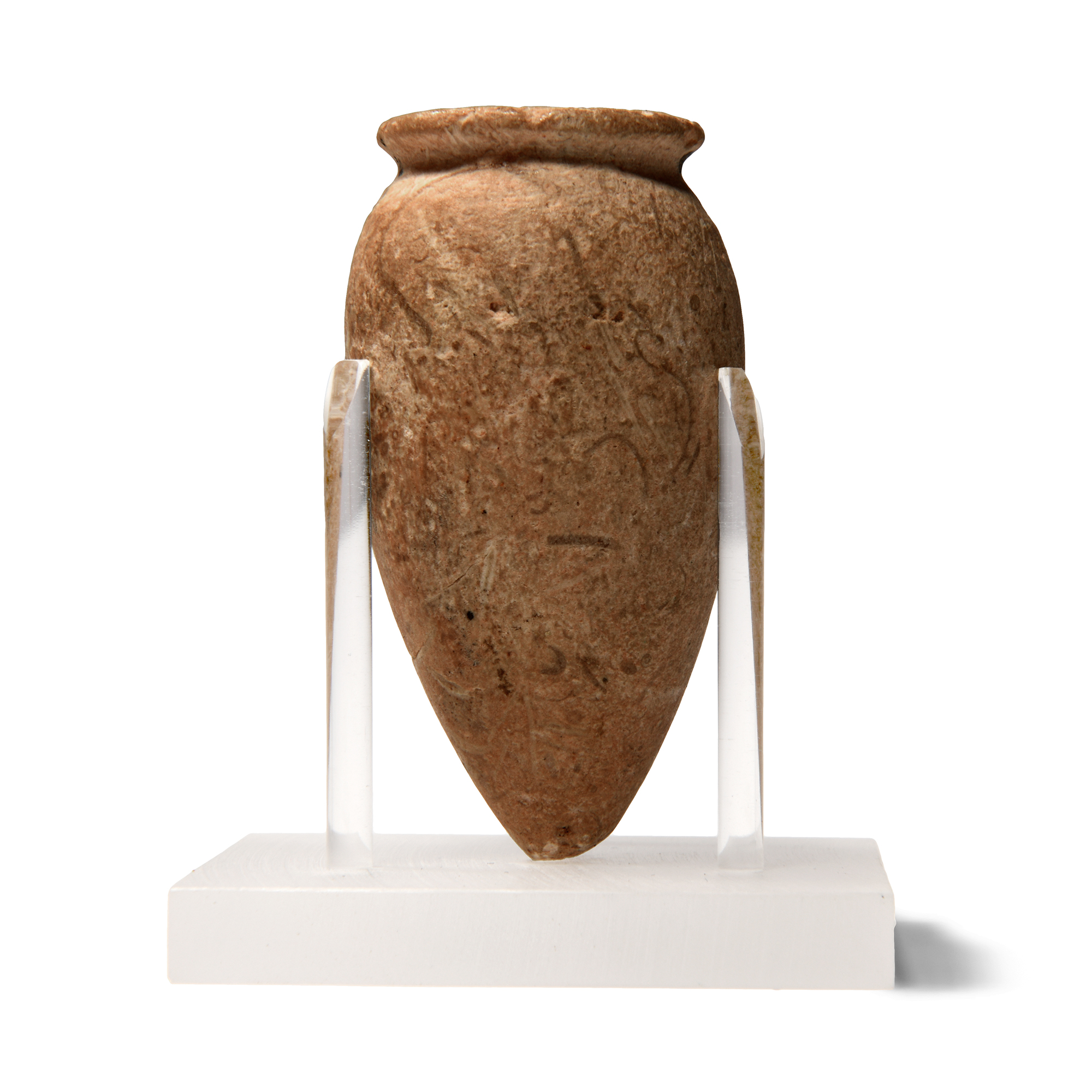
Egyptian Stone Alabastron
LATE OLD KINGDOM, CIRCA 2300 B.C.
1 7/8 in. (2 1/8 in.) (34.2 grams, 48 mm high (48.9 grams, 55 mm including stand)).
The body with rounded shoulders, convex outer face and pointed base, everted rim; accompanied by a custom-made display base.
ProvenanceAcquired in Europe before 1994.
European collection.
Cf. Guidotti, M.C., Vasi dall’epoca protodinastica al Nuovo Regno, Museo Egizio di Firenze, Rome, 1991, p.99, no.68, for similar vessel.
CONDITIONTimeLine Auctions follows a vetting process to ensure the authenticity and legality of all items, reinforcing our commitment to integrity and responsible trading. Each antiquity, antique, and coin lot undergoes thorough examination by a vetting committee of at least ten external specialists, professional trade association members, scientists, and archaeologists: Our Vetting Process
AUCTIONS:
TimeLine is a leading auction house specialising in antiquities, ancient art, collectables, natural history, coins, medals, and books. Our auctions offer museums, collectors, historians, and enthusiasts the opportunity to acquire unique and historically significant pieces.
LOT 0473
Egyptian Stone Alabastron
Estimate £300 - 400€350 - 460 (for guidance only)$410 - 540 (for guidance only)
-
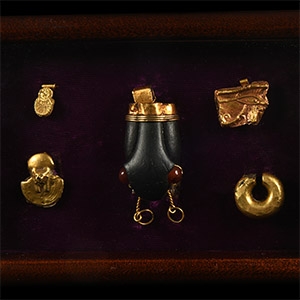
Egyptian Gold Pendant Collection
New Kingdom-Ptolemaic Period, 1550-30 B.C.Sold for (Inc. bp): £4,420
Comprising: a sheet-gold wedjat eye; a gold sheet penannular ring, possibly a wig ornament; a sheet-gold bead formed as a granulated female bust; gold aegis of Sekhmet wearing a broad collar and sun disc; a black snake's head mounted in gold with red carnelian eyes, possibly later replacements; mounted in display frame with purple velvet backing. 235 grams total, 15.3 x 10 cm
with Christie’s, London, 10 December 1986, no.64 (part). Property of a gentleman. Accompanied by copies of the relevant Christie's catalogue pages. This lot has been checked against the Interpol Database of stolen works of art and is accompanied by search certificate no.12130-214291. -
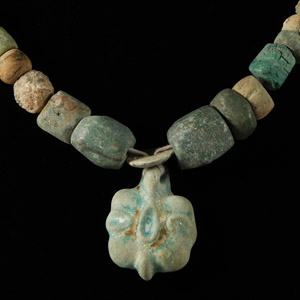
Egyptian Blue Faience Bead Necklace
Roman Period, 30 B.C.-323 AD.Sold for (Inc. bp): £117
Restrung group of graduated beads, mainly tubular and oblate types, centrepiece a rosette pendant. 49 grams, 70 cm long
Acquired 1980-2015. Ex Abelita family collection. -
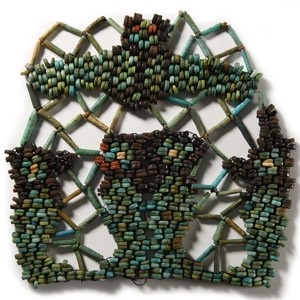
Egyptian Bead Panel with Four Sons of Horus and Winged Scarab
Ptolemaic Period, 332-30 B.C.Sold for (Inc. bp): £130
Restrung as an openwork panel with a winged scarab above and the four sons of Horus below as two opposing pairs. 46 grams, 12.5 cm high
Previously on French art market in the 1990s. Ex London, UK, collection.
The Four Sons of Horus were deities responsible for protecting the internal organs of the deceased. The human-headed Imsety protected the liver, the baboon-headed Hapy protected the lungs, the jackal-headed Duamutef protected the stomach, and the falcon-headed Qebehsenuef protected the intestines.
