
Loading, please wait...
LOT 0466
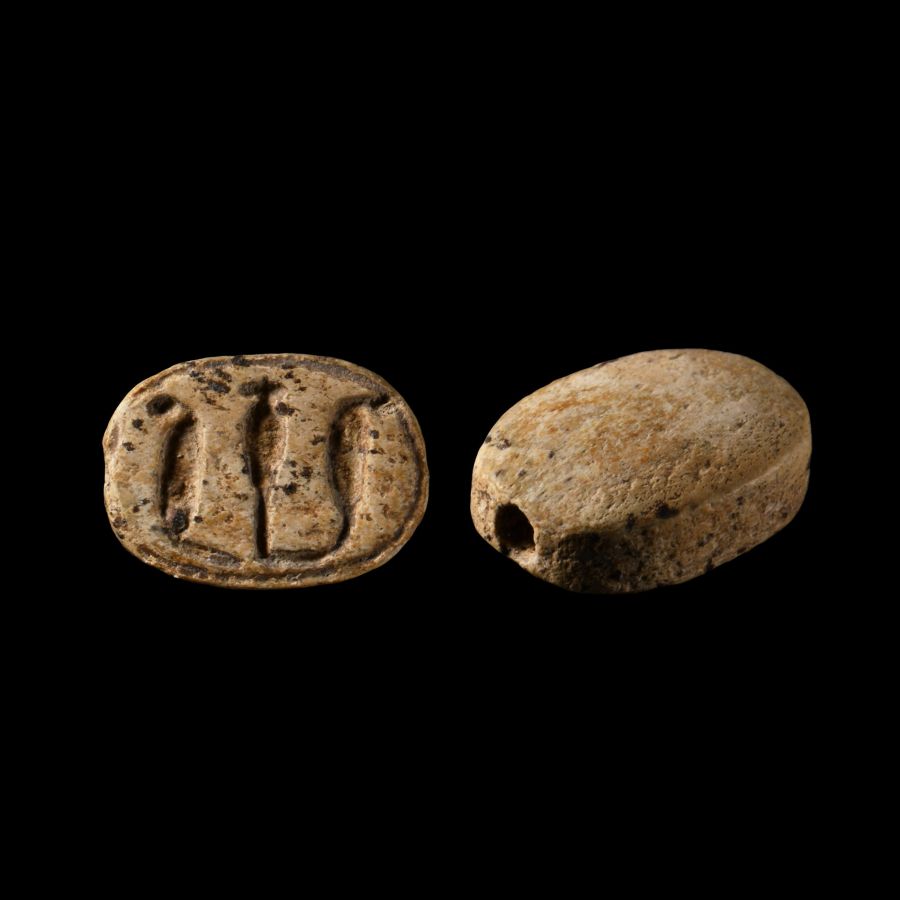
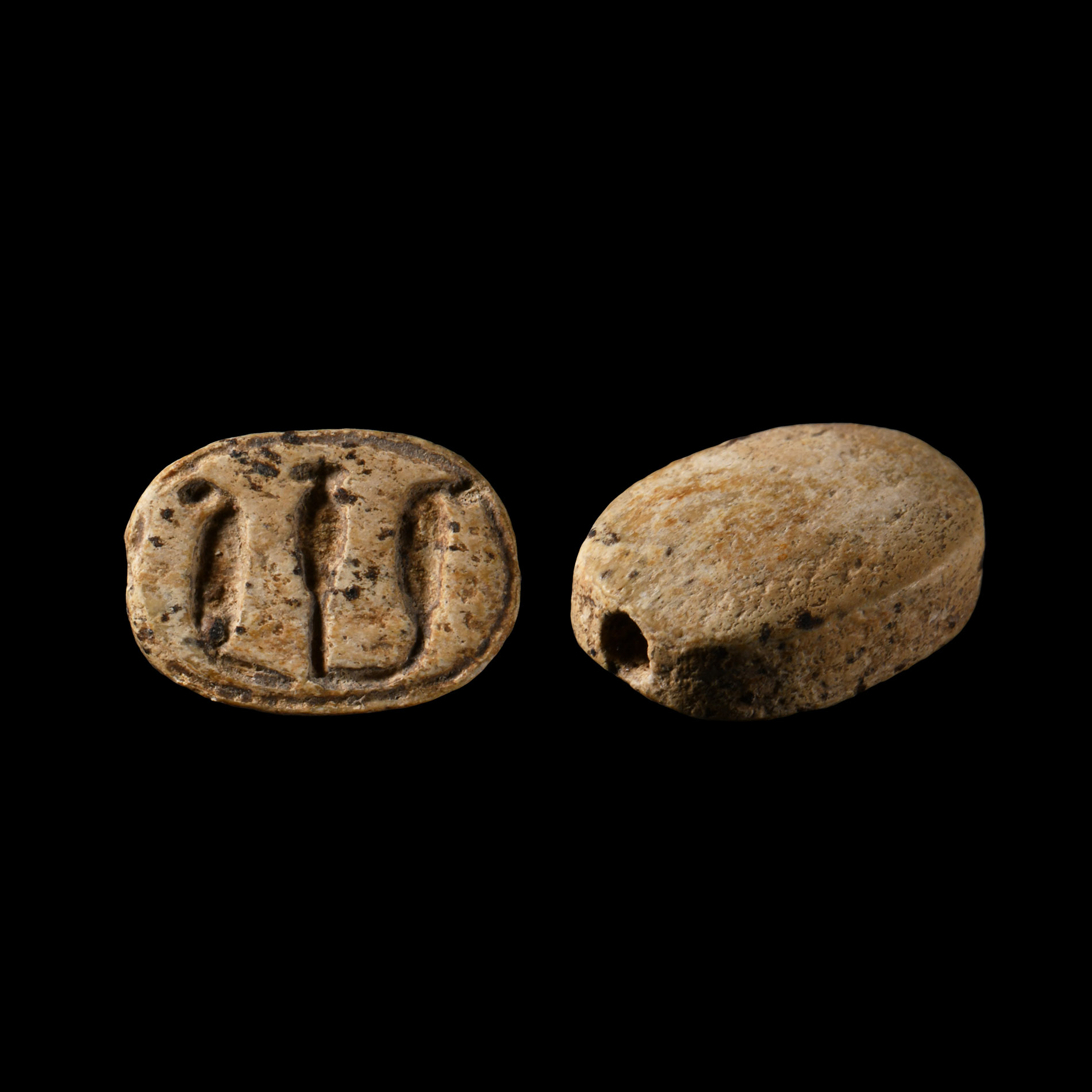
Egyptian Steatite Scaraboid Amulet with Royal Uraei and Vessel
LATE PERIOD, 664-332 B.C.
1/2 in. (1.16 grams, 14 mm).
Ellipsoid scaraboid bead with base inscribed with a central hes-vase flanked by two uraei. [No Reserve]
ProvenanceEx ArtAncient Ltd, London, SW6, in 2013, with stock no.15989.
From the private collection of Mr A Hills, Kent, UK.
Accompanied by a copy of an ArtAncient certificate of authenticity.
TimeLine Auctions follows a vetting process to ensure the authenticity and legality of all items, reinforcing our commitment to integrity and responsible trading. Each antiquity, antique, and coin lot undergoes thorough examination by a vetting committee of at least ten external specialists, professional trade association members, scientists, and archaeologists: Our Vetting Process
AUCTIONS:
TimeLine is a leading auction house specialising in antiquities, ancient art, collectables, natural history, coins, medals, and books. Our auctions offer museums, collectors, historians, and enthusiasts the opportunity to acquire unique and historically significant pieces.
LOT 0466
Egyptian Steatite Scaraboid Amulet with Royal Uraei and Vessel
Sold for (Inc. bp): £78
-
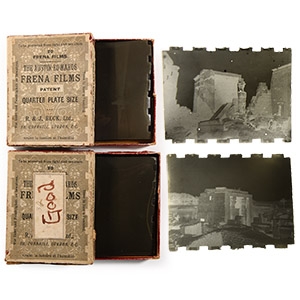
Historic Collection of Thirty-Six Original Slide Images of Egypt Including Archaeological Sites
Circa 1897 A.D.Sold for (Inc. bp): £260
Group of photographic negatives in 'quarter plate size', in two old cardboard lidded boxes, one stamped 'D.W.Collings'; archaeological expedition to Egypt. 168 grams total, 11.6 cm
From the private collection of Dudley Collings, from his travels in Egypt in the late 19th century. -
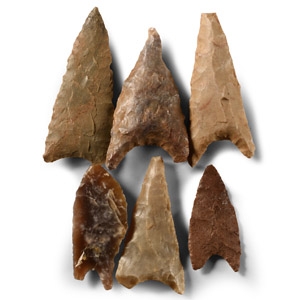
Egyptian Flint Arrowhead Group
Predynastic Period, Naqada II, 4000-3150 B.C.Sold for (Inc. bp): £72
With triangular blade and napped recess to the lower edge. 11.2 grams total, 24-36 mm
From a collection acquired on the UK art market from various auction houses and collections mostly before 2000. From an important Cambridgeshire estate; thence by descent. -
.jpg)
Egyptian PreDynastic Black-Topped Jar
Naqada I-II, 4000-3200 B.C.Sold for (Inc. bp): £1,430
Of ovoid form tapering to a narrow flattened base. 274 grams, 13.5 cm
From the vendor's grandfather's collection, formed in the 1950s; thence by family descent circa 1974.
The 'black-topped' ware was the most common funerary pottery during Naqada I and Naqada II periods, with a small volume of production in the Naqada III, Early Dynastic and Old Kingdom periods.
