
Loading, please wait...
LOT 0054
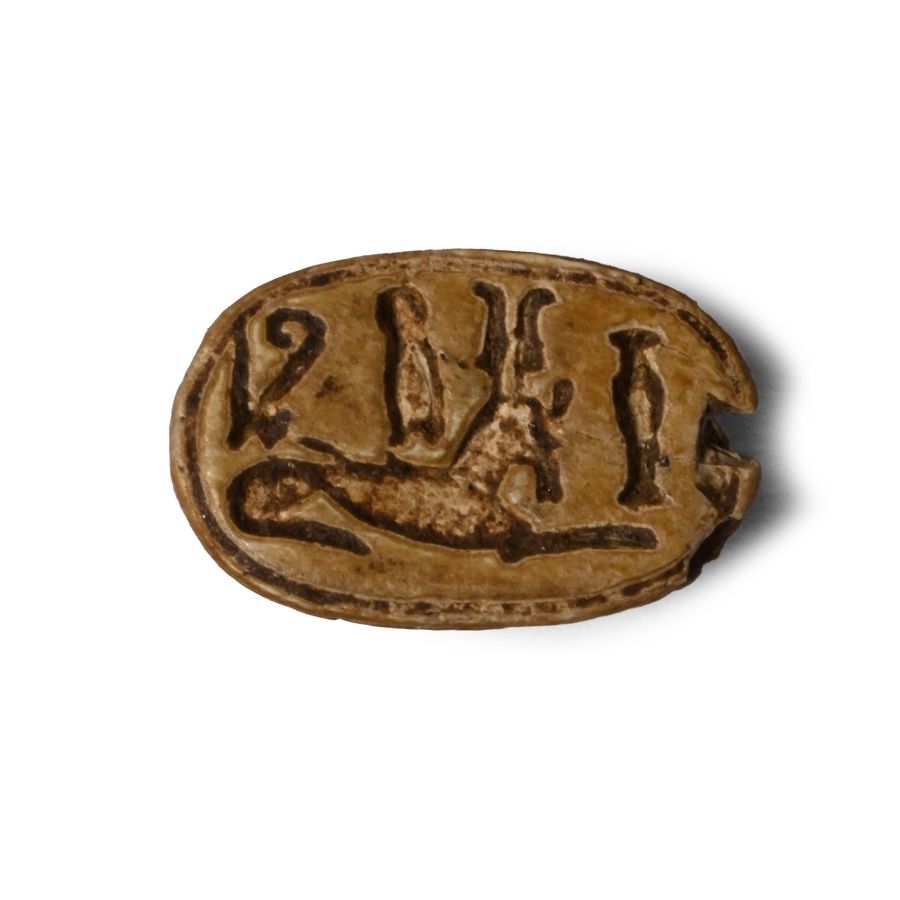
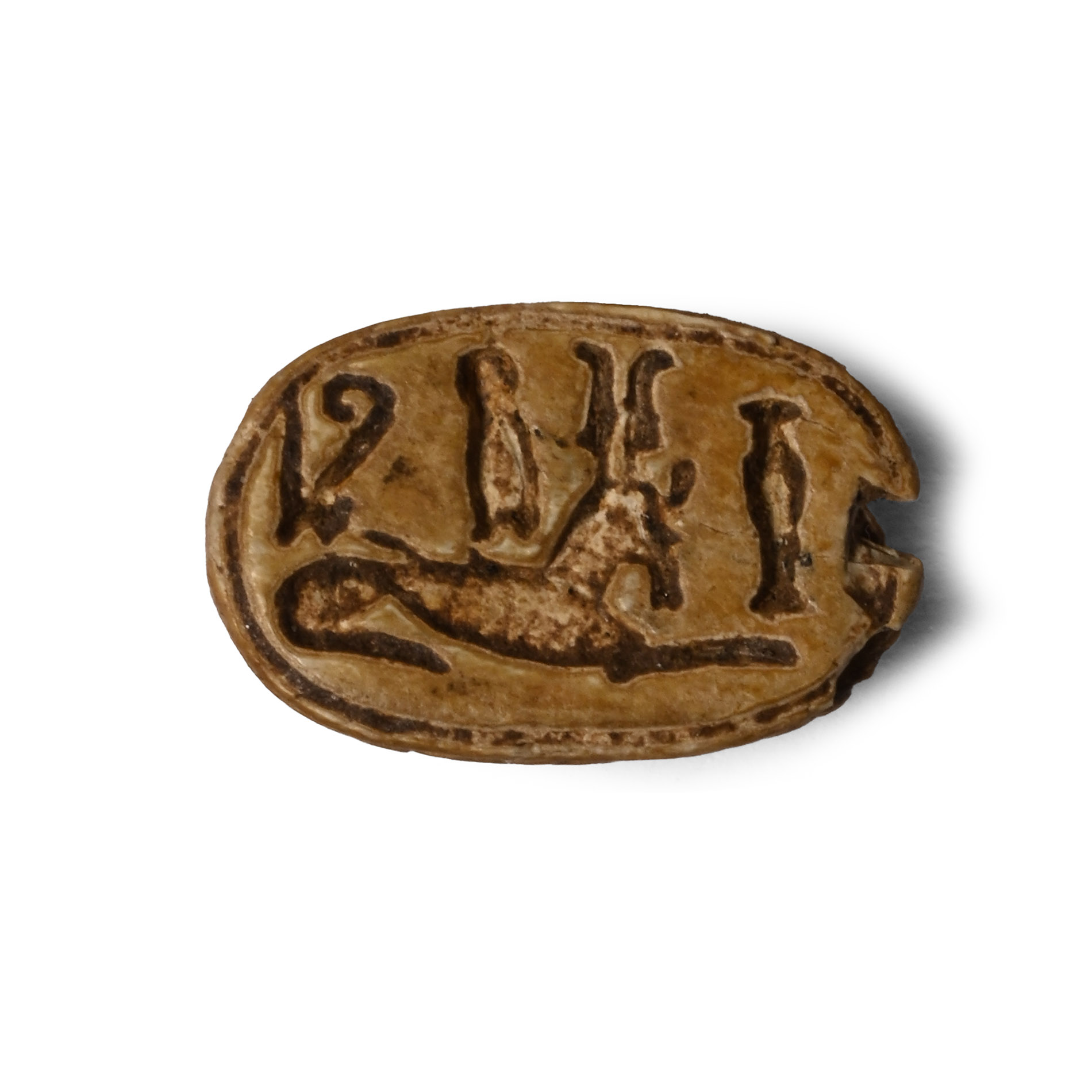
Egyptian Steatite Scarab
1ST MILLENNIUM B.C.
1/2 in. (0.80 grams, 12 mm).
With detailed carapace and mouth, hieroglyphs to the underside depicting a pharaoh-headed recumbent lion, with hes-vase in front and the crowns of Lower and Upper Egypt behind.
ProvenanceEx R. Liechti (1934-2010) Geneva, Switzerland, formed between 1950-1990s.
CONDITIONTimeLine Auctions follows a vetting process to ensure the authenticity and legality of all items, reinforcing our commitment to integrity and responsible trading. Each antiquity, antique, and coin lot undergoes thorough examination by a vetting committee of at least ten external specialists, professional trade association members, scientists, and archaeologists: Our Vetting Process
AUCTIONS:
TimeLine is a leading auction house specialising in antiquities, ancient art, collectables, natural history, coins, medals, and books. Our auctions offer museums, collectors, historians, and enthusiasts the opportunity to acquire unique and historically significant pieces.
LOT 0054
Egyptian Steatite Scarab
Estimate £500 - 700€580 - 810 (for guidance only)$680 - 950 (for guidance only)
-
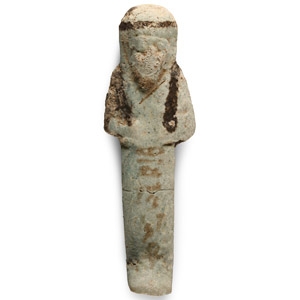
Egyptian Faience Hieroglyphic Shabti For Djed-Bastet-iuef-ankh
Third Intermediate Period, 1069-702 B.C.Sold for (Inc. bp): £156
With pale blue surface and applied black detailing to hair, seed-bag and tools; faint hieroglyphs to lower body giving the dedication 'The Osiris, Djed-Bastet-iuef-ankh'. 18.9 grams, 80 mm
From a UK collection in the 1990s. Property of a Cambridgeshire, UK, gentleman. -
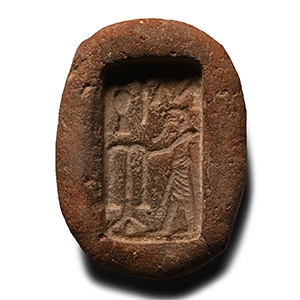
Egyptian Terracotta Nile God Hapi Amulet Mould
Late Period, 664-332 B.C.Sold for (Inc. bp): £390
Plano-convex ceramic mould with an incuse image of Hapi standing before a libating vessel and sacred knot. 22 grams, 50 mm
Ex D. Smith collection, 1990s. Property of a Cambridgeshire, UK, gentleman.
In ancient Egyptian mythology, Hapi was considered the embodiment of the annual inundation of the River Nile and the source of life for all living beings in Egypt, including people, animals, and plants. His distinct headdress of papyrus stalks was often used to identify him. -
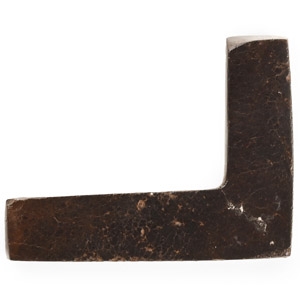
Egyptian Hardstone Architectural Amulet
Late Period, 664-332 B.C.Estimate: £250 - 350 (+bp*)
Opening Bid: £125
Carved haematite representation of a carpenter's or stonemason's set-square. 3.15 grams, 24 mm
with Hotel des Ventes, Drouot, Paris, France. From the collection of Mr H. Naudy, Paris, France. Acquired at between 2004-2010. Property of a French collector.
The L-shaped carpenter's or stonemason's square was used to measure right angles. Amulets of this tool symbolised integrity, moral uprightness, emotional equilibrium, and balance.
