
Loading, please wait...
LOT 0489
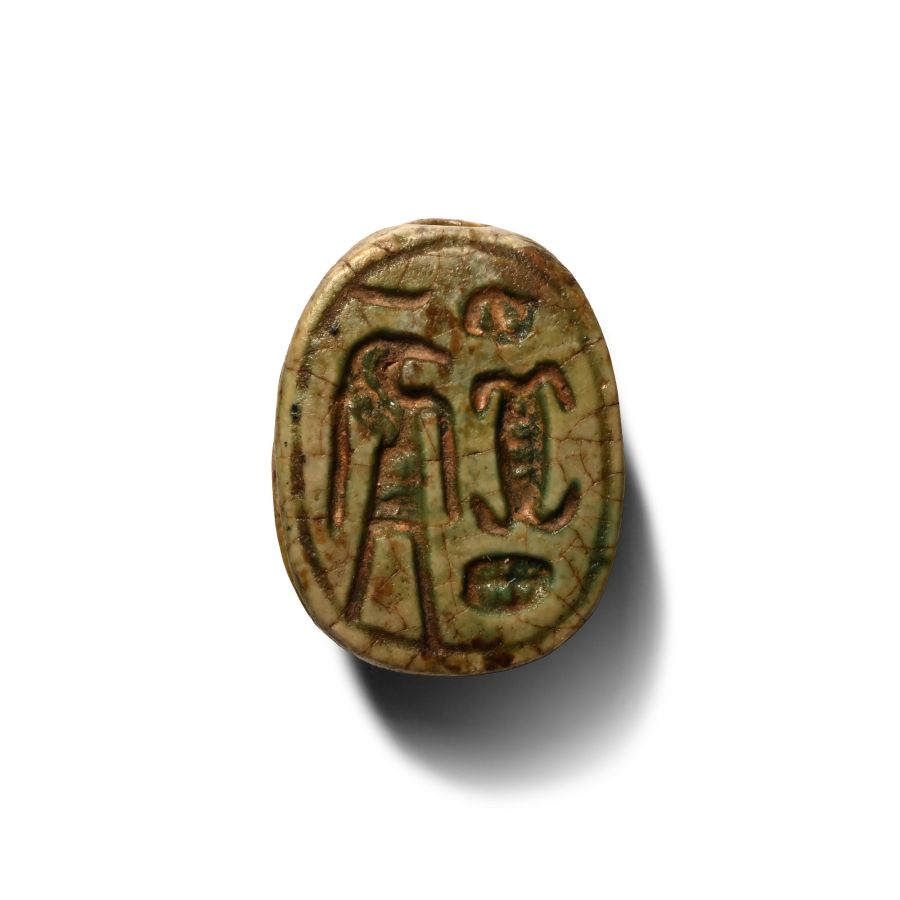
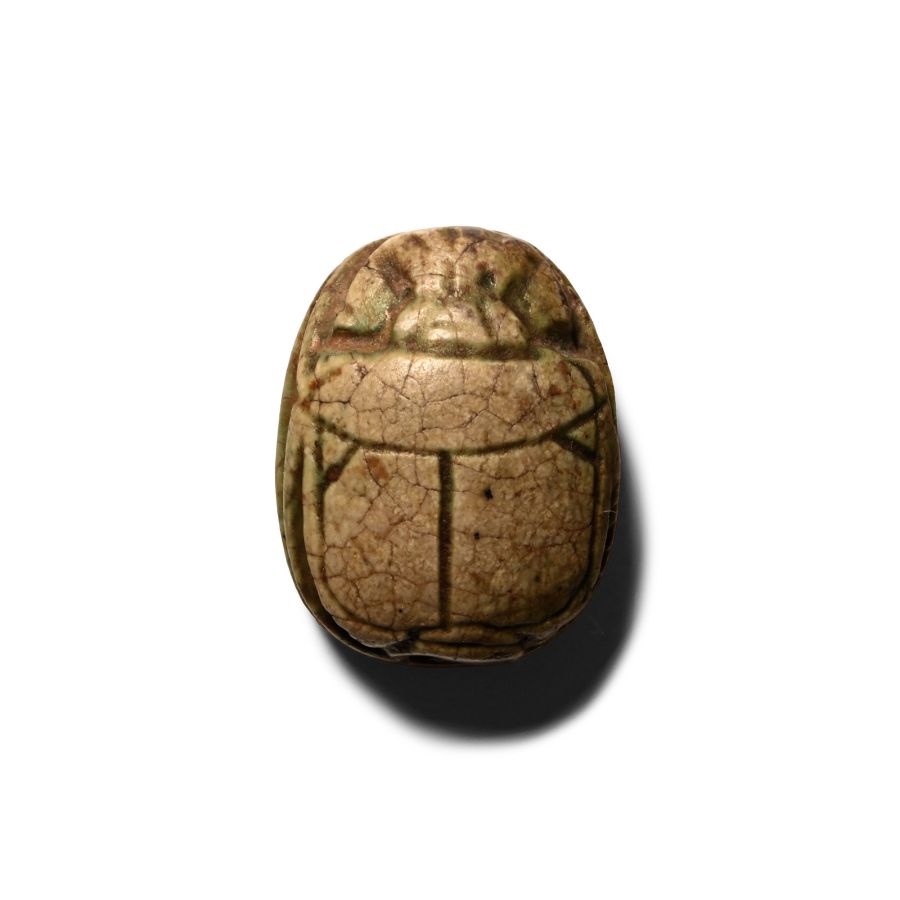
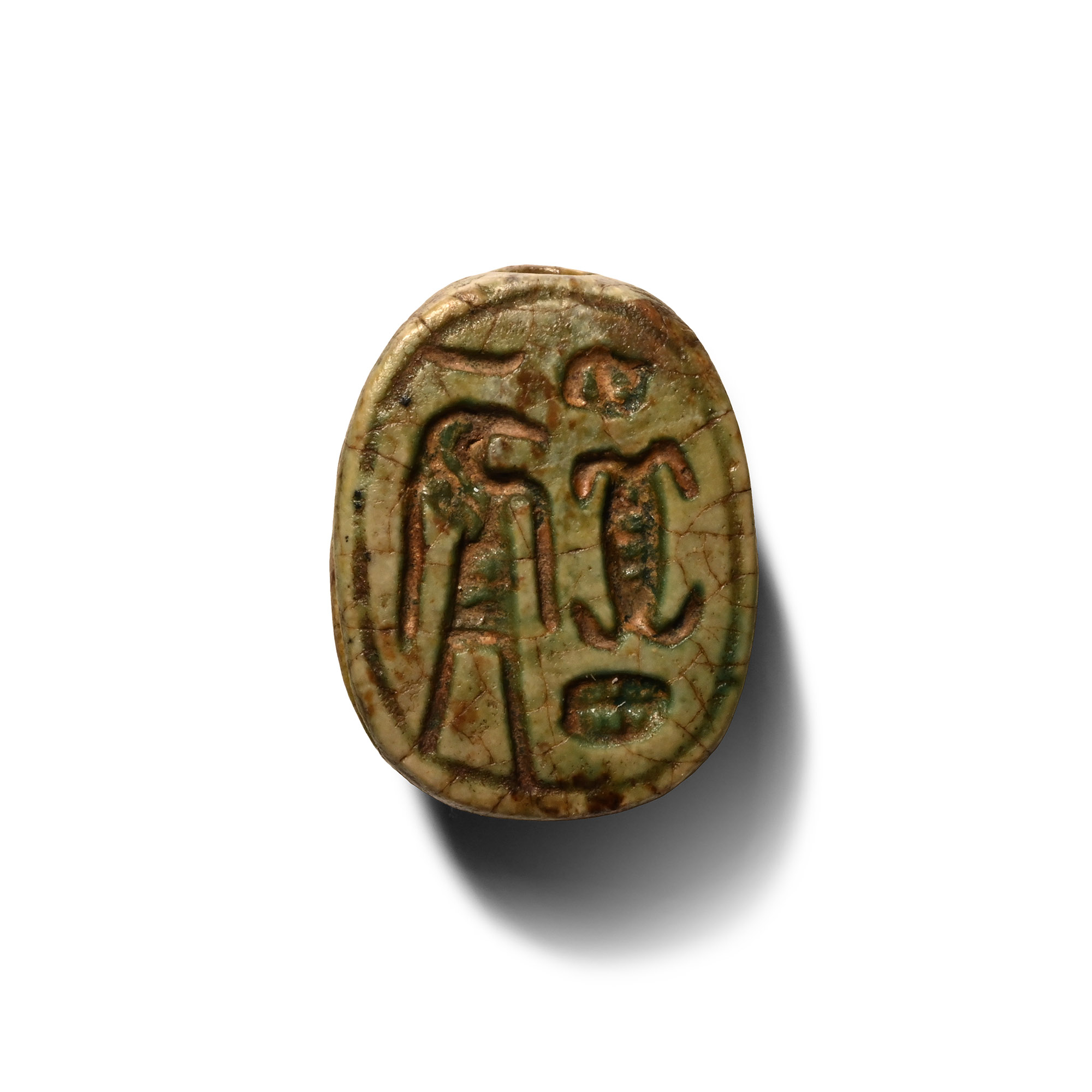
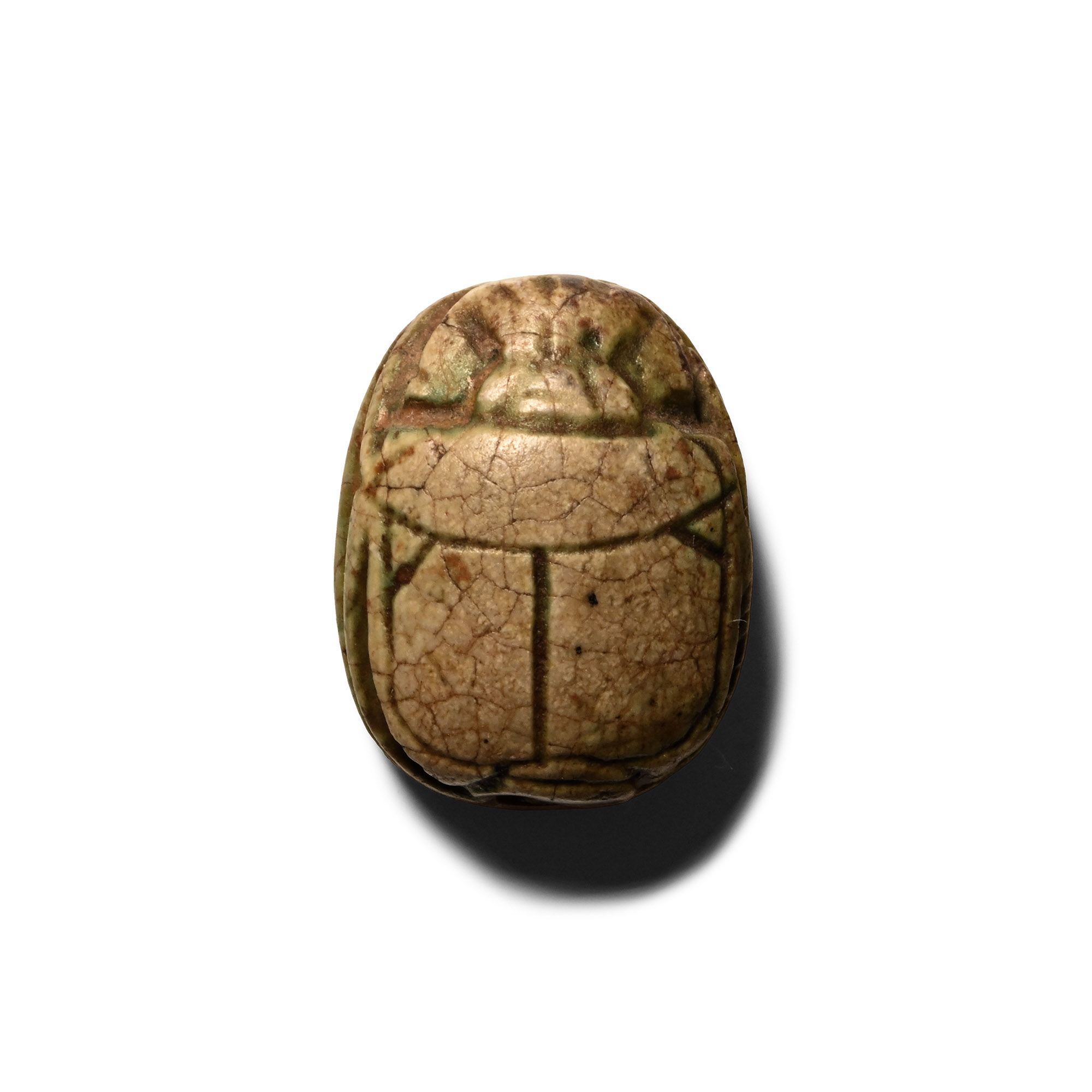
Egyptian Steatite Scarab with Thoth Standing
NEW KINGDOM-LATE PERIOD, 1550-332 B.C.
1/2 in. (1.65 grams, 14 mm).
Underside with standing figure of Thoth facing the symbol for the goddess Neith.
ProvenanceEx North London gentleman's collection, 1990s.
Property of a Cambridgeshire, UK, gentleman.
Thoth was revered for his association with knowledge, writing, and healing. In a funerary context, Thoth was probably linked to his role as the recorder of the final judgment, which determined whether the deceased had lived a life of virtue. A positive report ensured the rebirth of the deceased in the eternal Afterlife.
Neith was a prominent deity in ancient Egyptian mythology, revered as a warrior and mother goddess. Her cult gained significant importance during the Ramesside dynasties when she became closely associated with the sun god. Neith was known for her fierce protection and maternal guidance.
TimeLine Auctions follows a vetting process to ensure the authenticity and legality of all items, reinforcing our commitment to integrity and responsible trading. Each antiquity, antique, and coin lot undergoes thorough examination by a vetting committee of at least ten external specialists, professional trade association members, scientists, and archaeologists: Our Vetting Process
AUCTIONS:
TimeLine is a leading auction house specialising in antiquities, ancient art, collectables, natural history, coins, medals, and books. Our auctions offer museums, collectors, historians, and enthusiasts the opportunity to acquire unique and historically significant pieces.
-
Egyptian Bronze Cobra Mount
Late Period, 6th century B.C.Estimate: £1,200 - 1,700 (‡+bp*)
Opening Bid: £600
Cobra-shaped mount with head raised and hood expanded, two mounting studs to the reverse; mounted on a custom-made stand. 182 grams, 22 cm
Private Israeli collection. Ex Archaeological Center, Tel Aviv, Israel, 2015. Private European collection.
The mount most likely adorned the Atef crown of a statue of Osiris. -
Egyptian Hardstone Scarab with Bes
Late Period, 664-332 B.C.Sold for (Inc. bp): £208
Plano-convex in section with detailed obverse, the underside with the figure of Bes flanked by adoring baboons and sun disks. 10.7 grams, 31 mm
Ex London, UK collection, 1990s.
Bes became one of ancient Egypt's most popular apotropaic deities from the New Kingdom onwards. Despite his somewhat fearful appearance, Bes was the patron and protector of pregnant women and children and believed to protect the wearer from snakes. The depiction of baboons flanking Bes with their arms raised before the sun disk was a common feature on temple wall reliefs. In ancient Egyptian religious literature, baboons heralded the dawn and, thus, the rebirth of the sun. -
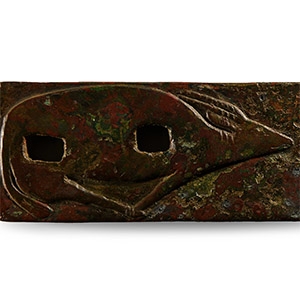
Egyptian Bronze Base with Ibex and Hieroglyphs
Late Period, 664-332 B.C.Sold for (Inc. bp): £442
Rectangular with two sockets to the upper face, low-relief recumbent ibex; incised hieroglyphic text to one short sidewall and remains on both long sidewalls, giving a dedication to 'give life, health, a long [lifetime......]'. 205 grams, 11.7 cm
Galerie Orient-Occident, Paris, 1990. Parisian private collection. with Pierre Berge, 2 February 2017, lot 85.
The bound ibex is a frequent image in ancient Egyptian art and a prized foodstuff. The animal's presence on this base symbolises the finest offerings to the once-attached deity.
