
Loading, please wait...
LOT 0550
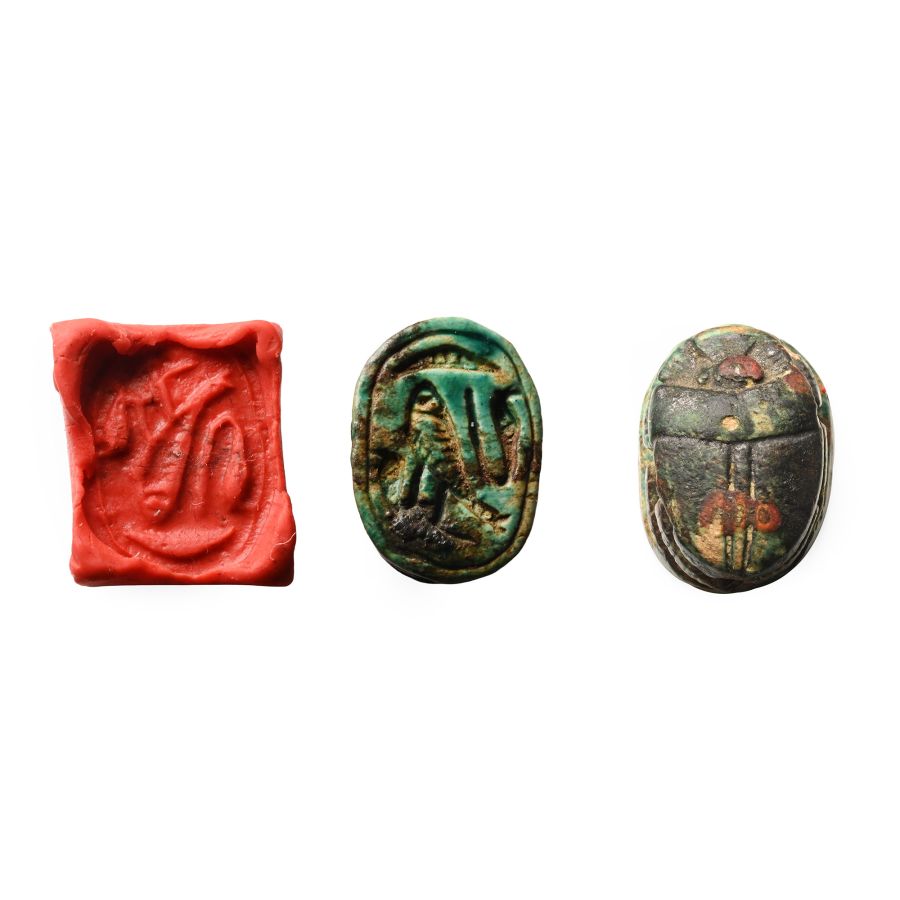
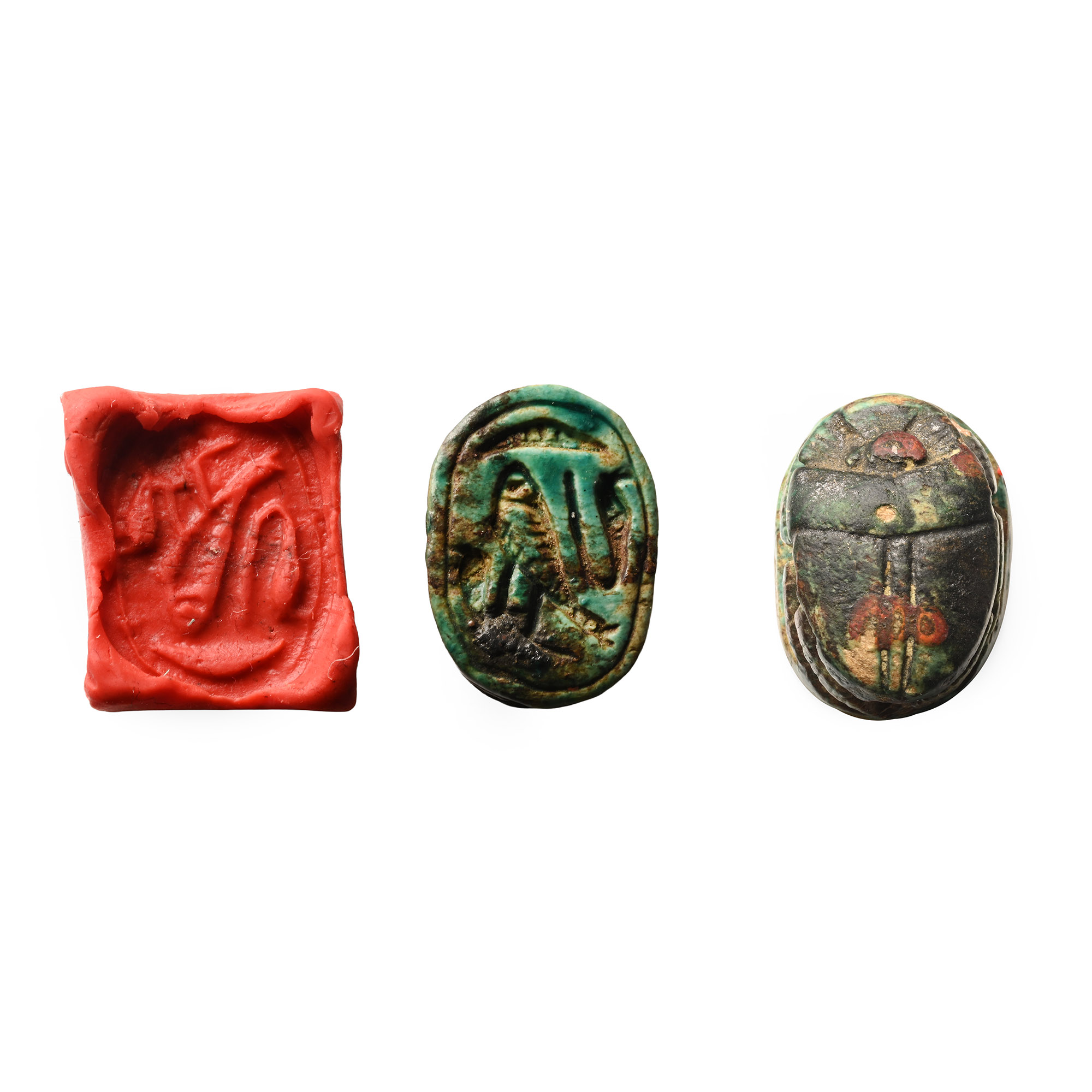
Egyptian Steatite Scarab with Horus and Uraeus
LATE PERIOD, 664-332 B.C.
3/4 in. (3.42 grams, 19 mm).
Detailed carapace and head, underside with a rearing cobra and Horus in falcon form. [No Reserve]
ProvenanceMrs Allinson to Mrs Foster, 1867 and thence by descent to the current owner, Stanley Crescent, London, UK.
CONDITIONTimeLine Auctions follows a vetting process to ensure the authenticity and legality of all items, reinforcing our commitment to integrity and responsible trading. Each antiquity, antique, and coin lot undergoes thorough examination by a vetting committee of at least ten external specialists, professional trade association members, scientists, and archaeologists: Our Vetting Process
AUCTIONS:
TimeLine is a leading auction house specialising in antiquities, ancient art, collectables, natural history, coins, medals, and books. Our auctions offer museums, collectors, historians, and enthusiasts the opportunity to acquire unique and historically significant pieces.
-
Egyptian Coptic Textile Fragment
Circa 5th-6th century A.D.Sold for (Inc. bp): £78
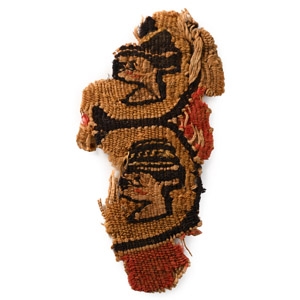
Small fragment of a garment in yellow, green and red wool, S torsion, embroidered with female heads wearing high propoloma. 10 grams total including package, 76 mm
Acquired 1970s-1996. Property of a North American collector. London collection, 2016.
This fragment was most likely part of a tapestry medallion with symbolic figures, likely linked to the Christian cult or, perhaps, to the Dionysian iconography. These figures could surround Tyche (a city's patron deity) or a figure of Christ or Saints. -
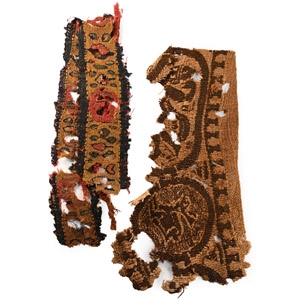
Egyptian Coptic Textile Fragment Group
Circa 5th-6th century A.D.Sold for (Inc. bp): £98
Comprising a large segmentum in linen and wool, with a hare and nereid, wool purple on linen, S torsion, borders with dentellid decoration; two other segmenta in wool and linen, part of clavi, with floral and vegetal embroidery. 41 grams total including package, 19-33 cm
Acquired 1970s-1996. Property of a North American collector. London collection, 2016.
The theme of rabbits or hares, in association with other characters and animals of the Dionysian thiasos (here a nereid), has notable parallels. Such representations are linked to narratives of the Dionysian cycle. -
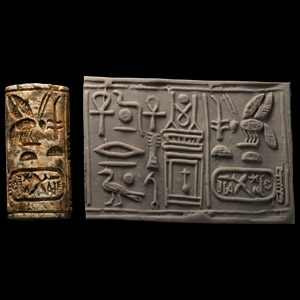
Egyptian Stone Cylinder Seal with Cartouche of Psusennes
Third Intermediate Period, circa 1055-950 B.C.Sold for (Inc. bp): £1,950
Large cylinder with deeply incised hieroglyphs, including the royal titulary above a cartouche of Psusennes I or II. 31.7 grams, 44 mm
From the collection of a gentleman, acquired on the London art market in the 1990s.
