
Loading, please wait...
LOT 0027
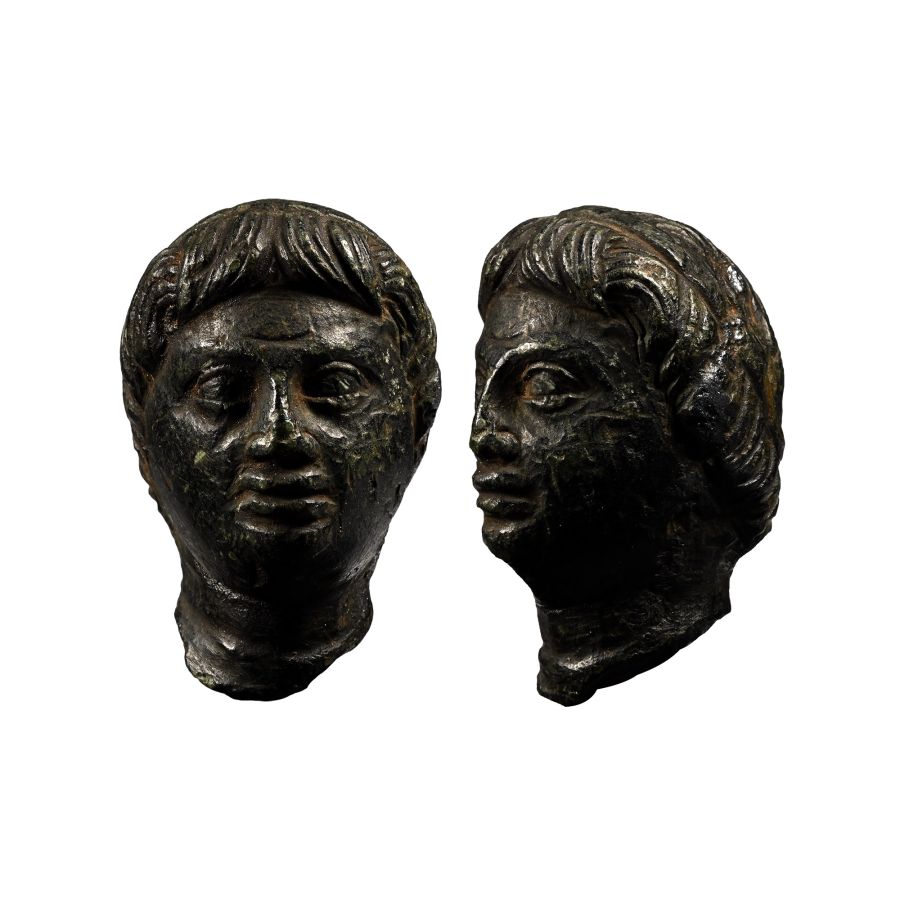
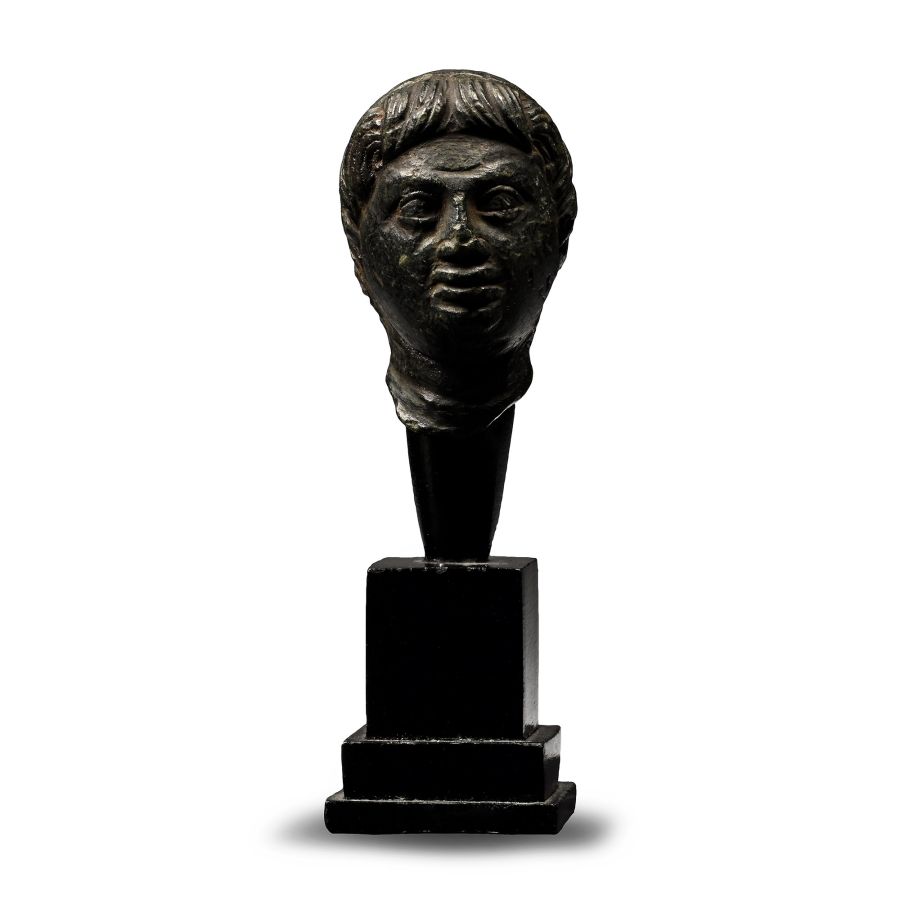
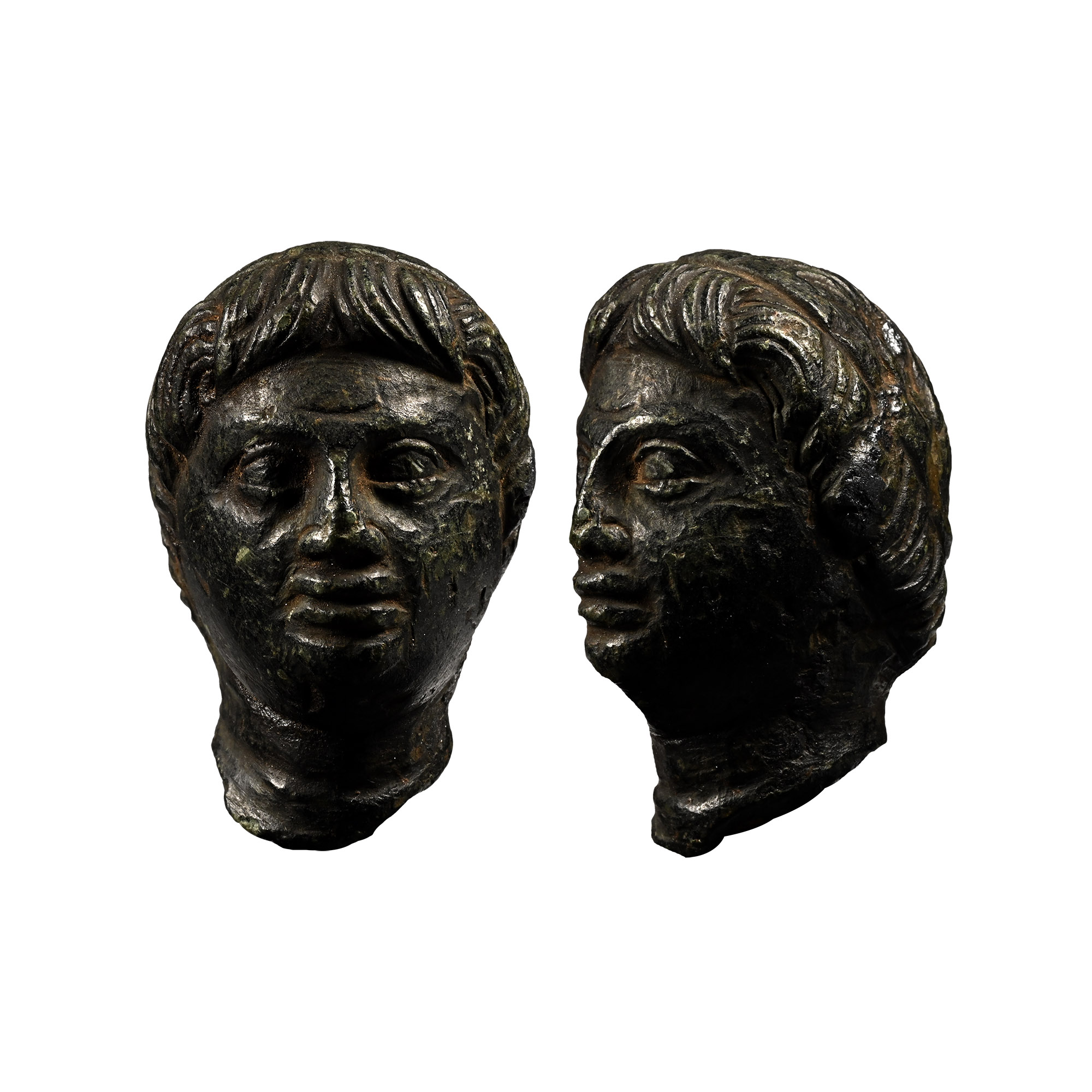
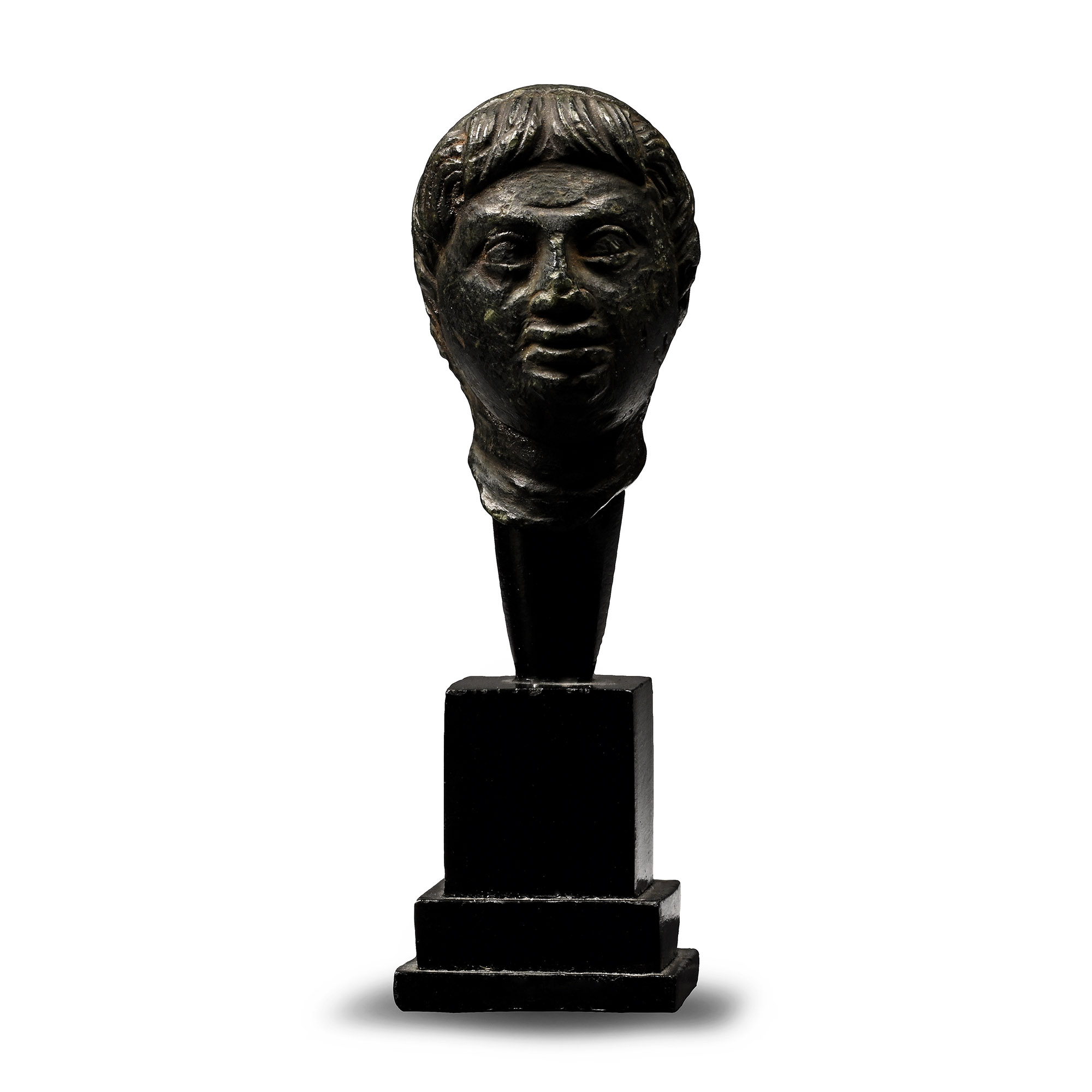
Egyptian Steatite Portrait of a Ptolemaic Prince
2ND-1ST CENTURY B.C.
4 in. (84 grams total, 10 cm including stand).
With a round face featuring large eyes, a narrow nose that broadens at the end, and full lips downturned at the corners, the forehead has a distinctive deep furrow above the brow; a narrow, twisted diadem encircling his wavy hair; mounted on a custom-made display stand.
ProvenancePrivate collection, Bern, Switzerland.
with Galerie Rhéa, Zurich, Switzerland.
This lot has been checked against the Interpol Database of stolen works of art and is accompanied by a search certificate number no.12631-236408.
This lot has been cleared against the Art Loss Register database, and is accompanied by an illustrated lot declaration signed by the Head of the Antiquities Department, Dr Raffaele D'Amato.
Cf. Ashton, S.-A., Ptolemaic Royal Sculpture from Egypt, BAR International Series 923, Oxford, 2001, p.68, no. 3.2, for another small steatite head in the Petrie Museum (UC 49930) featuring a similar rounded face, wavy hair, and a twisted diadem, dated to the 1st century B.C.
FootnotesThe Greek hairstyle is a characteristic feature of Ptolemaic royal portraiture, as is the twisted diadem - a Greek interpretation of the Egyptian headband (the sšd) - which appears on several portrait heads of Ptolemaic boy-kings and princes. The distinctive furrow is intriguing, as it contrasts with the typically blemish-free physiognomy of most Ptolemaic royal sculpture. However, a similar furrow can be seen on the portrait head of a provincial governor from Dendera, dated to the 2nd century B.C. (Bothmer, B.V., Egyptian Sculpture of the Late Period 700 B.C. to A.D. 100, New York, 1960, pp. 144-143, pl. 112, nos. 301-302), which may indicate an artistic trend employed in high-status sculpture at that time.
It has been suggested that small royal portrait heads, such as this example, may have served as votives. The lack of an Egyptian-style back pillar on this and similar pieces supports the possibility that they were inserted into statues made of different materials (Ashton, S.-A., Ptolemaic Royal Sculpture from Egypt, BAR International Series 923, Oxford, 2001, p.12).
TimeLine Auctions follows a vetting process to ensure the authenticity and legality of all items, reinforcing our commitment to integrity and responsible trading. Each antiquity, antique, and coin lot undergoes thorough examination by a vetting committee of at least ten external specialists, professional trade association members, scientists, and archaeologists: Our Vetting Process
AUCTIONS:
TimeLine is a leading auction house specialising in antiquities, ancient art, collectables, natural history, coins, medals, and books. Our auctions offer museums, collectors, historians, and enthusiasts the opportunity to acquire unique and historically significant pieces.
LOT 0027
Egyptian Steatite Portrait of a Ptolemaic Prince
Estimate £3,000 - 4,000€3,480 - 4,640 (for guidance only)$4,050 - 5,400 (for guidance only)
-
Egyptian Wooden Funerary Shabti Figurine
New Kingdom, circa 1570-1070 B.C.Estimate: £1,200 - 1,700 (‡+bp*)
Opening Bid: £600
Carved in the round as a mummiform figure, with a carefully modelled tripartite wig, a rounded face, large eyes, and a subtly simpering expression. 39 grams, 14.5 cm
Ex R. Liechti (1934-2010) Geneva, Switzerland, formed between 1950-1990s. with Liechti stock number 'E.825' to base. This lot has been checked against the Interpol Database of stolen works of art and is accompanied by a search certificate number no.12079-218221. This lot is accompanied by an illustrated lot declaration signed by the Head of the Antiquities Department, Dr Raffaele D'Amato.
A shabti (also known as ushabti or shawabti) is a small funerary figurine found in ancient Egyptian tombs, from around 2000 BCE to 30 BCE. Its main purpose was to act as a servant for the deceased in the afterlife, carrying out manual tasks like farming or irrigation as directed by the gods. Shabtis were frequently inscribed with a magical formula from the Book of the Dead to ensure they would animate when summoned. -
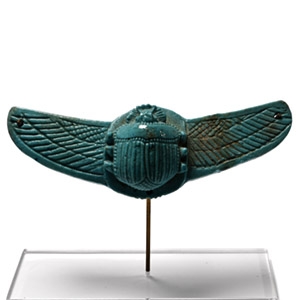
Egyptian Blue Faience Scarab
Late Period, 7th-6th century B.C.Sold for (Inc. bp): £4,550
Comprising a crescentic plaque with central scarab modelled in the half-round, and lateral wings with hatched texturing; scarab with ribbing and other detailing; pierced in four places for attachment; accompanied by a custom-made stand. 22.3 grams, 10 cm wide (44 grams total, 10 cm wide including stand)
Acquired in the 1950-1990s. Mr C., Geneva, Switzerland. Private collection, Europe. This lot has been checked against the Interpol Database of stolen works of art and is accompanied by a search certificate number no.12592-232170. This lot has been cleared against the Art Loss Register database, and is accompanied by an illustrated lot declaration signed by the Head of the Antiquities Department, Dr Raffaele D'Amato.
Winged scarabs were thought to ensure the rebirth and regeneration of the deceased, making them popular funerary amulets. This is a particularly fine example of a rarer one-piece amulet, as they are usually made from three separate elements. -
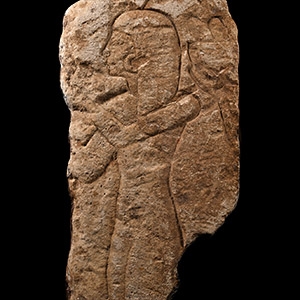
Egyptian Limestone Relief Fragment with Female Figure
New Kingdom, 18th Dynasty, circa 1295 B.C.Estimate: £4,000 - 6,000 (‡+bp*)
Opening Bid: £2,000
Showing a female figure as part of a procession, carrying a loaf of bread, a second offerant behind her; mounted on a custom-made display stand. 3.12 kg total, 42 cm high including stand
From the estate of the late Professor Dr E. Bernardo Streiff, Geneva; a distinguished collection of antiquities formed during the 1950s-1970s. with Galerie Rhéa, Zurich, Switzerland. This lot has been checked against the Interpol Database of stolen works of art and is accompanied by a search certificate number no.12625-236383. This lot has been cleared against the Art Loss Register database, and is accompanied by an illustrated lot declaration signed by the Head of the Antiquities Department, Dr Raffaele D'Amato.
Professor Dr E. Bernardo Streiff (1911-2001) was a prominent Swiss physician and academic based in Geneva, best known for his contributions to medical science as well as his deep passion for ancient art and antiquities. Over the course of several decades, particularly between the 1950s and 1970s, Professor Streiff assembled a highly regarded private collection of antiquities, reflecting both scholarly discernment and aesthetic sensitivity. His interests focused on the art and material culture of the ancient Mediterranean, with a particular emphasis on Greek, Etruscan, and Roman objects. A connoisseur guided by academic rigour, Dr Streiff maintained close ties with museums, galleries, and archaeological experts of his time. Many pieces from his collection were acquired from leading European dealers and fairs, and are notable for their quality, provenance, and condition. Following his passing, objects from the Streiff collection have appeared in respected sales and exhibitions, recognised for their integrity and the refined eye of the collector behind them.
