
Loading, please wait...


LOT 0458
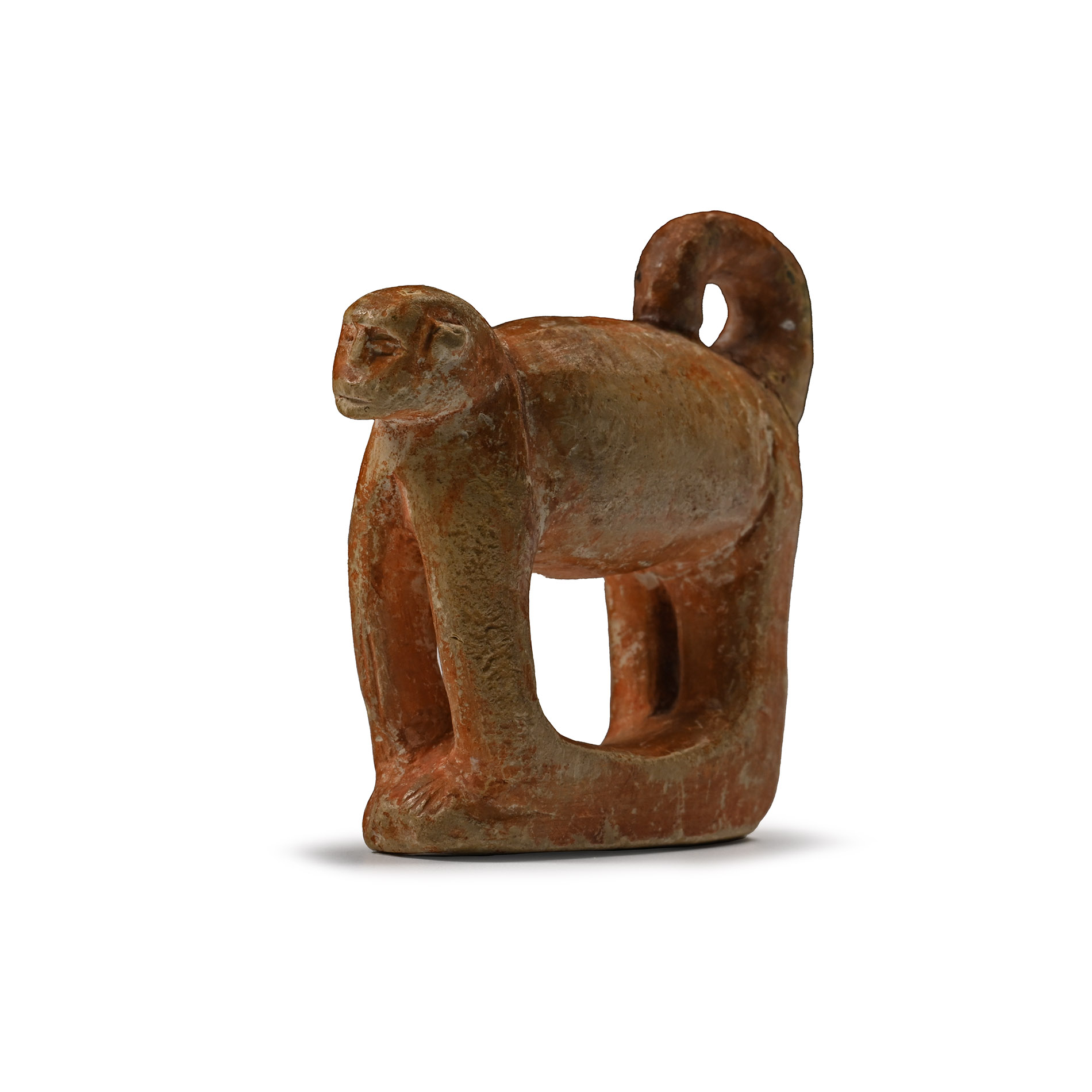
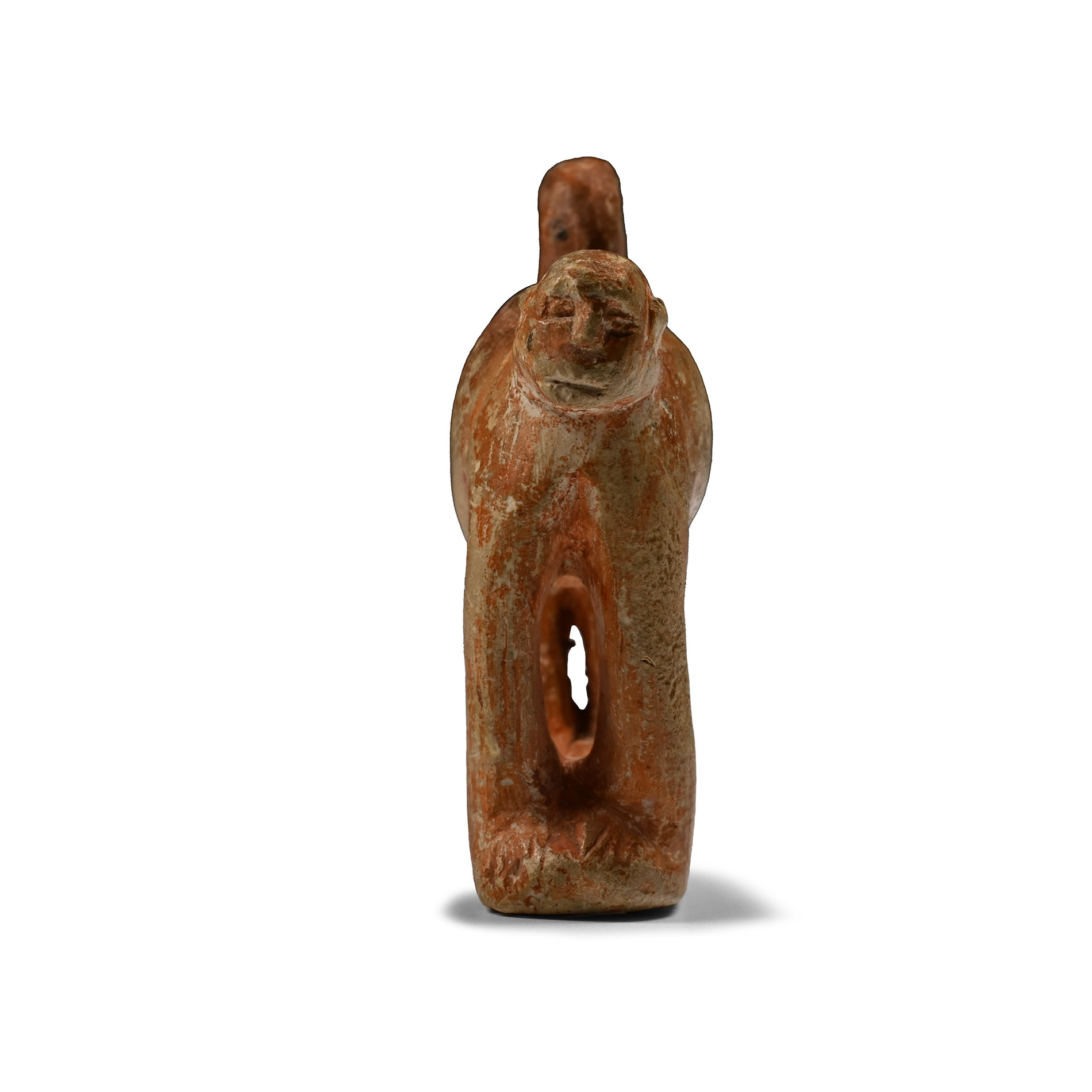
Egyptian Statuette of a Standing Monkey
PTOLEMAIC PERIOD, 4TH-1ST CENTURY B.C. OR LATER
2 3/8 in. (42.8 grams, 60 mm).
Standing on a rectangular plinth with head raised and tail curled above the hindquarters, barrel-shaped body with incised detailing at the shoulders and hips, traces of a white and reddish brown coating; partially restored; old collector's labels to underside '51' and 'N13234'.
ProvenanceEx Baden-Württemberg, Germany, formed since ca.1930.
Private collection Saarland, Germany.
Thereafter, Michael Schrôder, Germany.
Consigned to DAWO Auktion, 18 February 2017, no.824.
Accompanied by a copy of an Art Loss Register certificate no.S00123279.
This lot is accompanied by an illustrated lot declaration signed by the Head of the Antiquities Department, Dr Raffaele D’Amato.
This lot is accompanied by an illustrated lot declaration signed by the Head of the Antiquities Department, Dr Raffaele D'Amato.
TimeLine Auctions follows a vetting process to ensure the authenticity and legality of all items, reinforcing our commitment to integrity and responsible trading. Each antiquity, antique, and coin lot undergoes thorough examination by a vetting committee of at least ten external specialists, professional trade association members, scientists, and archaeologists: Our Vetting Process
AUCTIONS:
TimeLine is a leading auction house specialising in antiquities, ancient art, collectables, natural history, coins, medals, and books. Our auctions offer museums, collectors, historians, and enthusiasts the opportunity to acquire unique and historically significant pieces.
LOT 0458
Egyptian Statuette of a Standing Monkey
Estimate £800 - 1,000€930 - 1,160 (for guidance only)$1,080 - 1,350 (for guidance only)
-
Egyptian Multi-Stranded Mummy Bead Necklace
Late Period, 664-332 B.C.Sold for (Inc. bp): £312
Four-stranded designer necklace composed of beads of mainly annular and tubular types. 21 grams, 67 cm
Acquired before 1979. From the private collection of Mr F.A., South Kensington, London, UK; thence by descent 2014. This lot is accompanied by an illustrated lot declaration signed by the Head of the Antiquities Department, Dr Raffaele D'Amato.
For thousands of years, artisans in Egypt created vibrant ceramics to echo the beauty of rare jewels. These ornaments were created with almost every material, colour, and texture imaginable and they come from across Egypt and beyond: vibrant blue lapis lazuli from Afghanistan, glossy black obsidian from Turkey, and aqua-green turquoise from the Sinai. They were worn in life and, after death, they served as precious ornamentation for mummies. -
Egyptian Faience Juglet
Late Period, 664-332 B.C.Sold for (Inc. bp): £91
With squat body, broad neck with thickened rim, two strap handles to the shoulders. 88 grams, 85 mm
Acquired in the 1990s. Ex Abelita family collection. This lot is accompanied by an illustrated lot declaration signed by the Head of the Antiquities Department, Dr Raffaele D'Amato. -
.jpg)
Egyptian Bronze Statuette of Isis Seated with Young Horus
Late-Ptolemaic Period, 664-30 B.C.Sold for (Inc. bp): £130
Isis enthroned wearing a cow's horn headdress with a solar disc, suckling the infant Horus on her lap. 39 grams, 10.7 cm
From the property of a lady since the early to mid 20th century. From the private collection of Mr M.L. since circa 2005. This lot is accompanied by an illustrated lot declaration signed by the Head of the Antiquities Department, Dr Raffaele D'Amato.
In ancient Egyptian mythology, Isis was the sister-wife of Osiris and the mother of the sky god Horus. She is associated with aspects of fertility and motherhood and is often depicted in various artworks seated in a nursing pose with her son Horus on her lap, as here.
