
Loading, please wait...
LOT 0430
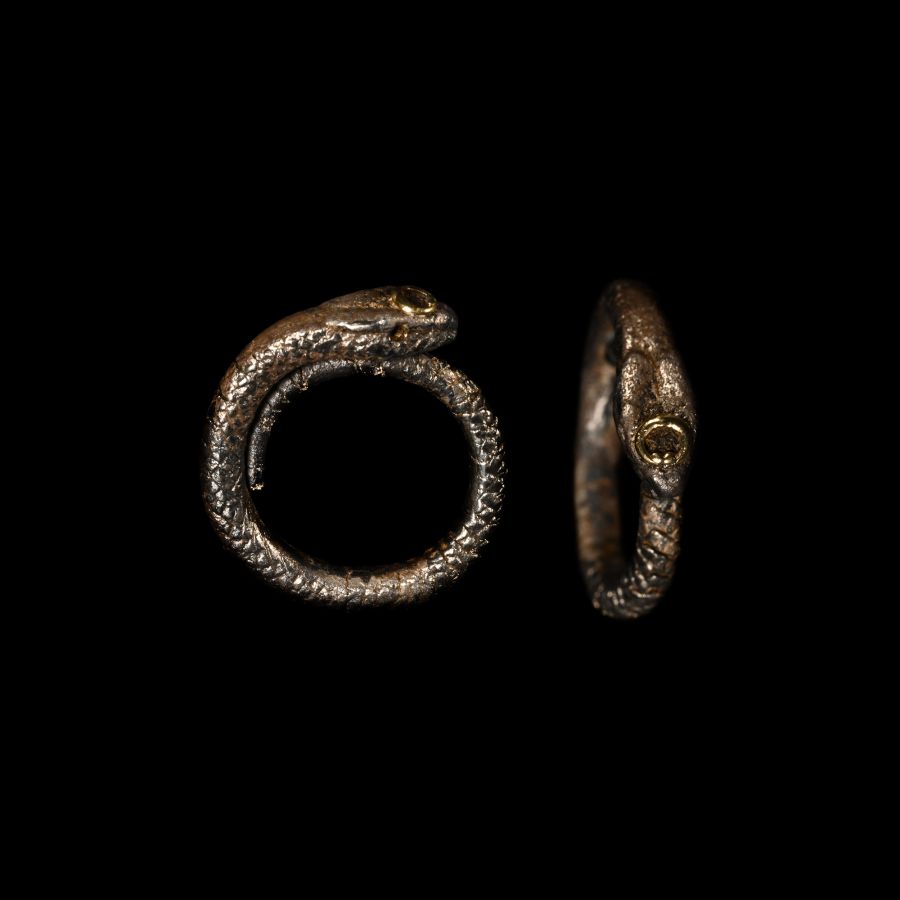
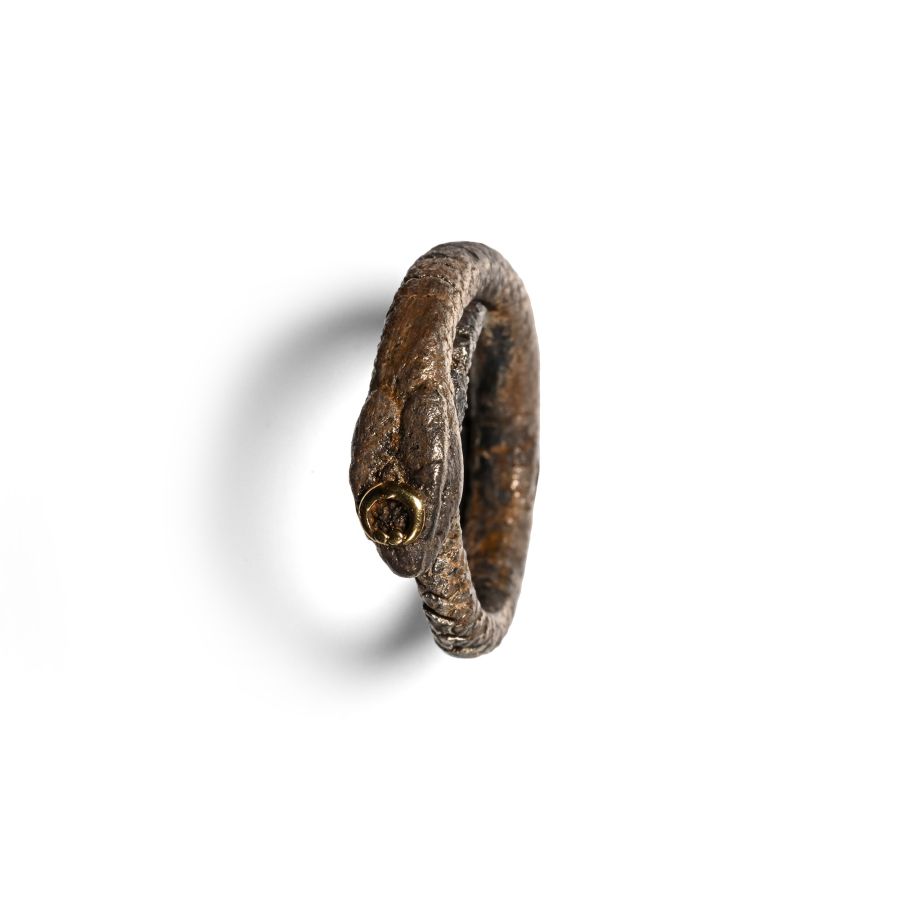
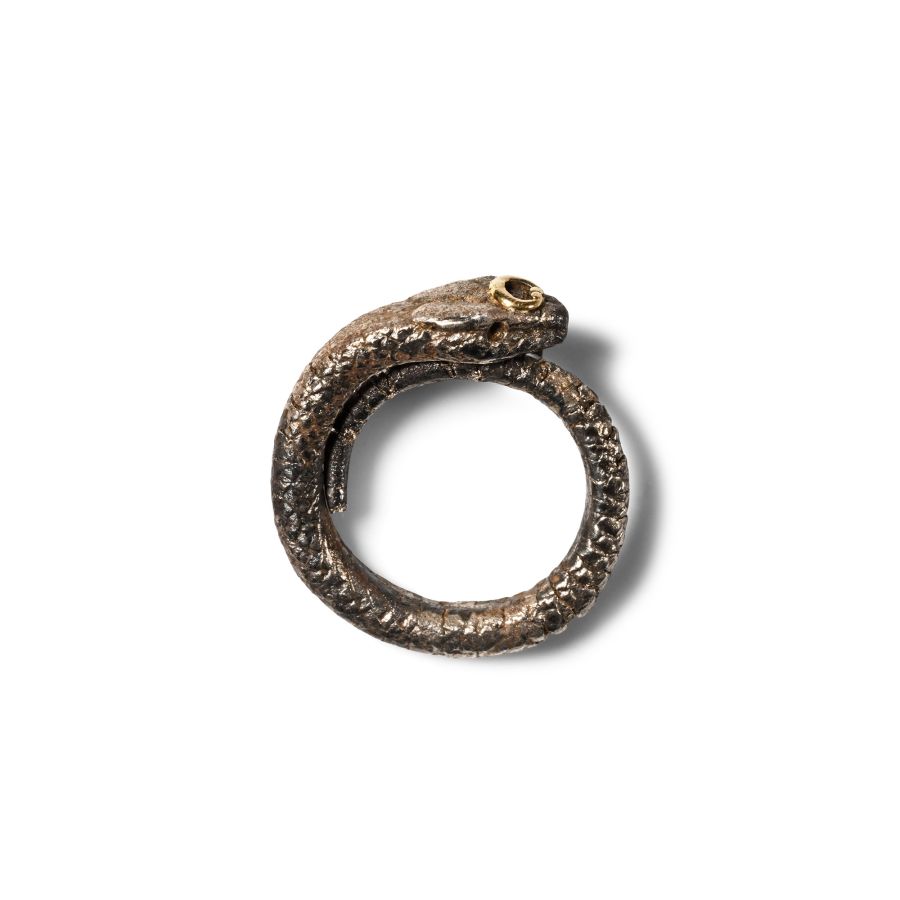
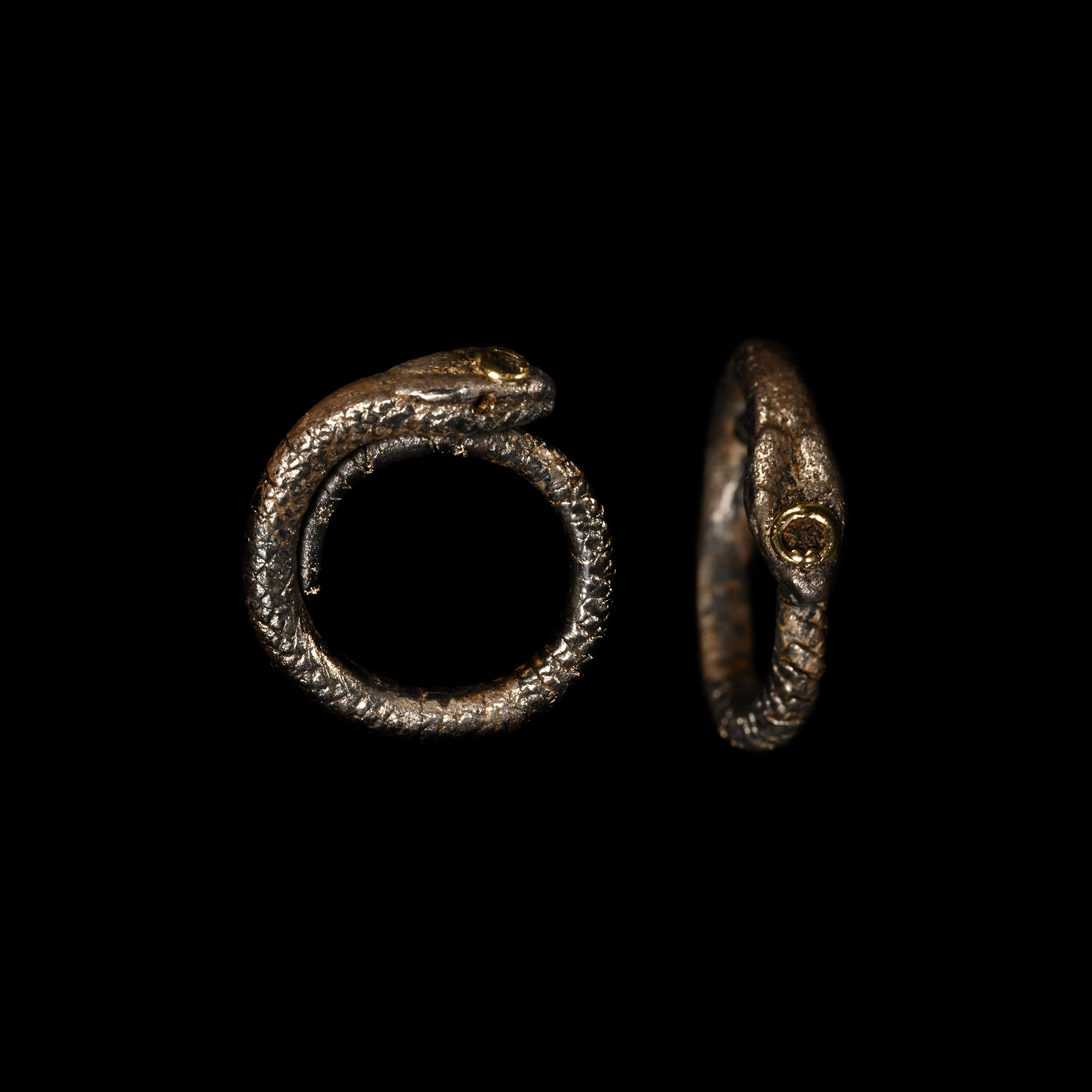
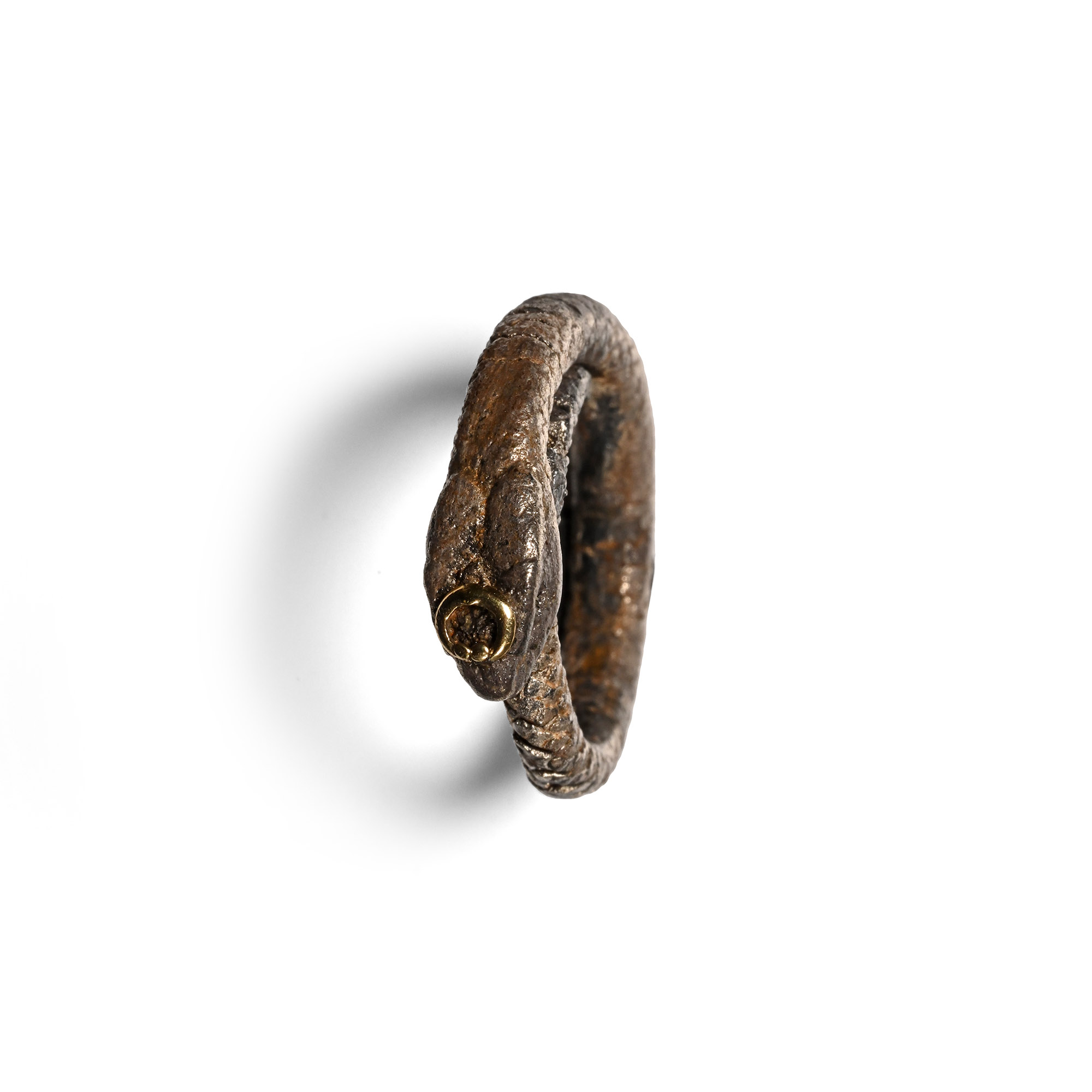
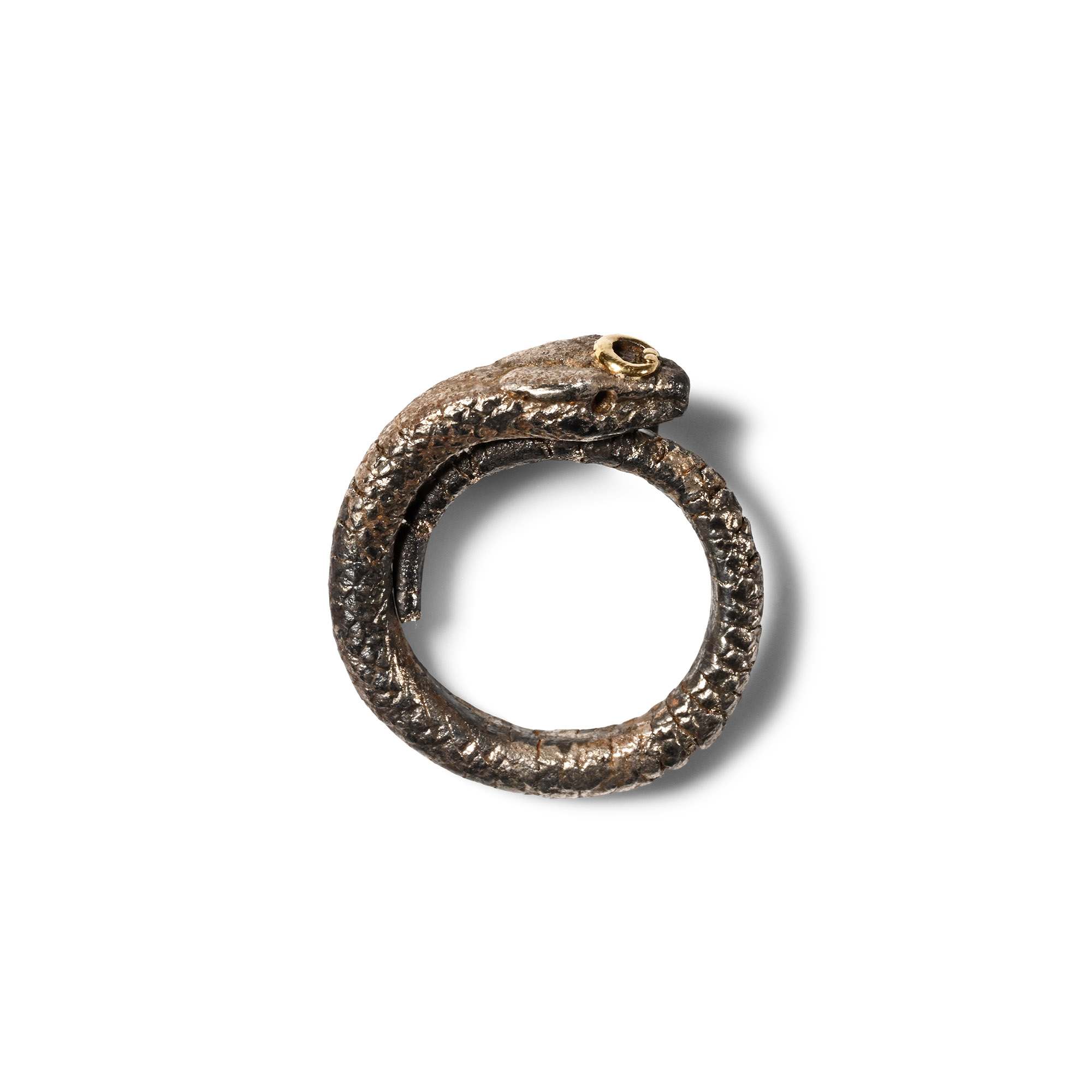
Egyptian Silver Snake Ring
1ST MILLENNIUM B.C.
1 in. (6.79 grams, 26.03 mm overall, 15.77 mm internal diameter (approximate size British J, USA 4 3/4, Europe 8.69, Japan 8)).
Comprising a round-section tapering body with intricate scale detailing, the head resting on the body, detailed face with closed mouth and rounded eyes, an applied gold annulet with two granules above the head; part of the tail absent.
ProvenanceEx Dr Leo Mildenberg, Zurich, 1990s.
Acquired by Galerie Rhéa, Zurich, from the above in 1999.
This lot is accompanied by an illustrated lot declaration signed by the Head of the Antiquities Department, Dr Raffaele D'Amato.
Snake rings were not originally a traditional form in Egypt and only became common during the Ptolemaic and Roman Periods. Animal-shaped rings, including those with snake motifs, originated in Western Asia around the eighth century BC, spread to Greece by the fifth century BC, and were introduced to Egypt primarily through the Ptolemaic Period. In Greek culture, snakes were often linked to healing, though they likely carried other symbolic meanings as well.
CONDITIONTimeLine Auctions follows a vetting process to ensure the authenticity and legality of all items, reinforcing our commitment to integrity and responsible trading. Each antiquity, antique, and coin lot undergoes thorough examination by a vetting committee of at least ten external specialists, professional trade association members, scientists, and archaeologists: Our Vetting Process
AUCTIONS:
TimeLine is a leading auction house specialising in antiquities, ancient art, collectables, natural history, coins, medals, and books. Our auctions offer museums, collectors, historians, and enthusiasts the opportunity to acquire unique and historically significant pieces.
-
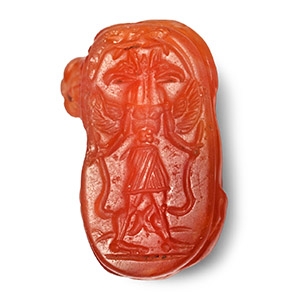
Phoenician Carnelian Scaraboid with Lion
6th-4th century B.C.Sold for (Inc. bp): £2,600
Carved in the half-round as a recumbent lion with head turned, underside with incuse image of a gryphon-headed man holding snakes in his hands. 2.55 grams, 18.65 mm
From the collection of a deceased London gentleman, UK, 1970-1990s. This lot has been checked against the Interpol Database of stolen works of art and is accompanied by a search certificate number no.12636-234419. This lot has been cleared against the Art Loss Register database, and is accompanied by an illustrated lot declaration signed by the Head of the Antiquities Department, Dr Raffaele D'Amato. -
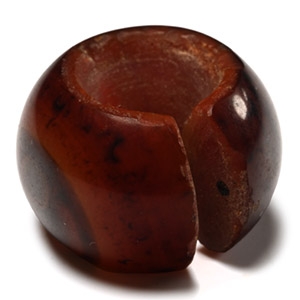
Egyptian Red Jasper Hair Ring
New Kingdom, 1550-1070 B.C.Sold for (Inc. bp): £169
Circular with a semi-circular profile and an opening on one side. 6.61 grams, 20 mm
Ex early 20th century collection, London and Home Counties, UK. This lot is accompanied by an illustrated lot declaration signed by the Head of the Antiquities Department, Dr Raffaele D'Amato. -
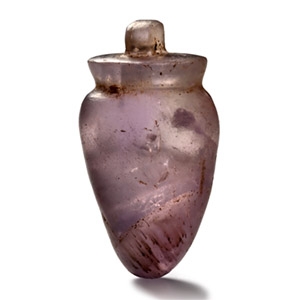
Large Egyptian Amethyst Heart Amulet
Late Period, 664-332 B.C.Estimate: £600 - 800 (+bp*)
Opening Bid: £300
Carved in the round with integral suspension loop. 8.79 grams, 31 mm
From early 20th century Home Counties, UK, collection. This lot is accompanied by an illustrated lot declaration signed by the Head of the Antiquities Department, Dr Raffaele D'Amato.
According to ancient Egyptian beliefs, the heart (ib) was considered the centre of intelligence, emotions, and behaviour. It was also believed to store an individual's memories. During the Weighing of the Heart ceremony in the afterlife, the heart could speak on behalf of the deceased and account for their lifetime of actions before Osiris. For this reason, heart amulets were placed on the mummy to safeguard the organ and ensure a favourable outcome during judgment.
