
Loading, please wait...
LOT 0500
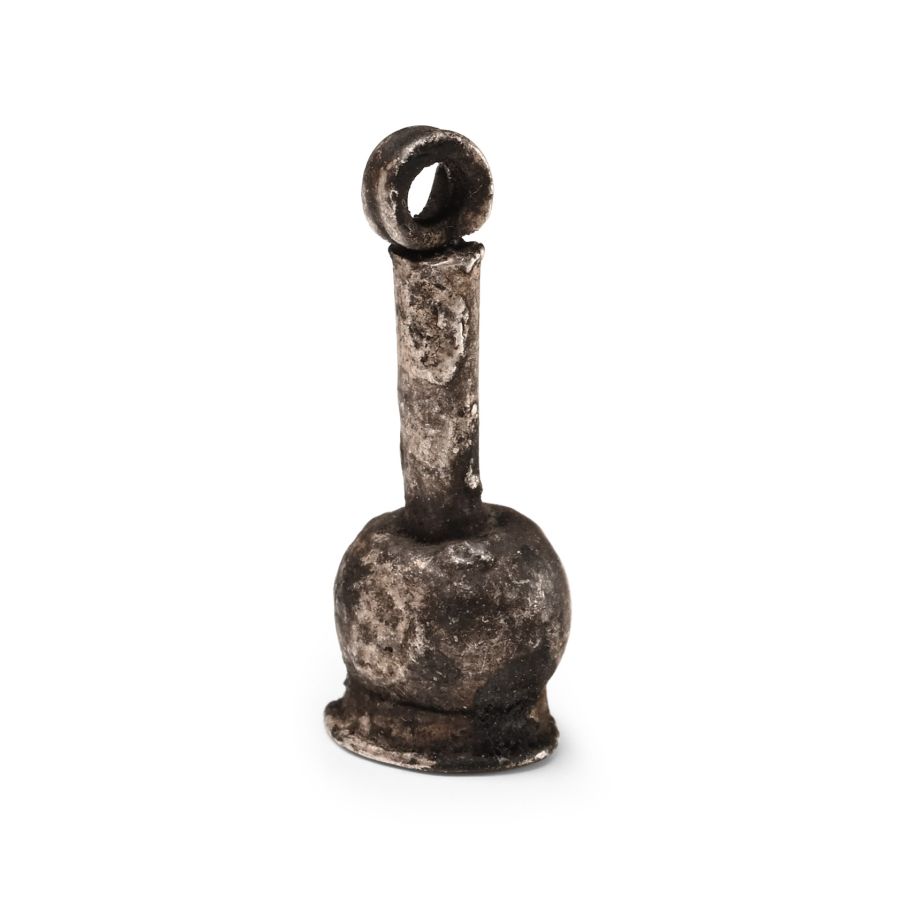
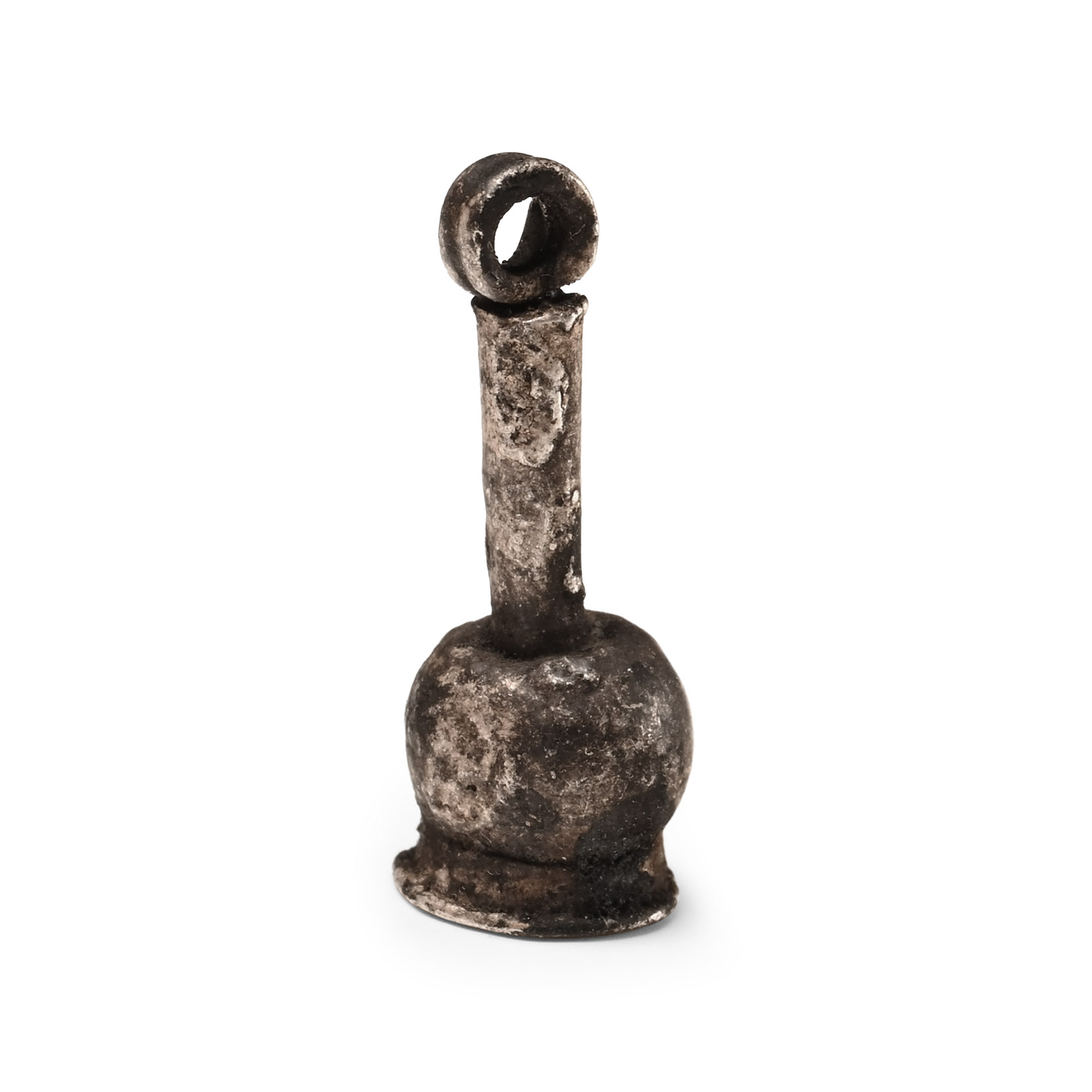
Egyptian Silver Poppy Head Amulet
LATE PERIOD, 664-332 B.C.
3/4 in. (1 grams, 17 mm).
With bulb and disc finial, integral shank and gusseted suspension loop. [No Reserve]
ProvenanceFrom an early 20th century collection.
LiteratureCf. Andrews, C., Amulets of Ancient Egypt, London, 1994, pl.65 (n), for type.
FootnotesAmulets in the form of poppies were used to heal and alleviate pain and to ward off death. These types of amulets were also linked to Osiris, the Egyptian deity of agriculture, death, and the afterlife.
CONDITIONTimeLine Auctions follows a vetting process to ensure the authenticity and legality of all items, reinforcing our commitment to integrity and responsible trading. Each antiquity, antique, and coin lot undergoes thorough examination by a vetting committee of at least ten external specialists, professional trade association members, scientists, and archaeologists: Our Vetting Process
AUCTIONS:
TimeLine is a leading auction house specialising in antiquities, ancient art, collectables, natural history, coins, medals, and books. Our auctions offer museums, collectors, historians, and enthusiasts the opportunity to acquire unique and historically significant pieces.
-
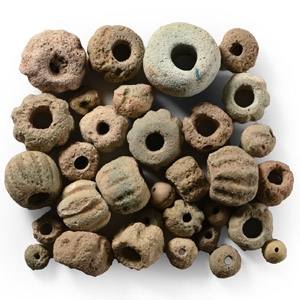
Egyptian Pottery Necklace Bead Group
Roman Period, 30 B.C.-323 A.D.Sold for (Inc. bp): £39
Comprising a group of modelled unglazed pottery grooved melon beads some faience. 39.4 grams total, 6-18 mm
Ex London, UK, collection, 1990s. -
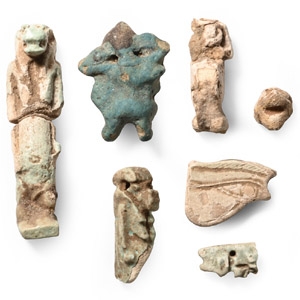
Egyptian Faience Amulet Group
Mainly Late Period, 664-332 B.C.Sold for (Inc. bp): £65
Comprising fragmentary amulets including, a wedjat-eye of Horus, Tawaret, a seated Isis, a Tawaret in two parts, and Bes. 27 grams total, 11-31 mm
From an early 20th century Home Counties, UK, collection. -
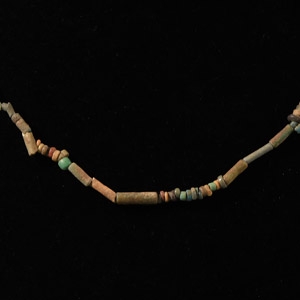
Egyptian Mummy Bead Necklace
Late Period, 664-332 B.C.Sold for (Inc. bp): £46
Restrung group of glazed composition beads, mainly tubular and annular types. 3.58 grams, 50 cm long
From a private Paris collection, France, 1960s. From the personal collection of Derek Rogers, Suffolk, UK.
