
Loading, please wait...
LOT 0411
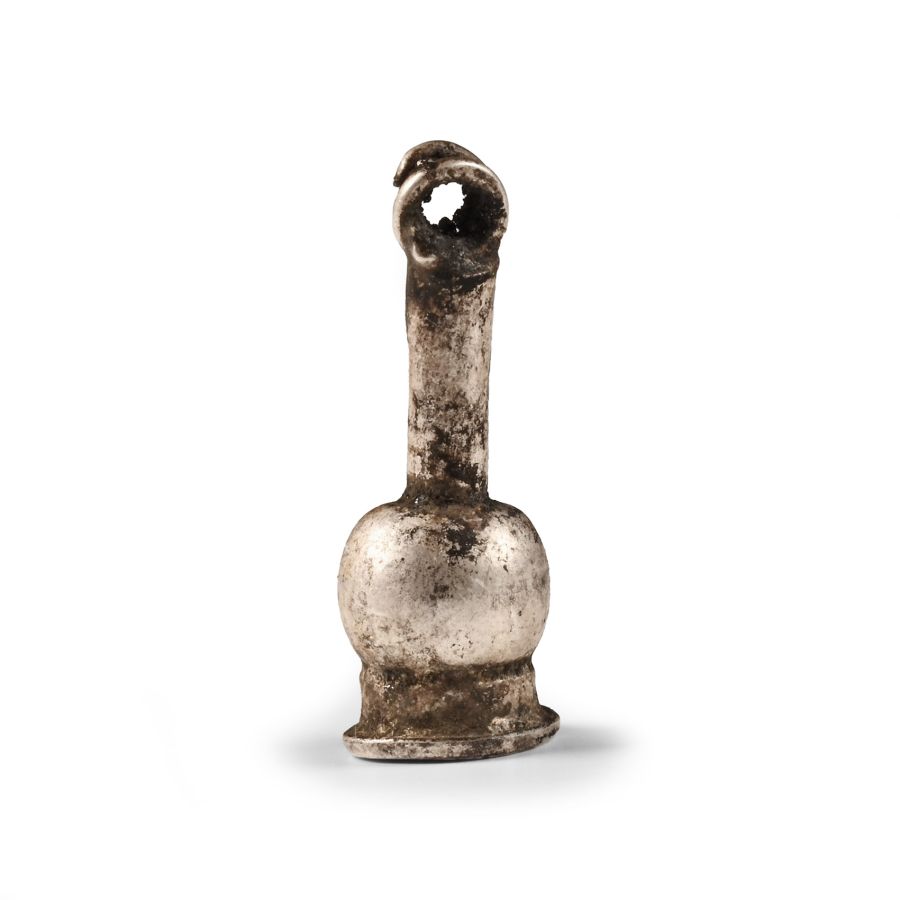
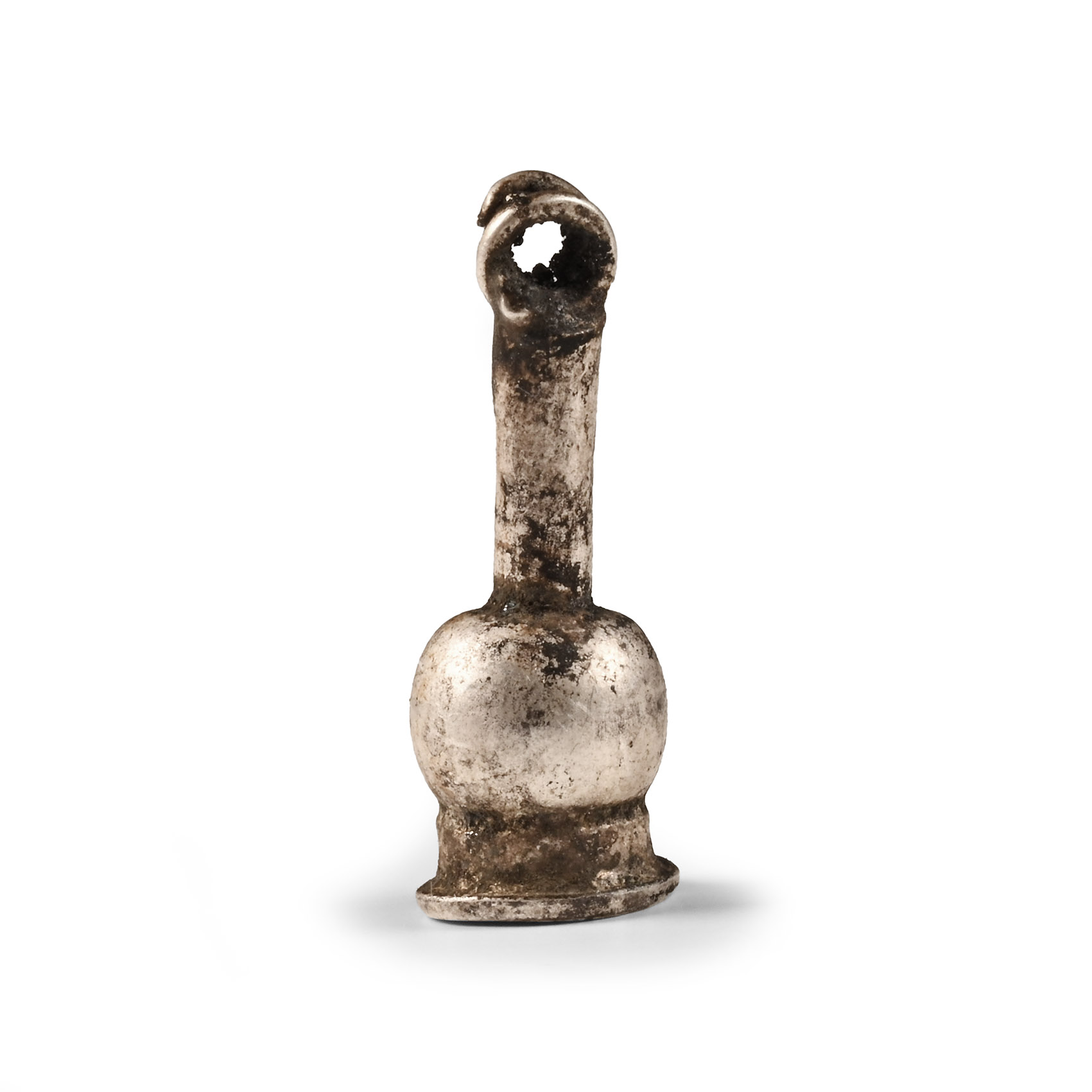
Egyptian Silver Poppy Head Amulet
LATE PERIOD, 664-332 B.C.
5/8 in. (1.03 grams, 17 mm).
With bulb and disc finial, integral shank and gusseted suspension loop. [No Reserve]
ProvenanceFrom an early 20th century collection.
FootnotesAmulets in the form of poppies were utilised for healing and alleviating pain, as well as for warding off death. These types of amulets were also linked to Osiris, the Egyptian deity of agriculture, death, and the afterlife.
CONDITIONTimeLine Auctions follows a vetting process to ensure the authenticity and legality of all items, reinforcing our commitment to integrity and responsible trading. Each antiquity, antique, and coin lot undergoes thorough examination by a vetting committee of at least ten external specialists, professional trade association members, scientists, and archaeologists: Our Vetting Process
AUCTIONS:
TimeLine is a leading auction house specialising in antiquities, ancient art, collectables, natural history, coins, medals, and books. Our auctions offer museums, collectors, historians, and enthusiasts the opportunity to acquire unique and historically significant pieces.
-
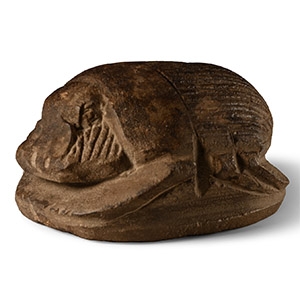
Egyptian Carved Stone Scarab
1st millennium B.C.Estimate: £500 - 700 (+bp*)
Opening Bid: £250
With textured carapace and detailed head and legs; underside blank. 159 grams, 63 mm
Acquired on the German art market, 1989-1995. with The Museum Gallery, 19 Bury Place, London, WC1, UK, 1998-2003. Property of a London based academic, 2003-present. -
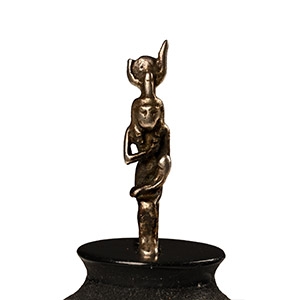
Egyptian Silver Isis Amulet
Late Period, 664-332 B.C.Sold for (Inc. bp): £338
Isis enthroned wearing a cow's horn headdress with a solar disc, suckling the infant Horus on her lap; loop to rear of crown; mounted on a custom-made stand. 6.2 grams, 39 mm (20.7 grams total, 62 mm including stand)
Ex Mythes & Legend. Ex Cohen collection 2011. Property of a French collector.
In ancient Egyptian mythology, Isis was the sister-wife of Osiris and the mother of the sky god Horus. She is associated with aspects of fertility and motherhood and is often depicted in various artworks seated in a nursing pose with her son Horus on her lap, as here. -
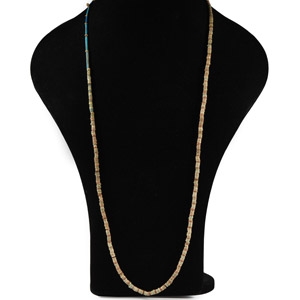
Egyptian Faience Mummy Bead Necklace
Late Period, 664-332 B.C.Sold for (Inc. bp): £65
Restrung group of annular and tubular beads. 17.9 grams, 95 cm long
From an old English deceased estate. Acquired on the London art market in the early 1990s. Property of a London, UK, collector.
