
Loading, please wait...
LOT 0041
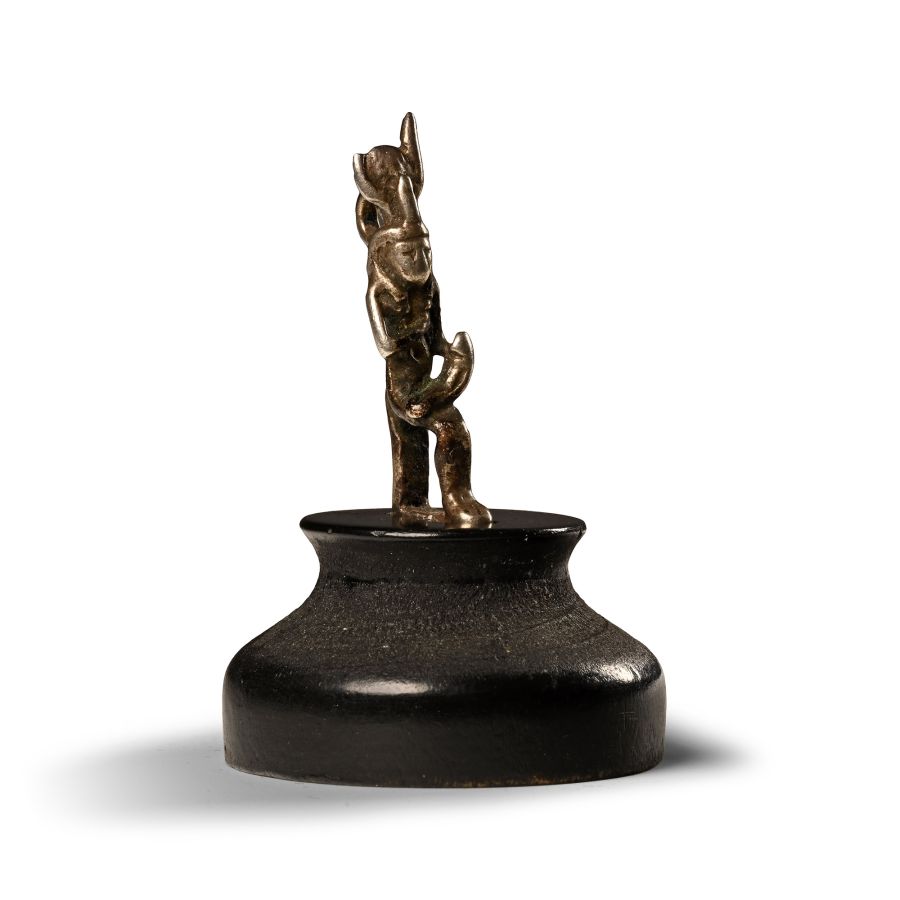
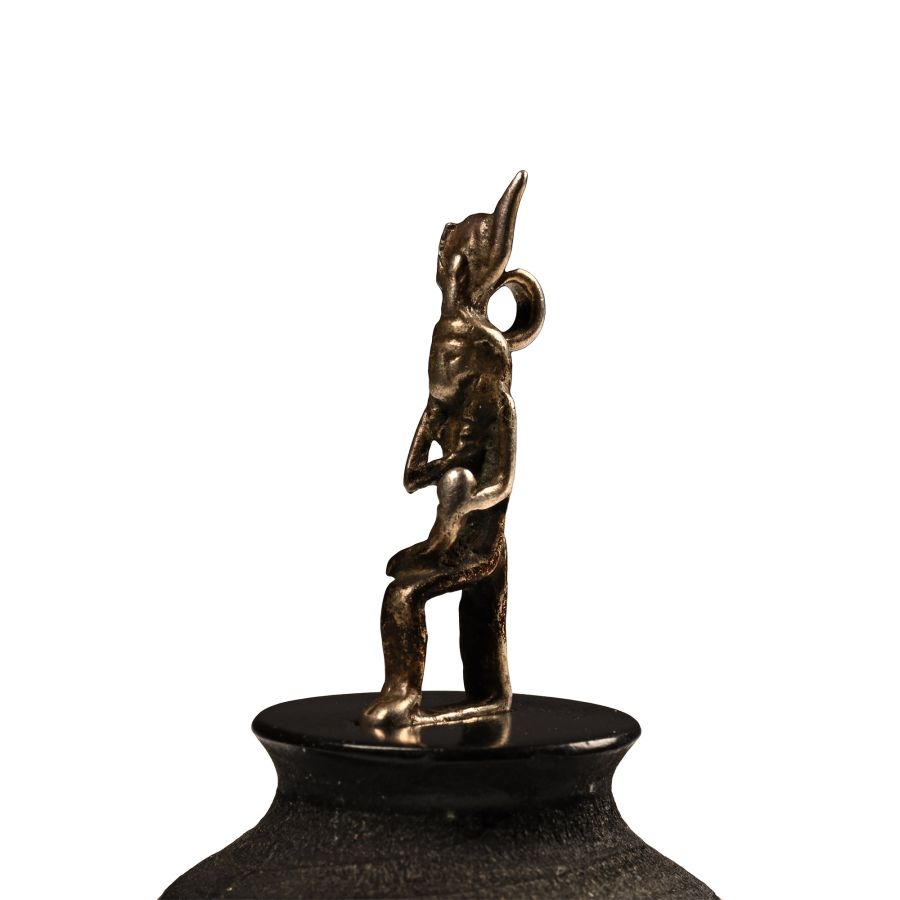
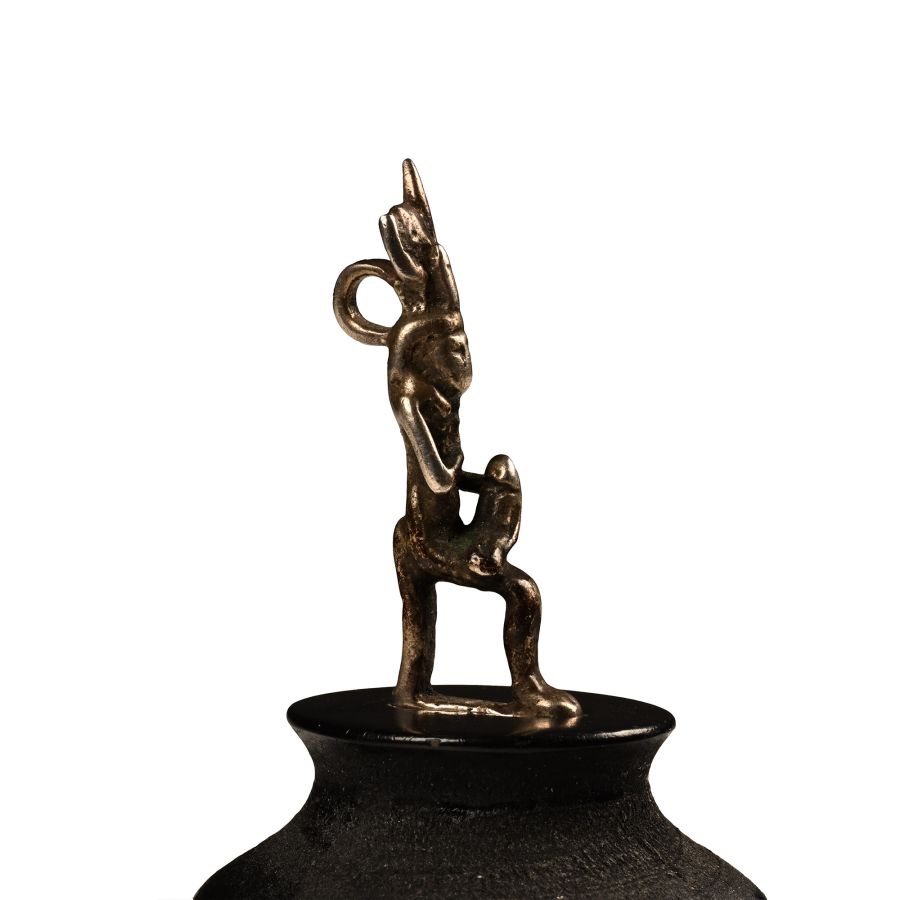
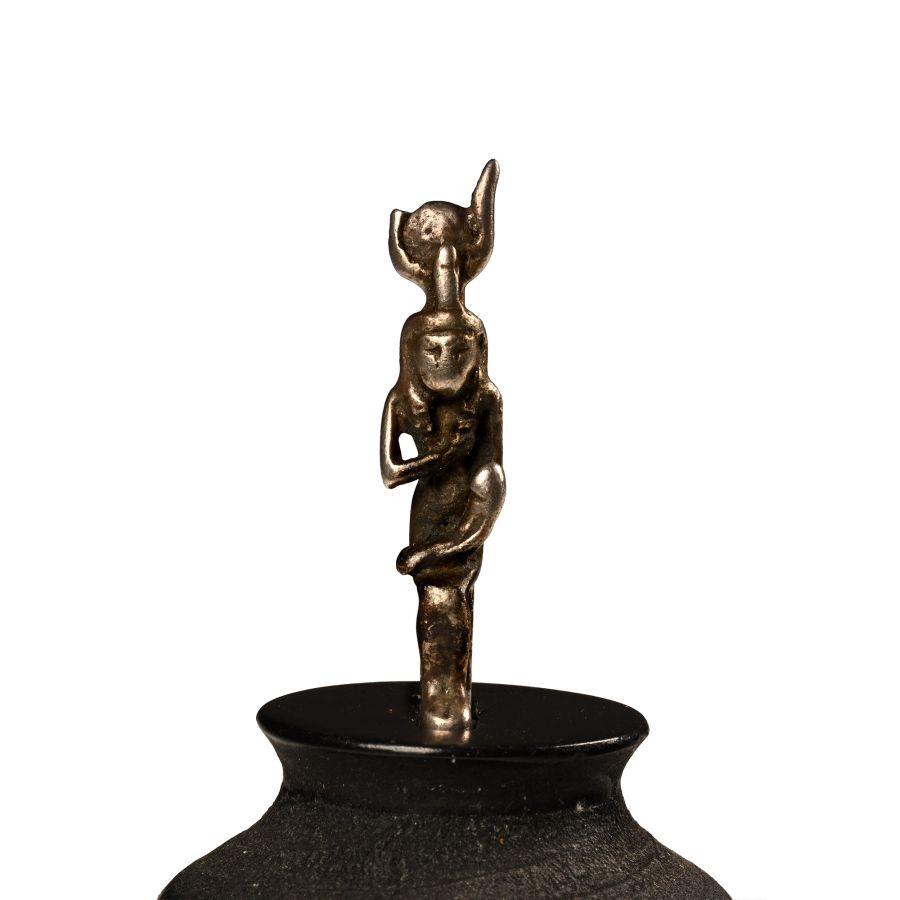
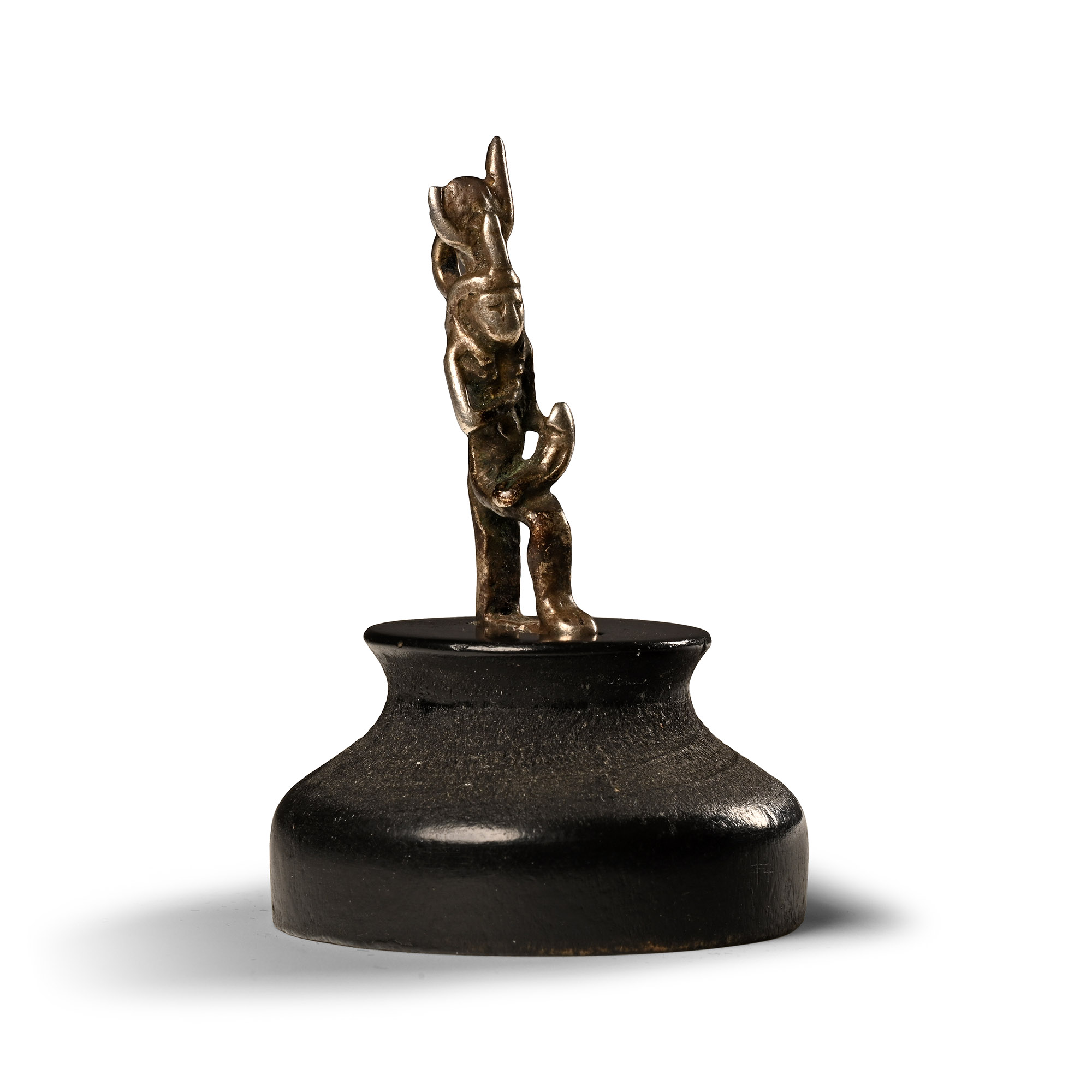
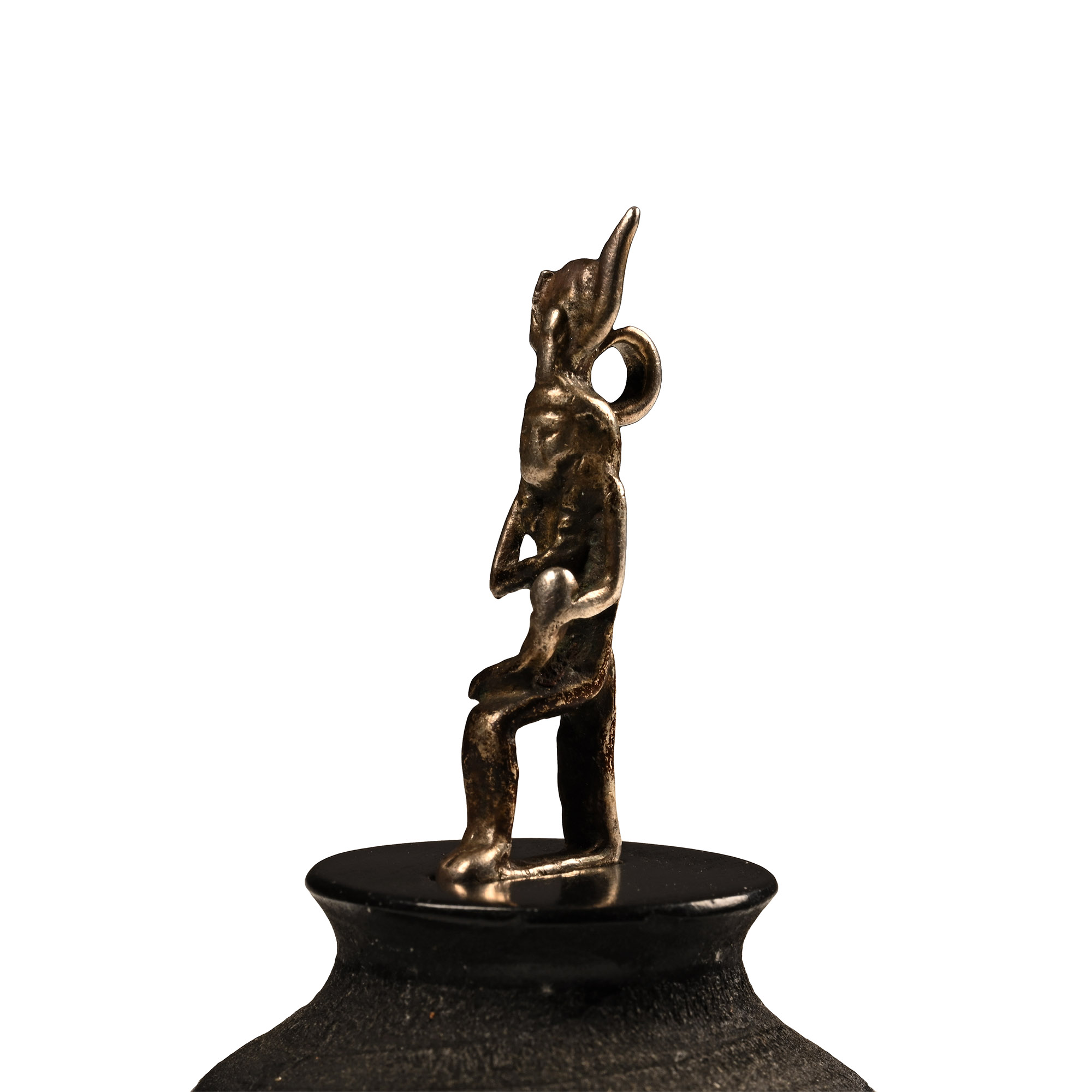
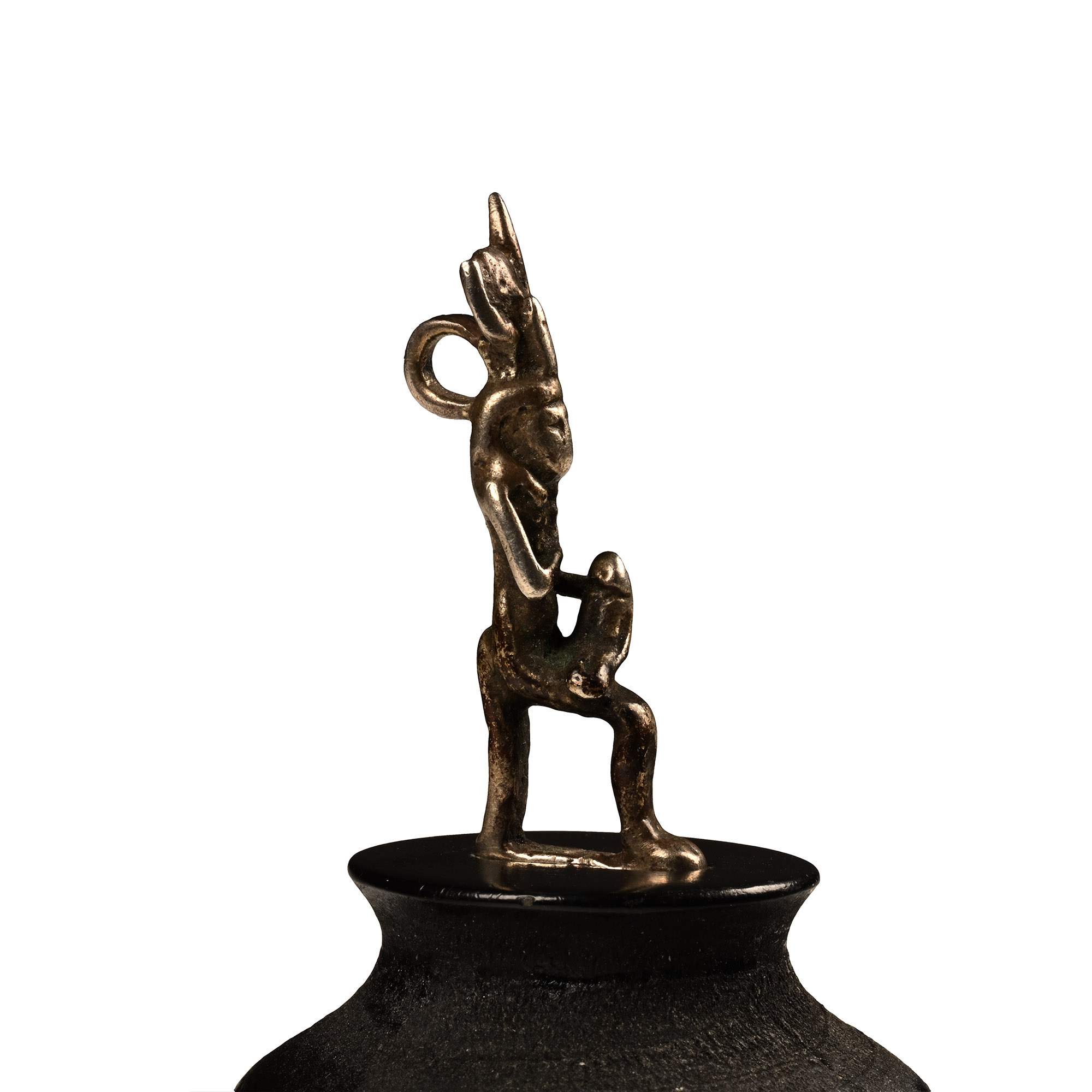
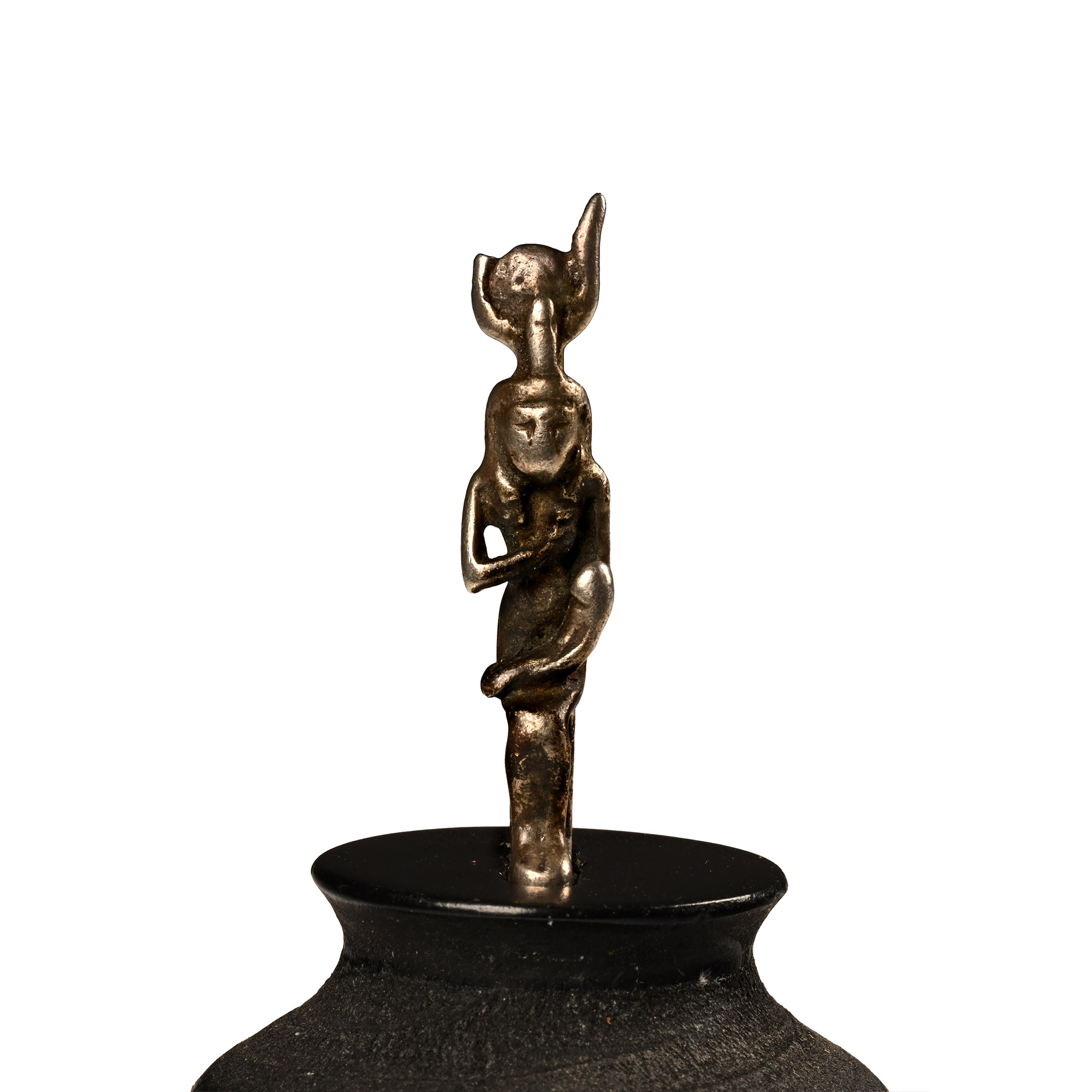
Egyptian Silver Isis Amulet
LATE PERIOD, 664-332 B.C.
1 1/2 in. (2 1/2 in.) (6.2 grams, 39 mm (20.7 grams total, 62 mm including stand)).
Isis enthroned wearing a cow's horn headdress with a solar disc, suckling the infant Horus on her lap; loop to rear of crown; mounted on a custom-made stand. [No Reserve]
ProvenanceEx Mythes & Legend.
Ex Cohen collection 2011.
Property of a French collector.
Cf. Andrews, C., Amulets of Ancient Egypt, London, 1994, item 18(a).
FootnotesIn ancient Egyptian mythology, Isis was the sister-wife of Osiris and the mother of the sky god Horus. She is associated with aspects of fertility and motherhood and is often depicted in various artworks seated in a nursing pose with her son Horus on her lap, as here.
CONDITIONTimeLine Auctions follows a vetting process to ensure the authenticity and legality of all items, reinforcing our commitment to integrity and responsible trading. Each antiquity, antique, and coin lot undergoes thorough examination by a vetting committee of at least ten external specialists, professional trade association members, scientists, and archaeologists: Our Vetting Process
AUCTIONS:
TimeLine is a leading auction house specialising in antiquities, ancient art, collectables, natural history, coins, medals, and books. Our auctions offer museums, collectors, historians, and enthusiasts the opportunity to acquire unique and historically significant pieces.
-
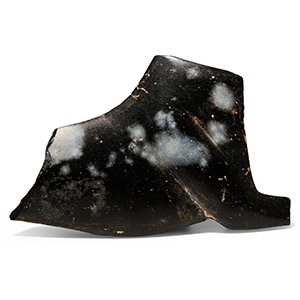
Egyptian Body of Anubis Glass Inlay
Late Period-Ptolemaic Period, 664-30 B.C.Estimate: £1,200 - 1,700 (+bp*)
Opening Bid: £667
With gently curved obverse and flat reverse, section of an inlay depicting Anubis, with thick neck and beginning of extended foreleg. 108 grams, 96 mm
Acquired on the French art market, 1980s. with Bonhams, London, 13 April 2011, lot 21. Accompanied by copies of the relevant Bonhams catalogue pages. -
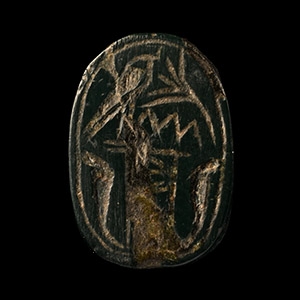
Phoenicio-Egyptian Hardstone Scarab with Hieroglyphs
Circa 6th-4th century B.C.Estimate: £400 - 600 (+bp*)
Opening Bid: £200
Haematite scarab with underside incised Horus falcon and lotus flower atop a fire-altar(?) flanked by uraei. 2.21 grams, 16 mm
Collected from 1969-1999. From the collection of the late Mr S.M., London, UK. -
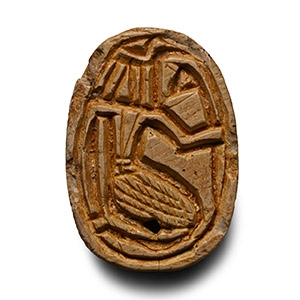
Egyptian White Stone Scarab with Falcon-headed God
New Kingdom-Late Period, 1550-332 B.C.Sold for (Inc. bp): £286
Underside with low-relief image of falcon-headed god holding a papyrus stem. 2.36 grams, 18 mm
From the private collection of P. Champman. Acquired 1992. Ex C.J. Martin, London, UK.
