
Loading, please wait...
LOT 0473
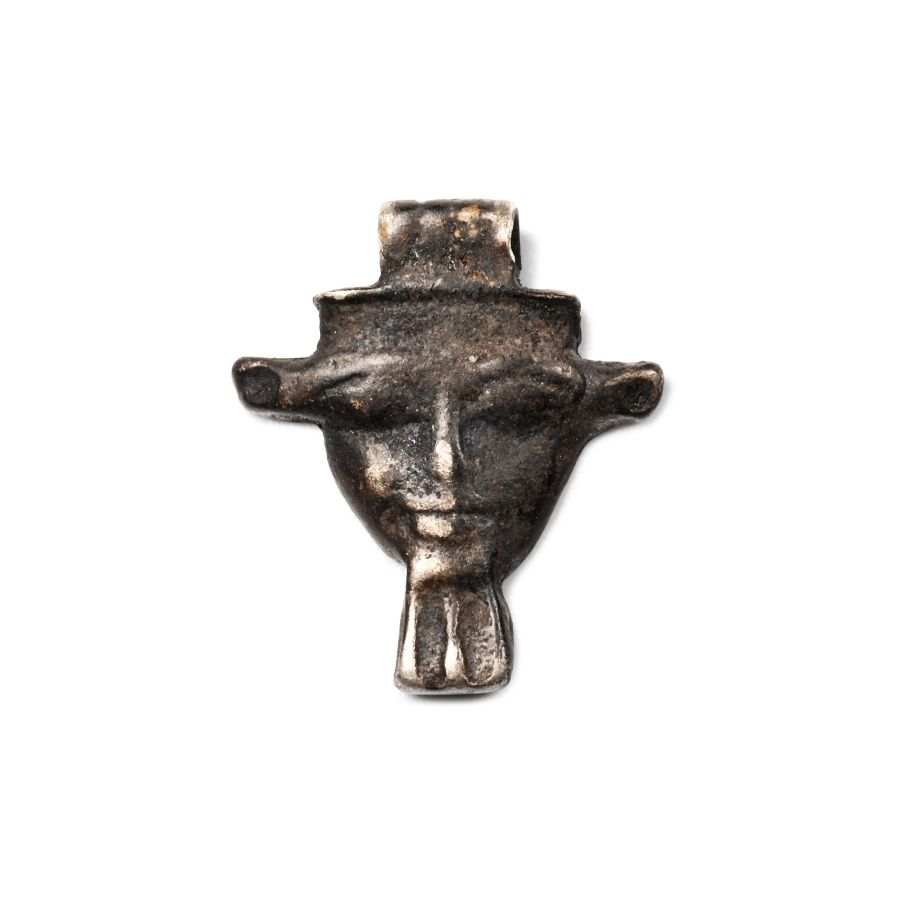
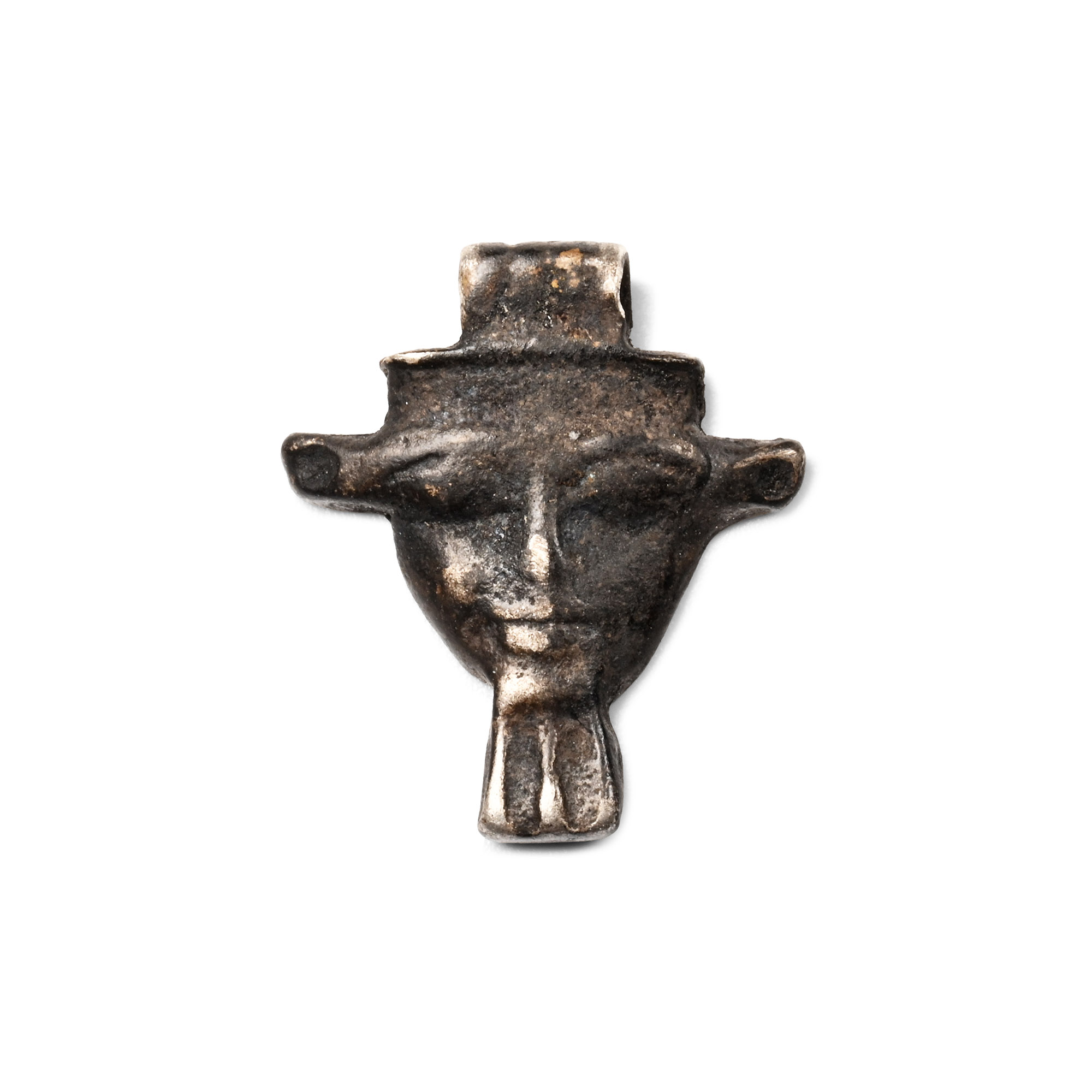
Egyptian Silver Hathor Amulet
LATE-PTOLEMAIC PERIOD, 664-30 B.C.
3/8 in. (0.7 grams, 11 mm).
D-shaped mask representing the human-headed Hathor with cow ears and a short beard, a ribbed suspension loop above. [No Reserve]
ProvenanceFrom an early 20th century collection.
This lot is accompanied by an illustrated lot declaration signed by the Head of the Antiquities Department, Dr Raffaele D'Amato.
TimeLine Auctions follows a vetting process to ensure the authenticity and legality of all items, reinforcing our commitment to integrity and responsible trading. Each antiquity, antique, and coin lot undergoes thorough examination by a vetting committee of at least ten external specialists, professional trade association members, scientists, and archaeologists: Our Vetting Process
AUCTIONS:
TimeLine is a leading auction house specialising in antiquities, ancient art, collectables, natural history, coins, medals, and books. Our auctions offer museums, collectors, historians, and enthusiasts the opportunity to acquire unique and historically significant pieces.
-
Egyptian Scarab and Amulet Group
Late Period, 664-332 B.C.Sold for (Inc. bp): £59
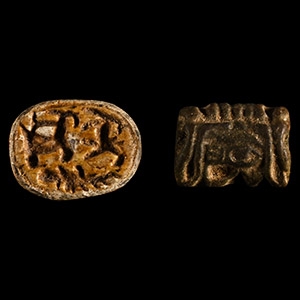
Comprising: a scarab with anatomical detailing to the carapace, underside with a crocodile and two quadrupeds; a rectangular Eye of Horus amulet with domed upper face. 3.04 grams total, 14-16 mm
Norfolk family collection, 1940s-1960s; thence by descent. This lot is accompanied by an illustrated lot declaration signed by the Head of the Antiquities Department, Dr Raffaele D'Amato. -
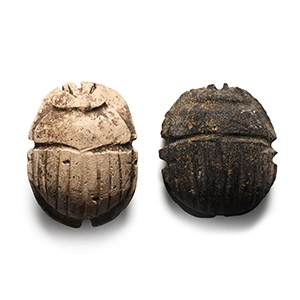
Egyptian Heart Scarab Group
Late Period, 664-332 B.C.Estimate: £180 - 240 (+bp*)
Opening Bid: £90
Comprising two scarabs with striated wing cases and ribbed underside. 7.5 grams total, 18-20 mm
From the collection of a gentleman, acquired on the London art market in the 1990s. This lot is accompanied by an illustrated lot declaration signed by the Head of the Antiquities Department, Dr Raffaele D'Amato.
The scarab amulet was a powerful symbol of rebirth, transformation, and protection in ancient Egypt. Modelled after the beetle linked to the sun god Khepri, it represented the cycle of life and regeneration. Used from the Middle Kingdom (c. 2050 BCE) onwards, scarabs served as funerary amulets, personal charms, and seals—often inscribed with prayers or names—reflecting both spiritual beliefs and daily life. -
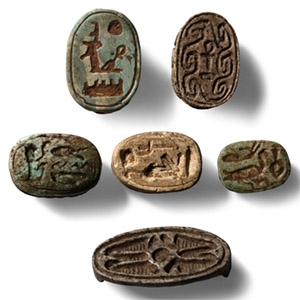
Egyptian Mixed Scarab Collection
2nd-1st millennium B.C.Sold for (Inc. bp): £585
Comprising (from left to right, top to bottom): 1) a scarab with an oval border containing the throne name of the 19th Dynasty pharaoh, Seti I (Men-Maat-Re); 2) a scarab with an oval outer border containing a continuous oblong scroll border framing a neb and ankh symbol; 3) a scarab with an oval border containing a seated adorant before a sa, water, and neb symbol; 4) a scarab with an oval border containing the throne name of the 19th Dynasty pharaoh, Ramesses II (User-Maat-Re), atop a neb sign; 5) a scarab with two signs, possibly representing the word for ‘bread’ above a goose, with a beer jar in front; 6) and a scaraboid with a stretched oval border containing mirrored pairs of rearing cobras surrounding a central sun disc. 18.64 grams total, 14-27 mm
From the collection of a gentleman, acquired on the London art market in the 1990s. This lot is accompanied by an illustrated lot declaration signed by the Head of the Antiquities Department, Dr Raffaele D'Amato.
