
Loading, please wait...
LOT 0581
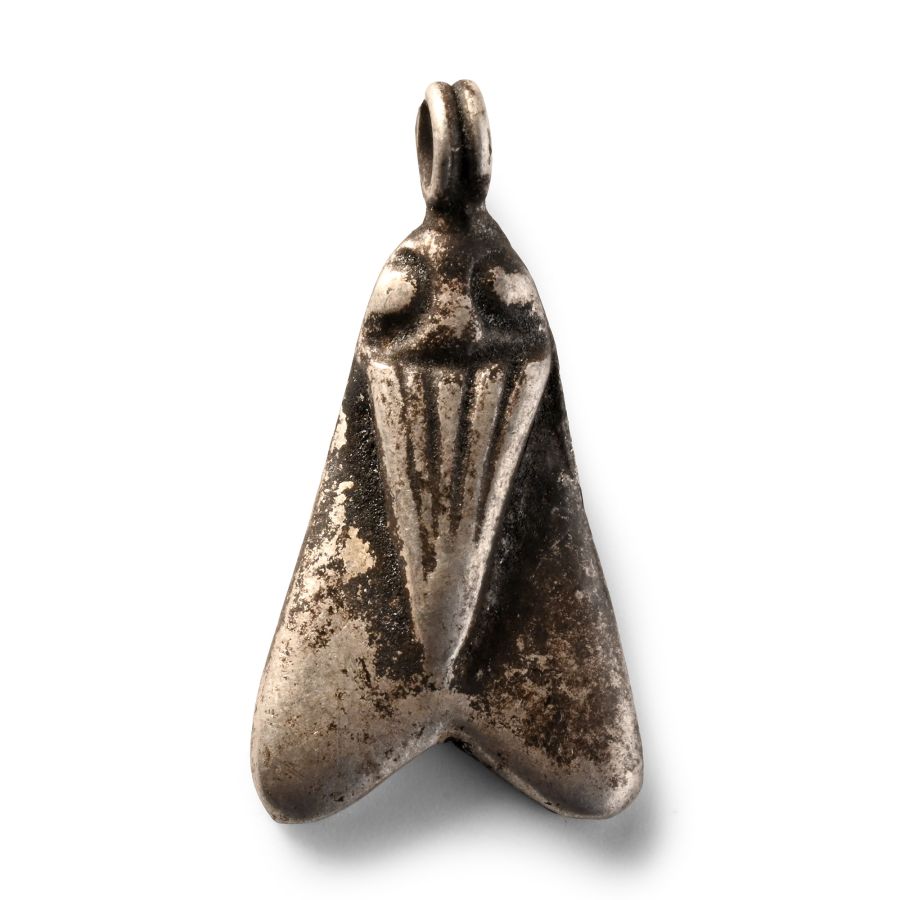
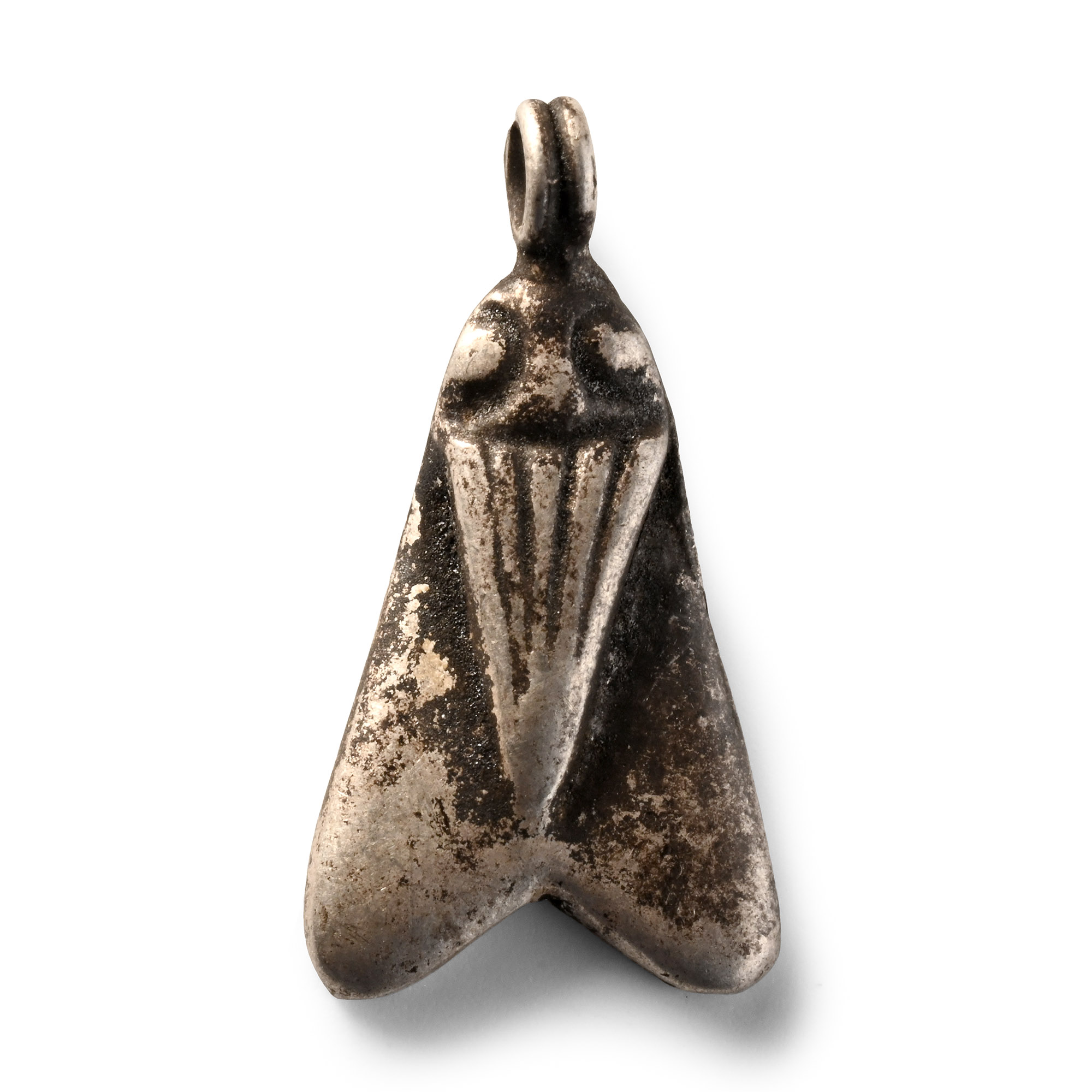
Egyptian Silver Fly Amulet
LATE PERIOD, 664-332 B.C.
3/4 in. (1.33 grams, 20 mm).
With textured detailing to wings and body, loop for suspension. [No Reserve]
ProvenanceFrom a gentleman's family collection, 2000s.
LiteratureCf. Andrews, C., Amulets of Ancient Egypt, London, 1994, pp.62-3.
CONDITIONTimeLine Auctions follows a vetting process to ensure the authenticity and legality of all items, reinforcing our commitment to integrity and responsible trading. Each antiquity, antique, and coin lot undergoes thorough examination by a vetting committee of at least ten external specialists, professional trade association members, scientists, and archaeologists: Our Vetting Process
AUCTIONS:
TimeLine is a leading auction house specialising in antiquities, ancient art, collectables, natural history, coins, medals, and books. Our auctions offer museums, collectors, historians, and enthusiasts the opportunity to acquire unique and historically significant pieces.
-
.jpg)
Egyptian Bronze Head of a Cat
Late-Ptolemaic Period, 664-30 B.C.Sold for (Inc. bp): £1,820
The head of goddess Bastet modelled in the round with alert ears and eyes, ears pierced; hollow-formed. 40.4 grams, 33.6 mm high
Acquired in the mid 1990s. Private collection, Switzerland, thence by descent. Private collection, since the late 1990s.
The feline's pierced ears likely once held earrings or other ornaments. It was probably attached to a statuette of a cat, whose body may have been crafted from wood. The cat was sacred to Bastet, a protective mother goddess and the daughter of the sun god Re. Amulets provided the wearer with the goddess's protection. Her name means ‘she of the bast [ointment jar],’ which may have contained a substance favoured by or exclusive to royalty. Originally, Bastet was depicted as a woman with the head of a lioness, but by the late New Kingdom, she was typically shown with a cat's head. She is sometimes portrayed with kittens, emphasising her maternal role as a fierce protector of her offspring. -
.jpg)
Egyptian Green Stone Frog Amulet
Late Period, 664-332 B.C.Sold for (Inc. bp): £351
Modelled seated on an oval base; pierced for suspension. 1.47 grams, 13 mm
Mrs Allinson to Mrs Foster, 1867 and thence by descent to the current owner, Stanley Crescent, London, UK.
Frog amulets in ancient Egypt symbolised fertility, rebirth, and renewal. Associated with the goddess Heket, who was connected to childbirth and life-giving forces, these amulets were especially popular in contexts related to fertility and protection during pregnancy and labour. Their association with the annual Nile flood, which brought new life to the land, further underscored their symbolism of revival and abundance. -
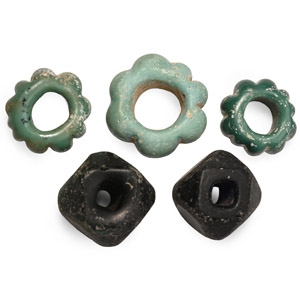
Phoenician Glass Bead Group
Circa 600-400 B.C.Sold for (Inc. bp): £85
Comprising: three ring-shaped with grooves and two irregular cube-shapes. 46 grams total, 18-25 mm
Prince collection, 1990s-2014. Ex private collection 1970s-1990s.
