
Loading, please wait...
LOT 0407
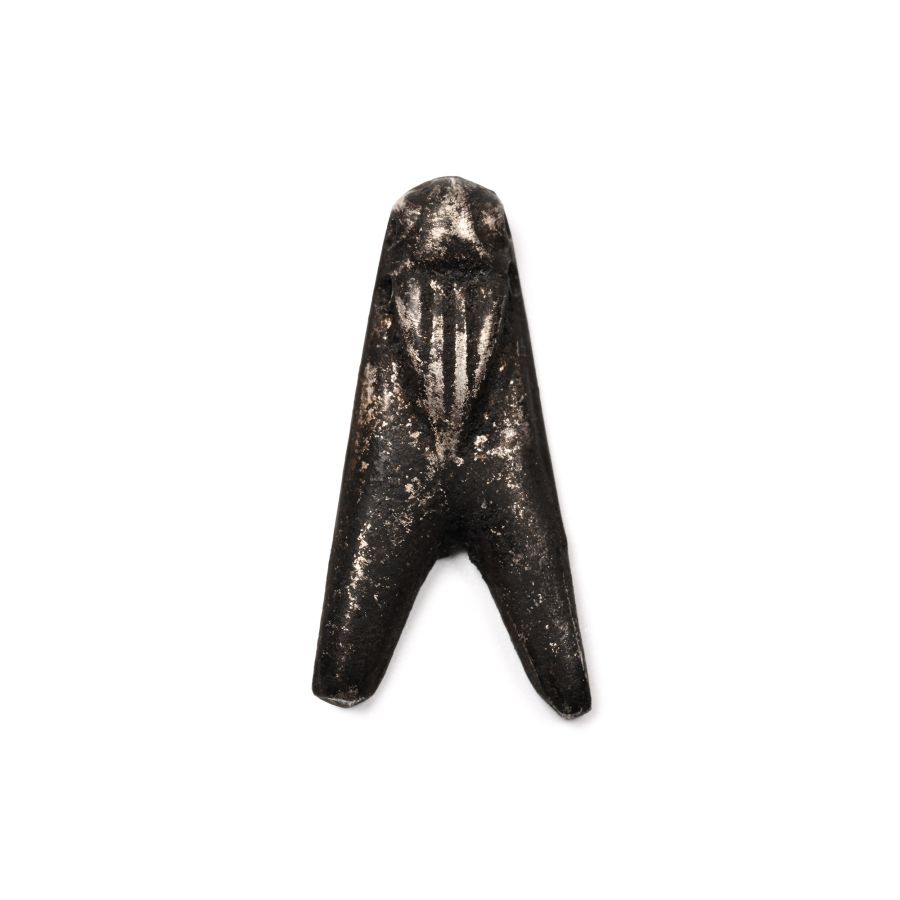
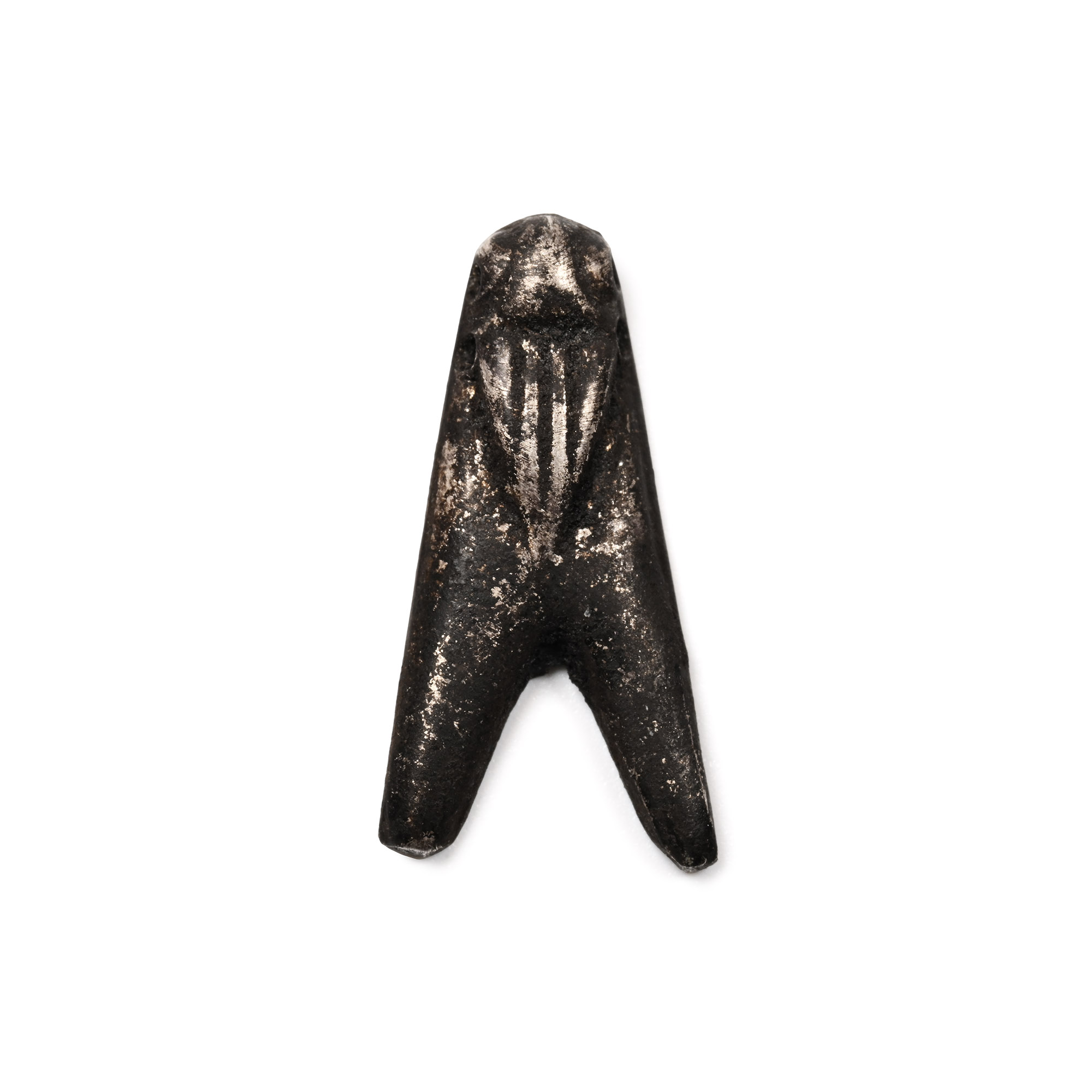
Egyptian Silver Fly Amulet
LATE-PTOLEMAIC PERIOD, 664-30 B.C.
5/8 in. (0.82 grams, 17 mm).
With linear detailing to the body, raised eyes, pierced through the head for suspension. [No Reserve]
ProvenanceFrom an early 20th century collection.
This lot is accompanied by an illustrated lot declaration signed by the Head of the Antiquities Department, Dr Raffaele D'Amato.
Cf. Andrews, C., Amulets of Ancient Egypt, London, 1994, pp.62-3.
FootnotesEgyptian artists often depicted fly whisks with pharaohs and officials, suggesting flies were just nuisances. In reality, Egyptians valued flies for their speed and persistence. Small fly amulets appeared around 3200 B.C. in Naqada II burials, gaining popularity and varying materials during the New Kingdom, including gold, silver, lapis lazuli, carnelian, amethyst, faience, and gemstones. These amulets were thought to protect against insect bites and troublesome creatures via apotropaic magic and possibly symbolised fecundity. Pharaohs awarded gold fly-shaped pendants to honour soldiers' bravery in battle.
CONDITIONTimeLine Auctions follows a vetting process to ensure the authenticity and legality of all items, reinforcing our commitment to integrity and responsible trading. Each antiquity, antique, and coin lot undergoes thorough examination by a vetting committee of at least ten external specialists, professional trade association members, scientists, and archaeologists: Our Vetting Process
AUCTIONS:
TimeLine is a leading auction house specialising in antiquities, ancient art, collectables, natural history, coins, medals, and books. Our auctions offer museums, collectors, historians, and enthusiasts the opportunity to acquire unique and historically significant pieces.
-
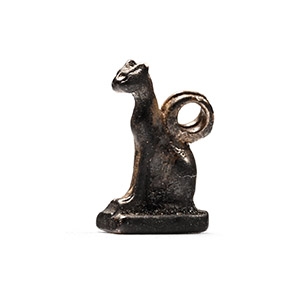
Egyptian Silver Bastet as Seated Cat Amulet
Late-Ptolemaic Period, 664-30 B.C.Sold for (Inc. bp): £715
Seated figure of a cat with pointed ears mounted on a rectangular base with a rounded end; suspension loop on the back. 0.34 grams, 8 mm
From an early 20th century collection. This lot is accompanied by an illustrated lot declaration signed by the Head of the Antiquities Department, Dr Raffaele D'Amato.
The cat was sacred to Bastet, a protective mother goddess and the daughter of the sun god Re. Amulets offered the wearer the goddess's protection. Her name means ‘she of the bast [ointment jar],’ which may have contained a substance favoured by or exclusive to royalty. Originally, Bastet was depicted as a woman with the head of a lioness, but by the late New Kingdom, she was usually shown with a cat's head. She is sometimes portrayed with kittens, emphasising her maternal role as a fierce protector of offspring. -
.jpg)
Egyptian Turquoise Glazed Faience Four Sons of Horus Mount Set
25th Dynasty, circa 747-656 B.C.Sold for (Inc. bp): £5,200
Set of four flat-backed plaques depicting the standing figures of the four sons of Horus (from left to right: Duamutef, Imsety, Hapy, and Qebehsenuef) in profile, each wearing a tripartite wig, broad collars, and holding a long folded cloth; mounted on a stand. 81 grams total, 95 x 80 mm including stand
Gunther Markert collection, Germany/Switzerland, 1954 or 1961. with Robert Bigler, Switzerland. Private collection, London, UK, acquired from the above on 12 October 2001. Accompanied by a copy of the Robert Bigler invoice. This lot has been cleared against the Art Loss Register database, and is accompanied by an illustrated lot declaration signed by the Head of the Antiquities Department, Dr Raffaele D'Amato.
The Four Sons of Horus were deities tasked with protecting the internal organs of the deceased. The human-headed Imsety safeguarded the liver, the baboon-headed Hapy looked after the lungs, the jackal-headed Duamutef defended the stomach, and the falcon-headed Qebehsenuef protected the intestines. Amulets featuring these deities were included within the mummy wrappings. -
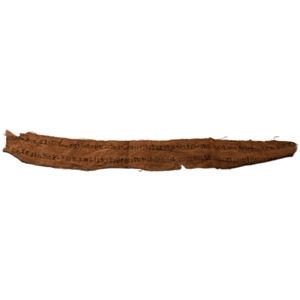
Egyptian Mummy Shroud Section with Hieratic Text
Late-Ptolemaic Period, circa 480-30 B.C.Sold for (Inc. bp): £715
A narrow strip of woven linen textile featuring two lines of neatly written hieratic text in black. 3.74 grams, 40 cm
From the collection of a gentleman, acquired on the London art market in the 1990s. This lot is accompanied by an illustrated lot declaration signed by the Head of the Antiquities Department, Dr Raffaele D'Amato.
From the fifth century B.C., mummy wrappings often feature hieratic script—a cursive form of Egyptian hieroglyphs used for daily and religious texts. These include excerpts from funerary works like the Book of the Dead, alongside prayers meant to protect the deceased in the afterlife. Often with vignettes, these texts were inscribed directly on linen strips during the mummification. Some bandages were notably long; one from Brussels, 6.2 cm wide, measures an incredible 26 metres.
