
Loading, please wait...


LOT 0518
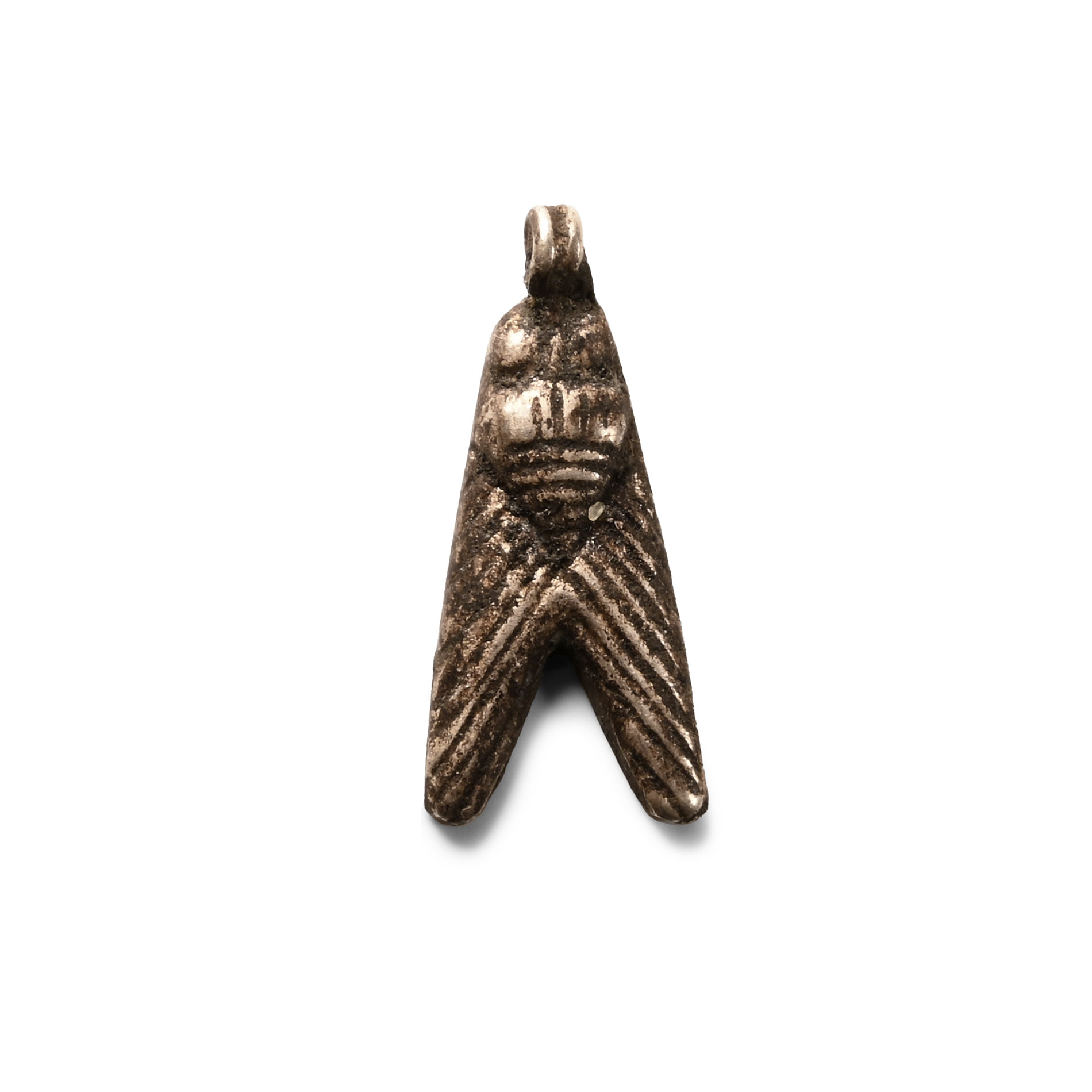
Egyptian Silver Fly Amulet
LATE PERIOD, 664-332 B.C.
3/4 in. (1.1 grams, 20 mm).
With linear detailing to body and wings, loop above the neck.
ProvenanceFrom an early 20th century collection.
LiteratureCf. Andrews, C., Amulets of Ancient Egypt, London, 1994, pp.62-3.
FootnotesSmall fly amulets first appeared in burials during the Naqada II Period, c. 3200 B.C. These amulets grew in popularity and the materials used to make them expanded during the New Kingdom. They are crafted from a variety of materials such as gold, silver, lapis lazuli, carnelian, amethyst, faience, and bone. These amulets were thought to protect against insect bites and to ward off troublesome flying creatures through apotropaic magic. Some believe they may have even been intended to symbolise the fly’s fecundity. Additionally, pharaohs would bestow gold fly-shaped pendants as military awards to honour the bravery and fly-like persistence of soldiers in battle.
CONDITIONTimeLine Auctions follows a vetting process to ensure the authenticity and legality of all items, reinforcing our commitment to integrity and responsible trading. Each antiquity, antique, and coin lot undergoes thorough examination by a vetting committee of at least ten external specialists, professional trade association members, scientists, and archaeologists: Our Vetting Process
AUCTIONS:
TimeLine is a leading auction house specialising in antiquities, ancient art, collectables, natural history, coins, medals, and books. Our auctions offer museums, collectors, historians, and enthusiasts the opportunity to acquire unique and historically significant pieces.
-
Egyptian Limestone 'Floral' Inlay Group
Roman Period, 30 B.C.-323 A.D.Sold for (Inc. bp): £72
Group of discoid inlay plaques or gaming counters, crinoids with cinquefoil motif. 105 grams total, 7-19 mm
From a central London ADA gallery, 1990s. -
Egyptian Painted Wooden Mask
Late Period, 664-332 B.C.Sold for (Inc. bp): £364
D-shaped in plan with carved facial detailing, thick nose and narrow mouth, with ochre-coloured painted finish; pierced for attachment. 170 grams, 20 cm
with a London, UK gallery, 1971-early 2000s.
This is the face and front portion of a wig belonging to a mummiform wooden coffin. It was attached using wooden dowels, the holes for which are visible. -
Egyptian Faience Bead and Amulet Group
Late Period, 664-332 B.C.Sold for (Inc. bp): £117
Comprising mainly blue and green tubular beads with some annular beads and fragmentary amulets, including the head of a hare and a portion of a hedjet crown. 19 grams total, 2-19 mm
From an early 20th century Home Counties, UK, collection.
