
Loading, please wait...
LOT 0453
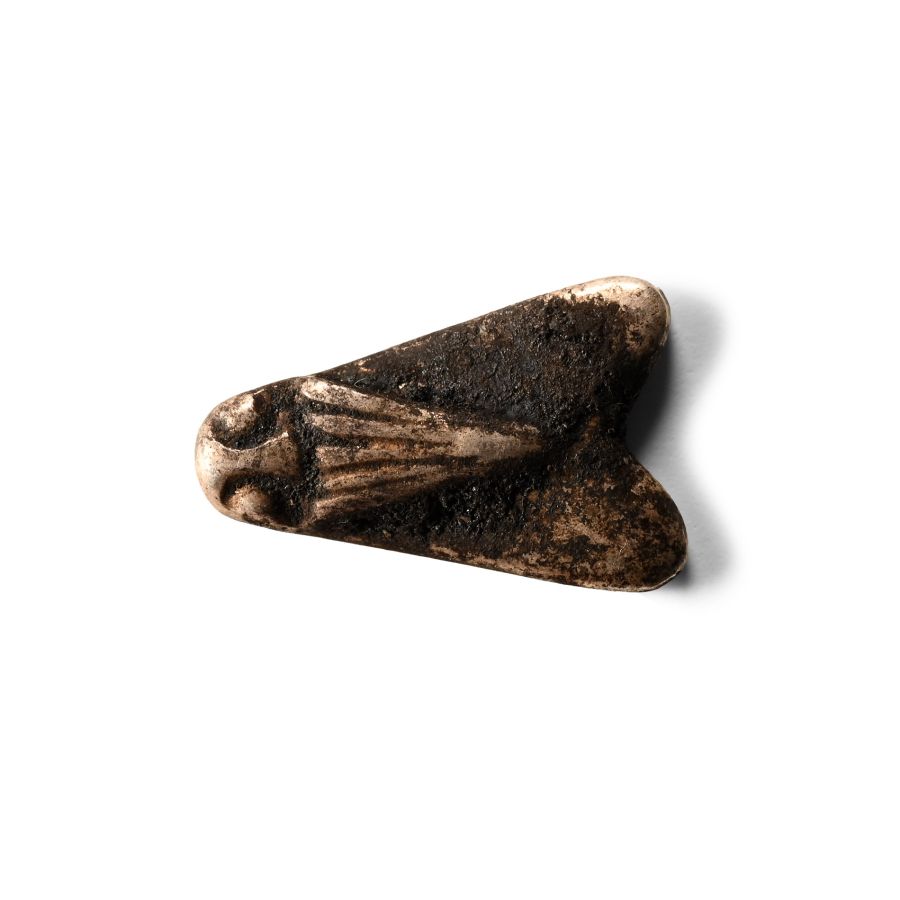
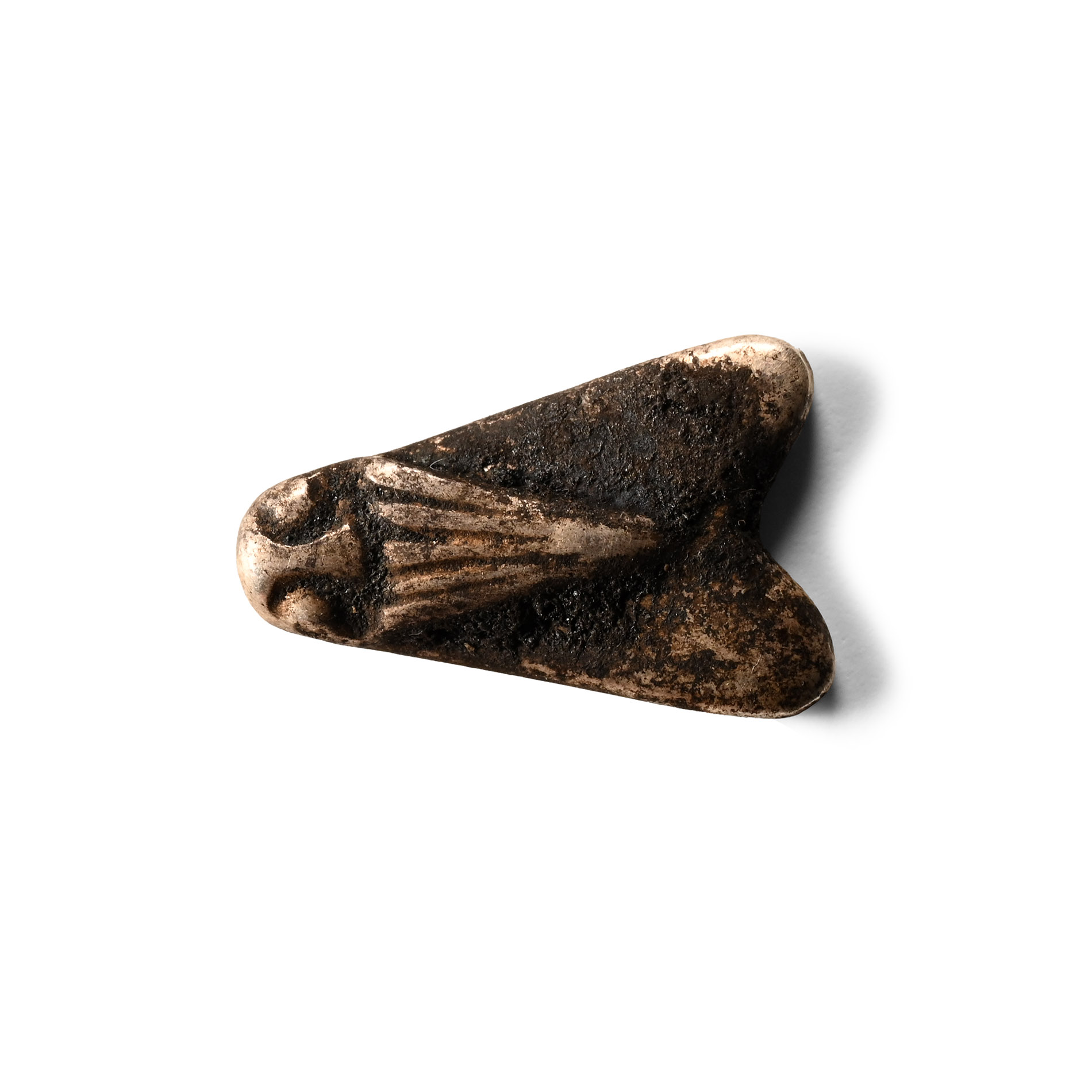
Egyptian Silver Fly Amulet
LATE PERIOD, 664-332 B.C.
5/8 in. (1.13 grams, 16 mm).
Pendant formed as a fly with domed eyes.
ProvenanceFrom an early 20th century collection.
FootnotesConsidering Egyptian artists often depicted fly whisks in the hands of pharaohs and high officials, one might assume that flies were simply a nuisance. However, the Egyptians held flies in high regard due to their quick speed, reactions, and persistence. Small fly amulets were made from various materials, including gold, silver, lapis lazuli, carnelian, amethyst, faience, and bone. They were believed to protect against insect bites and ward off flying creatures through apotropaic magic. Additionally, the pharaoh would give gold fly-shaped pendants as military awards to recognise the bravery and persistence of soldiers in battle.
CONDITIONTimeLine Auctions follows a vetting process to ensure the authenticity and legality of all items, reinforcing our commitment to integrity and responsible trading. Each antiquity, antique, and coin lot undergoes thorough examination by a vetting committee of at least ten external specialists, professional trade association members, scientists, and archaeologists: Our Vetting Process
AUCTIONS:
TimeLine is a leading auction house specialising in antiquities, ancient art, collectables, natural history, coins, medals, and books. Our auctions offer museums, collectors, historians, and enthusiasts the opportunity to acquire unique and historically significant pieces.
-
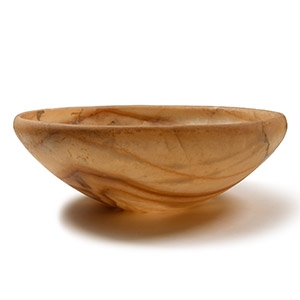
Egyptian Alabaster Bowl with Incised Inner Circle
Old Kingdom, circa 2700-2513 B.C.Sold for (Inc. bp): £442
Squat bowl with returned lip to the rim, incised ring to the centre. 749 grams, 21 cm wide
Acquired from Sir William Matthew Flinders Petrie FRS FBA (1853-1942), who had both found and repaired the piece; a British Egyptologist and a pioneer of systematic methodology in archaeology and the preservation of artefacts. From the private collection of the late Mrs Belinda Ellison, long time member of the Egyptian Exploration Society, c.1940-2020. -
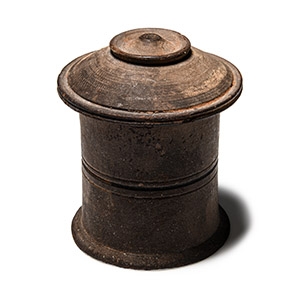
Egyptian Decorated Wooden Pyxis
Late Period-Ptolemaic Period, 664-30 B.C.Estimate: £400 - 600 (+bp*)
Opening Bid: £200
Lathe-turned body and separate lid, incised bands to the equator, flared base, and fillet to the domed lid. 60 grams, 73 mm high
Ex UK collection, 1930-1940s. -
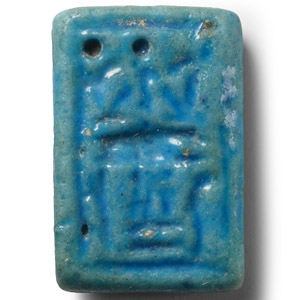
Egyptian Faience Bead for Ramesses II
New Kingdom, 19th Dynasty, 1279-1213 B.C.Sold for (Inc. bp): £286
Rectangular bead with faintly impressed hieroglyphs on both broad faces, giving Ramesses II's birth and throne names. 3.59 grams, 23 mm
From the old Belfort collection, expert Jean Roudillon. Ex Hotel des Ventes de Belfort. Property of a French collector.
