
Loading, please wait...


LOT 0492
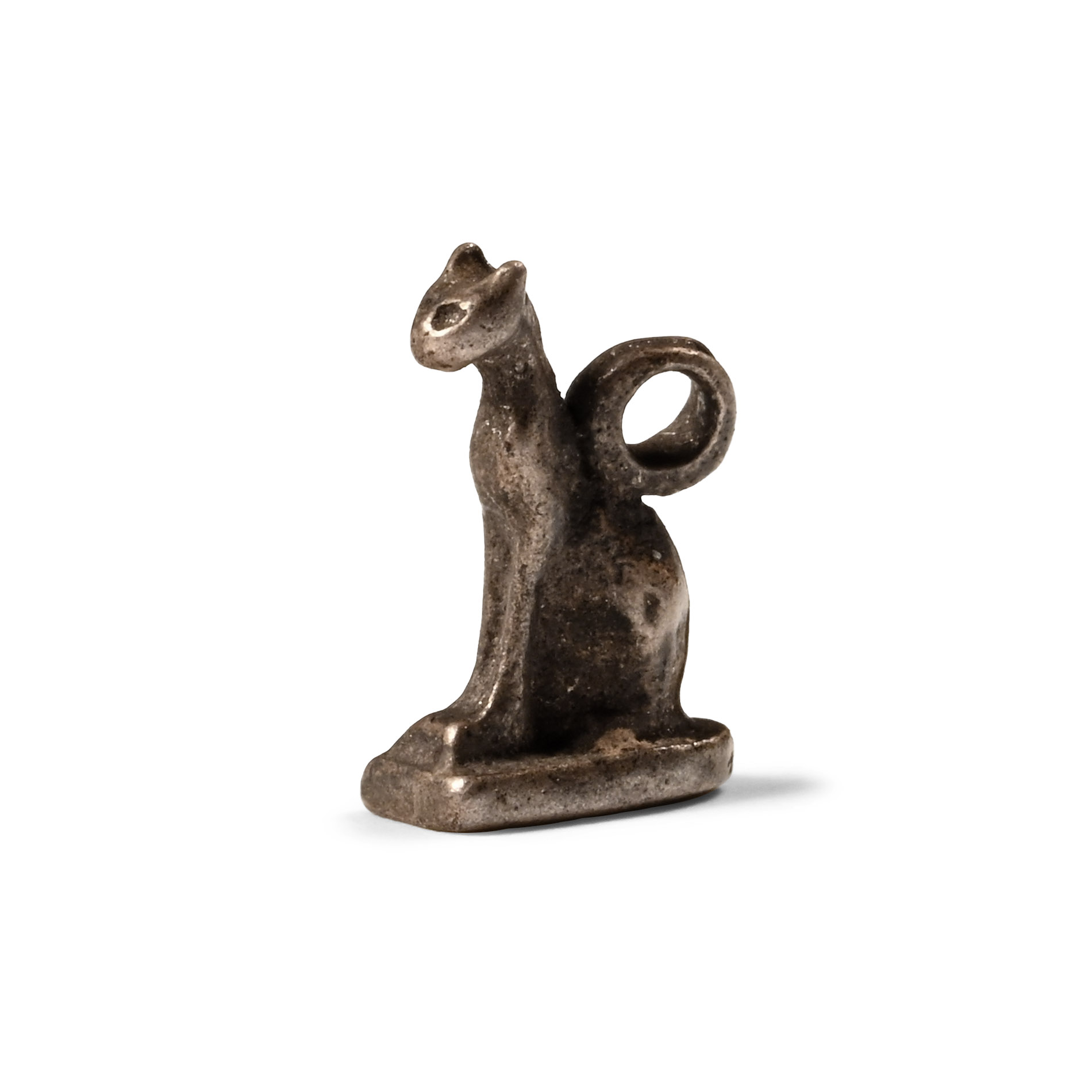
Egyptian Silver Cat Amulet
LATE PERIOD, 664-332 B.C.
3/8 in. (0.33 grams, 8 mm).
Modelled seated on a tongue-shaped base, with facial detailing and suspension loop to the back.
ProvenanceFrom an early 20th century collection.
LiteratureCf. Andrews, C., Amulets of Ancient Egypt, London, 1994, item 29(c).
FootnotesThe cat was sacred to Bastet, a protective mother goddess and the daughter of the sun god Re. Amulets provided the wearer with the goddess's protection.
CONDITIONTimeLine Auctions follows a vetting process to ensure the authenticity and legality of all items, reinforcing our commitment to integrity and responsible trading. Each antiquity, antique, and coin lot undergoes thorough examination by a vetting committee of at least ten external specialists, professional trade association members, scientists, and archaeologists: Our Vetting Process
AUCTIONS:
TimeLine is a leading auction house specialising in antiquities, ancient art, collectables, natural history, coins, medals, and books. Our auctions offer museums, collectors, historians, and enthusiasts the opportunity to acquire unique and historically significant pieces.
-
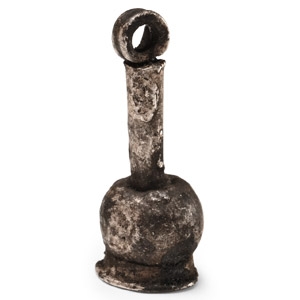
Egyptian Silver Poppy Head Amulet
Late Period, 664-332 B.C.Sold for (Inc. bp): £59
With bulb and disc finial, integral shank and gusseted suspension loop. 1 grams, 17 mm
From an early 20th century collection.
Amulets in the form of poppies were used to heal and alleviate pain and to ward off death. These types of amulets were also linked to Osiris, the Egyptian deity of agriculture, death, and the afterlife. -
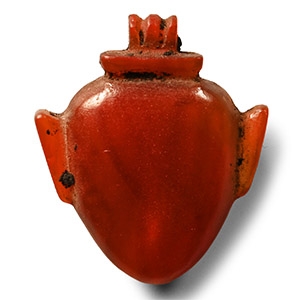
Large Egyptian Translucent Carnelian Heart Amulet
New Kingdom, circa 1550-1070 B.C.Sold for (Inc. bp): £3,900
Carved with lateral triangular lugs and ribbed bale. 4.6 grams, 24 mm
From an early 20th century collection.
According to ancient Egyptian beliefs, the heart (ib) was considered to be the centre of intelligence, emotions, and behaviour. The heart was also believed to store an individual's memories. During the Weighing of the Heart ceremony in the afterlife, the heart could speak up for the deceased and account for their lifetime of actions before Osiris. For this reason, heart amulets were placed on the mummy to safeguard the organ and ensure a favourable outcome during judgment. -
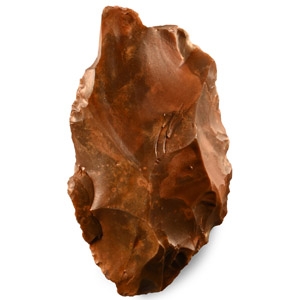
Egyptian Flint Handaxe
Lower Palaeolithic Period, circa 450,000-280,000 B.P.Sold for (Inc. bp): £33
Irregular in plan with biconvex section. 380 grams, 14 cm
Found Egypt, North Africa. From the British art market in the 1970s-1980s. Acquired via inheritance, 1988. From the collection of a South West London, UK, specialist Stone Age collector.
