
Loading, please wait...
LOT 0511
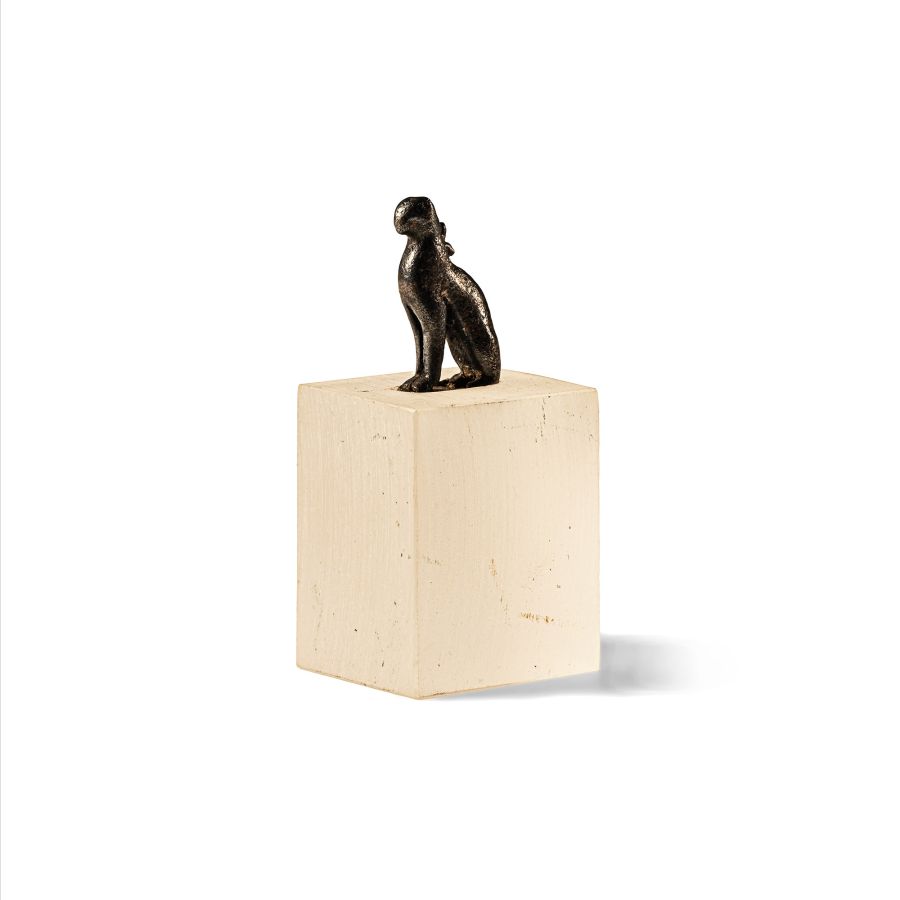
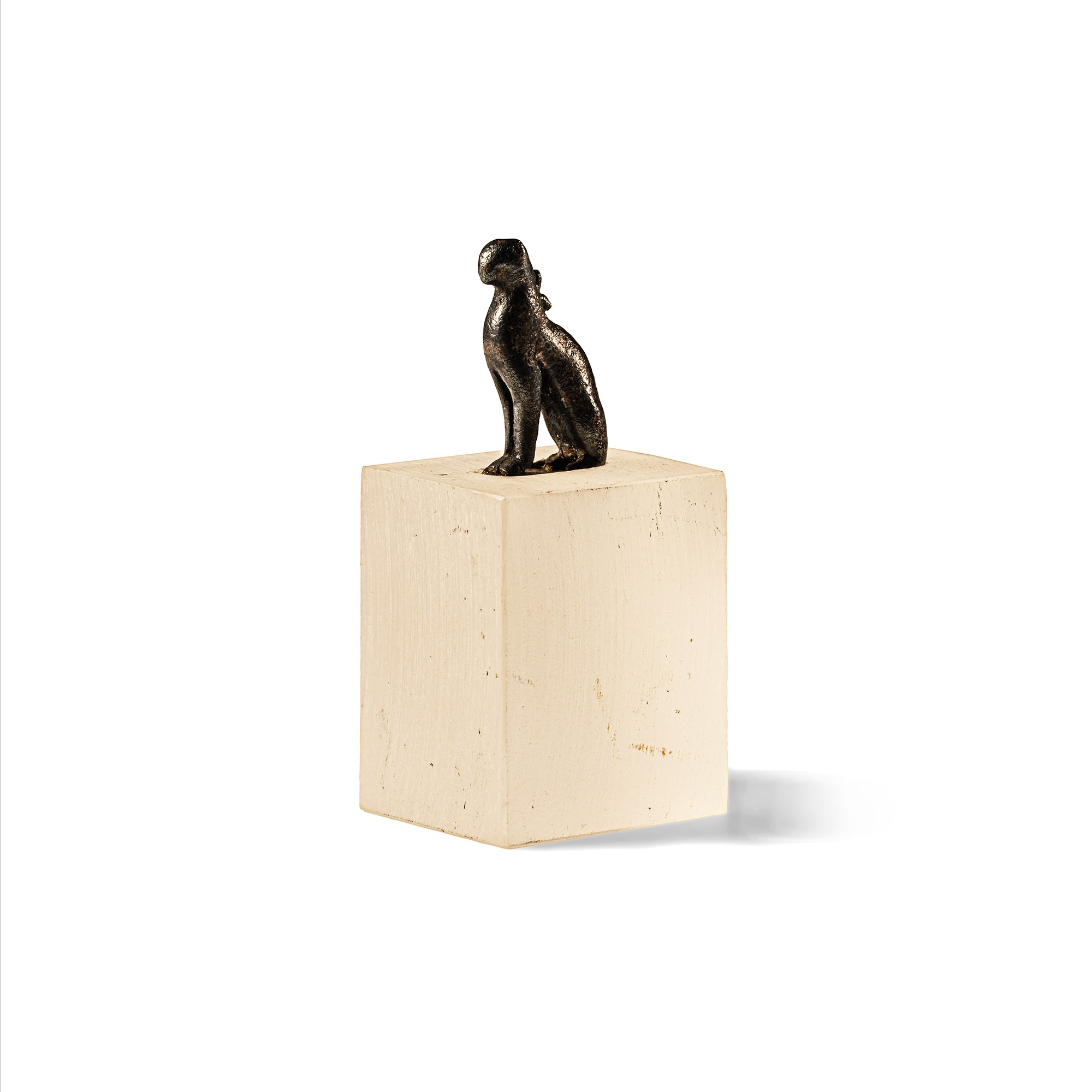
Egyptian Silver Bastet Cat Goddess
LATE PERIOD, 664-332 B.C.
1/2 in. (1 1/4 in.) (1.27 grams, 13 mm high (6.02 grams total, 33 mm including stand)).
Modelled seated on an oblong base; accompanied by a custom-made display base.
ProvenanceEx Mrs Zimmermann Koutoulakis, December 1977.
Ex R. Liechti (1934-2010) Geneva, Switzerland, collection between 1950-1990s.
Bastet was primarily a goddess of fertility, but she also represented festivities and intoxication, which formed part of the temple celebrations of her cult.
CONDITIONTimeLine Auctions follows a vetting process to ensure the authenticity and legality of all items, reinforcing our commitment to integrity and responsible trading. Each antiquity, antique, and coin lot undergoes thorough examination by a vetting committee of at least ten external specialists, professional trade association members, scientists, and archaeologists: Our Vetting Process
AUCTIONS:
TimeLine is a leading auction house specialising in antiquities, ancient art, collectables, natural history, coins, medals, and books. Our auctions offer museums, collectors, historians, and enthusiasts the opportunity to acquire unique and historically significant pieces.
LOT 0511
Egyptian Silver Bastet Cat Goddess
Estimate £700 - 900€810 - 1,040 (for guidance only)$950 - 1,220 (for guidance only)
-
Egyptian Limestone 'Floral' Inlay Group
Roman Period, 30 B.C.-323 A.D. or earlierSold for (Inc. bp): £85
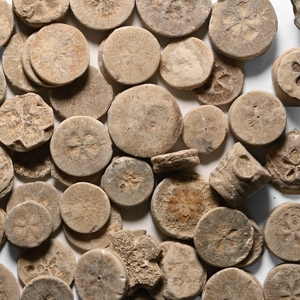
Group of discoid inlay plaques or gaming counters, crinoids with cinquefoil motif. 80 grams total, 12-19 mm
From a central London ADA gallery, 1990s.
Flowers were symbolic of rebirth due to the daily reopening of their petals after nightfall. As a result, they were widely used in domestic settings, religious and funerary contexts, and as adornments. Similar rosette discs, like those recovered from the Ramesside Period palace at Qantir, were used as decorative elements in royal palaces. -
.jpg)
Egyptian Multi-Stranded Mummy Bead Necklace
Late Period, 664-332 B.C.Sold for (Inc. bp): £156
Multi-stranded designer necklace composed of beads of mainly annular and tubular types. 23 grams total, 66 cm long
Acquired before 1979. From the private collection of Mr F. A., South Kensington, London, UK; thence by descent 2014.
For thousands of years, artisans in Egypt created vibrant ceramics to echo the beauty of rare jewels. These ornaments were created with almost every material, colour, and texture imaginable and they come from across Egypt and beyond: vibrant blue lapis lazuli from Afghanistan, glossy black obsidian from Turkey, and aqua-green turquoise from the Sinai. They were worn in life and, after death, they served as precious ornamentation for mummies -
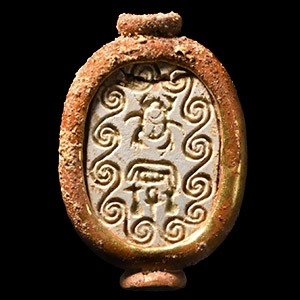
Egyptian Gold Mounted Scarab Bead
Middle Kingdom-Second Intermediate Period, circa 1900-1560 B.C.Estimate: £400 - 600 (+bp*)
Opening Bid: £200
Comprising a faience scarab with a scroll-work border framing the vertically arranged hieroglyphs: kheper beetle, nwb sign for gold, and two nfr signs flanking an ankh sign, set in a gold funda with tubular collars. 3.36 grams, 20 mm
From an early 20th century Home Counties, UK, collection.
