
Loading, please wait...
LOT 0447
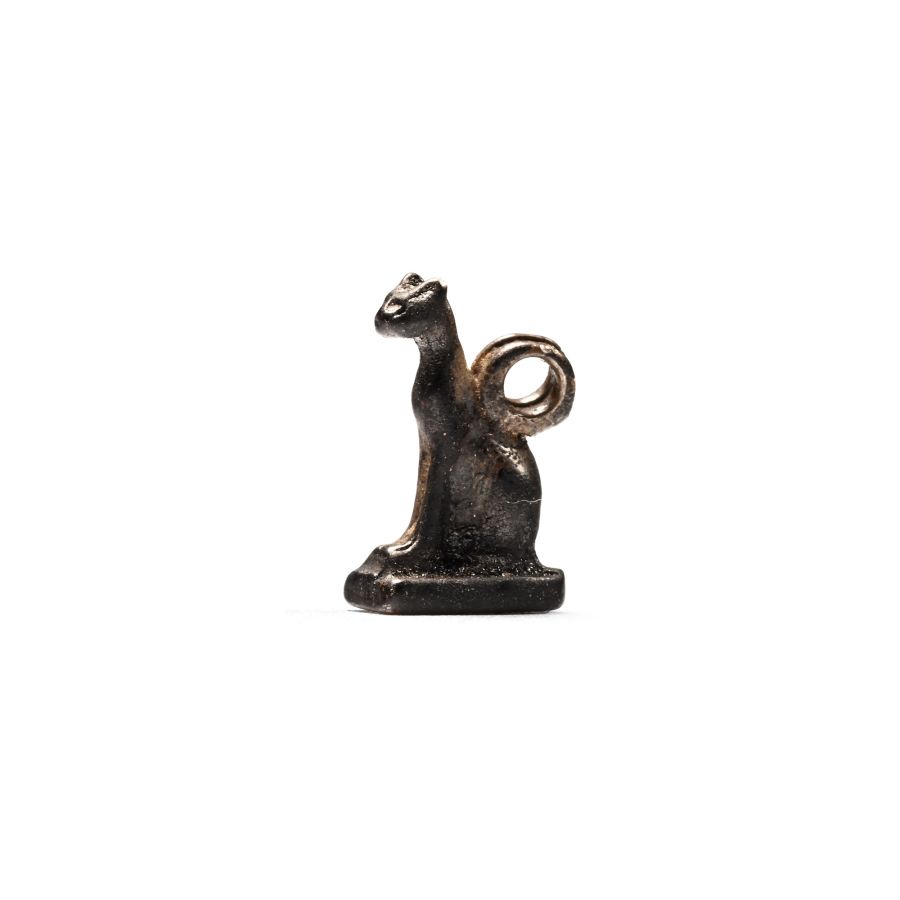
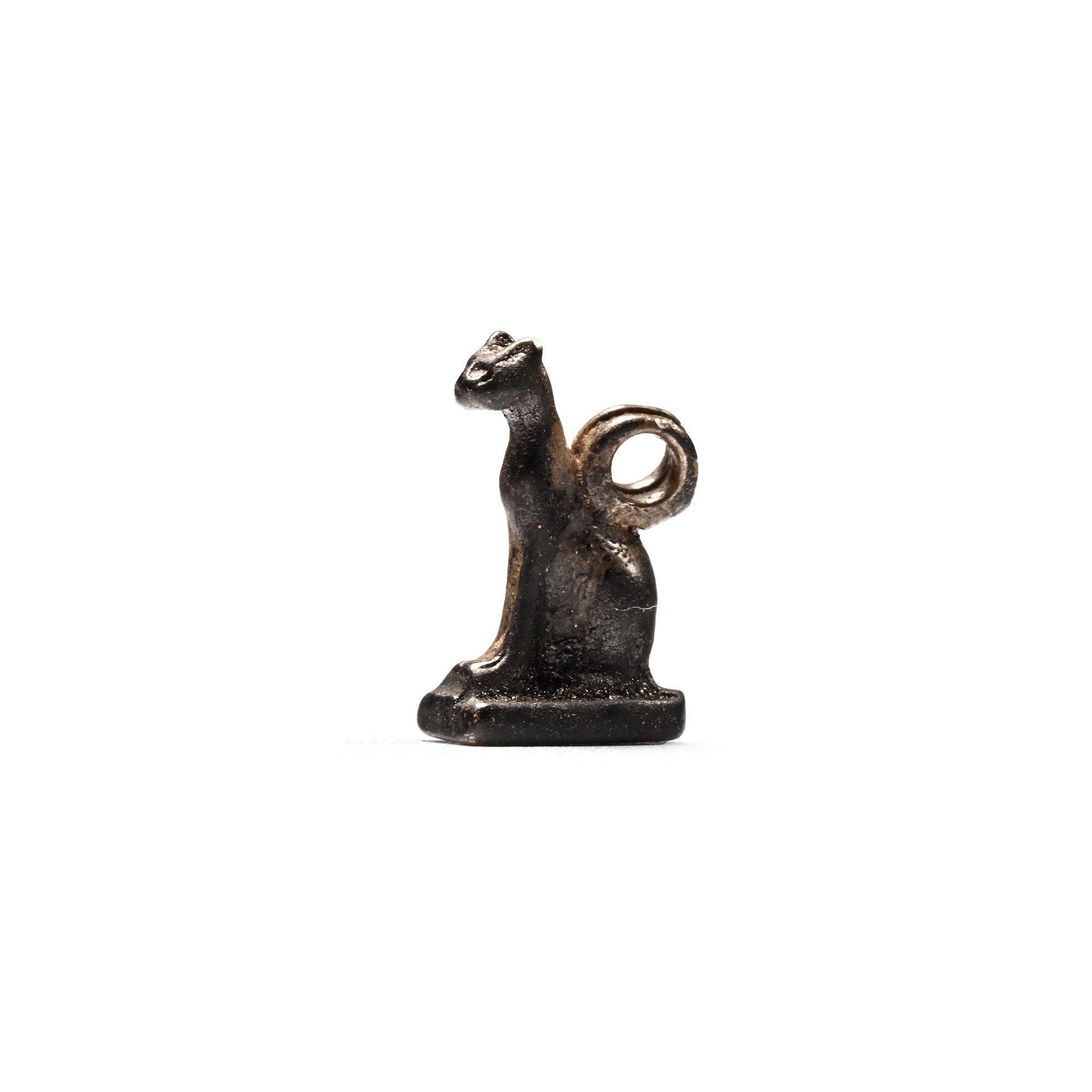
Egyptian Silver Bastet as Seated Cat Amulet
LATE-PTOLEMAIC PERIOD, 664-30 B.C.
3/8 in. (0.34 grams, 8 mm).
Seated figure of a cat with pointed ears mounted on a rectangular base with a rounded end; suspension loop on the back. [No Reserve]
ProvenanceFrom an early 20th century collection.
This lot is accompanied by an illustrated lot declaration signed by the Head of the Antiquities Department, Dr Raffaele D'Amato.
Cf. Andrews, C., Amulets of Ancient Egypt, London, 1994, item 29(c).
FootnotesThe cat was sacred to Bastet, a protective mother goddess and the daughter of the sun god Re. Amulets offered the wearer the goddess's protection.
Her name means ‘she of the bast [ointment jar],’ which may have contained a substance favoured by or exclusive to royalty. Originally, Bastet was depicted as a woman with the head of a lioness, but by the late New Kingdom, she was usually shown with a cat's head. She is sometimes portrayed with kittens, emphasising her maternal role as a fierce protector of offspring.
TimeLine Auctions follows a vetting process to ensure the authenticity and legality of all items, reinforcing our commitment to integrity and responsible trading. Each antiquity, antique, and coin lot undergoes thorough examination by a vetting committee of at least ten external specialists, professional trade association members, scientists, and archaeologists: Our Vetting Process
AUCTIONS:
TimeLine is a leading auction house specialising in antiquities, ancient art, collectables, natural history, coins, medals, and books. Our auctions offer museums, collectors, historians, and enthusiasts the opportunity to acquire unique and historically significant pieces.
-
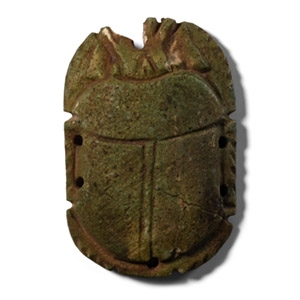
Large Egyptian Faience Heart Scarab
Late Period, 664-332 B.C.Sold for (Inc. bp): £169
Green-glazed with anatomical detailing, pierced through the outer edge. 48 grams, 73 mm
From an early 20th century collection London and Home counties, UK. This lot is accompanied by an illustrated lot declaration signed by the Head of the Antiquities Department, Dr Raffaele D'Amato.
The heart scarab served to protect the individual by silencing the heart so it would not testify against its owner. Many heart scarabs, especially those intended for elite burials, were mounted with outstretched wings—symbols of divine protection and rebirth. These wings echoed the iconography of protective deities like Isis and Nephthys, enhancing the amulet’s power to safeguard the soul on its journey to eternal life. The pierced holes on the side of this example were likely for the attachment of such wings. -
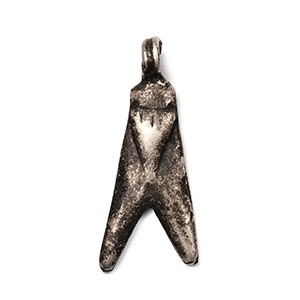
Egyptian Silver Fly Amulet
Late-Ptolemaic Period, 664-30 B.C.Sold for (Inc. bp): £111
With detailing to wings and eyes, loop for suspension above the head. 0.89 grams, 20 mm
From an early 20th century collection. This lot is accompanied by an illustrated lot declaration signed by the Head of the Antiquities Department, Dr Raffaele D'Amato. -
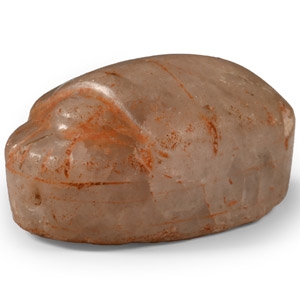
Egyptian Pink Quartz Scarab
Late Period, 664-332 B.C.Sold for (Inc. bp): £338
Carved with deep sides and carapace detailing to the upper face, pierced. 19.82 grams, 33 mm
From the private collection of the late Mrs Belinda Ellison, a long time member of the Egyptian Exploration Society, c.1940-2020. This lot is accompanied by an illustrated lot declaration signed by the Head of the Antiquities Department, Dr Raffaele D’Amato. This lot is accompanied by an illustrated lot declaration signed by the Head of the Antiquities Department, Dr Raffaele D'Amato.
