
Loading, please wait...
LOT 0439
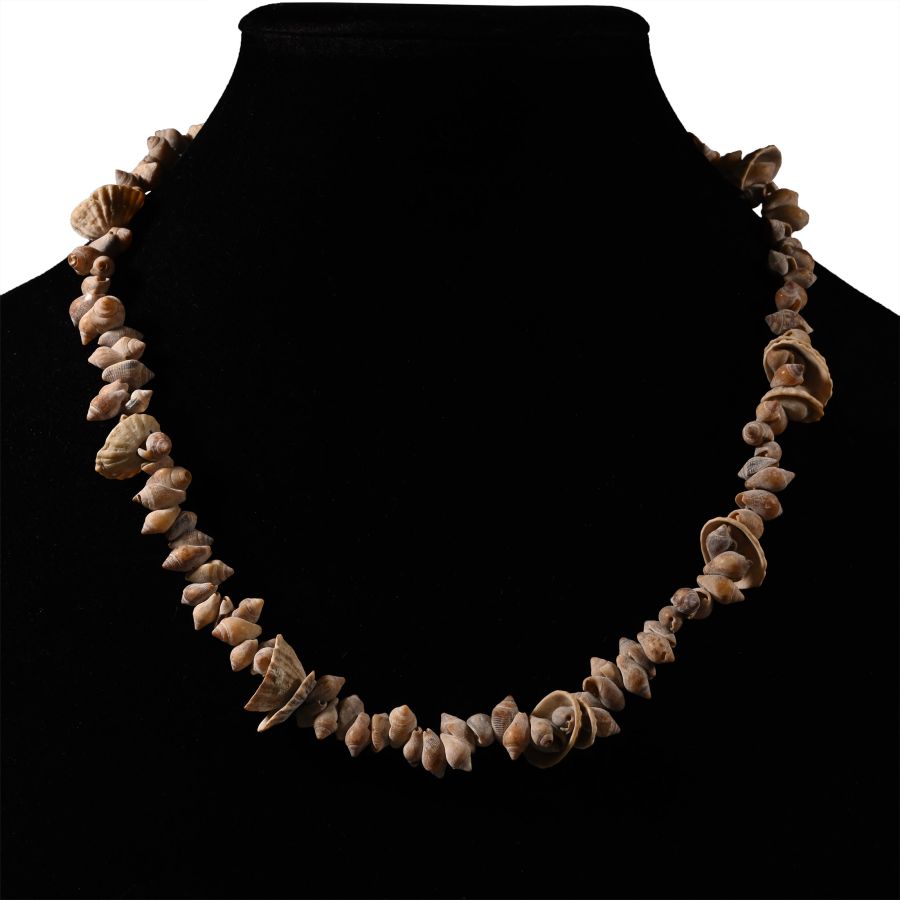
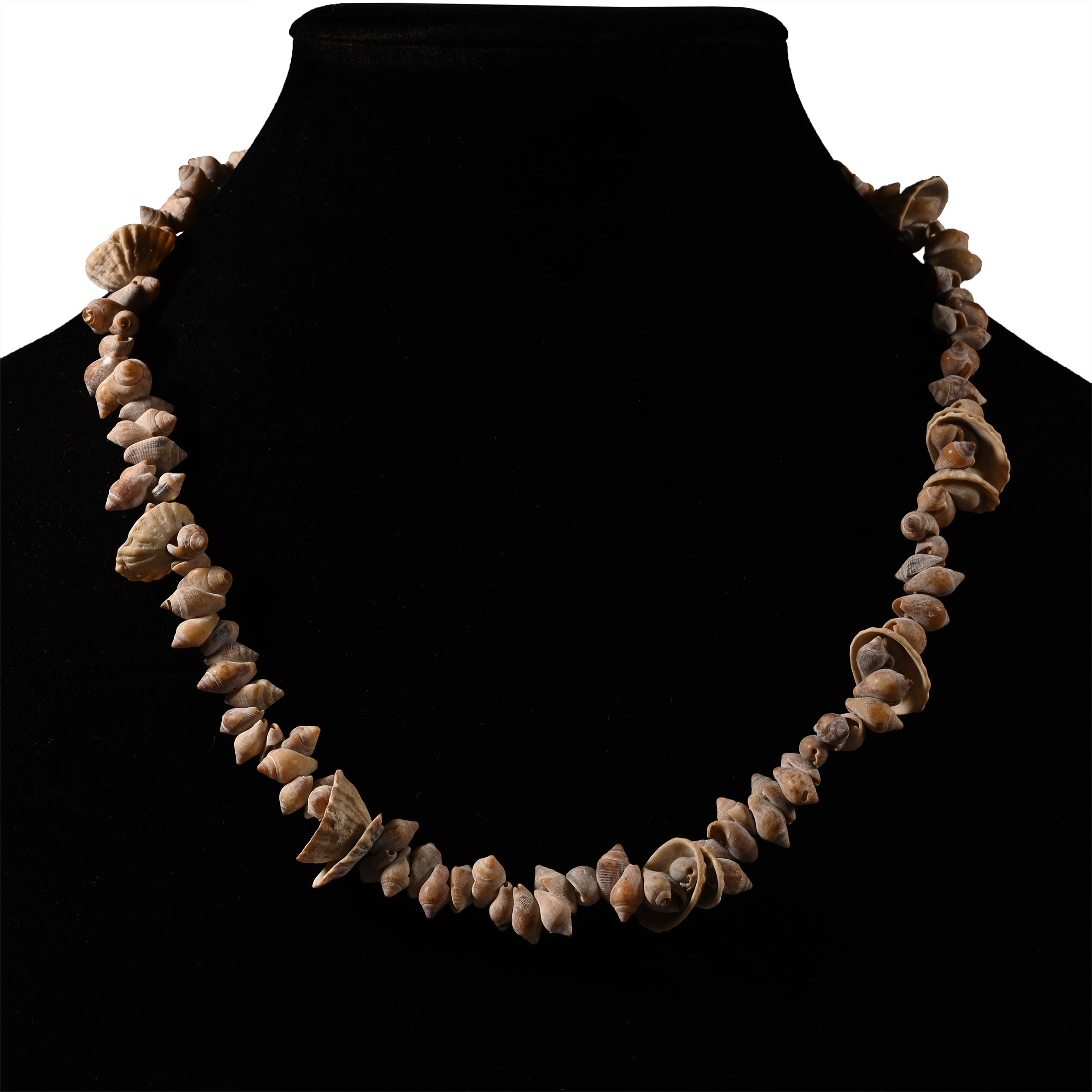
Egyptian Shell Bead Necklace
LATE-PTOLEMAIC PERIOD, 664-30 B.C.
20 in. (27 grams, 51 cm).
Restrung necklace of scallops, cockles, limpets, and other types. [No Reserve]
ProvenanceFrom the private collection of Walter Thomas Gaze Cooper (1895-1980).
This lot is accompanied by an illustrated lot declaration signed by the Head of the Antiquities Department, Dr Raffaele D'Amato.
TimeLine Auctions follows a vetting process to ensure the authenticity and legality of all items, reinforcing our commitment to integrity and responsible trading. Each antiquity, antique, and coin lot undergoes thorough examination by a vetting committee of at least ten external specialists, professional trade association members, scientists, and archaeologists: Our Vetting Process
AUCTIONS:
TimeLine is a leading auction house specialising in antiquities, ancient art, collectables, natural history, coins, medals, and books. Our auctions offer museums, collectors, historians, and enthusiasts the opportunity to acquire unique and historically significant pieces.
-
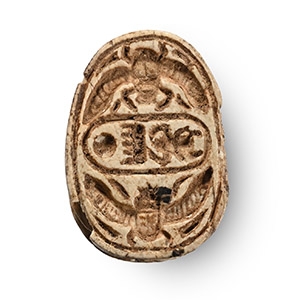
Egyptian Steatite Pharaoh Thutmose III Royal Scarab
New Kingdom, 1334-332 B.C. or laterSold for (Inc. bp): £468
With fine detailing to the clypeus, head and legs; underside with cartouche for Thutmose III flanked by winged scarabs. 7.42 grams, 25 mm
From the collection of a gentleman, acquired on the London art market in the 1990s. This lot is accompanied by an illustrated lot declaration signed by the Head of the Antiquities Department, Dr Raffaele D'Amato. -
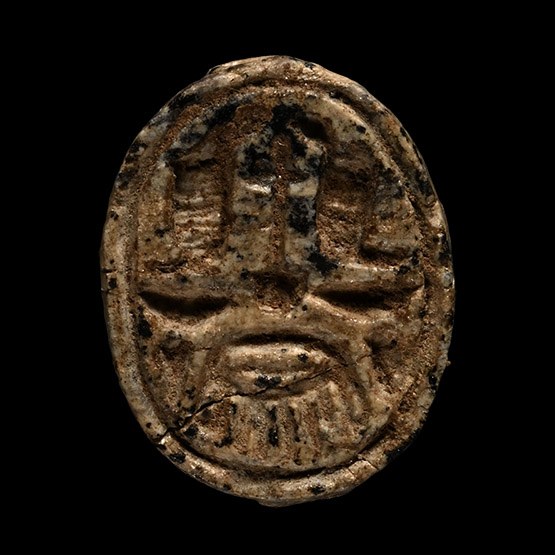
Egyptian Faience Scarab with Hieroglyphs
Late Period, 664-332 B.C.Estimate: £180 - 240 (+bp*)
Opening Bid: £90
Modelled as a scarab resting on a textured base with a tubular extension behind and before the head forming part of the piercing, the underside features two rearing cobras atop neb signs flanking a nefer sign, with a large nwb sign (meaning 'gold') below. 2.66 grams, 18 mm
From the property of a London, UK, gentleman, 1970-2000s. This lot is accompanied by an illustrated lot declaration signed by the Head of the Antiquities Department, Dr Raffaele D'Amato. -
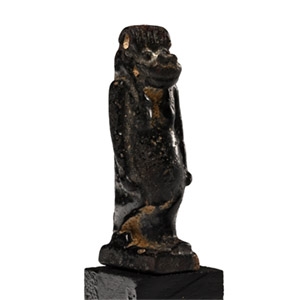
Egyptian Glass Taweret Amulet
Late Period, 664-332 B.C.Estimate: £500 - 700 (+bp*)
Opening Bid: £278
The goddess Taweret in the form of a hippopotamus standing upright with human arms resting on the swollen stomach, crocodile tail flowing down her spine from beneath her wig; mounted on a custom-made display stand. 11.9 grams, 52 mm
Ex P.A. collection, London, UK, 1990s. This lot is accompanied by an illustrated lot declaration signed by the Head of the Antiquities Department, Dr Raffaele D'Amato.
Tawaret is an ancient Egyptian goddess primarily associated with fertility, childbirth, motherhood, and the protection of women during pregnancy and childbirth. She is depicted as a composite creature, blending various animal traits, and is one of the more unique and striking deities in the Egyptian pantheon. Tawaret’s name is derived from the Egyptian word for "great" or "large" (tꜣwꜣrt), reflecting her formidable and protective nature.
