
Loading, please wait...
LOT 0025
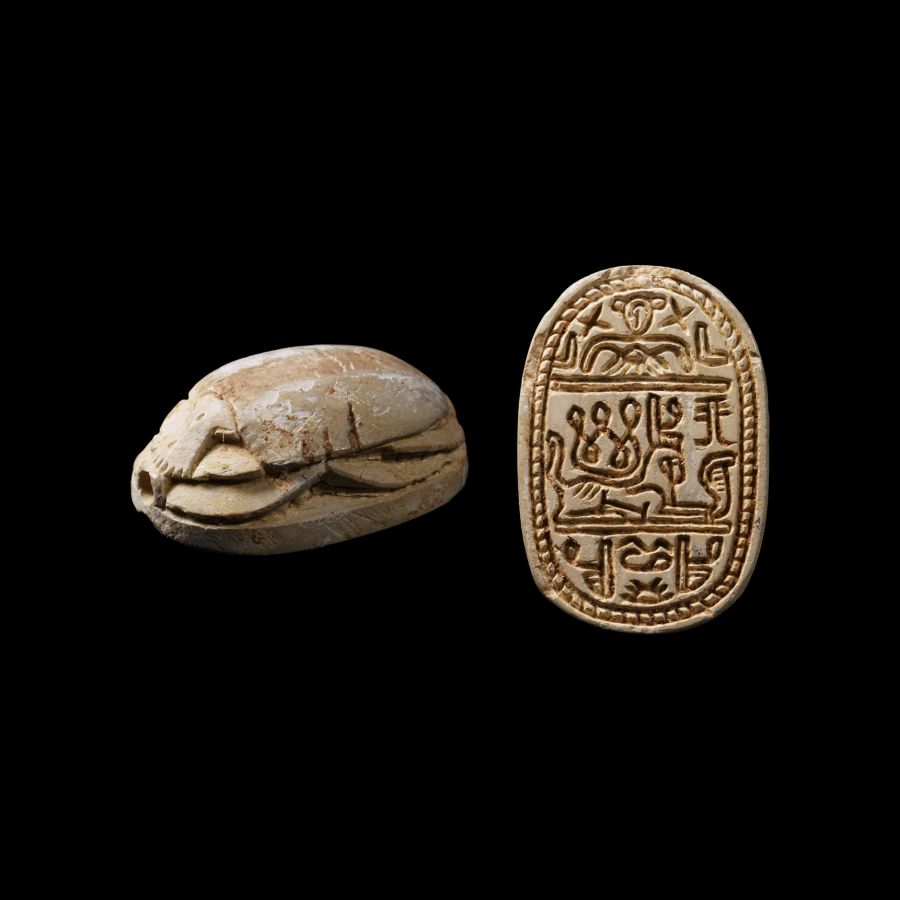
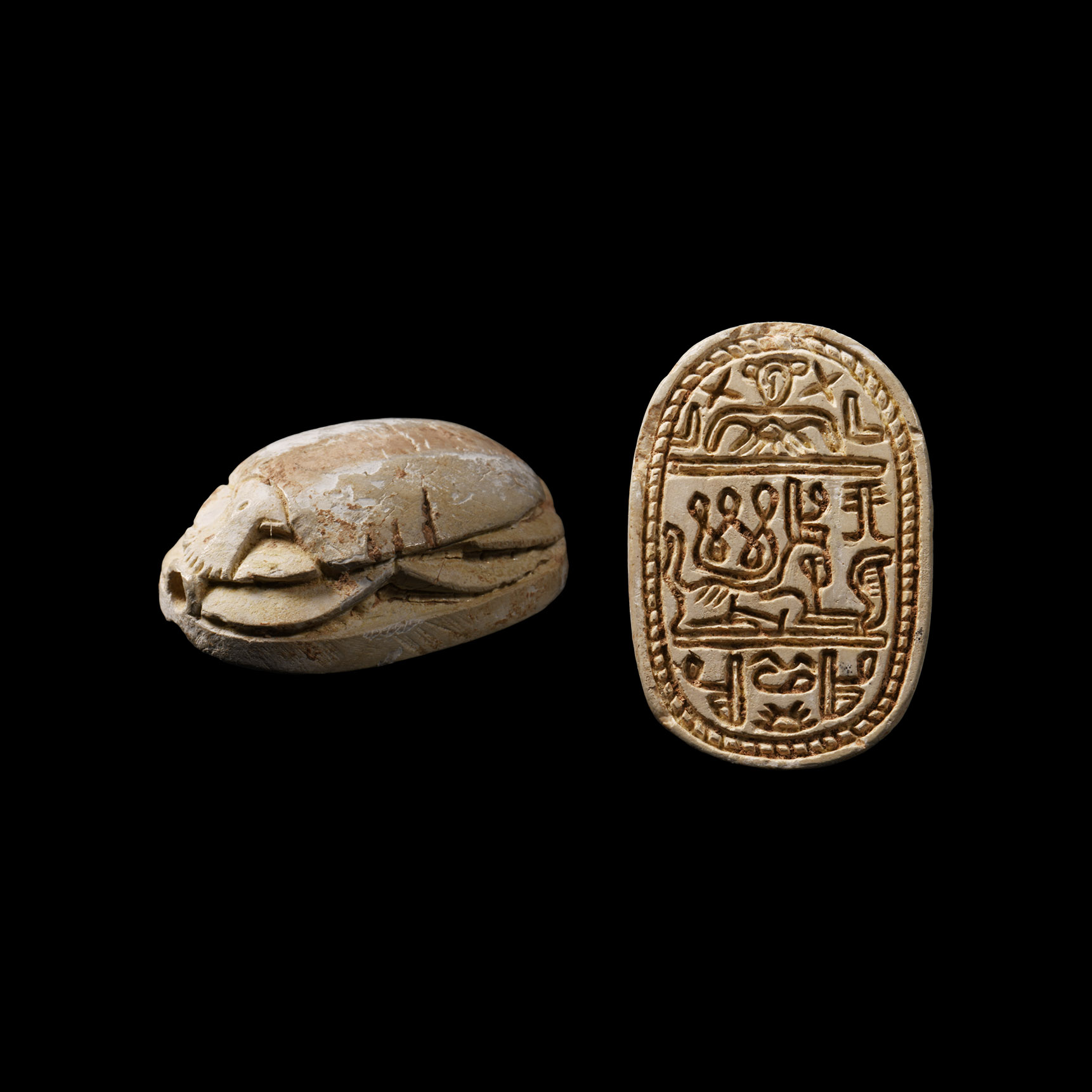
Egyptian Scarab with Sphinx
NEW KINGDOM-LATE PERIOD, 1550-332 B.C.
1 in. (4.18 grams, 24 mm).
Carved with naturalistic anatomical detailing; the base displaying a ropework border framing three tiers of symbols and figures, including a couchant sphinx facing right and wearing the Red Crown of Lower Egypt, a djed pillar and sacred uraeus before it, loop and other motifs; drilled for suspension.
ProvenanceEx London gentleman's collection, 1990s.
CONDITIONTimeLine Auctions follows a vetting process to ensure the authenticity and legality of all items, reinforcing our commitment to integrity and responsible trading. Each antiquity, antique, and coin lot undergoes thorough examination by a vetting committee of at least ten external specialists, professional trade association members, scientists, and archaeologists: Our Vetting Process
AUCTIONS:
TimeLine is a leading auction house specialising in antiquities, ancient art, collectables, natural history, coins, medals, and books. Our auctions offer museums, collectors, historians, and enthusiasts the opportunity to acquire unique and historically significant pieces.
LOT 0025
Egyptian Scarab with Sphinx
Estimate £1,000 - 1,400€1,160 - 1,620 (for guidance only)$1,350 - 1,890 (for guidance only)
-
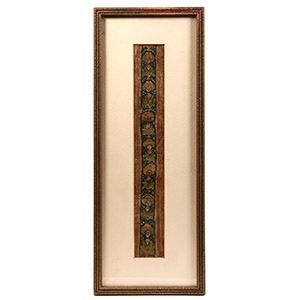
Framed Coptic Wool Garment Fragment with Female Heads
Circa 6th-7th century A.D.Sold for (Inc. bp): £260
Comprising a vertical arrangement of female heads wearing proplomas, alternating with green foliage; enclosed within a red-orange border with yellow bands, wave motifs to the edges; mounted in a custom-made glazed frame by Jean Bohne Pictures & Frames, New York, with a handwritten dedication to the reverse. 728 grams total, 46 x 17.5 cm including frame
From the private collection of Mr Vladimir Gregorietch Simkhovitch (1874-1959), Professor of Economics at Columbia University, U.S.A. Vladimir was a great collector of ancient art and works from his collection are kept in the Smithsonian Museum, the Metropolitan Museum of New York, and the Brooklyn Museum amongst others.
The band was probably a segment from a curtain, carpet or parietal cover. -
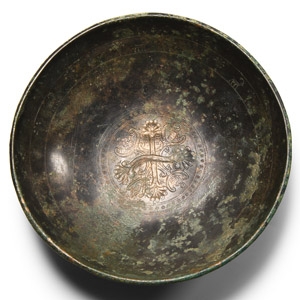
Heavy Egypto-Persian Bronze Phiale with Ibexes, Leonine-Headed Aegis, Pseudo-Cartouches, and Lotus Flowers
Circa 7th-4th century B.C.Estimate: £1,800 - 2,400 (+bp*)
Opening Bid: £900
Shallow profile with rounded underside and rounded rim; underside with central impressed cruciform motif with one eccentric arm; inner face with two ropework bands flanking stamped images (advancing ibex, lotus in blossom, leonine-headed aegis (perhaps Sekhmet); central ring of pellets with herringbone borders, cruciform design of four lotus plants above stems with leonine-headed aegis and pseudo cartouches topped with Maat-feather plumes. 256 grams, 14.7 cm wide
From a private UK collection since the 1980s. Acquired mid 2000s. Property of a London gentleman. Accompanied by a scholarly report by Egyptologist Paul Whelan. -
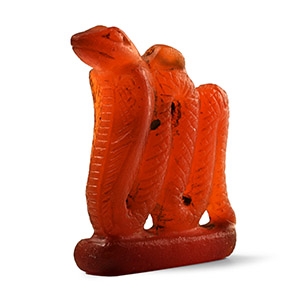
Egyptian Carnelian Cobra Amulet
Third Intermediate Period, circa 900 B.C.Sold for (Inc. bp): £910
Carved on a free-standing rectangular base; suspension loop to the serpent's back. 8.58 grams, 33 mm
Acquired prior to 2000 from a European collection. Canadian private collection of Mr A.K. of Montreal.
The sacred uraeus was a symbol of royalty, sovereignty and divine authority in ancient Egypt.
