
Loading, please wait...
LOT 0501
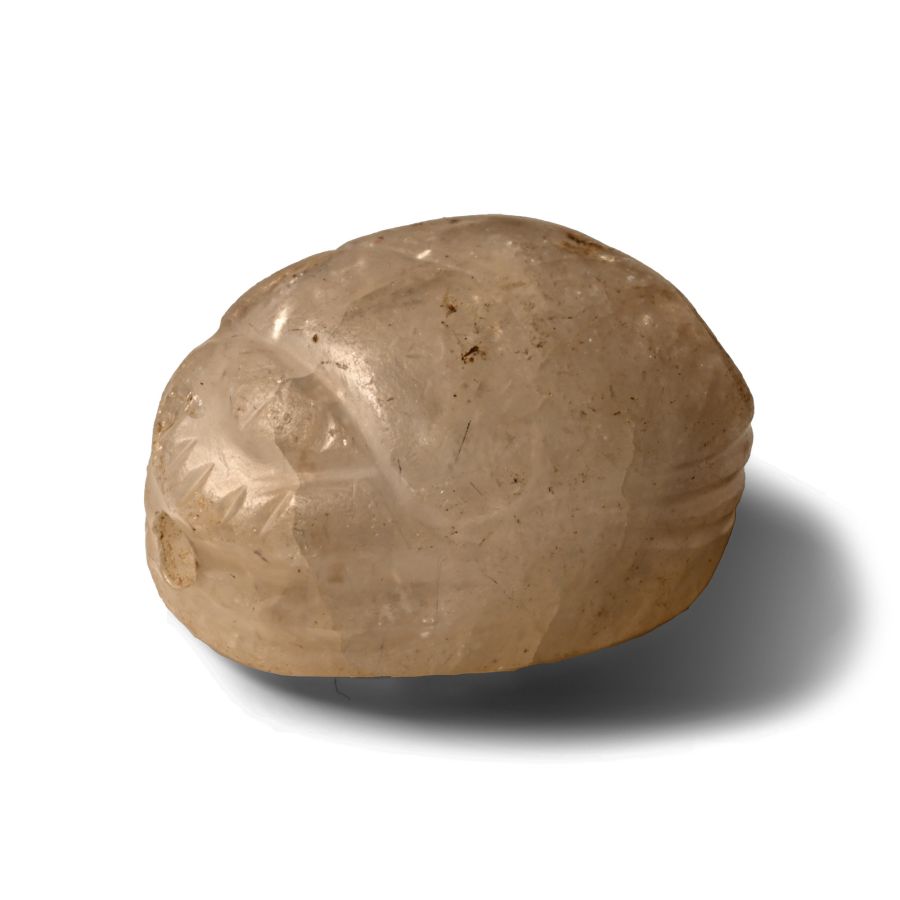
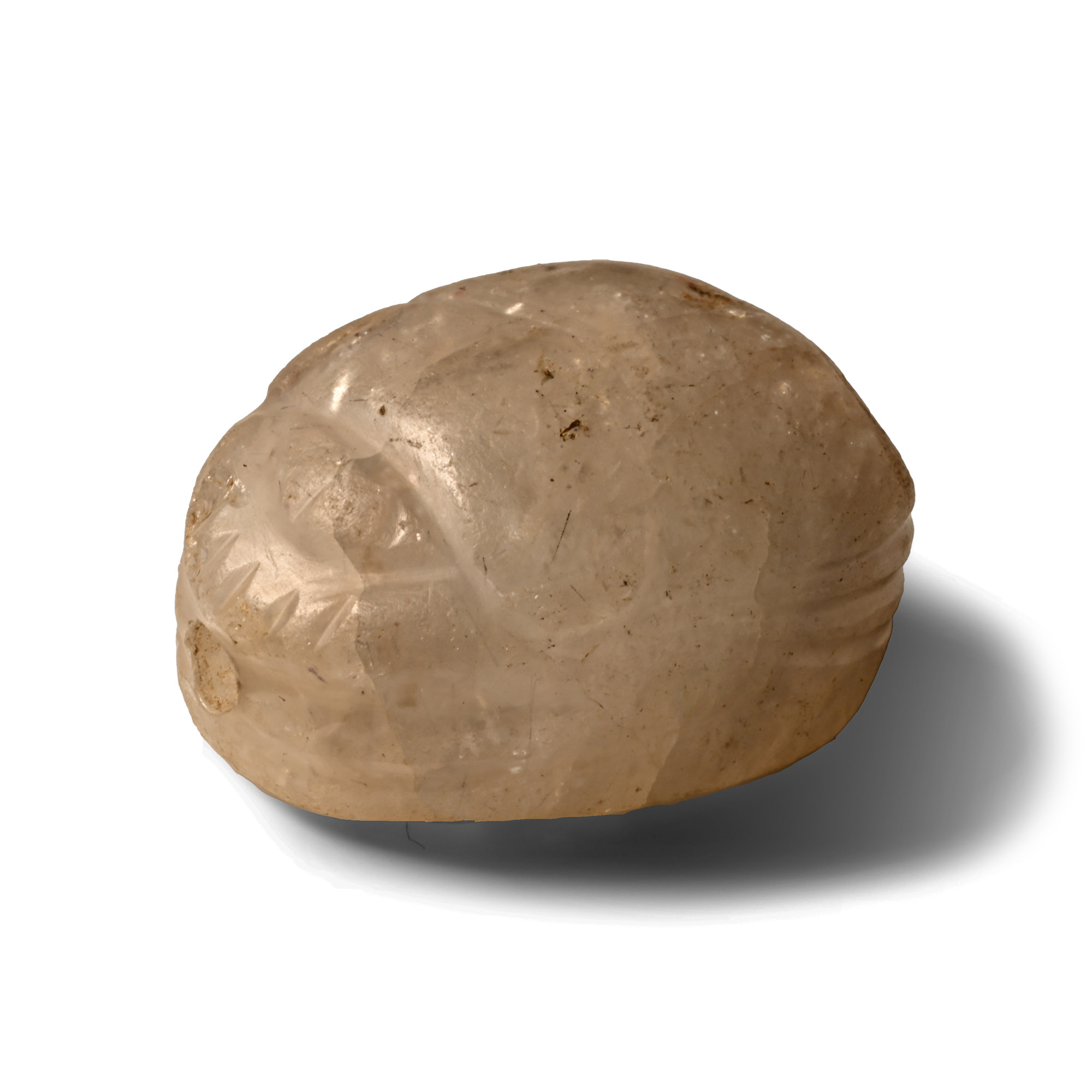
Egyptian Rock Crystal Scarab
LATE PERIOD, 664-332 B.C.
5/8 in. (4.45 grams, 18 mm).
With segmented carapace, plain underside.
ProvenanceFrom the property of the late Mr SM, London, UK, 1969-1999.
CONDITIONTimeLine Auctions follows a vetting process to ensure the authenticity and legality of all items, reinforcing our commitment to integrity and responsible trading. Each antiquity, antique, and coin lot undergoes thorough examination by a vetting committee of at least ten external specialists, professional trade association members, scientists, and archaeologists: Our Vetting Process
AUCTIONS:
TimeLine is a leading auction house specialising in antiquities, ancient art, collectables, natural history, coins, medals, and books. Our auctions offer museums, collectors, historians, and enthusiasts the opportunity to acquire unique and historically significant pieces.
LOT 0501
Egyptian Rock Crystal Scarab
Estimate £200 - 300€230 - 350 (for guidance only)$270 - 410 (for guidance only)
-
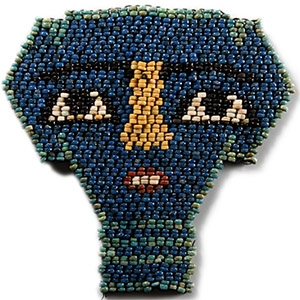
Egyptian Faience Mummy Bead Mask
Ptolemaic Period, 332-30 B.C. and laterSold for (Inc. bp): £169
Restrung beadwork panel of exceptional colour depicting a mummy face mask with false beard; restrung with some later beads. 17.3 grams, 89 mm
Ex Mariaud de Serres, Paris, France, 1980-1990s. From a London, UK, collection. -
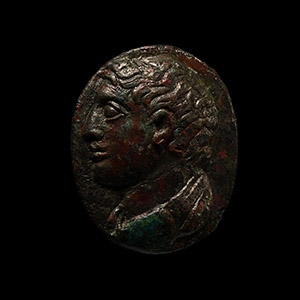
Egyptian Bronze Ring with Portrait
Ptolemaic Period, 3rd-2nd century B.C.Sold for (Inc. bp): £2,925
With ellipsoid plaque, low-relief profile bust of a male with tousled hair and aquiline nose. 21.88 grams, 30.19 mm overall, 19.08 x 16.73 mm internal diameter (approximate size British O, USA 7, Europe 14.98, Japan 14)
Acquired by the owners family in the 1980s. Ex Rupert Wace, Ancient Art Ltd, London UK. with Christie's, New York, ‘Ancient Jewellery’, 11 December 2003, no.378. European private collection. Accompanied by copies of the relevant Christie's catalogue pages. This lot has been checked against the Interpol Database of stolen works of art and is accompanied by a search certificate number no.12084-218157. -
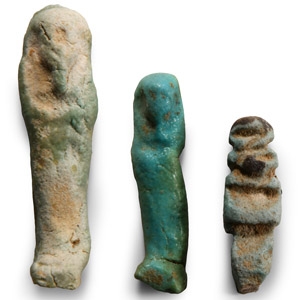
Egyptian Faience Shabti and Amulet Group
Late Period-Ptolemaic Period, 664-30 B.C.Sold for (Inc. bp): £78
Two mummiform shabti figurines, one faded pale green and the other bright turquoise; one amuletic figurine, possibly of a ram or baboon-headed deity with sun disk headdress, applied black pigment detailing. 20 grams total, 41-65 mm
From the H.N. collection, Milton Keynes, Berkshire, UK, 1990s.
Shabti figures were created to carry out heavy manual tasks on behalf of a person in the afterlife. From the Third Intermediate Period into the Late Period burials were often provided with several hundred shabtis.
