
Loading, please wait...
LOT 0405
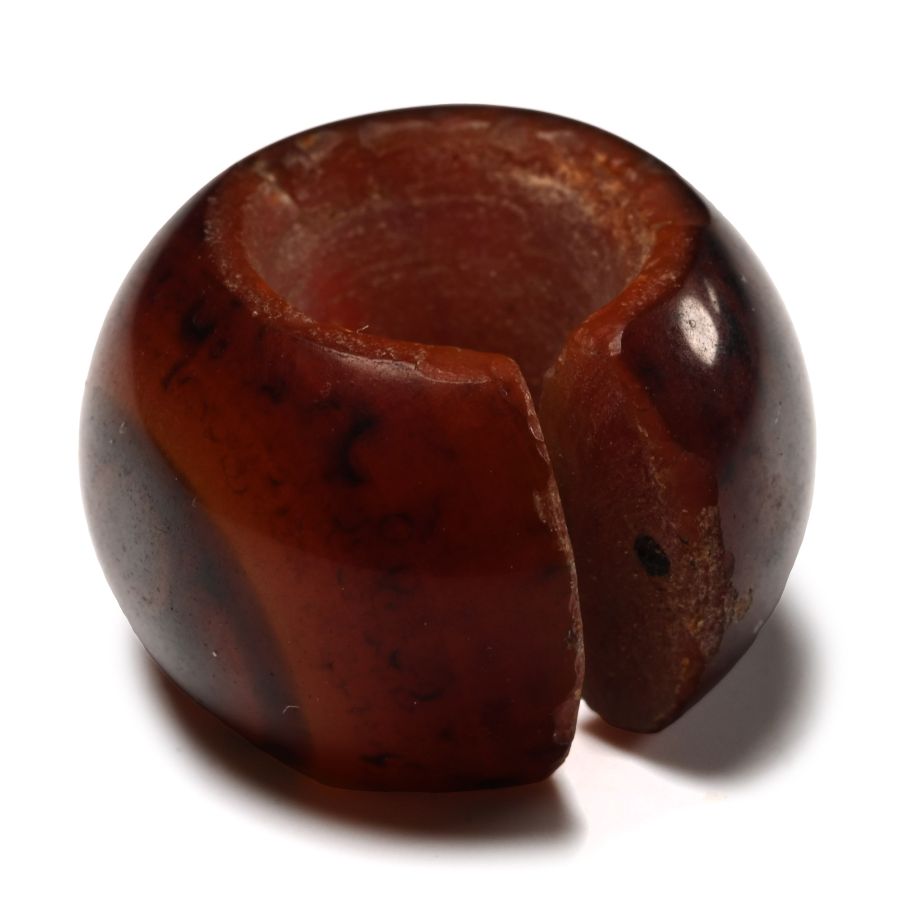
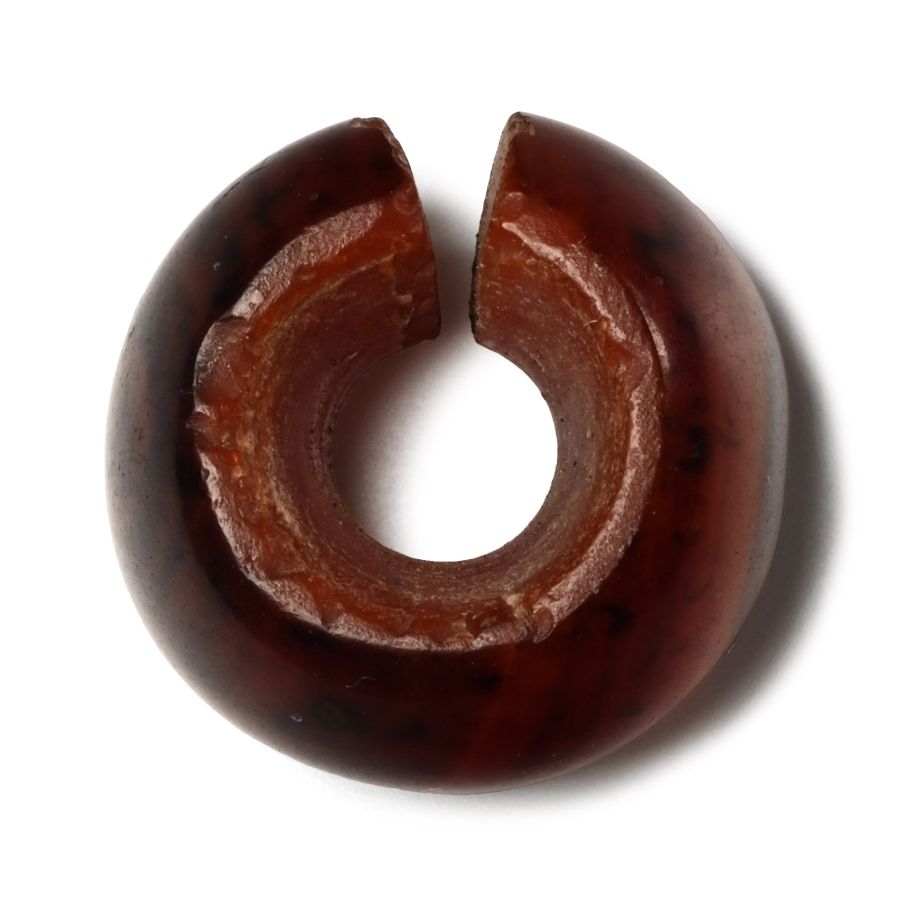
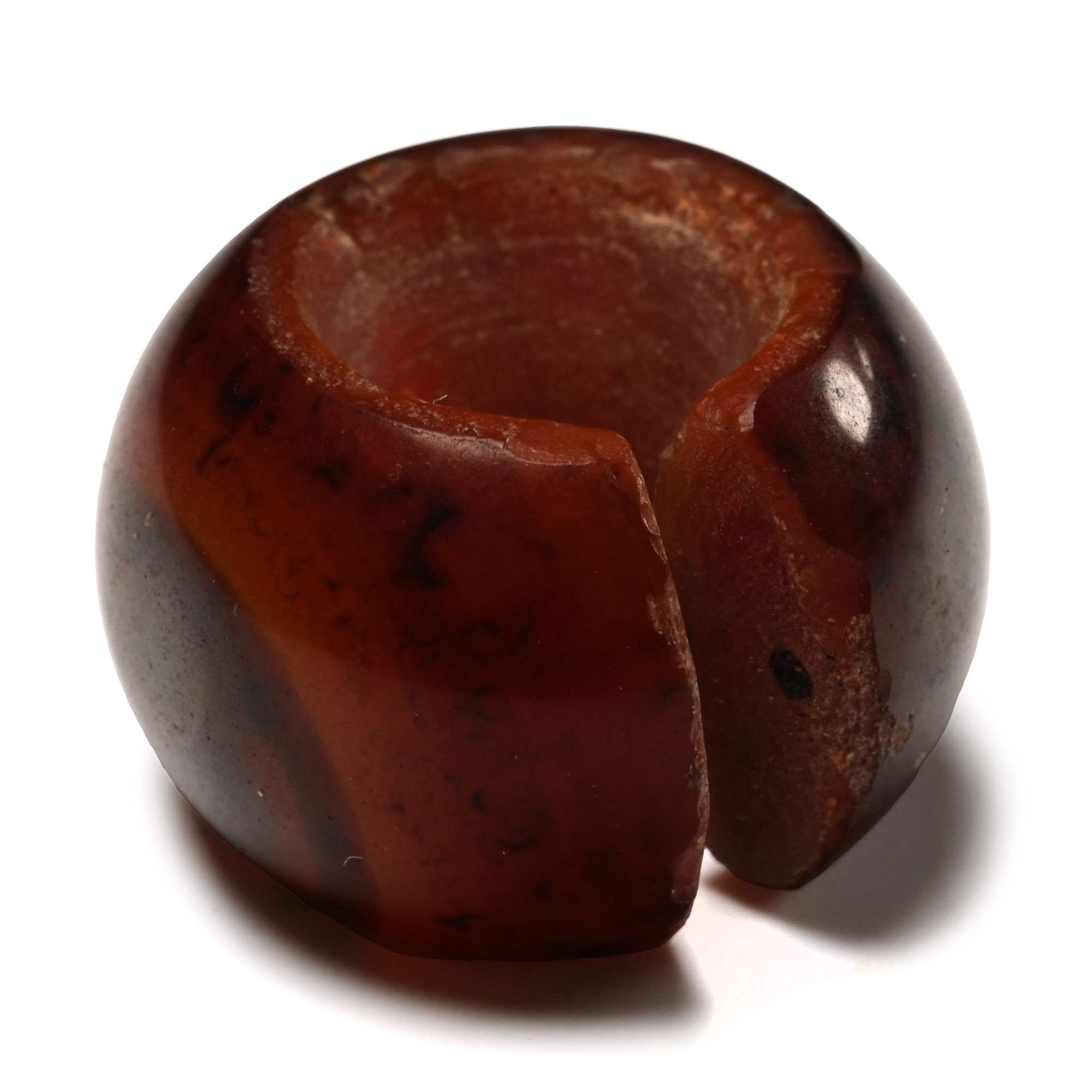
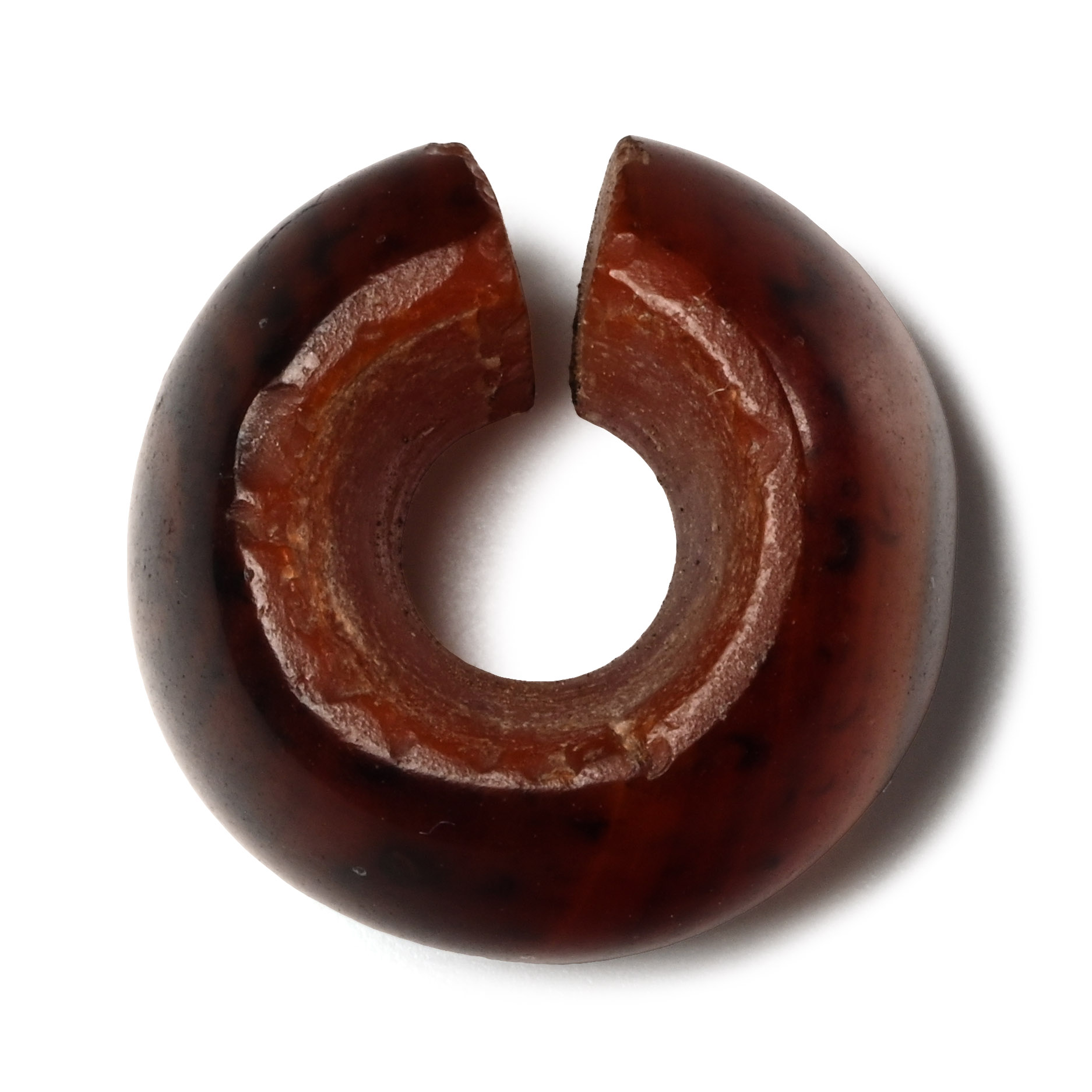
Egyptian Red Jasper Hair Ring
NEW KINGDOM, 1550-1070 B.C.
3/4 in. (6.61 grams, 20 mm).
Circular with a semi-circular profile and an opening on one side.
ProvenanceEx early 20th century collection, London and Home Counties, UK.
This lot is accompanied by an illustrated lot declaration signed by the Head of the Antiquities Department, Dr Raffaele D'Amato.
See Andrews, C., Ancient Egyptian Jewellery, London, 1990, p.116, no.96k, for the style.
CONDITIONTimeLine Auctions follows a vetting process to ensure the authenticity and legality of all items, reinforcing our commitment to integrity and responsible trading. Each antiquity, antique, and coin lot undergoes thorough examination by a vetting committee of at least ten external specialists, professional trade association members, scientists, and archaeologists: Our Vetting Process
AUCTIONS:
TimeLine is a leading auction house specialising in antiquities, ancient art, collectables, natural history, coins, medals, and books. Our auctions offer museums, collectors, historians, and enthusiasts the opportunity to acquire unique and historically significant pieces.
-
Egyptian Blue Glazed Pataikos Statuette
Third Intermediate Period, 1069-702 B.C.Estimate: £600 - 800 (+bp*)
Opening Bid: £300
Modelled in the round standing nude on a D-shaped base with atef crown, dorsal pillar with loop. 13.68 grams, 73 mm
Acquired on the German art market, 1989-1995. with The Museum Gallery, 19 Bury Place, London, WC1, UK, 1998-2003. Property of a London based academic, 2003 to present. This lot is accompanied by an illustrated lot declaration signed by the Head of the Antiquities Department, Dr Raffaele D'Amato.
Herodotus mentions Pataikos as a dwarf-like representation of Ptah, although the ancient Egyptian name of the god remains unclear. These diminutive amulets symbolise Ptah’s immense magical power, which serves to protect the wearer from dangerous creatures such as snakes and crocodiles. The role of the deity in the funerary sphere is explained in Spell 164 of the Book of the Dead, where Pataikos is used to protect the deceased’s heart from enemy attacks and the putrefaction of the body. The atef crown worn by this example, clearly links the figure to the underworld god, Osiris. -
Egyptian Alabaster Bowl with Thickened Rim
3rd millennium B.C.Sold for (Inc. bp): £156
Comprising a squat conical body with narrow foot, groove beneath the thickened rim. 177 grams, 82 mm
Acquired in the mid 1980s-1990s. Private collection, Switzerland, thence by descent. Private collection, since the late 1990s. This lot is accompanied by an illustrated lot declaration signed by the Head of the Antiquities Department, Dr Raffaele D'Amato.
One of the most prestigious materials the Egyptians extracted was alabaster, more correctly referred to as travertine or calcite-alabaster. From the 1st through 3rd Dynasties, stone vessels were very popular items to include in the burials of pharaohs and nobles. No fewer than 30,000 stone vessels were found in the labyrinthine galleries below Djoser’s Step Pyramid at Saqqara, and Egyptian alabaster was used to make hundreds of those vessels. -
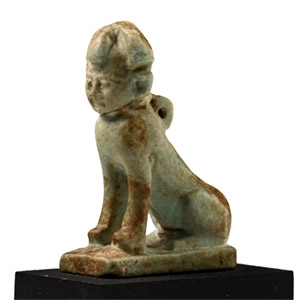
Egyptian Green Glazed Faience Amulet of a Seated Sphinx
Kushite Kingdom, 25th Dynasty, circa 747-656 B.C.Estimate: £1,000 - 1,400 (+bp*)
Opening Bid: £500
Figure of a sphinx in seated pose on a tongue-shaped base, with loop between the shoulders and Nubian hairstyle. 17.48 grams total, 51 mm including stand
with Charles Ede Ltd, London, UK. Private collection, London, UK, acquired from the above on 28 April 1994. Accompanied by a copy of the Charles Ede invoice. This lot is accompanied by an illustrated lot declaration signed by the Head of the Antiquities Department, Dr Raffaele D'Amato.
The 'Nubian' hairstyle was worn by young women in connection with birth, nursing babies and applying cosmetics.
