
Loading, please wait...
LOT 0008
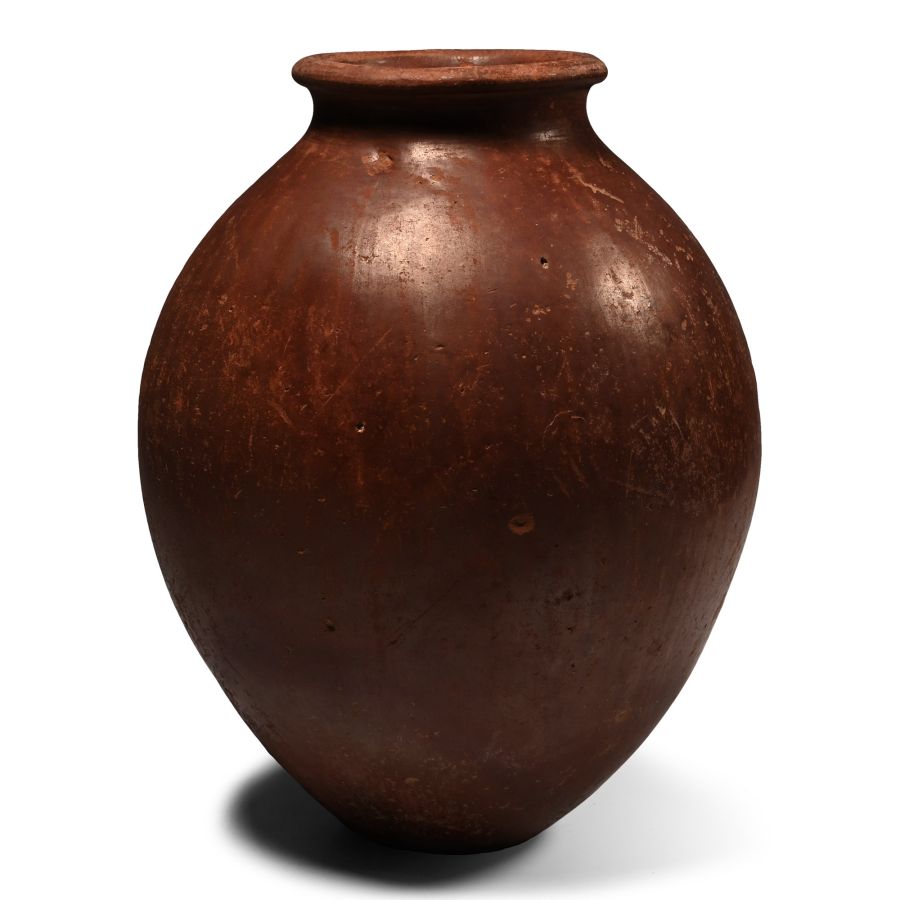
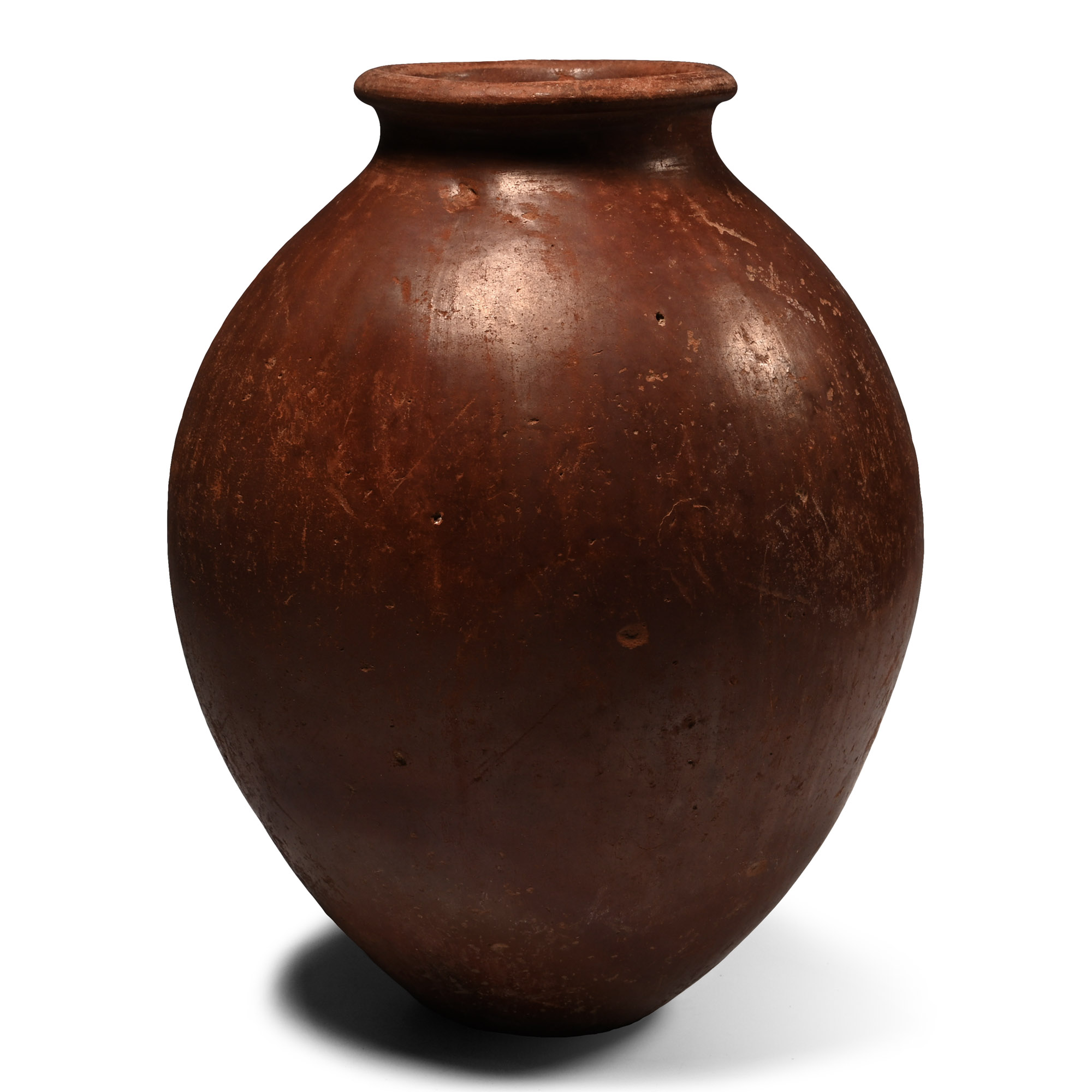
Egyptian Predynastic Globular Flask
NAQADA II, 3500-3150 B.C.
8 1/4 in (925 grams, 21 cm).
A globular-shaped body with a disc base, short neck, and everted rim at the mouth; featuring a burnished red wash surface.
ProvenancePrivate collection.
with Bonhams, London, 22 September 1998, no.130.
European private collection.
This lot is accompanied by an illustrated lot declaration signed by the Head of the Antiquities Department, Dr Raffaele D'Amato.
Cf. Bourriau, J., Pottery from the Nile Valley Before the Arab Conquest, Cambridge, 1981, p. 74, no. 73, for a comparable flask from Naqada.
CONDITIONTimeLine Auctions follows a vetting process to ensure the authenticity and legality of all items, reinforcing our commitment to integrity and responsible trading. Each antiquity, antique, and coin lot undergoes thorough examination by a vetting committee of at least ten external specialists, professional trade association members, scientists, and archaeologists: Our Vetting Process
AUCTIONS:
TimeLine is a leading auction house specialising in antiquities, ancient art, collectables, natural history, coins, medals, and books. Our auctions offer museums, collectors, historians, and enthusiasts the opportunity to acquire unique and historically significant pieces.
-
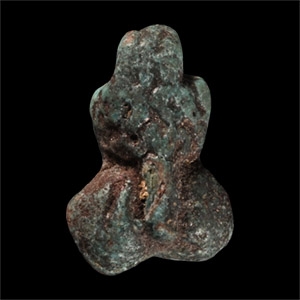
Egyptian Faience Phallic Amuletic Pendant
Ptolemaic Period, 332-30 B.C.Estimate: £100 - 140 (+bp*)
Opening Bid: £50
Formed as stylised phallus with large testes and part of the lower abdomen, suspension loop above. 1.54 grams, 18 mm
From the collection of a late London, UK, gentleman, 1970s. This lot is accompanied by an illustrated lot declaration signed by the Head of the Antiquities Department, Dr Raffaele D'Amato.
Small phallic amulets in ancient Egypt symbolised fertility, protection, and vitality. Often worn as jewellery or carried as personal charms, these amulets invoked the generative power of the male form, which was closely tied to life, creation, and strength. They were commonly used to ward off evil, ensure male potency, and protect children or the wearer from harm. These amulets reflect the Egyptian belief in the protective and regenerative power of sexuality, and their use spanned both everyday life and funerary contexts. -
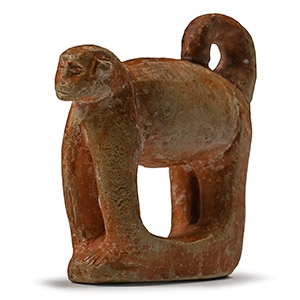
Egyptian Statuette of a Standing Monkey
Ptolemaic Period, 4th-1st century B.C. or laterEstimate: £800 - 1,000 (‡+bp*)
Opening Bid: £400
Standing on a rectangular plinth with head raised and tail curled above the hindquarters, barrel-shaped body with incised detailing at the shoulders and hips, traces of a white and reddish brown coating; partially restored; old collector's labels to underside '51' and 'N13234'. 42.8 grams, 60 mm
Ex Baden-Württemberg, Germany, formed since ca.1930. Private collection Saarland, Germany. Thereafter, Michael Schrôder, Germany. Consigned to DAWO Auktion, 18 February 2017, no.824. Accompanied by a copy of an Art Loss Register certificate no.S00123279. This lot is accompanied by an illustrated lot declaration signed by the Head of the Antiquities Department, Dr Raffaele D’Amato. This lot is accompanied by an illustrated lot declaration signed by the Head of the Antiquities Department, Dr Raffaele D'Amato. -
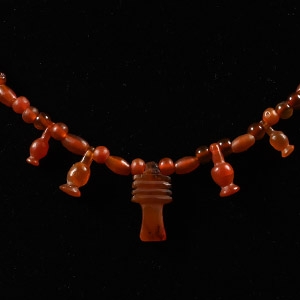
Egyptian Carnelian Necklace with Djed Pillar
Late Period, 664-332 B.C.Sold for (Inc. bp): £715
Composed mainly of oblate and spherical beads, four poppy seed pendants, and a larger djed pillar pendant; restrung with a modern clasp. 12.68 grams, 43.5 cm
From an Israeli collection, formerly with the Archaeological Centre in Jaffa. This lot is accompanied by an illustrated lot declaration signed by the Head of the Antiquities Department, Dr Raffaele D'Amato.
The djed pillar symbolises endurance and stability. Used as a funerary amulet since the Old Kingdom, it was first linked to Ptah and Sokar, later becoming associated with Osiris as his backbone. Chapter 155 of the Book of the Dead references it in the context of resurrection. Beads in the form of poppies were used to heal and alleviate pain and to ward off death. These types of amulets were also linked to Osiris, the Egyptian deity of agriculture, death, and the afterlife.
