
Loading, please wait...
LOT 0005
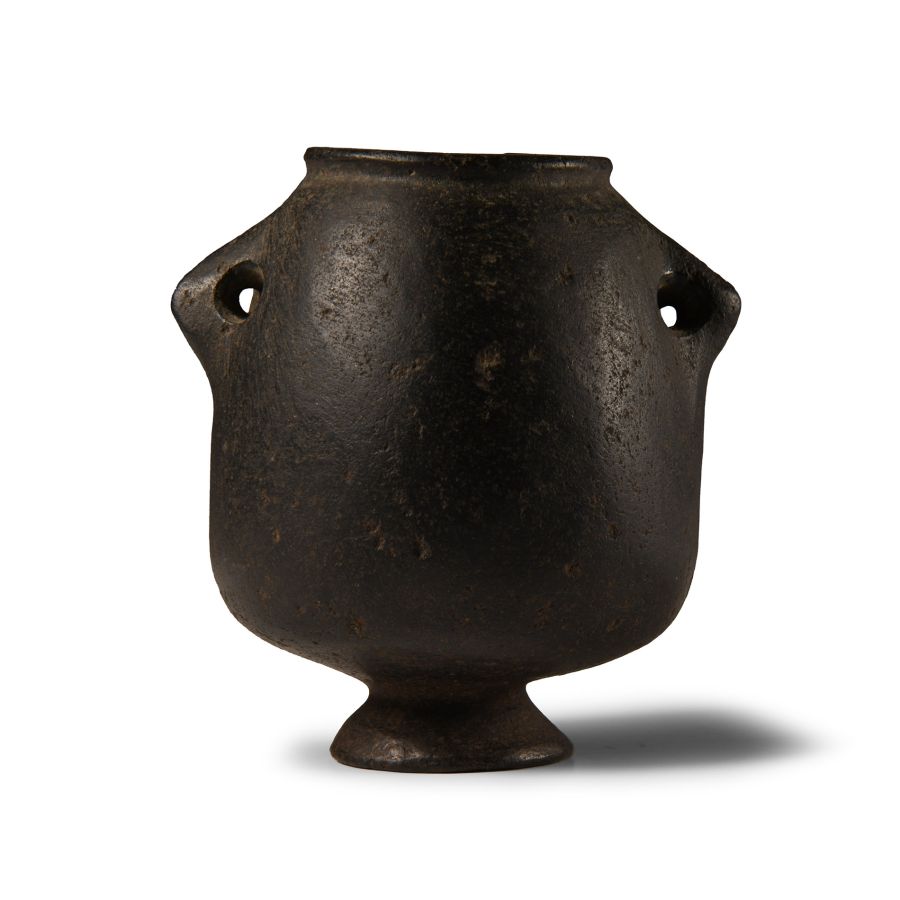
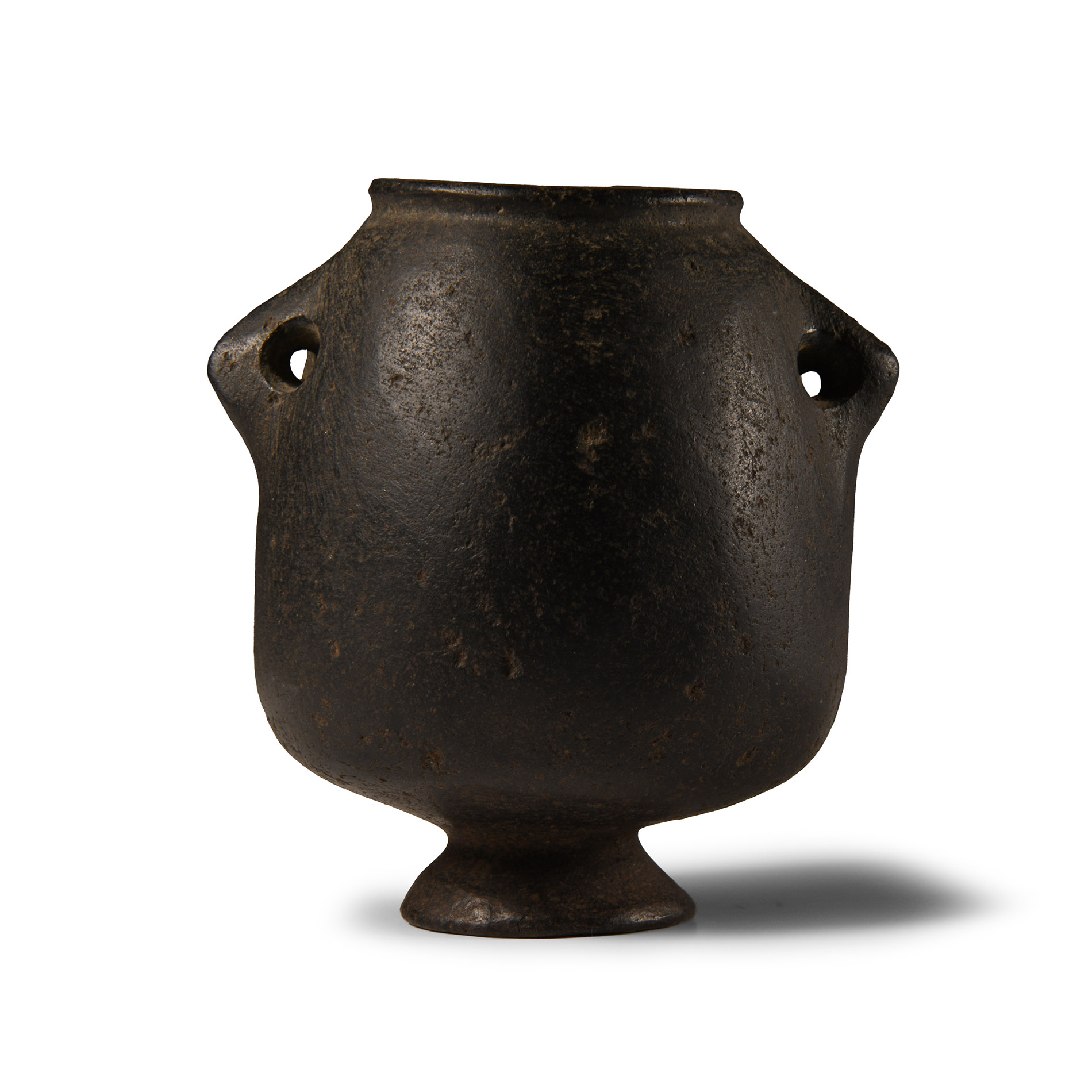
Egyptian Predynastic Basalt Vase
NAQADA I-II, CIRCA 3900-3300 B.C.
3 3/8 in. (330 grams, 86 mm).
Barrel-shaped in profile with tapering neck and trumpet-shaped foot, two lateral pierced lug handles, flared rim (damaged).
ProvenanceFrench private collection.
From the 'Yvelines Department', Northern France.
with Mme Digard, Drouot, Paris, 7 February 2011, no.107.
Accompanied by a copy of a French cultural passport.
This lot has been checked against the Interpol Database of stolen works of art and is accompanied by a search certificate number no.12072-218133.
Cf. Aston, B.G., Ancient Egyptian Stone Vessels: Materials and Forms, SAGA 5, Heidelberg, 1994, p.95, no. 13, for type.
CONDITIONTimeLine Auctions follows a vetting process to ensure the authenticity and legality of all items, reinforcing our commitment to integrity and responsible trading. Each antiquity, antique, and coin lot undergoes thorough examination by a vetting committee of at least ten external specialists, professional trade association members, scientists, and archaeologists: Our Vetting Process
AUCTIONS:
TimeLine is a leading auction house specialising in antiquities, ancient art, collectables, natural history, coins, medals, and books. Our auctions offer museums, collectors, historians, and enthusiasts the opportunity to acquire unique and historically significant pieces.
LOT 0005
Egyptian Predynastic Basalt Vase
Estimate £5,000 - 7,000€5,800 - 8,120 (for guidance only)$6,750 - 9,450 (for guidance only)
-
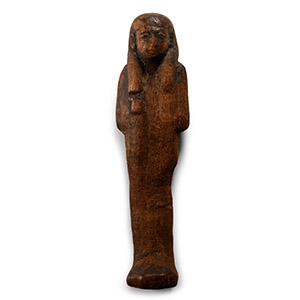
Egyptian Wooden Funerary Shabti Figurine
2nd-1st millennium B.C.Estimate: £1,800 - 2,400 (‡+bp*)
Opening Bid: £750
Carved in the round with D-shaped base, carefully modelled hair and ears with beard absent, the right hand visible, not holding any work tools, the body has the appearance of a mummy entirely draped in a shroud with rather elongated proportions, the broad and rounded face with a slightly ‘smiling’ expression, framed by a tripartite hairstyle without stripes, which continues down the back and two lappets on the chest. 39 grams, 14.5 cm
Ex R. Liechti (1934-2010) Geneva, Switzerland, formed between 1950-1990s. This lot has been checked against the Interpol Database of stolen works of art and is accompanied by a search certificate number no.12079-218221. -
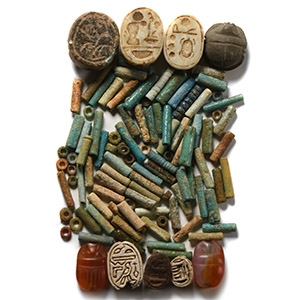
Egyptian Faience Bead and Scarab Collection
New Kingdom-Late Period, circa 1400-332 B.C.Sold for (Inc. bp): £624
Including tubular and annular beads, scarabs and scaraboids with inscriptions, including the prenomen of Amenhotep III (Neb-Maat-Re) and the nomen of Amenhotep II (A-Kheperu-Re). 22.4 grams total, 3-18 mm
From an early to mid 20th century collection, West country, UK. -
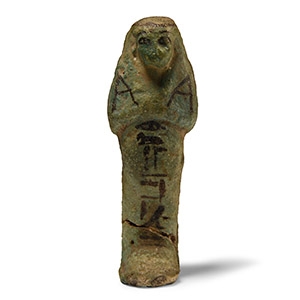
Egyptian Blue Glazed Shabti for the Priest of Amun Mi
Third Intermediate Period, 21st Dynasty, 1077-943 B.C.Sold for (Inc. bp): £442
Applied black pigment to the wig, eyes, two hoes, seed bag at the reverse, and a vertical panel of hieroglyphic text on the lower body with the dedication: 'The Osiris, the Priest of Amun Mi, true of voice'. 132 grams, 11.8 cm
Probably from a priests’ cachette at Luxor. Acquired in Egypt by Lieutenant James Alexander Goodman in the 1920s. Thence by descent to his grandson.
Lieutenant Goodman served in the 4th Battalion Welsh Regiment during World War I and saw action in Palestine during the capture of Bethlehem, (for which he won an MC). After the war, he setup a business selling Fordson trucks and tractors in Alexandria, Egypt. A keen antiquarian, he collected ancient objects during his time in Alexandria and when he visited the pyramids at Giza. After his first marriage failed, he returned to the UK in the early 1930s. On his death in 1959, he passed his small collection of Egyptian objects on to his second wife, Ruby Goodman. On Ruby’s death in 1994, they were left to their second daughter, Rosemary Johnson, (née Goodman), and are currently in the possession of her son.
