
Loading, please wait...


LOT 0427
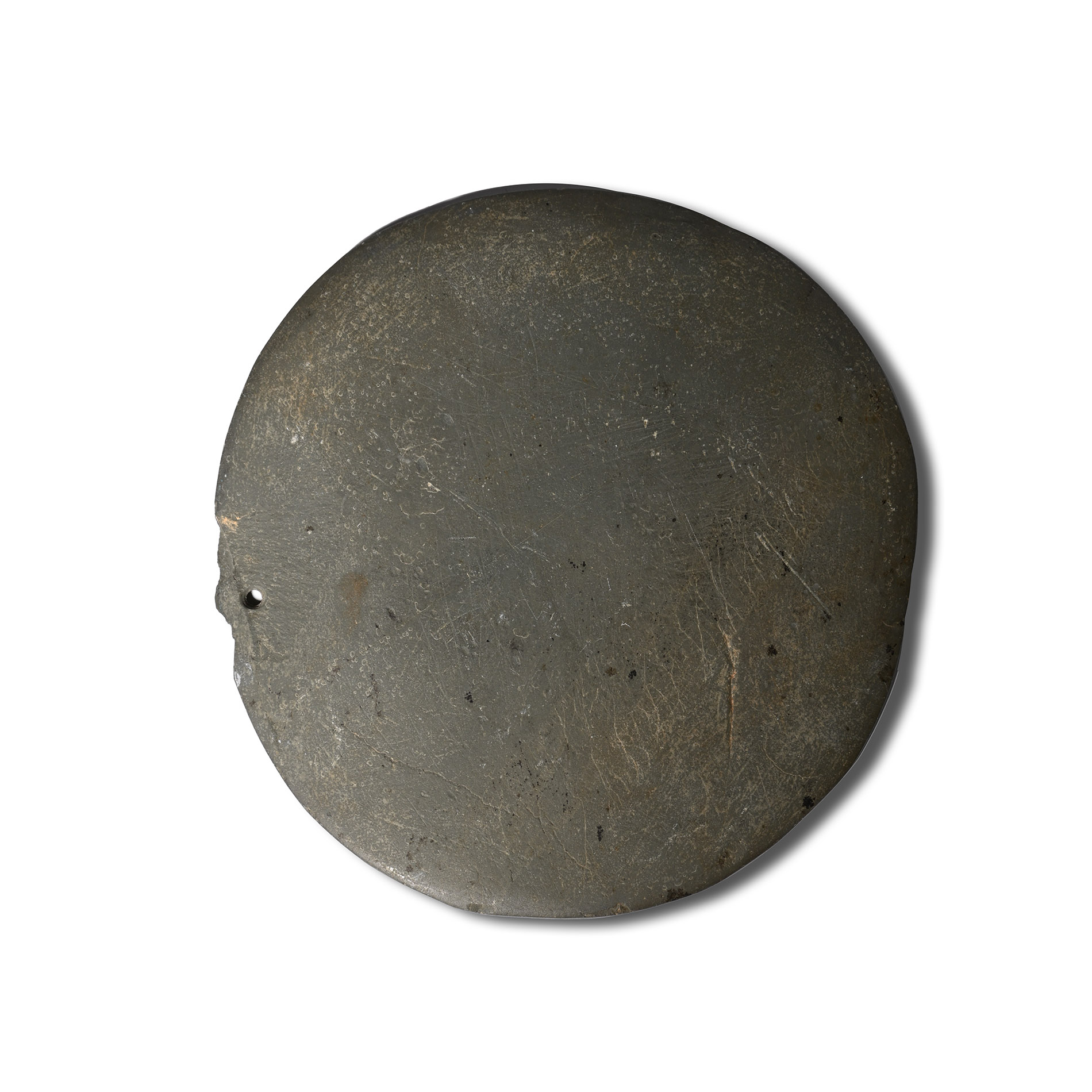
Egyptian Pre-Dynastic Greywacke Palette
PREDYNASTIC PERIOD, NAQADA III, CIRCA 3300–2960 B.C.
5 1/4 in. (238 grams, 13.3 cm).
Circular in plan with smoothed faces, pierced through the edge.
ProvenanceAcquired in the mid 1980s-1990s.
Private collection, Switzerland, thence by descent.
Private collection, since the late 1990s.
This lot is accompanied by an illustrated lot declaration signed by the Head of the Antiquities Department, Dr Raffaele D'Amato.
Cf. Petrie, W.M.F., Corpus of Prehistoric Pottery and Palettes, London, 1917, pl.LIII, 77, for two similar examples from the Predynastic cemetery at Tarkhan.
FootnotesPalettes were utilitarian objects used in the Predynastic Period to grind and mix mineral-based eye pigments (including ochre, malachite, and haematite). Greywacke cosmetic palettes were easily carved in various shapes and sizes, including zoomorphic representations and geometric forms. The symbolism of this circular palette may be connected to the sun disc, which featured prominently in ancient Egyptian culture.
The palette was so significant in Predynastic society that purely ceremonial versions, often impractically large for their original purpose, were produced for use in temple rituals. The most famous is the highly decorated Narmer Palette discovered at Hierakonpolis.
TimeLine Auctions follows a vetting process to ensure the authenticity and legality of all items, reinforcing our commitment to integrity and responsible trading. Each antiquity, antique, and coin lot undergoes thorough examination by a vetting committee of at least ten external specialists, professional trade association members, scientists, and archaeologists: Our Vetting Process
AUCTIONS:
TimeLine is a leading auction house specialising in antiquities, ancient art, collectables, natural history, coins, medals, and books. Our auctions offer museums, collectors, historians, and enthusiasts the opportunity to acquire unique and historically significant pieces.
-
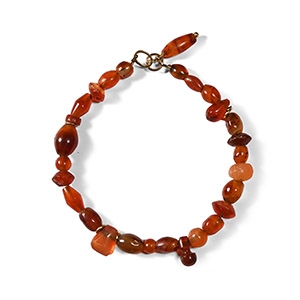
Egyptian Carnelian Bead Bracelet
Late Period, 664-332 B.C. or laterSold for (Inc. bp): £286
Composed mainly of biconical, oblate, and other beads with three larger pendants; with modern gold attachment. 16.4 grams total, 21 cm long
From the private collection of the late Mrs Belinda Ellison, a long time member of the Egyptian Exploration Society, c.1940-2020. This lot is accompanied by an illustrated lot declaration signed by the Head of the Antiquities Department, Dr Raffaele D'Amato. -
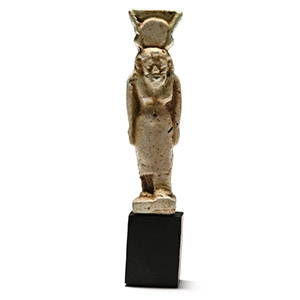
Large Egyptian Faience Isis Amulet
Late Period, 664-332 B.C.Estimate: £250 - 350 (+bp*)
Opening Bid: £125
Pale cream amuletic figure of Isis with crown formed as two horns flanking the sun-disc, and a uraeus at the front, wearing a calf-length robe, with dorsal pillar and rectangular base. 19.21 grams total, 76 mm including stand
Ex P.A. collection, London, UK, 1990s. This lot is accompanied by an illustrated lot declaration signed by the Head of the Antiquities Department, Dr Raffaele D'Amato.
In ancient Egyptian mythology, Isis was the sister-wife of Osiris and the mother of the sky god Horus. She is associated with aspects of fertility and motherhood and is often depicted in various artworks seated in a nursing pose with her son Horus on her lap. -
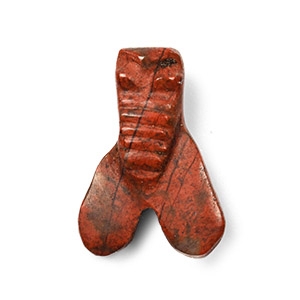
Egyptian Jasper Fly Amulet
New Kingdom, 1550-1070 B.C.Sold for (Inc. bp): £85
With incised line detailing to the body, pierced longitudinally for suspension. 0.33 grams, 11 mm
Ex London and Home Counties collection, UK, 1920-1940. This lot is accompanied by an illustrated lot declaration signed by the Head of the Antiquities Department, Dr Raffaele D'Amato.
Fly amulets are first attested during the Predynastic period (pre 3,100 BC). It is possible that they represented a wish to emulate the fly's renowned fecundity. These amulets were made in a variety of materials, including gold, and golden flies were used in the New Kingdom as an honorific award for military valour. No fewer than thirty-three fly amulets came from the tomb of the wives of Tuthmoses III.
