
Loading, please wait...

LOT 0409
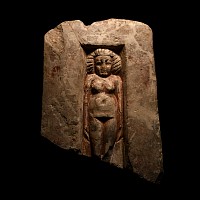
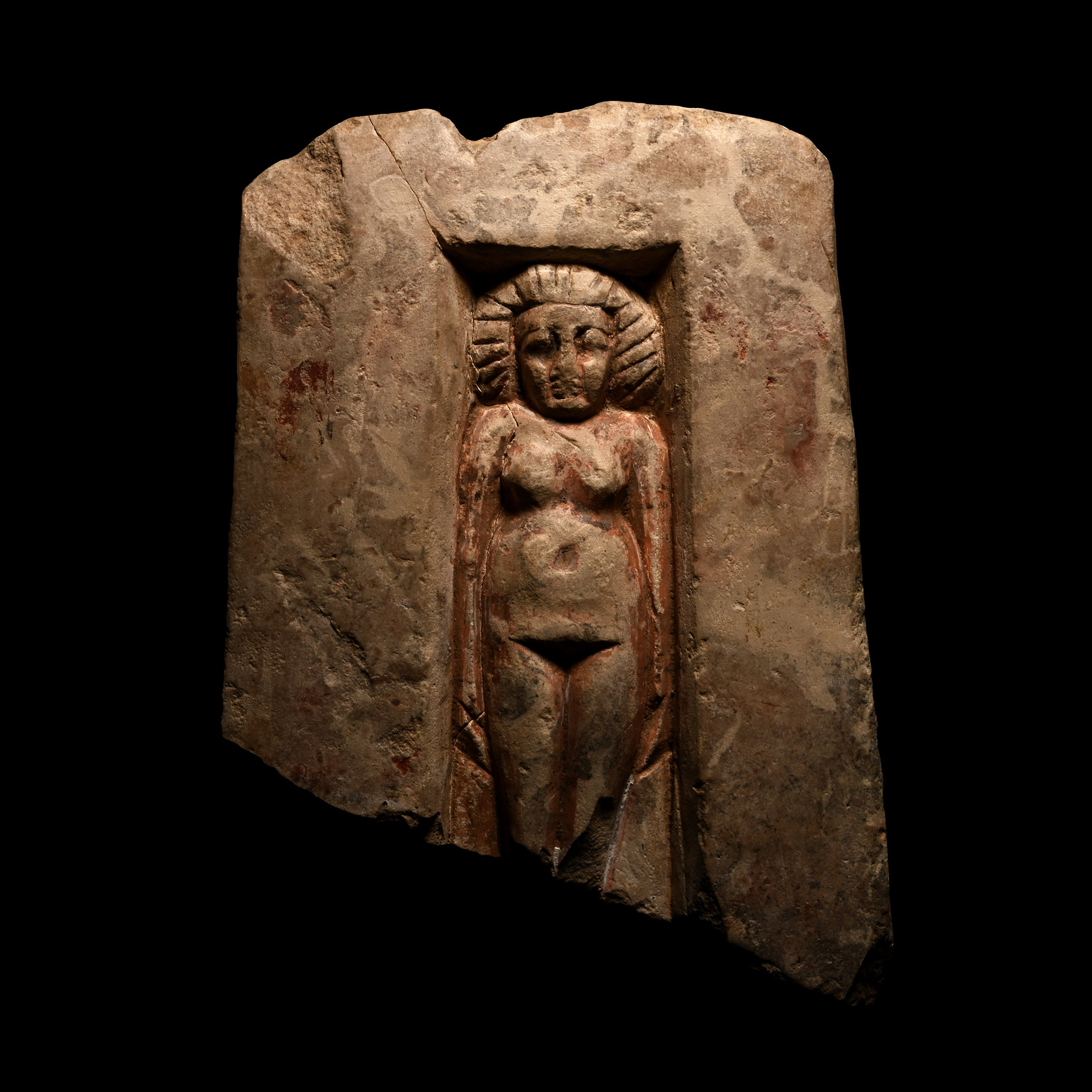
Egyptian Plaque with Fertility Figure
LATE-PTOLEMAIC PERIOD, 664-31 B.C.
6 3/4 in. (502 grams total, 17.1 cm including stand).
Carved rectangular plaque with central recess, carved image of a nude female modelled in the half-round with a deeply striated bag wig, arms by her side; traces of red and black pigment on the body; mounted on a custom-made stand.
ProvenanceFrom a central London collection, formed 1980-2000.
From the private collection of Mr David Barker, London, UK; thence by descent.
This lot is accompanied by an illustrated lot declaration signed by the Head of the Antiquities Department, Dr Raffaele D'Amato.
Cf. Metropolitan Museum of Art inv. no. 23.6.78, for a similar figurine in a shrine niche.
FootnotesThe rectangular limestone plaque almost certainly represents a shrine. Such plaques first appeared in Lower Egypt and became widespread in the Late Period and Ptolemaic era. They may have developed from earlier female figurines depicted on beds and are usually associated with the female goddesses Isis and Hathor, both powerful protectors of women and childbirth and associated with fertility.
CONDITIONTimeLine Auctions follows a vetting process to ensure the authenticity and legality of all items, reinforcing our commitment to integrity and responsible trading. Each antiquity, antique, and coin lot undergoes thorough examination by a vetting committee of at least ten external specialists, professional trade association members, scientists, and archaeologists: Our Vetting Process
AUCTIONS:
TimeLine is a leading auction house specialising in antiquities, ancient art, collectables, natural history, coins, medals, and books. Our auctions offer museums, collectors, historians, and enthusiasts the opportunity to acquire unique and historically significant pieces.
-
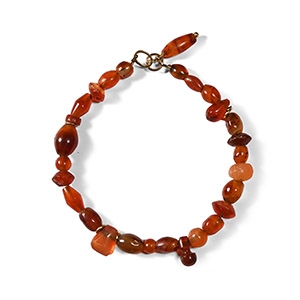
Egyptian Carnelian Bead Bracelet
Late Period, 664-332 B.C. or laterSold for (Inc. bp): £286
Composed mainly of biconical, oblate, and other beads with three larger pendants; with modern gold attachment. 16.4 grams total, 21 cm long
From the private collection of the late Mrs Belinda Ellison, a long time member of the Egyptian Exploration Society, c.1940-2020. This lot is accompanied by an illustrated lot declaration signed by the Head of the Antiquities Department, Dr Raffaele D'Amato. -
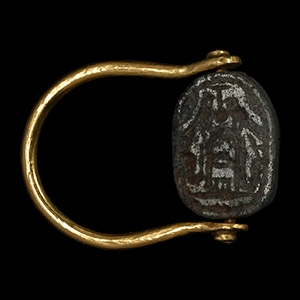
Phoenician Scarab in Gold Swivel Ring
6th-4th century B.C. and laterEstimate: £1,500 - 2,000 (‡+bp*)
Opening Bid: £675
The scarab with lightly incised anatomical detailing, the underside with a central cartouche flanked by two rearing crowned uraei, a pair of falcons standing above the cartouche facing a smꜣ hieroglyph symbolising union (of the two lands, Upper and Lower Egypt); set into a later gold swivel ring. 4.34 grams, 26.44 mm overall, 15.68 mm internal diameter (approximate size British J 1/2, USA 5, Europe 9.32, Japan 9)
with Bonhams, London, UK, 21 October 1999, no.36. Private collection, Europe. This lot has been checked against the Interpol Database of stolen works of art and is accompanied by a search certificate number no.12370-226696. This lot has been cleared against the Art Loss Register database, and is accompanied by an illustrated lot declaration signed by the Head of the Antiquities Department, Dr Raffaele D'Amato. -
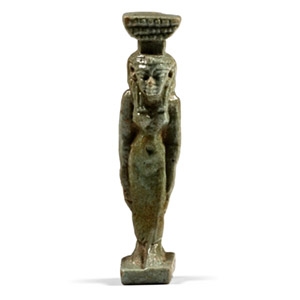
Egyptian Green Glazed Faience Amulet of Nephthys
Late Period, 26th Dynasty, circa 664-525 B.C.Estimate: £500 - 700 (+bp*)
Opening Bid: £250
Depicting the goddess Nephthys wearing the two hieroglyphic parts of her name (Neb(et)-Hut), with dorsal pillar and base. 2.68 grams, 37 mm
with B.M.S., Switzerland. Private collection, London, UK, acquired from the above on 14 September 1981. This lot is accompanied by an illustrated lot declaration signed by the Head of the Antiquities Department, Dr Raffaele D'Amato.
Nephthys was a protective goddess linked to mourning, magic, and the afterlife. As the sister of Isis, she played a vital role in the funerary rites of Osiris. Amulets like this were placed on the deceased to invoke her protection and aid in rebirth. Typically made of faience or semi-precious stone, they were especially common in the Late Period.
