
Loading, please wait...
LOT 0422
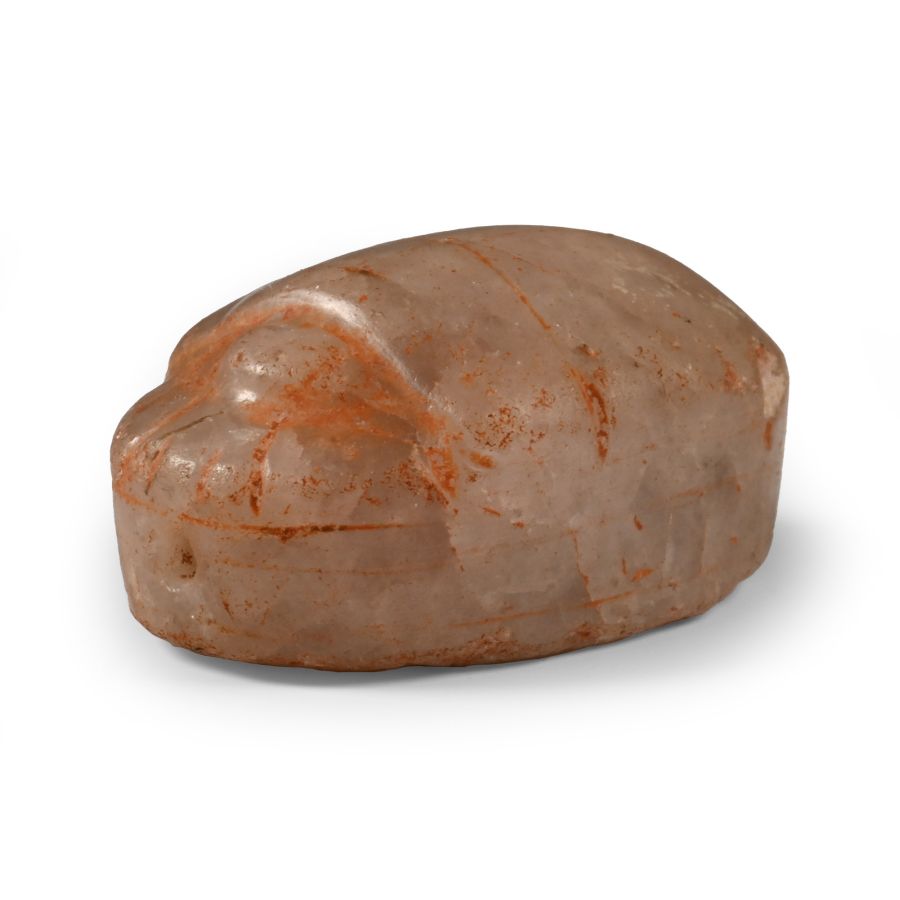
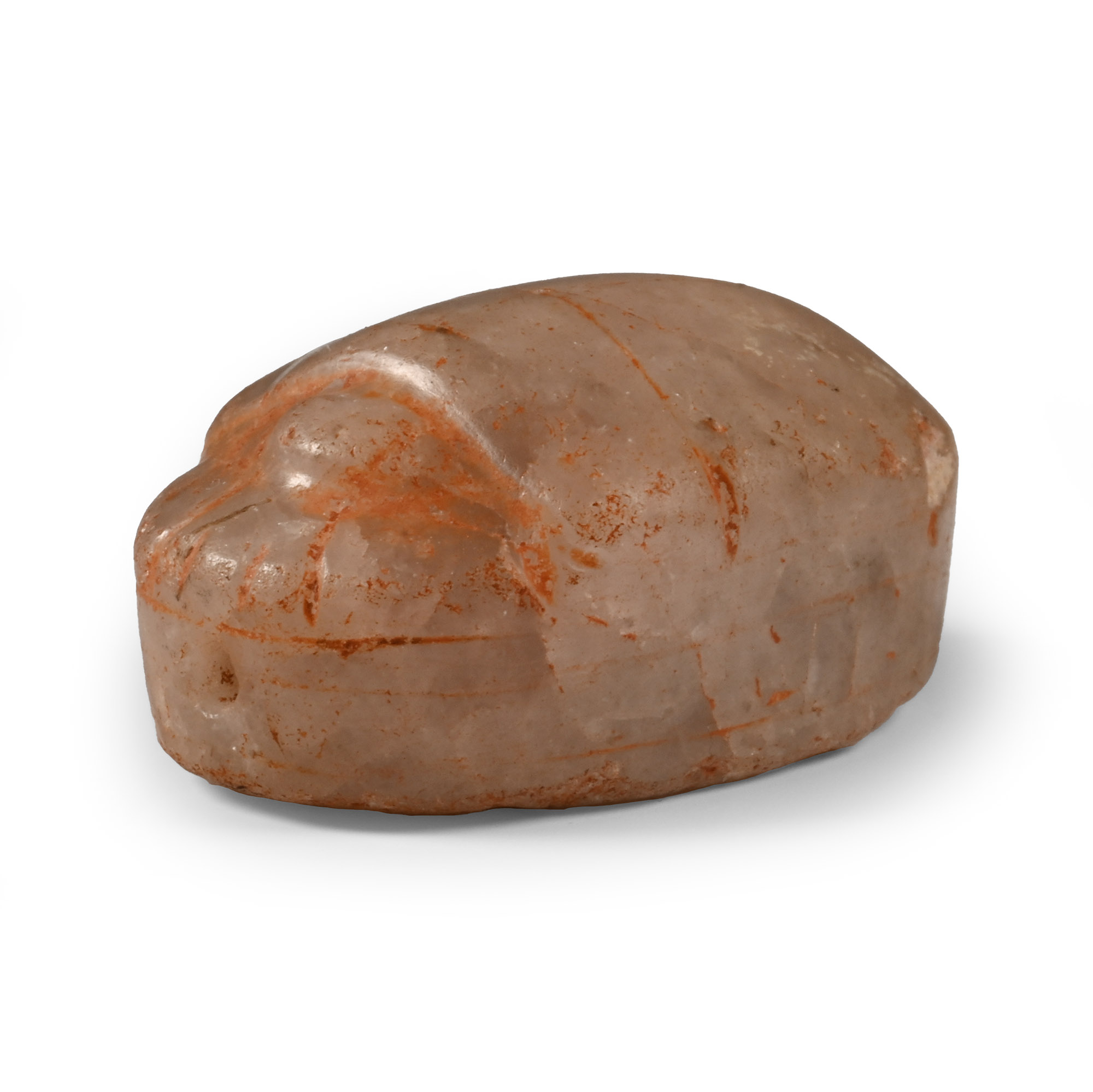
Egyptian Pink Quartz Scarab
LATE PERIOD, 664-332 B.C.
1 1/4 in. (19.82 grams, 33 mm).
Carved with deep sides and carapace detailing to the upper face, pierced.
ProvenanceFrom the private collection of the late Mrs Belinda Ellison, a long time member of the Egyptian Exploration Society, c.1940-2020.
This lot is accompanied by an illustrated lot declaration signed by the Head of the Antiquities Department, Dr Raffaele D’Amato.
This lot is accompanied by an illustrated lot declaration signed by the Head of the Antiquities Department, Dr Raffaele D'Amato.
TimeLine Auctions follows a vetting process to ensure the authenticity and legality of all items, reinforcing our commitment to integrity and responsible trading. Each antiquity, antique, and coin lot undergoes thorough examination by a vetting committee of at least ten external specialists, professional trade association members, scientists, and archaeologists: Our Vetting Process
AUCTIONS:
TimeLine is a leading auction house specialising in antiquities, ancient art, collectables, natural history, coins, medals, and books. Our auctions offer museums, collectors, historians, and enthusiasts the opportunity to acquire unique and historically significant pieces.
-
.jpg)
Egyptian Gold Uraeus Amulet
Late New Kingdom, 1279-1070 B.C.Estimate: £200 - 300 (+bp*)
Opening Bid: £111
Depicting a rearing cobra sporting a sun disc with its coiled body below resting on the hieroglyphic neb sign. 0.38 grams, 11 mm
From an early 20th century French collection. This lot is accompanied by an illustrated lot declaration signed by the Head of the Antiquities Department, Dr Raffaele D’Amato. This lot is accompanied by an illustrated lot declaration signed by the Head of the Antiquities Department, Dr Raffaele D'Amato. -
.jpg)
Egyptian Wooden Model Boat with Oarsmen
Middle Kingdom, late 11th-early 12th Dynasty, 2010-1961 B.C.Estimate: £8,000 - 10,000 (+bp*)
Opening Bid: £3,444
Comprising a cream-coloured crescent-shaped boat manned by a crew of seven oarsmen, each with a short black wig, their bodies painted in reddish-brown and wearing cream-coloured kilts; all with pivoting arms and with hands drilled to accept oars (now missing); an outline around the boat's deck and a net pattern at the prow and stern in red; a portion of an inward slanting stern post remains, with traces of another at the prow; the oarsmen re-affixed. 1.29 kg, 41.5 cm wide
Acquired in the 1960s. From the collection of the late Egyptologist Surgeon Commander P.H.K. Gray RN. From a Surrey, UK, collection. Accompanied by an academic report by Egyptologist Paul Whelan. This lot has been checked against the Interpol Database of stolen works of art and is accompanied by search certificate no.11943-209563. This lot has been cleared against the Art Loss Register database, and is accompanied by an illustrated lot declaration signed by the Head of the Antiquities Department, Dr Raffaele D'Amato.
Models of various boat types were sometimes provided for the same burial. For the different types see Winlock, H.E., Models of Daily Life in Ancient Egypt from the Tomb of Meket-Re' at Thebes, Cambridge MA, 1955, pp.92-103. -
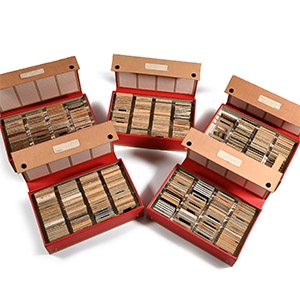
Historic Collection of 725 Slides of Archaeological Sites and Artefacts Including Other Sites in Egypt
1960s-1980s A.D.Sold for (Inc. bp): £650
Housed in five linen-covered boxes, covering general Egyptian sites, religion, Gods of Amun and Osiris, minor gods, environment, boats, and Book of the Dead etc. 4.44 kg total, 26.5 x 16.5 x 6.5 cm each box
Property of archaeologist Stephanie Gee, N.W. London, UK, 1960s-1980s. This lot is accompanied by an illustrated lot declaration signed by the Head of the Antiquities Department, Dr Raffaele D'Amato.
Stephanie Gee was a prominent archaeologist who took part in several expeditions in Egypt. She was a trusted assistant to the British-Australian archaeologist Veronica Seton-Williams, who excavated in Egypt, Britain, and the Near East. Stephanie also took part in the Tell El-Farâ'în expeditions of 1965-1968, and assisted Seton-Williams with preparing the 1966 expedition report. Their collaboration continued and Stephanie helped with the manuscript of Seton-Williams’ book ‘The Road to El-Aguzein’, a narrative account of her life that was first published in 1988.
