
Loading, please wait...
LOT 0472
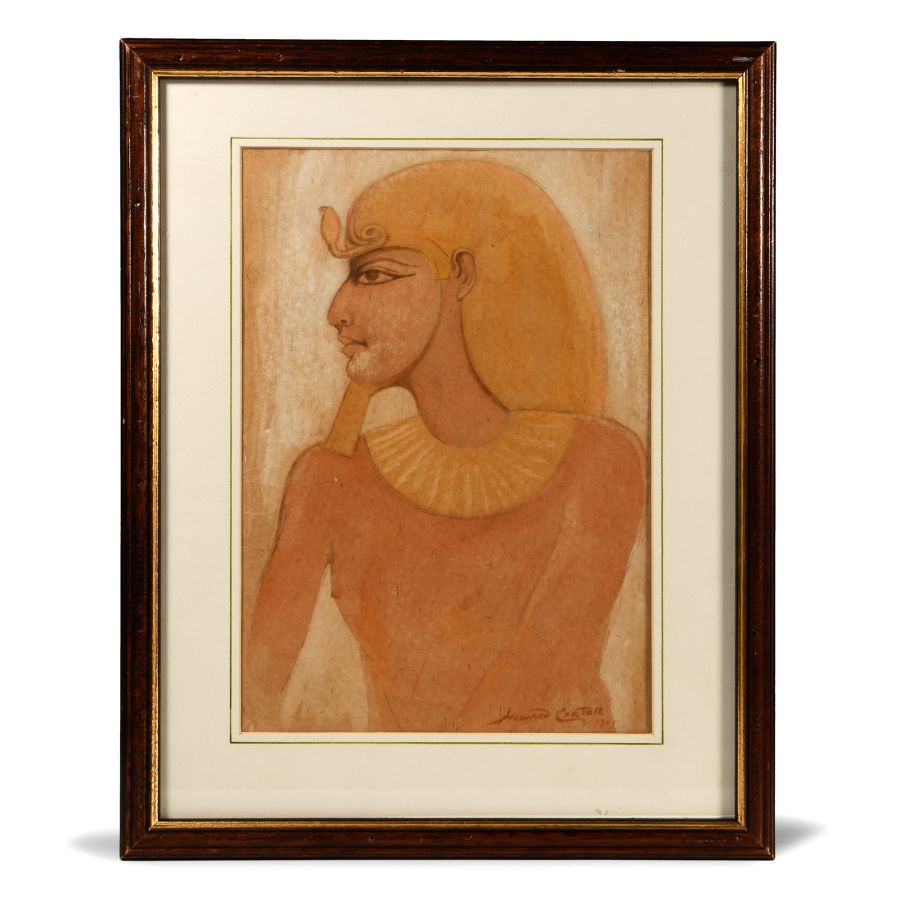
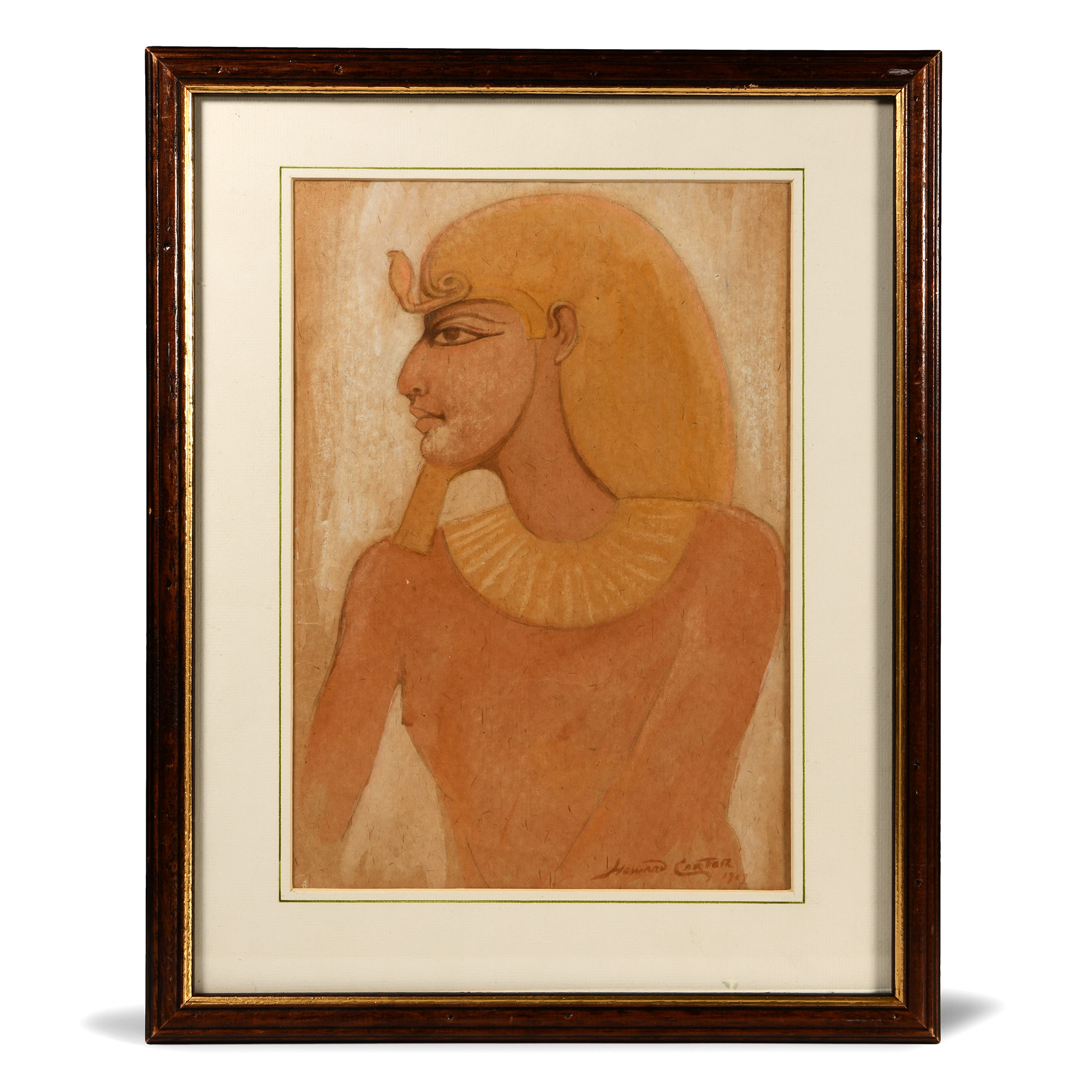
Egyptian Pharaoh Watercolour Attributed to Howard Carter
DATED 1917 A.D.
15 1/4 x 12 1/4 in. (898 grams total, 38.5 x 31 cm).
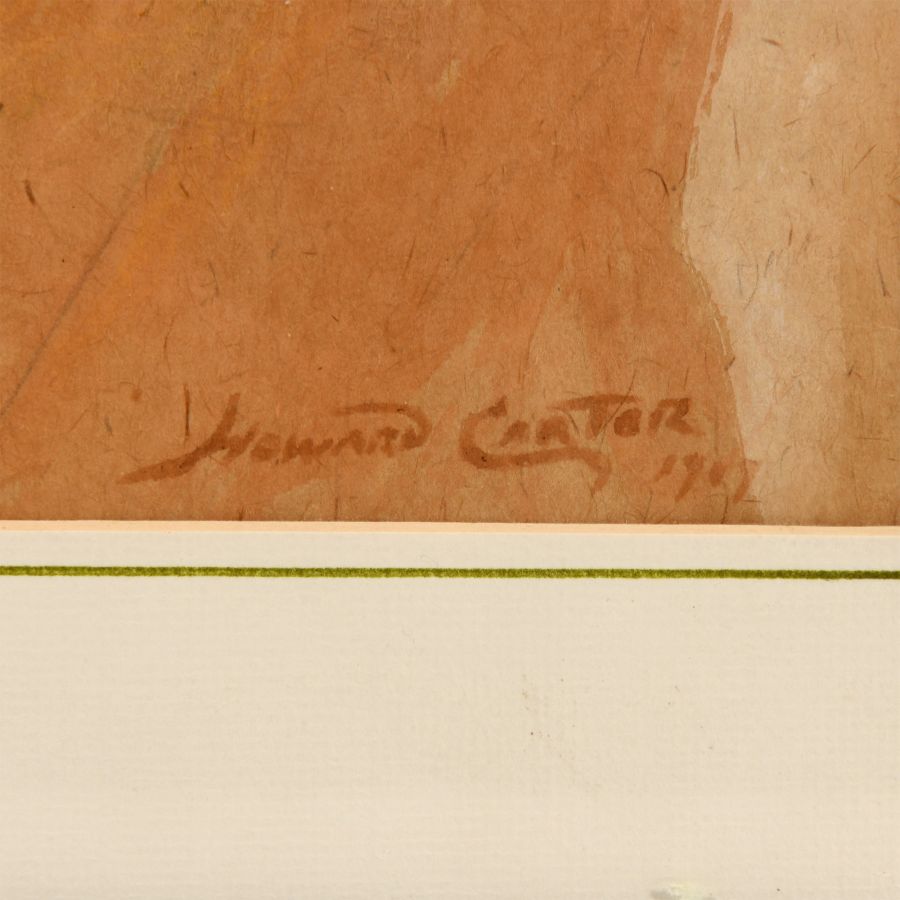
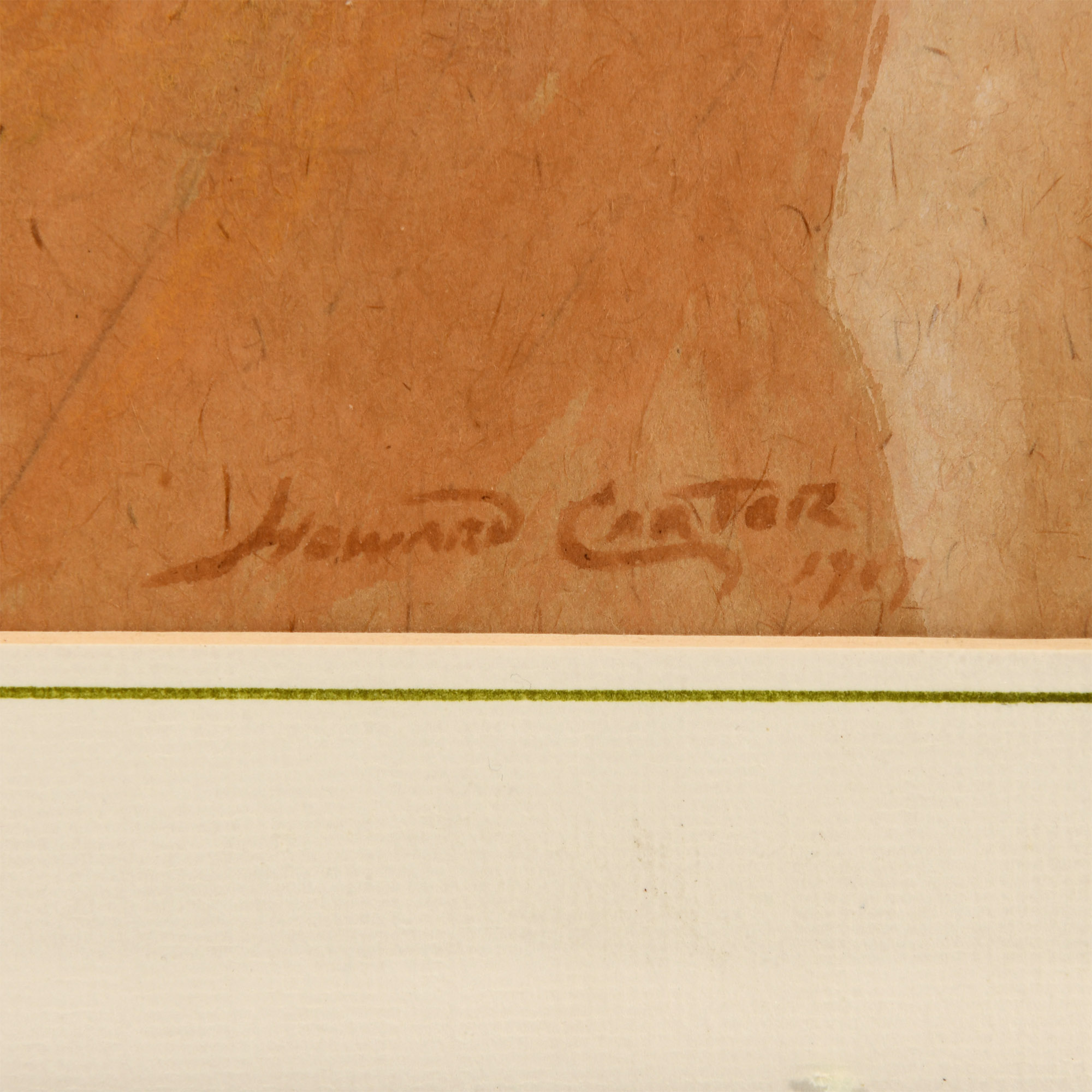
Profile bust of an Egyptian male in nemes headcloth with uraeus to the brow, wesekh segmented collar; signed bottom right 'Howard Carter, 1905'; board to reverse with pencilled note 'Hatshepsu' and inked 'Watercolour painting signed H carter 1905 / remnants of an old Philips auction label on verso', with pencilled star motif. [No Reserve]
Provenancewith old Phillips label to the verso.
LiteratureCf. Davis, T.M., The Tomb of Hâtshopsîtû, London, 1906, plate facing p. 22, for Howard Carter's version of the same image produced for Theodore M. Davis' publication of Hatshepsut's tomb.
FootnotesHatshepsut was the longest-reigning female ruler in Egyptian history (1473-1458 B.C.), who undertook several military expeditions.
Howard Carter's father, Samuel, was an illustrator for the Illustrated London News in the later 1800s. In 1891, Howard Carter accompanied Percy Newberry on an expedition focussing on First Intermediate Period tombs at the Middle Egyptian site of Beni Hasan, from which many of his original pieces survive. During his time at El-Amarna, the excavator Flinders-Petrie took Carter to visit the newly discovered royal tomb of Pharaoh Akhenaten. Carter made some sketches there which were published in The Daily Graphic on March 23, 1892, accompanying Petrie’s article on the tomb. These sketches were the first Egyptian drawings published by Howard Carter, and the first to convey the uniqueness of Amarna art to the European public.
TimeLine Auctions follows a vetting process to ensure the authenticity and legality of all items, reinforcing our commitment to integrity and responsible trading. Each antiquity, antique, and coin lot undergoes thorough examination by a vetting committee of at least ten external specialists, professional trade association members, scientists, and archaeologists: Our Vetting Process
AUCTIONS:
TimeLine is a leading auction house specialising in antiquities, ancient art, collectables, natural history, coins, medals, and books. Our auctions offer museums, collectors, historians, and enthusiasts the opportunity to acquire unique and historically significant pieces.
LOT 0472
Egyptian Pharaoh Watercolour Attributed to Howard Carter
Sold for (Inc. bp): £1,430
-
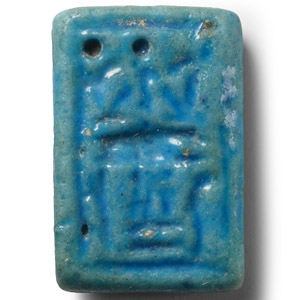
Egyptian Faience Bead for Ramesses II
New Kingdom, 19th Dynasty, 1279-1213 B.C.Sold for (Inc. bp): £286
Rectangular bead with faintly impressed hieroglyphs on both broad faces, giving Ramesses II's birth and throne names. 3.59 grams, 23 mm
From the old Belfort collection, expert Jean Roudillon. Ex Hotel des Ventes de Belfort. Property of a French collector. -
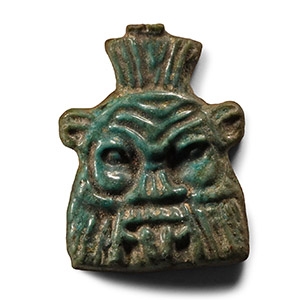
Egyptian 'Maspero' Green Faience Amulet
Late Period, 664-332 B.C.Sold for (Inc. bp): £312
Mask of Bes in low-relief with lentoid eyes and tongue extended. 2.09 grams, 28 mm
Ex Emile Bouillon Bey, c. 1880. From the Gaston Maspero Archaeological Fund. with Hotel des Ventes du Perigord, Bergerac, 24 June 2007. Property of a French collector.
Bes became one of ancient Egypt's most popular apotropaic deities from the New Kingdom onwards. Despite his somewhat fearful appearance, Bes was the patron and protector of pregnant women and children. He was also believed to protect from snakes. -
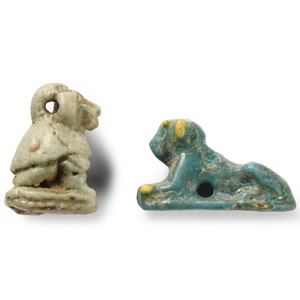
Egyptian Faience Amulet Group
Late Period, 664-332 B.C.Sold for (Inc. bp): £247
Comprising a resting lioness on a rectangular base and the god Thoth in baboon form. 1.30 grams total, 12-15 mm
From the collection of Doctor Girard, a collector for over 60 years. with Hotel des Ventes de Clermont-Ferrand, 22 May 2017. Property of a French collector.
Throughout ancient Egyptian mythology, lioness goddesses played a significant role in the religious beliefs of the people. These goddesses, including Sekhmet, Bastet, and Wadjet were revered as powerful and fierce protectors. Their presence was believed to ward off evil and safeguard the people from harm. The baboon was an animal manifestation of the god Thoth. Thoth was revered for his association with knowledge, writing, and healing. It is likely that the popularity of Thoth amulets as mummy amulets is linked to his role as the recorder of the final judgment, which determined whether the deceased had lived a life of virtue.
