
Loading, please wait...
LOT 0530
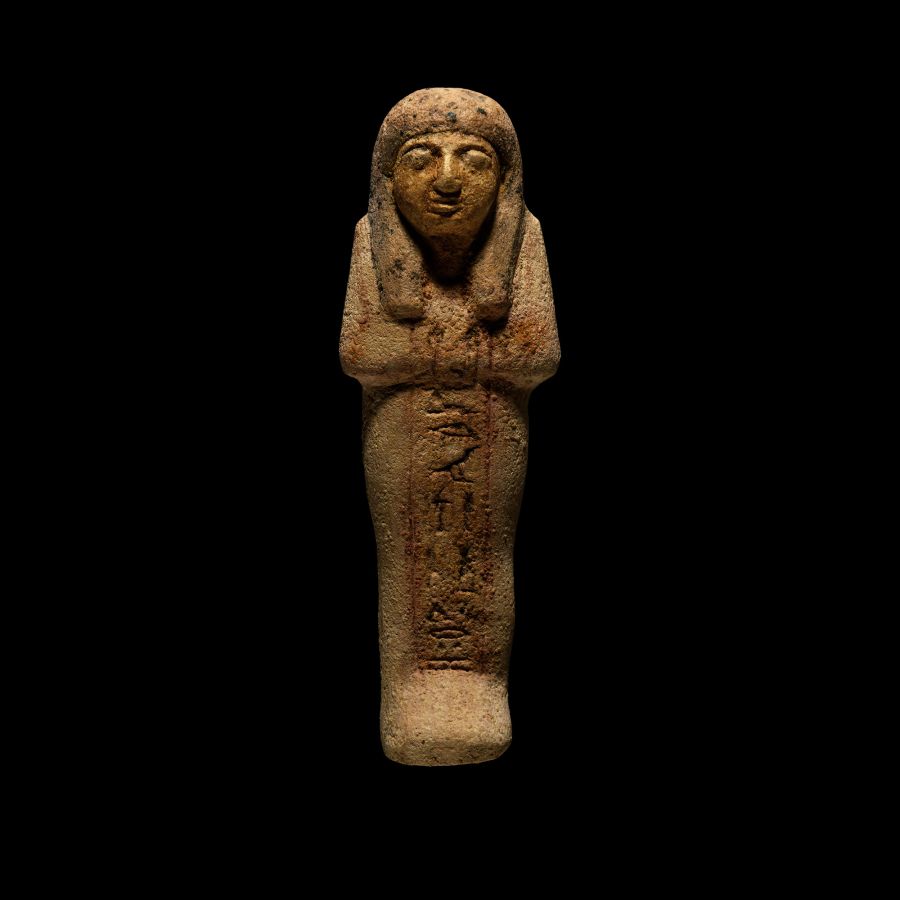
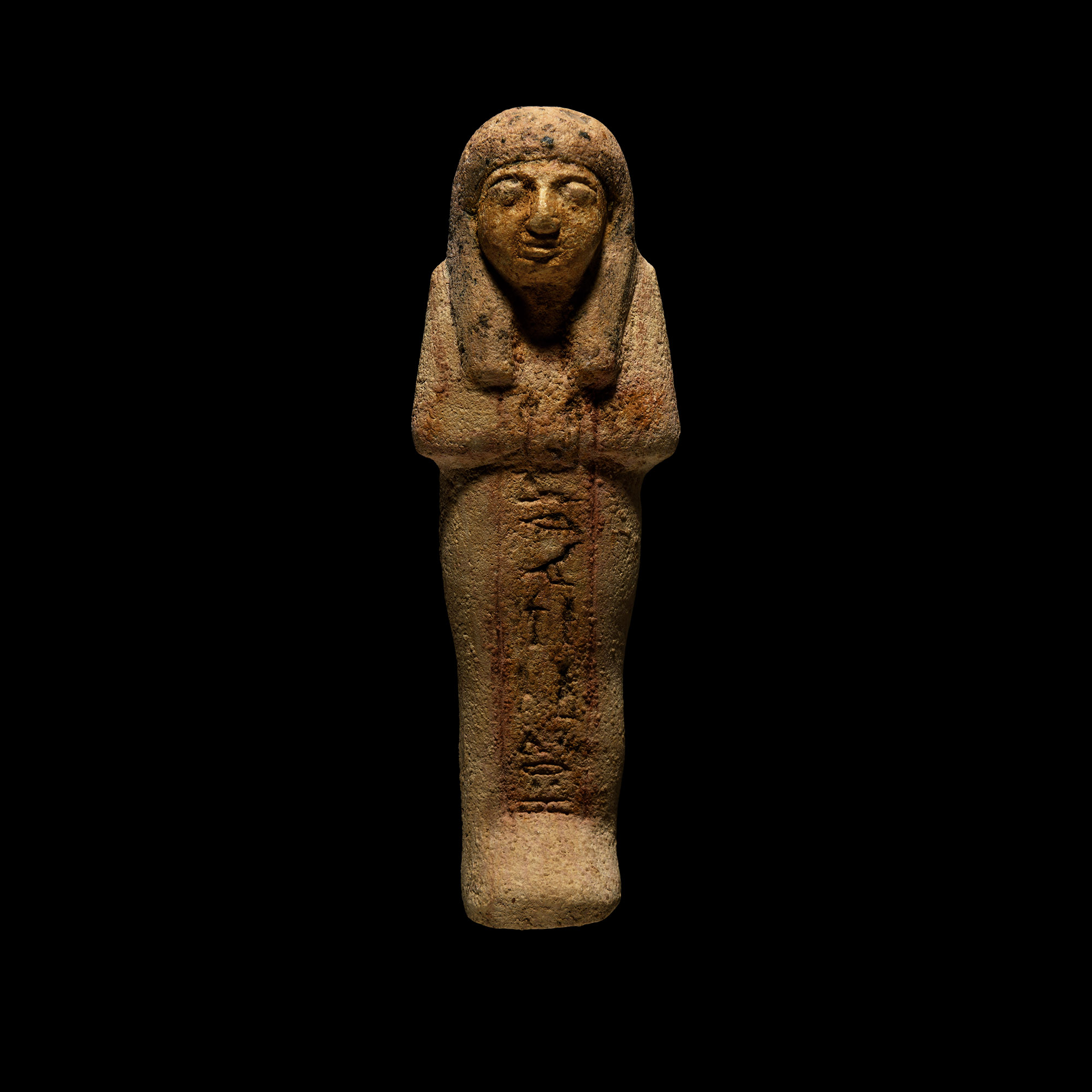
Egyptian Painted Limestone Shabti for Abet-iyiry
LATE NEW KINGDOM, CIRCA 1100 B.C.
5 1/4 in. (162 grams, 13.3 cm).
With remains of pigment to the tripartite wig, face and eyes; vertical band of hieroglyphic inscription in black on the front giving dedication: 'sḥḏ wsir Ꜣbt-iyiry(?) mꜢʾ ḫrw' ‘The illuminated, the Osiris, Abet-iyiry(?), true of voice’; with remains of red borders and red detailing to the back.
ProvenanceAcquired 1970s-1996.
Property of a North American collector.
London collection, 2016.
Cf. similar in the collection of the British Museum under accession no.EA48977.
CONDITIONTimeLine Auctions follows a vetting process to ensure the authenticity and legality of all items, reinforcing our commitment to integrity and responsible trading. Each antiquity, antique, and coin lot undergoes thorough examination by a vetting committee of at least ten external specialists, professional trade association members, scientists, and archaeologists: Our Vetting Process
AUCTIONS:
TimeLine is a leading auction house specialising in antiquities, ancient art, collectables, natural history, coins, medals, and books. Our auctions offer museums, collectors, historians, and enthusiasts the opportunity to acquire unique and historically significant pieces.
-
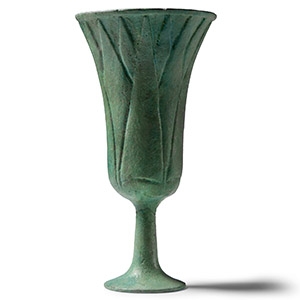
Egyptian Blue-Glazed Faience Blue Lotus Chalice
New Kingdom-Third Intermediate Period, circa 1504-935 B.C.Sold for (Inc. bp): £9,360
With a tall, flaring cup rounded at the base, attached to a short stem supported on a flared foot; the outside of the cup decorated with petals modelled in relief and a ribbed rim; the stem and foot plain; some restoration. 126 grams, 16 cm
Acquired 1970s-1996. Property of a North American collector. London collection, 2016. This lot has been checked against the Interpol Database of stolen works of art and is accompanied by search certificate no.12099-214088.
Faience chalices shaped like the flowers of the blue lotus (Nymphaea caerulea) first appeared in the 18th Dynasty. The blue lotus chalices were believed to have been used for cultic or votive purposes in temples or in rituals offered to the dead. Known as 'Seshen' by the ancient Egyptians, the blue lotus was a symbol of solar concepts associated with rebirth, probably because its flowers opened in the morning and closed at night. Hence, it is not surprising to find that the lotus was prominently featured in ancient Egyptian funerary art, particularly in banqueting scenes honouring the deceased, and in bouquets that adorned the coffin and bier of the deceased. It is also believed that the flower petals were used to make perfume, and that the ancient Egyptians took advantage of the lotus's narcotic properties. The extracted essence was added to wine to enhance its pleasurable effects, as depicted in banqueting scenes with intoxicated guests. -
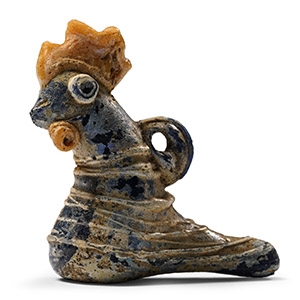
Phoenician Blue Glass Bird Pendant
425-200 B.C.Sold for (Inc. bp): £468
Hollow-formed amuletic pendant with applied trails to the body, iridescent surface, yellow glass detailing. 5.5 grams, 32 mm
From the collection of a gentleman, acquired on the London art market in the 1990s. -
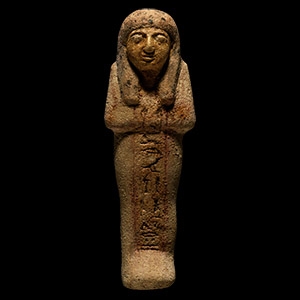
Egyptian Painted Limestone Shabti for Abet-iyiry
Late New Kingdom, circa 1100 B.C.Sold for (Inc. bp): £910
With remains of pigment to the tripartite wig, face and eyes; vertical band of hieroglyphic inscription in black on the front giving dedication: 'sḥḏ wsir Ꜣbt-iyiry(?) mꜢʾ ḫrw' ‘The illuminated, the Osiris, Abet-iyiry(?), true of voice’; with remains of red borders and red detailing to the back. 162 grams, 13.3 cm
Acquired 1970s-1996. Property of a North American collector. London collection, 2016.
