
Loading, please wait...
LOT 0498
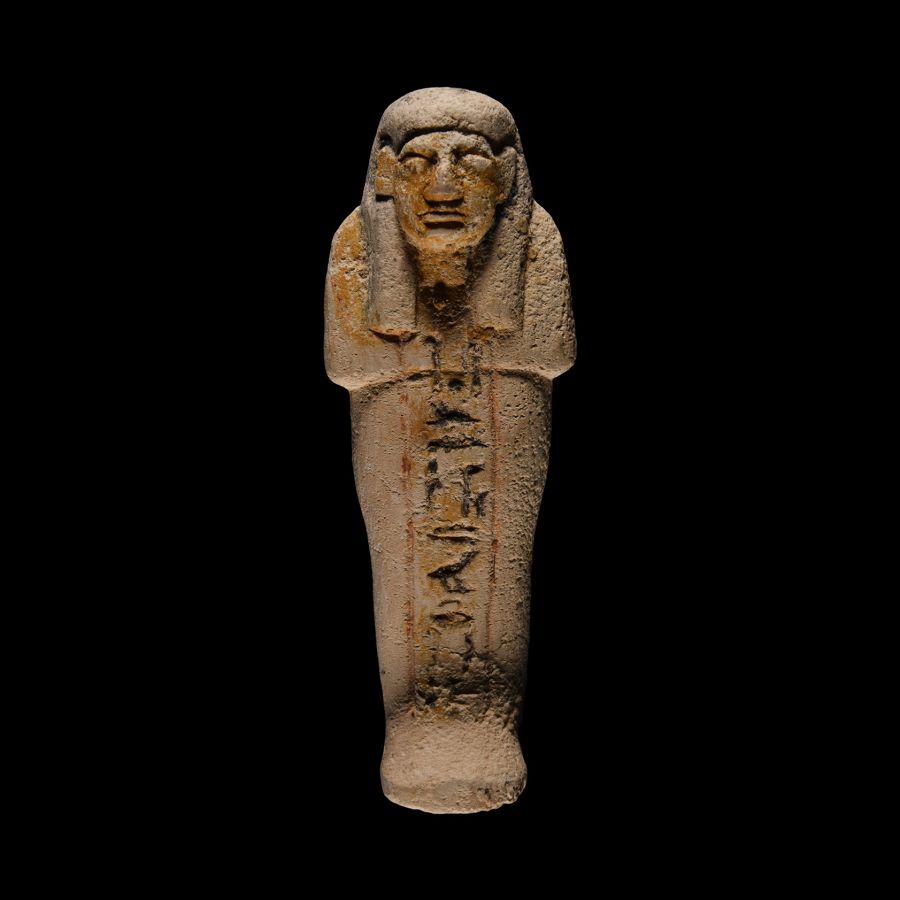
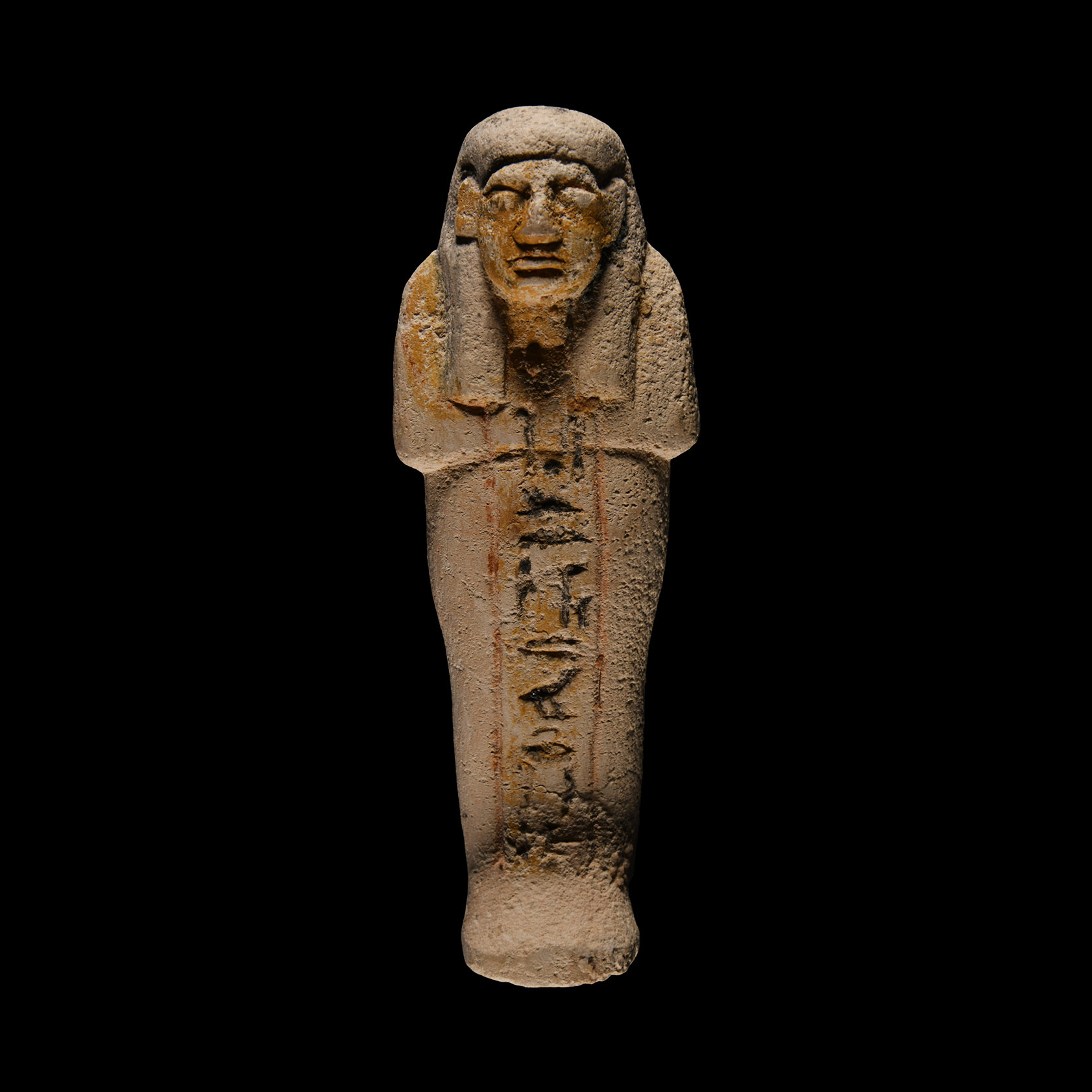
Egyptian Painted Limestone Hieroglyphic Shabti for Iru-iry
LATE NEW KINGDOM, CIRCA 1000 B.C.
4 3/8 in. (95.8 grams, 11.2 cm).
With remains of pigmented tripartite wig, face and upper body, with frontal column of hieroglyphic text with black fill and red borders, dedicating the shabti to 'The God's Father (a priestly title), Iru-iry(?)'.
ProvenanceAcquired 1970s-1996.
Property of a North American collector.
London collection, 2016.
Cf. similar in the collection of the British Museum under accession no.EA8710.
CONDITIONTimeLine Auctions follows a vetting process to ensure the authenticity and legality of all items, reinforcing our commitment to integrity and responsible trading. Each antiquity, antique, and coin lot undergoes thorough examination by a vetting committee of at least ten external specialists, professional trade association members, scientists, and archaeologists: Our Vetting Process
AUCTIONS:
TimeLine is a leading auction house specialising in antiquities, ancient art, collectables, natural history, coins, medals, and books. Our auctions offer museums, collectors, historians, and enthusiasts the opportunity to acquire unique and historically significant pieces.
LOT 0498
Egyptian Painted Limestone Hieroglyphic Shabti for Iru-iry
Sold for (Inc. bp): £910
-
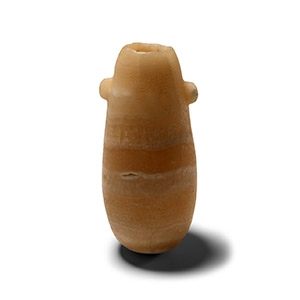
Egyptian Alabaster Alabastron
Late Period, 664-332 B.C.Sold for (Inc. bp): £260
The piriform vessel with rounded base, two integral lug handles to the neck; fractured above the neck. 139 grams, 97 mm high
Acquired in Europe before 1992. -
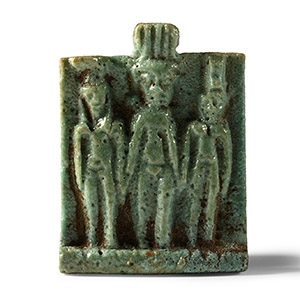
Egyptian Memphis Triad Amulet
Late Period, 664-332 B.C.Estimate: £500 - 700 (+bp*)
Opening Bid: £250
Rectangular plaque with ledge to the lower edge, ribbed loop above, the half-round figures of the goddesses Nephthys and Isis wearing their characteristic headdresses flank the figure of the young Horus wearing the sidelock of youth. 9.1 grams, 37 mm high
From an early Home Counties, UK, collection, 1930-1940. Ex London, UK, collection.
The deities of this triad are the protagonists associated with the myth of Osiris. -
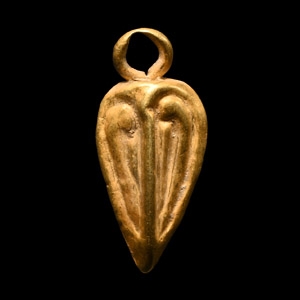
Romano-Egyptian Gold Ribbed Fruit Pendant
Roman Period, 30 B.C.-323 A.D.Sold for (Inc. bp): £111
Hollow-formed piriform drop with repoussé tendrils. 0.57 grams, 15 mm
From a late Japanese specialist collector, 1970-2000s.
