
Loading, please wait...
LOT 0487
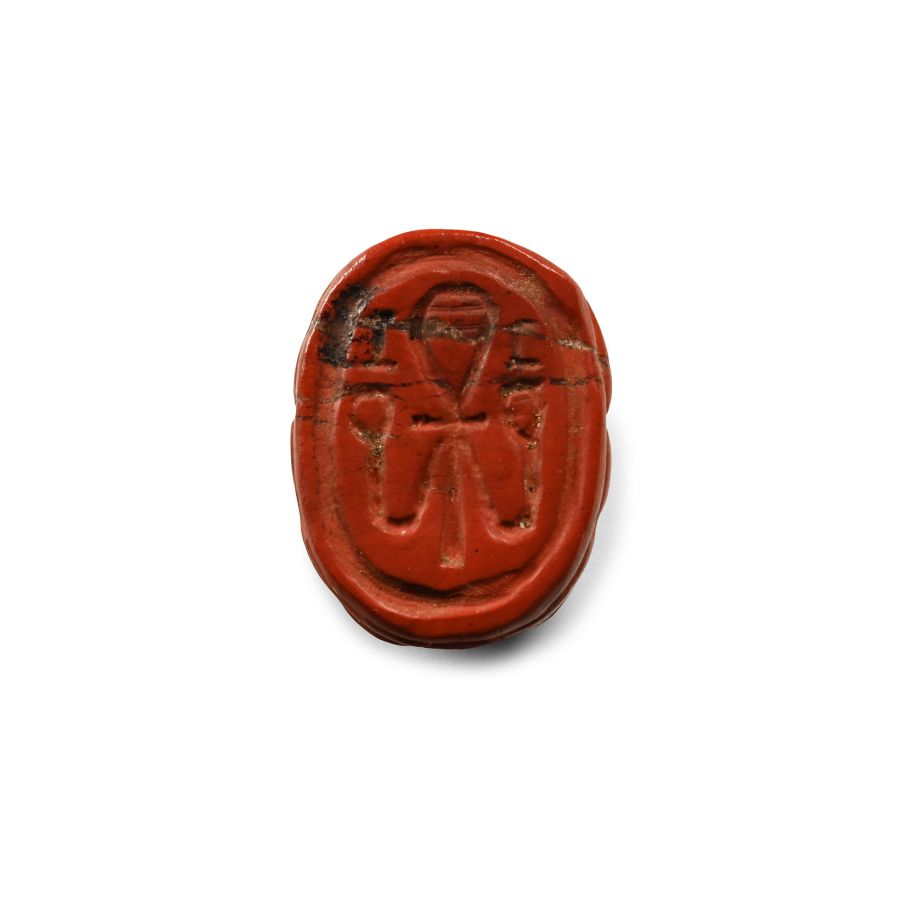
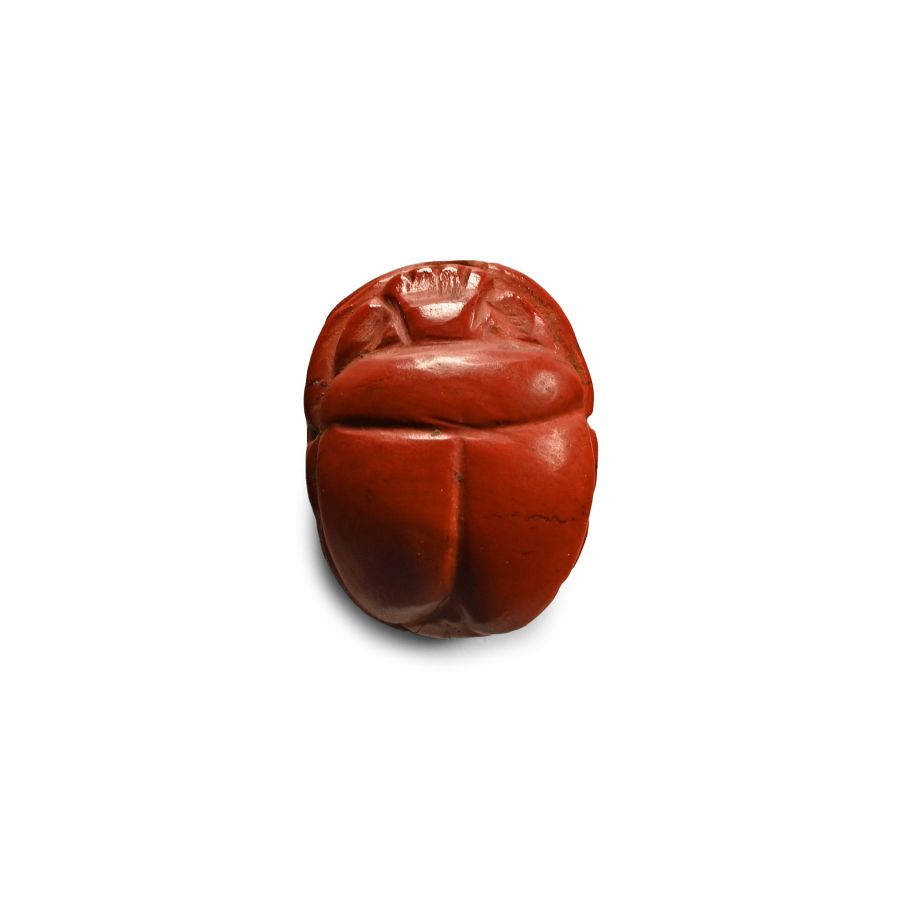
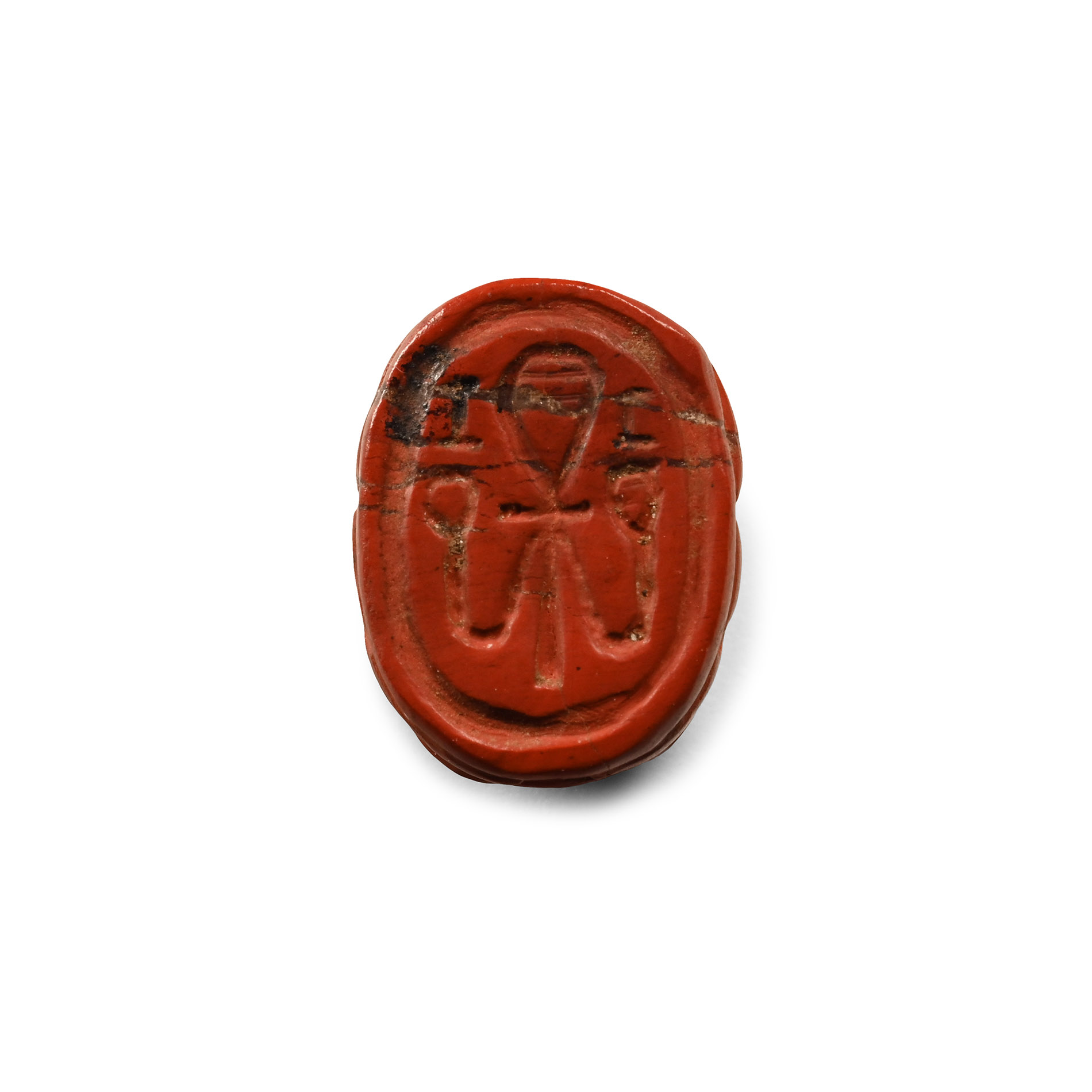
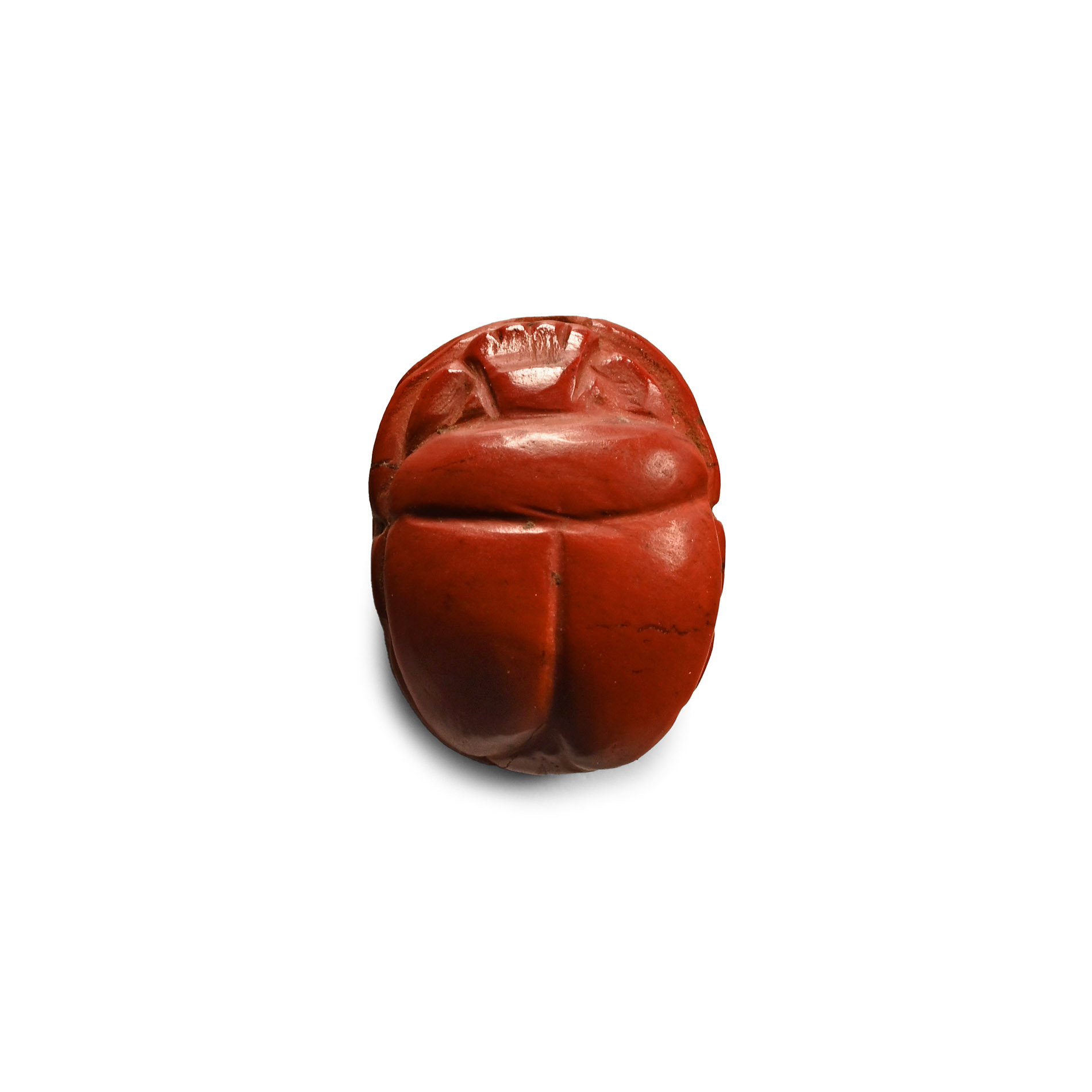
Egyptian Orange Jasper Scarab
NEW KINGDOM, 1550-1069 B.C.
1/2 in. (1.52 grams, 13 mm).
Carved with design to the underside of a central ankh symbol flanked by stylised rearing cobras.
ProvenanceFrom an early 20th century collection.
CONDITIONTimeLine Auctions follows a vetting process to ensure the authenticity and legality of all items, reinforcing our commitment to integrity and responsible trading. Each antiquity, antique, and coin lot undergoes thorough examination by a vetting committee of at least ten external specialists, professional trade association members, scientists, and archaeologists: Our Vetting Process
AUCTIONS:
TimeLine is a leading auction house specialising in antiquities, ancient art, collectables, natural history, coins, medals, and books. Our auctions offer museums, collectors, historians, and enthusiasts the opportunity to acquire unique and historically significant pieces.
-
Large Egyptian Blue Glazed Hieroglyphic Shabti for a Sem Priest
Saite Period, 26th Dynasty, 664-525 B.C.Sold for (Inc. bp): £1,950
Pale blue composition with moulded detail to the wig, beard, tools and seed bag; nine horizontal bands of hieroglyphic text to the lower half of the body; dorsal pillar. 230 grams, 18.2 cm
Acquired on the German art market, 1989-1995. with The Museum Gallery, 19 Bury Place, London, WC1, UK, 1998-2003. Property of a London based academic, 2003-present. -
.jpg)
Egyptian Faience Shabti for Nesy-Amun
Third Intermediate Period, 21st Dynasty, 1069-943 B.C.Sold for (Inc. bp): £1,170
Modelled in deep blue faience with applied black detailing to the hair, eyes, seed bag, agricultural tools and three bands of hieroglyphs to the lower body reading giving the title and name of 'Nesy-Amun, Justified'; very rare. 75 grams, 11.1 cm
European collection, latterly in private UK collection, 1990. Read by John Taylor at the British Museum on 27 February 2009. Accompanied by a copy of a handwritten information card and a print out of the Christie's example.
Nesy-Amun was the Fourth Prophet of Amun in the 21st Dynasty. The mummy was recovered from the priest's hole, cache II, Deir el-Bahari. -
Egyptian 'Maspero' Faience Bead Group with Hieroglyphs
New Kingdom, 19th-20th Dynasty, 1279-1081 B.C.Sold for (Inc. bp): £338
Including two scarabs with hieroglyphs to the underside, and two rectangular beads with hieroglyphs. 1.32 grams total, 7-10 mm
Ex Emile Bouillon Bey, c. 1880. From the Gaston Maspero Archaeological Fund. with Hotel des Ventes du Perigord, Bergerac, 24 June 2007. Property of a French collector.
