
Loading, please wait...
LOT 0493
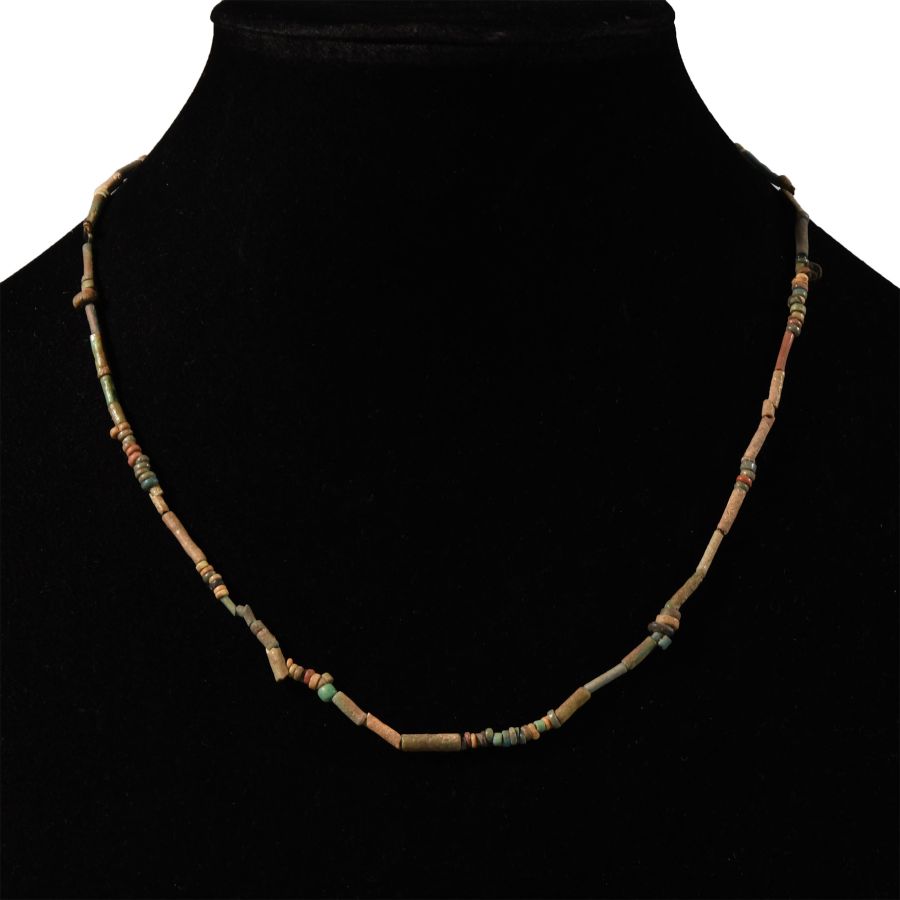
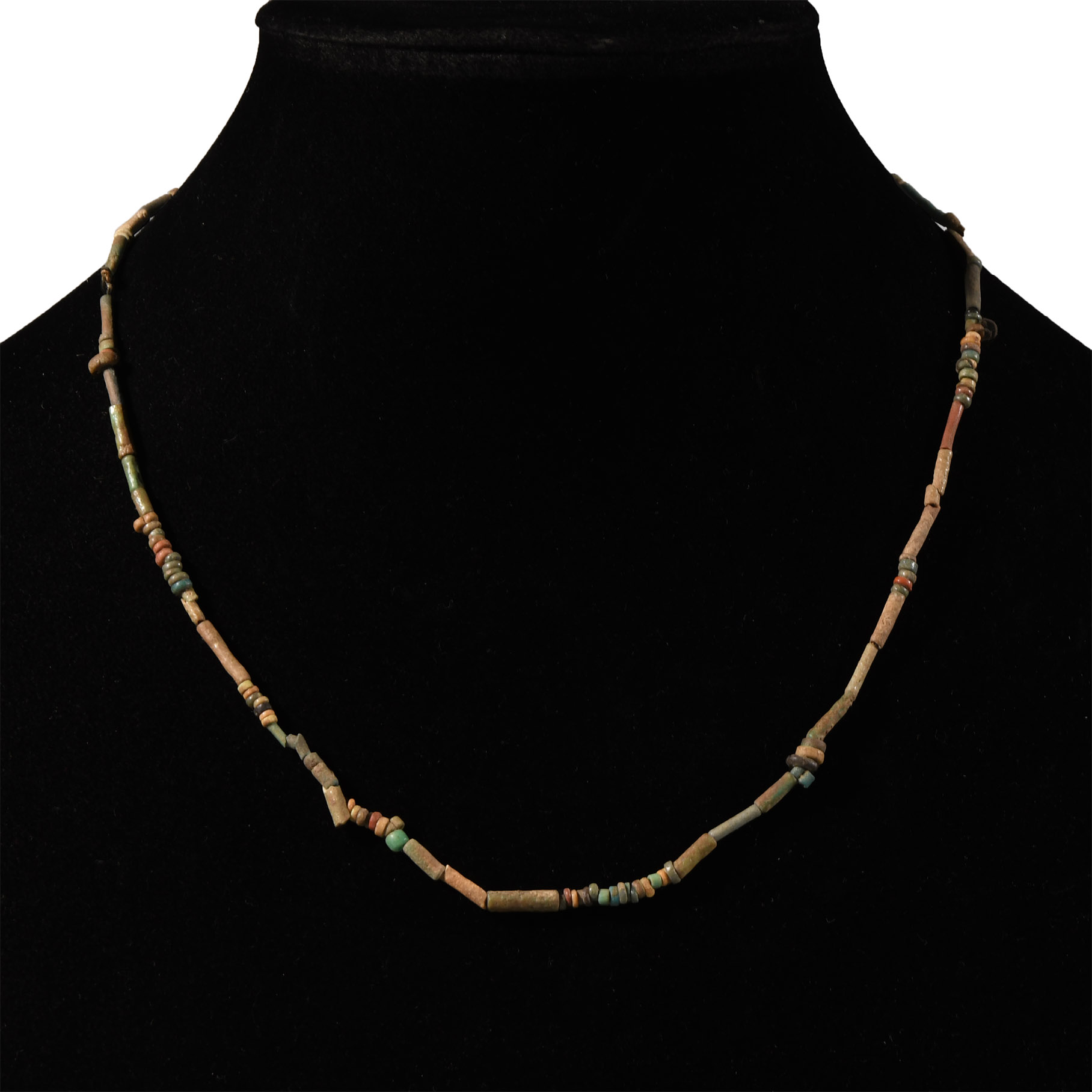
Egyptian Mummy Bead Necklace
LATE PERIOD, 664-332 B.C.
19 1/2 in. (3.58 grams, 50 cm long).
Restrung group of glazed composition beads, mainly tubular and annular types. [No Reserve]
ProvenanceFrom a private Paris collection, France, 1960s.
From the personal collection of Derek Rogers, Suffolk, UK.
TimeLine Auctions follows a vetting process to ensure the authenticity and legality of all items, reinforcing our commitment to integrity and responsible trading. Each antiquity, antique, and coin lot undergoes thorough examination by a vetting committee of at least ten external specialists, professional trade association members, scientists, and archaeologists: Our Vetting Process
AUCTIONS:
TimeLine is a leading auction house specialising in antiquities, ancient art, collectables, natural history, coins, medals, and books. Our auctions offer museums, collectors, historians, and enthusiasts the opportunity to acquire unique and historically significant pieces.
-
.jpg)
Egyptian Faience Scarab with Hieroglyphs
Late Period, 664-332 B.C.Sold for (Inc. bp): £624
Naturalistic detailing to the blue stained body and legs with section of openwork between the front and back legs; hieroglyphs on base giving the good luck message 'When Amun is behind you, do not fear'; pierced for suspension. 1.72 grams, 15 mm
Ex collection of Emil Saad, Paris-Alexandria. -
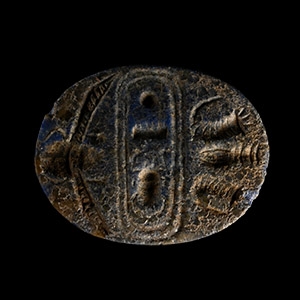
Egypto-Phoenician Lapis Lazuli Scarab with Cartouche for Thutmose III
Late 1st millennium B.C.Estimate: £2,500 - 3,500 (‡+bp*)
Opening Bid: £1,350
With carapace detailing to obverse, plaque with intaglio cartouche for the throne name of Thutmose III men-kheper-Re, winged scarab and fronds flanking. 7.4 grams, 25 mm
Private collection of Mr S.A., Switzerland, 1990s, thence by descent. This lot has been checked against the Interpol Database of stolen works of art and is accompanied by search certificate no.12127-211877. -
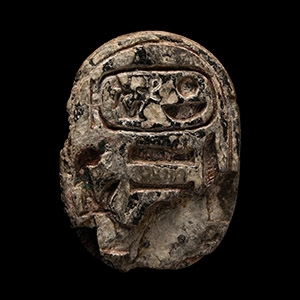
Large Egyptian Stone Hieroglyphic Scarab for Amenhotep III
New Kingdom, 1386-1349 B.C.Estimate: £700 - 900 (‡+bp*)
Opening Bid: £350
Naturalistically modelled with detailing to the upper body and legs; damaged base with the throne name 'neb-maat-re' of Amenhotep III in cartouche and the god's name Amun-Re below; pierced for suspension. 41 grams, 44 mm
Ex R. Liechti (1934-2010) Geneva, Switzerland, collection between 1950-1990s.
