
Loading, please wait...
LOT 0547
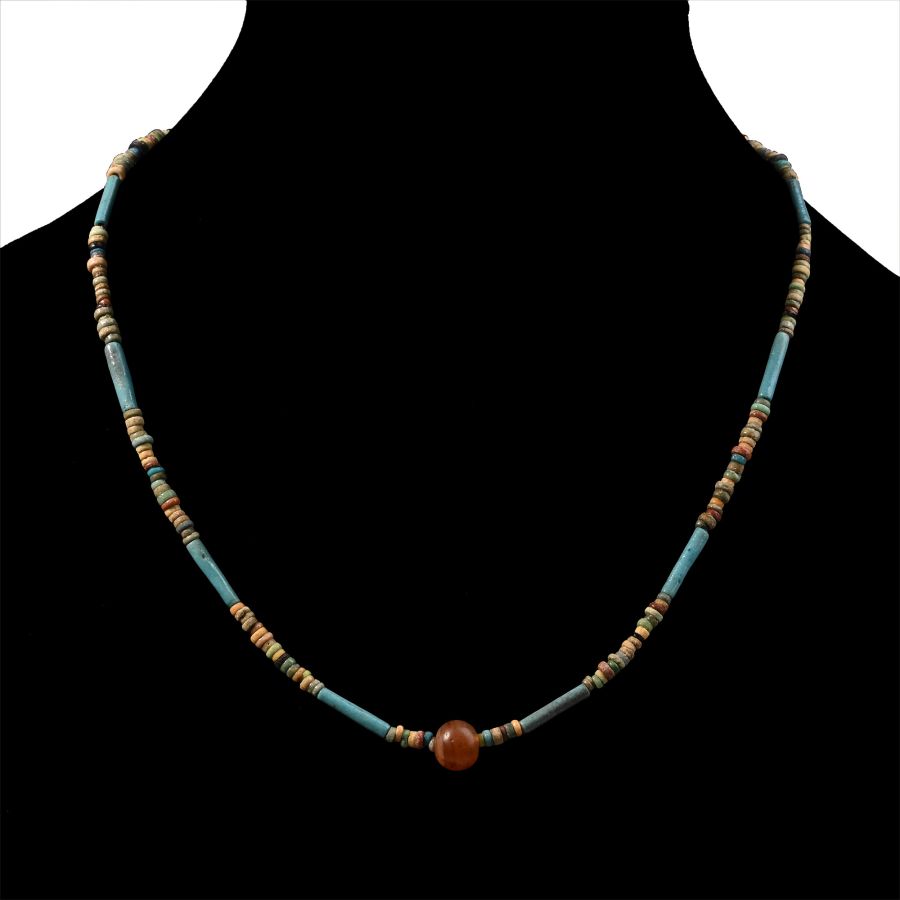
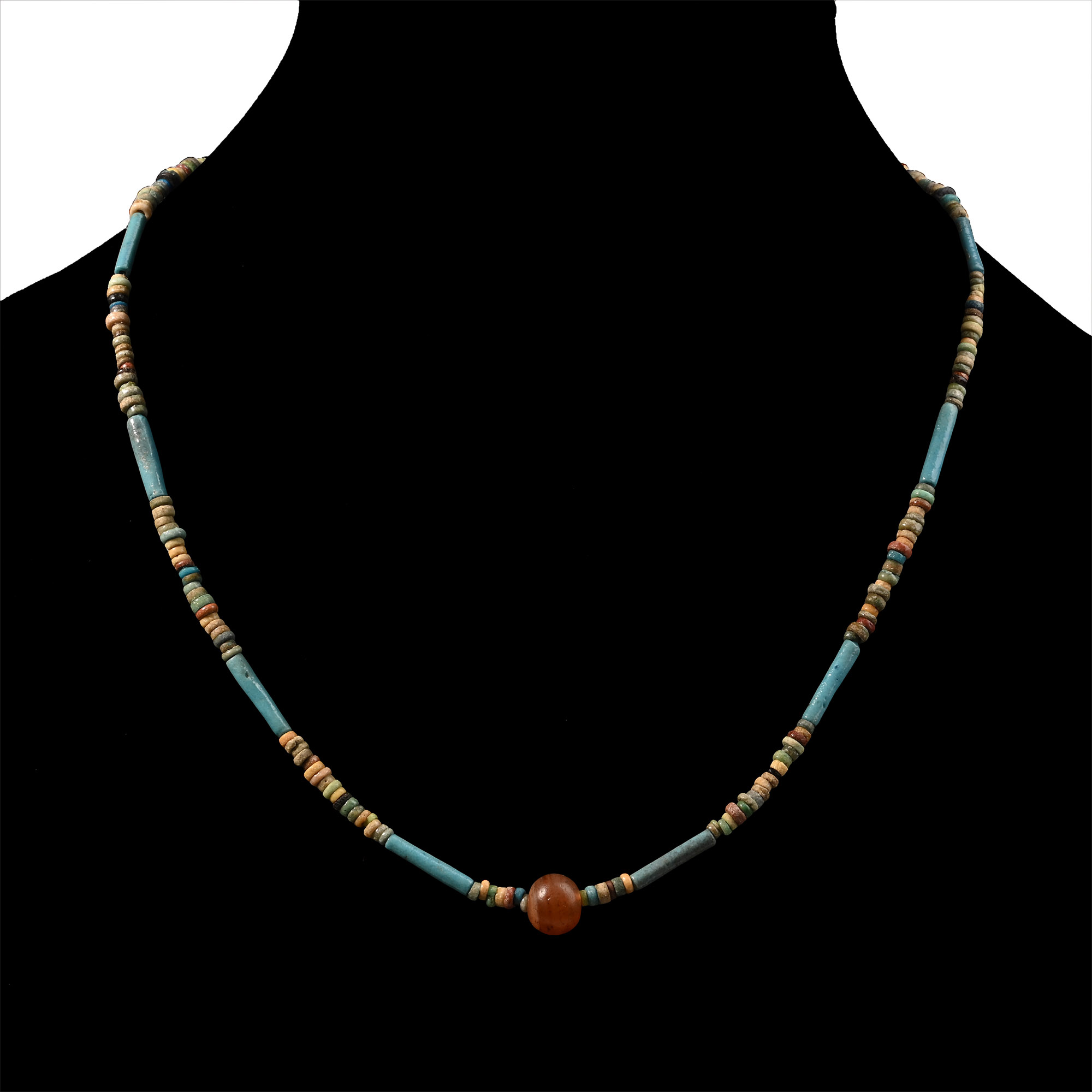
Egyptian Mummy Bead Necklace with Carnelian Feature Bead
LATE PERIOD, 664-332 B.C.
20 in. (8.41 grams, 51 cm long).
Restrung group of tubular and annular glazed composition beads with oblate centrepiece. [No Reserve]
ProvenancePreviously with Astarte Gallery, London W1, UK, 1983.
From the private collection of T.R. Elley, West Sussex, UK, 1980s.
Accompanied by an invoice copy dated 18 October 1983.
TimeLine Auctions follows a vetting process to ensure the authenticity and legality of all items, reinforcing our commitment to integrity and responsible trading. Each antiquity, antique, and coin lot undergoes thorough examination by a vetting committee of at least ten external specialists, professional trade association members, scientists, and archaeologists: Our Vetting Process
AUCTIONS:
TimeLine is a leading auction house specialising in antiquities, ancient art, collectables, natural history, coins, medals, and books. Our auctions offer museums, collectors, historians, and enthusiasts the opportunity to acquire unique and historically significant pieces.
LOT 0547
Egyptian Mummy Bead Necklace with Carnelian Feature Bead
Sold for (Inc. bp): £111
-
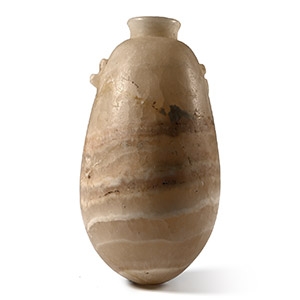
Egyptian Alabaster Alabastron
Late Period, 664-332 B.C.Estimate: £700 - 900 (‡+bp*)
Opening Bid: £350
Ovoid jar with a rounded base, concave shoulders and flared neck; remains of lug handles, restored. 332 grams, 14 cm
Acquired in the mid 1980s-1990s. Private collection, Switzerland, thence by descent. Private collection, since the late 1990s. -
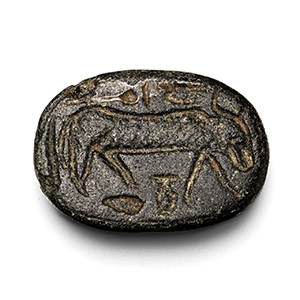
Egyptian Steatite Scaraboid with Face
Late Period, 664-332 B.C.Estimate: £200 - 300 (+bp*)
Opening Bid: £100
Modelled as a domed face of Hathor with small cow-ears and a wig with coiled lappet ends, and an advancing cow on the underside. 10.18 grams, 32 mm
From the collection of a gentleman, acquired on the London art market in the 1990s. -
.jpg)
Egyptian Limestone Relief with Pharaoh Making Offerings
Ptolemaic-Roman Period, circa 332 B.C.-300 A.D.Sold for (Inc. bp): £4,680
Rectangular relief showing the pharaoh wearing the pschent crown of Upper and Lower Egypt and presenting the hieroglyphic sign of a field (sḫt) in his outstretched palms towards the now barely discernible figure of a standing deity holding a long sceptre; an empty cartouche above and a column of worn hieroglyphic text below; mounted on a custom-made display stand. 18.4 kg total, 45.5 cm including stand
Acquired 1970s-1996. Private collection, Switzerland. with a North American collector. London collection, 2016. This lot has been checked against the Interpol Database of stolen works of art and is accompanied by search certificate number no.12943-244661.
Scenes showing the pharaoh offering various items, including fields, to one or more deities are found in temples across Egypt. The empty cartouche is a feature most often seen in inscriptions from Ptolemaic and Roman-period temples, reflecting uncertainty over the holder of power in the country.
