
Loading, please wait...
LOT 0536
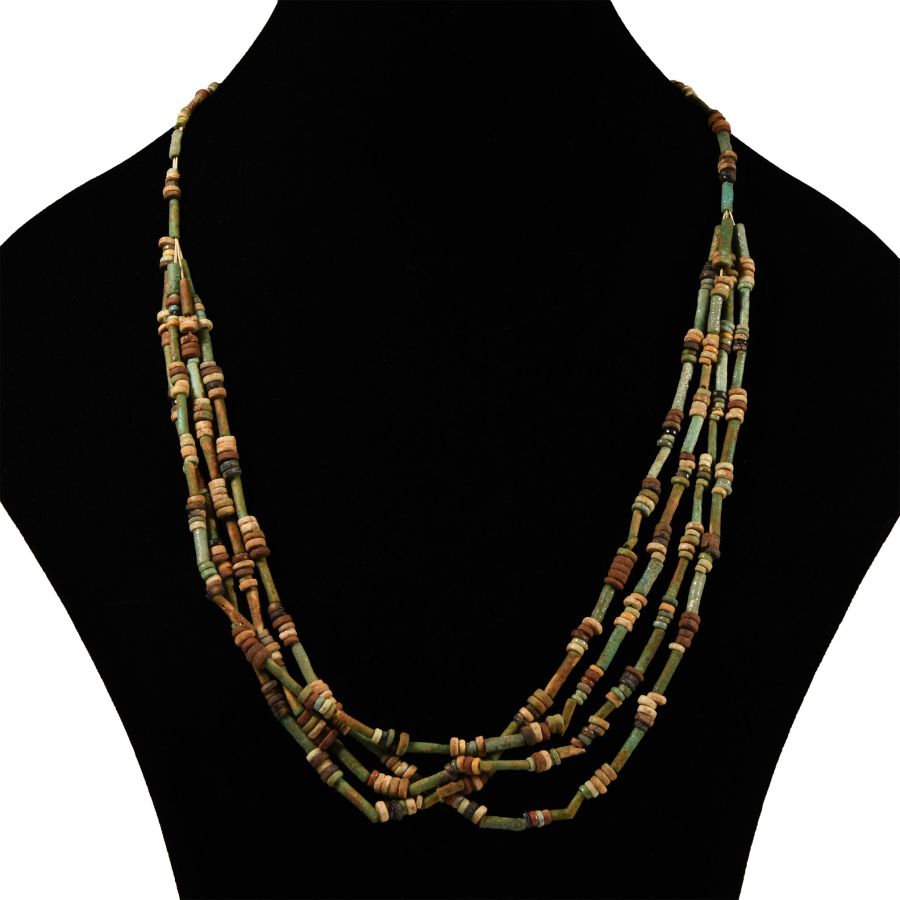
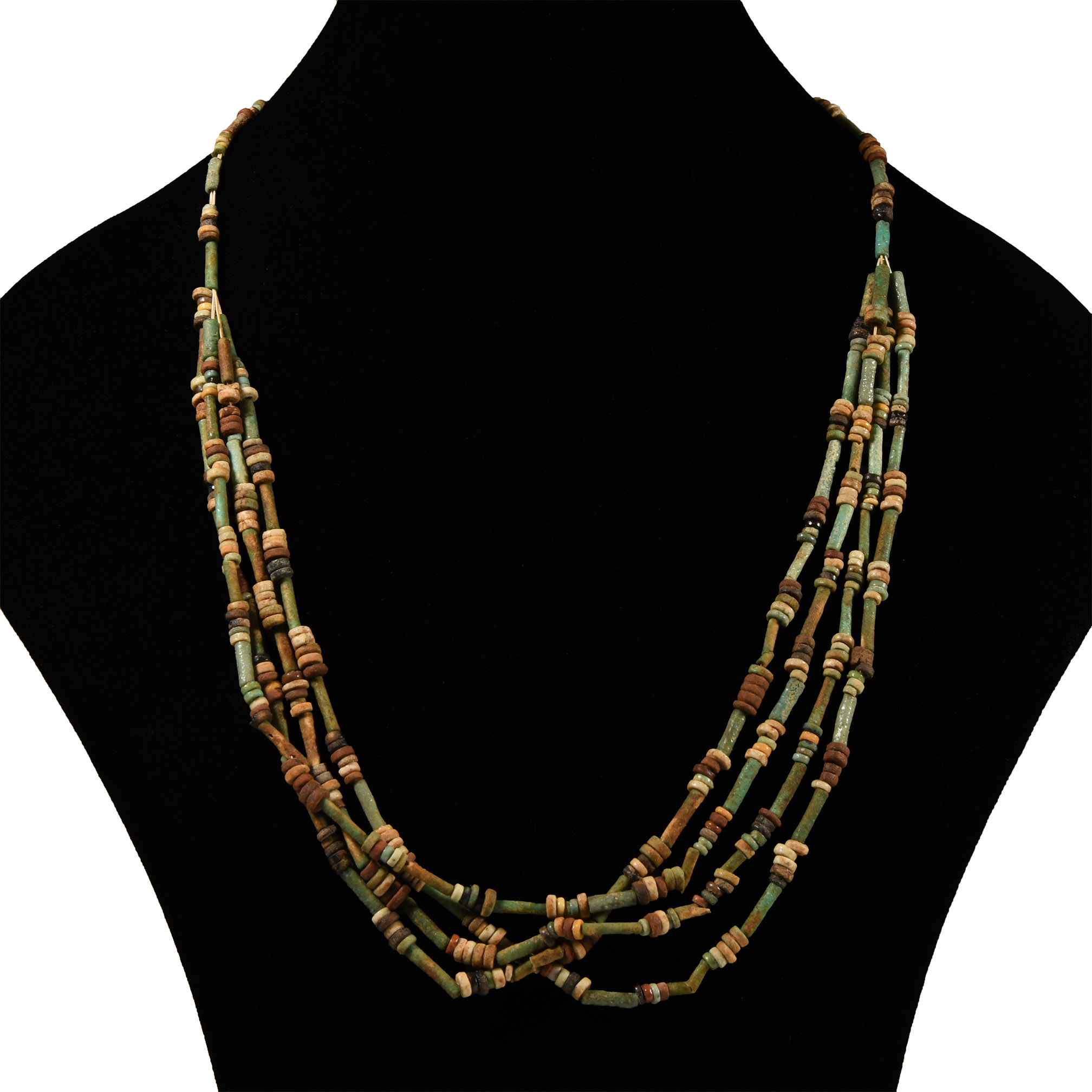
Egyptian Multi-Stranded Mummy Bead Necklace
LATE PERIOD, 664-525 B.C.
26 in. (27 grams, 66 cm).
Multi-stranded restrung composition necklace composed of beads of mainly annular and tubular types. [No Reserve]
ProvenanceAcquired before 1979.
From the private collection of Mr F. A., South Kensington, London, UK; thence by descent 2014.
Cf. similar specimens in faience at the Worcester Art Museum, inventory no.1925.539.
FootnotesFor thousands of years, artisans in Egypt created vibrant ceramics to echo the beauty of rare jewels. These ornaments were created with almost every material, colour, and texture imaginable and they come from across Egypt and beyond: vibrant blue lapis lazuli from Afghanistan, glossy black obsidian from Turkey, and aqua-green turquoise from the Sinai. They were worn in life and, after death, they served as precious ornamentation for mummies.
CONDITIONTimeLine Auctions follows a vetting process to ensure the authenticity and legality of all items, reinforcing our commitment to integrity and responsible trading. Each antiquity, antique, and coin lot undergoes thorough examination by a vetting committee of at least ten external specialists, professional trade association members, scientists, and archaeologists: Our Vetting Process
AUCTIONS:
TimeLine is a leading auction house specialising in antiquities, ancient art, collectables, natural history, coins, medals, and books. Our auctions offer museums, collectors, historians, and enthusiasts the opportunity to acquire unique and historically significant pieces.
-
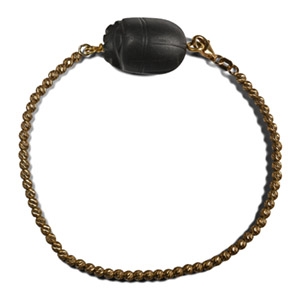
Egyptian Hardstone Scarab in Gold Bracelet
Late Period, 664-332 B.C. and laterSold for (Inc. bp): £572
Scarab, plano-convex in section with incised carapace and leg detailing, stylised djed pillar to the underside; mounted in a 20th-century gold bracelet. 12.30 grams, 22.5 cm
From the private collection of the late Mrs Belinda Ellison, long time member of the Egyptian Exploration Society, c.1940-2020. -
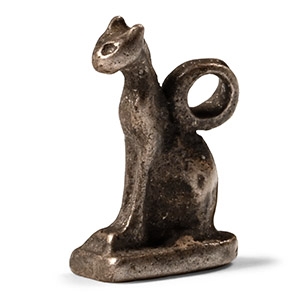
Egyptian Silver Cat Amulet
Late Period, 664-332 B.C.Sold for (Inc. bp): £260
Modelled seated on a tongue-shaped base, with facial detailing and suspension loop to the back. 0.33 grams, 8 mm
From an early 20th century collection.
The cat was sacred to Bastet, a protective mother goddess and the daughter of the sun god Re. Amulets provided the wearer with the goddess's protection. -
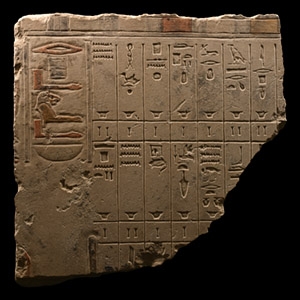
Egyptian Limestone Relief with Hieroglyphic List of Funerary Offerings
Old Kingdom, circa 2513-2190 B.C.Sold for (Inc. bp): £14,950
Dressed panel with reserved rectangular border to upper edge with ochre and terracotta pigment; left edge with reserved rectangle and column of hieroglyphs picked out with pigment; the left edge with a reserved rectangle and column of hieroglyphs picked out with pigment giving the titles of the deceased: ı͗ry-pꜤt ḥꜢty-Ꜥ nb, 'member of the elite, foremost of action, and lord'; to the right, a tabulated list of offerings with the quantities for each indicated beneath. 10.85 kg, 37 cm high
Acquired in the mid-1980s-1990s. Private collection, Switzerland, thence by descent. Private collection, since the late 1990s. Accompanied by an academic report by Egyptologist Paul Whelan. This lot has been checked against the Interpol Database of stolen works of art and is accompanied by search certificate number no.12199-222171.
The majority of preserved Old Kingdom offerings lists come from tombs at Saqqara or other parts of the Memphite necropolis and were intended to ensure that the deceased would be sustainably provided for eternally. During the 4th Dynasty, around 165 different offerings could be listed for the deceased, but by the 5th Dynasty, almost half of these had disappeared while some new ones were added. Even then, these lists could include around a hundred offerings. Although non-consumable items such as eye paint and cloth are sometimes listed, most offerings are different kinds of food, such as bread, wine, grain, and fruit.
