
Loading, please wait...
LOT 0462
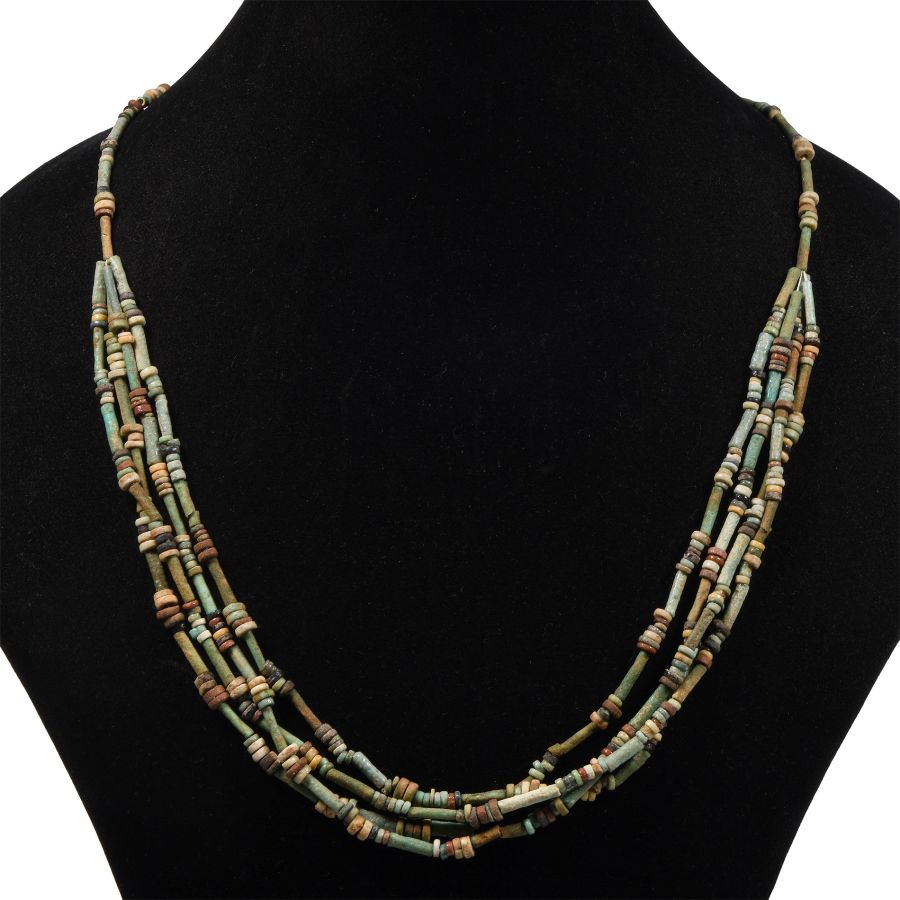
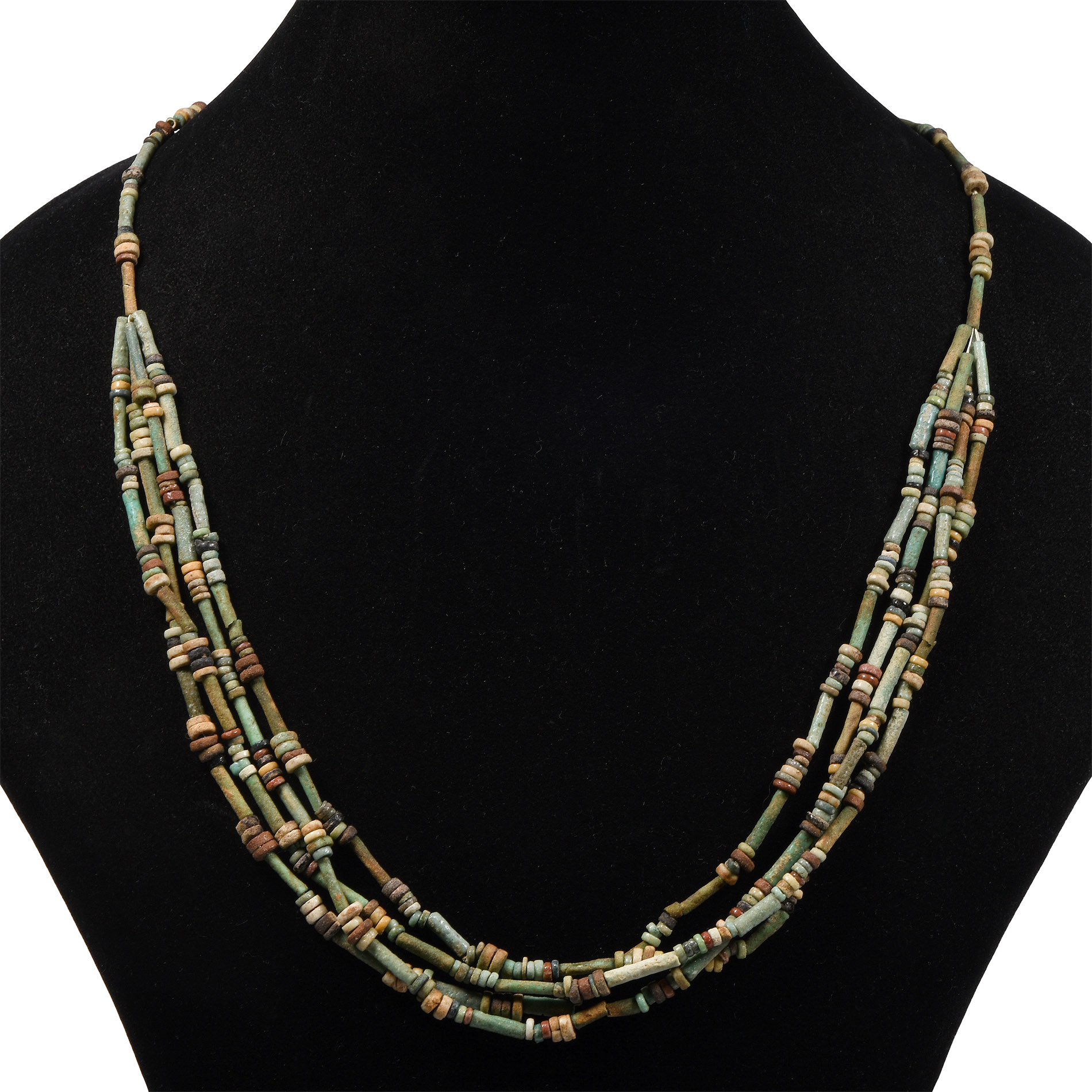
Egyptian Multi-Stranded Mummy Bead Necklace
LATE PERIOD, 664-525 B.C.
30 in. (26.2 grams, 76 cm long).
Composed of multiple strands of polychrome composition beads of mainly annular and tubular types. [No Reserve]
ProvenanceAcquired before 1979.
From the private collection of Mr F. A., South Kensington, London, UK; thence by descent 2014.
TimeLine Auctions follows a vetting process to ensure the authenticity and legality of all items, reinforcing our commitment to integrity and responsible trading. Each antiquity, antique, and coin lot undergoes thorough examination by a vetting committee of at least ten external specialists, professional trade association members, scientists, and archaeologists: Our Vetting Process
AUCTIONS:
TimeLine is a leading auction house specialising in antiquities, ancient art, collectables, natural history, coins, medals, and books. Our auctions offer museums, collectors, historians, and enthusiasts the opportunity to acquire unique and historically significant pieces.
-
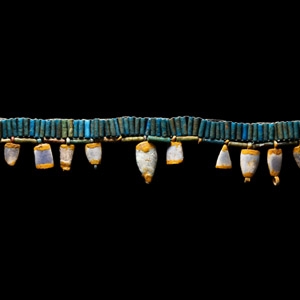
Egyptian Collar Type Faience Bead Necklace
Late New Kingdom, 1550-1069 B.C.Sold for (Inc. bp): £338
Composed of turquoise glazed tubular beads running vertically and horizontally, together with polychrome pendant beads, possibly in the form of fruits; with Amarna beads; restrung. 13.5 grams, 24 cm long
From an early 20th century UK collection. -
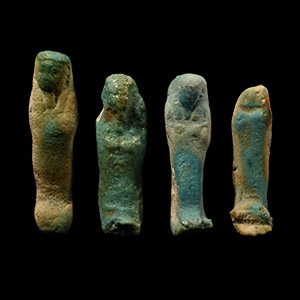
Egyptian Faience Shabti Group
Late Period-Ptolemaic Period, 664-30 B.C.Sold for (Inc. bp): £169
Four blue-glazed mummiform shabtis with worn detail. 20 grams total, 41-52 mm
From the collection of H.N., Milton Keynes, 1980s-1990s. -
.jpg)
Egyptian Mixed Bead Group
Circa 2nd millennium B.C. and laterSold for (Inc. bp): £98
Comprising various types, composition, sizes and colours, including: glass; calcite; steatite; shell; obsidian; peridot; carnelian; pink limestone; faience and rock crystal; some examples taking zoomorphic and axe forms; some held in perspex collector boxes with inked inventory numbers; accompanied by a handwritten collector's label reading 'glass beads from the tombs near Joppa. 1897' and a more recent note handwritten in the lid of one presentation box: '4 glass beads from 'the tombs near Joppa' now in Tel Aviv-Yafo in Israel, collected in 1897 when part of Ottoman Empire. Gift from Miss C. Rawdin 1982'; also a faience baboon amulet. 248 grams total, 4-33 mm
Fine condition.
Found Joppa, 1897. The property of Mr and Mrs P. R. of East Sussex. Thence by descent to family members. With an old dated label.
