
Loading, please wait...
LOT 0502
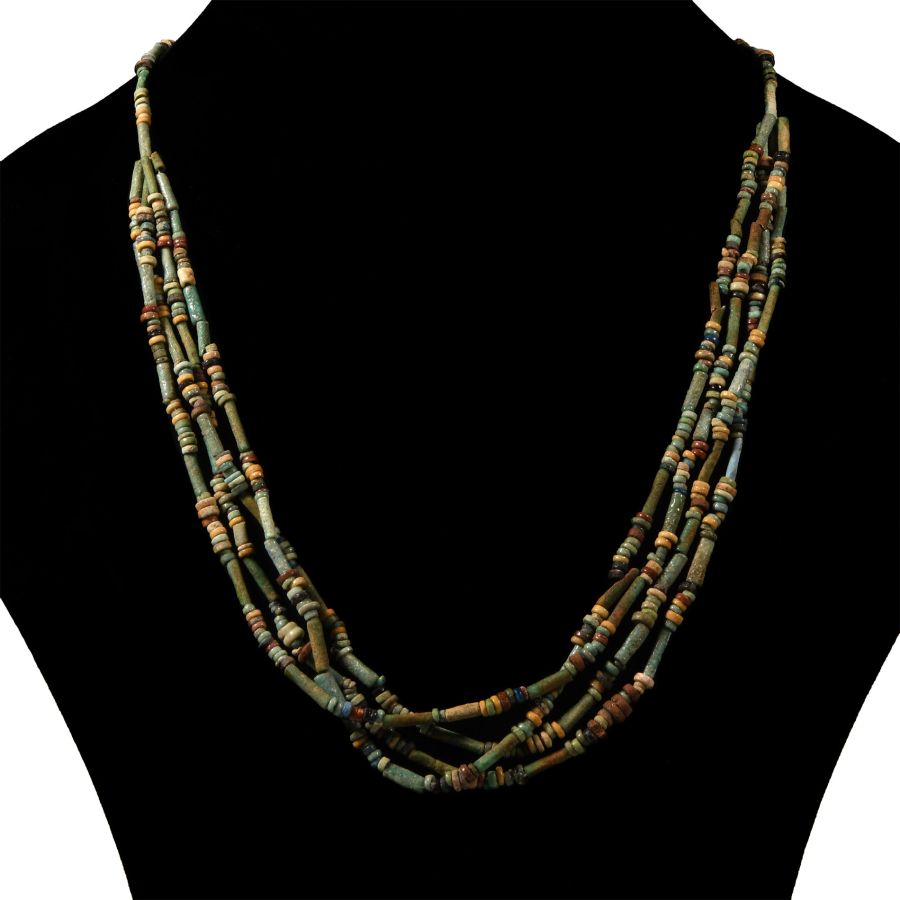
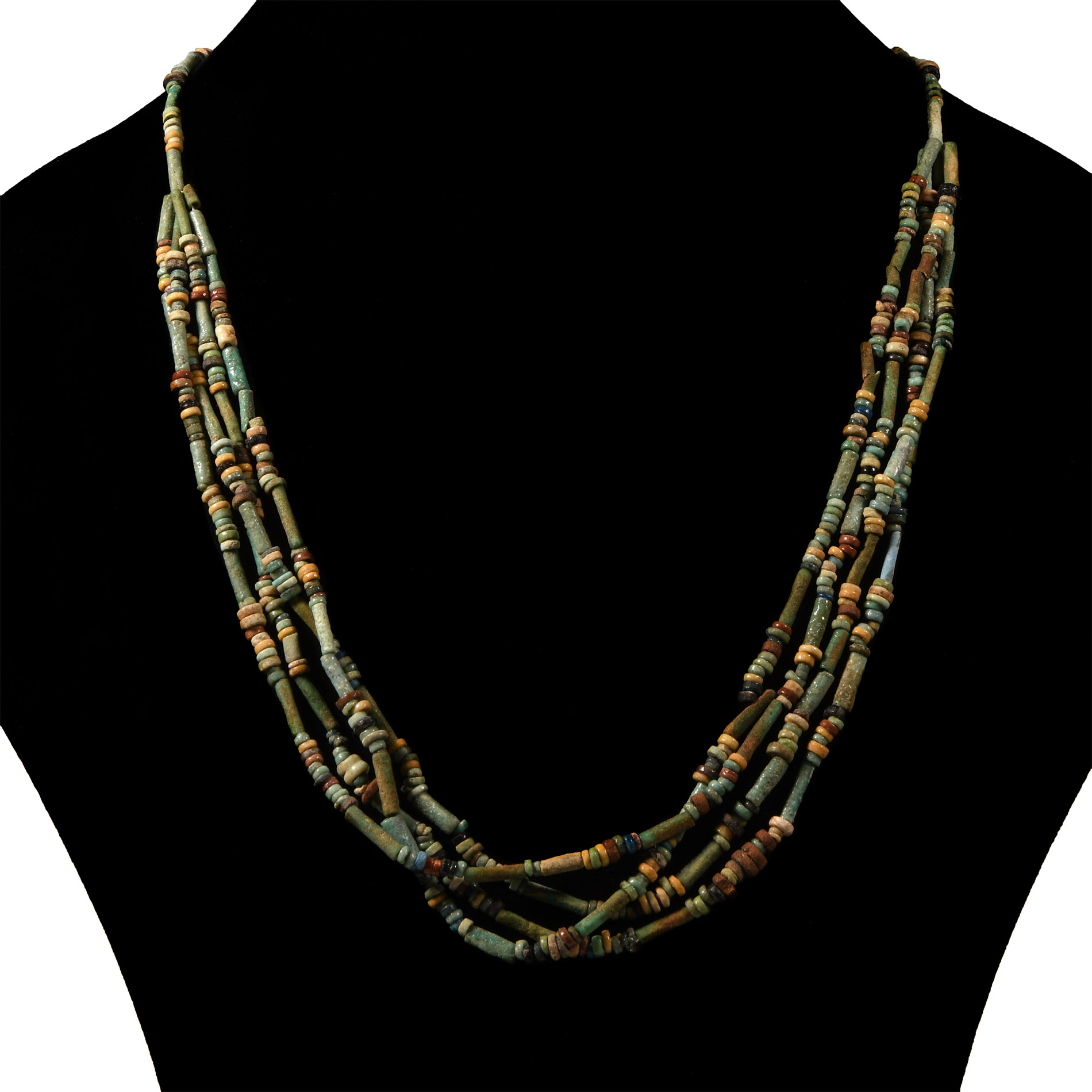
Egyptian Multi-Stranded Mummy Bead Necklace Collection
LATE PERIOD, 664-525 B.C.
29 1/8 in. (26.7 grams, 74 cm long).
Restrung using polychrome mummy beads of annular and tubular types. [No Reserve]
ProvenanceAcquired before 1979.
From the private collection of Mr F. A., South Kensington, London, UK; thence by descent 2014.
Cf. similar specimens in faience at the Worchester Art Museum, inventory no.1925.539.
FootnotesFor thousands of years, artisans in Egypt created vibrant ceramics to echo the beauty of rare jewels. These ornaments were created with almost every material, colour and texture imaginable and they come from across Egypt and beyond: vibrant blue lapis lazuli from Afghanistan, glossy black obsidian from the territory in modern Turkey, and aqua-green turquoise from the Sinai. They were worn in life and, after death, they served as precious ornamentation for mummies.
CONDITIONTimeLine Auctions follows a vetting process to ensure the authenticity and legality of all items, reinforcing our commitment to integrity and responsible trading. Each antiquity, antique, and coin lot undergoes thorough examination by a vetting committee of at least ten external specialists, professional trade association members, scientists, and archaeologists: Our Vetting Process
AUCTIONS:
TimeLine is a leading auction house specialising in antiquities, ancient art, collectables, natural history, coins, medals, and books. Our auctions offer museums, collectors, historians, and enthusiasts the opportunity to acquire unique and historically significant pieces.
-
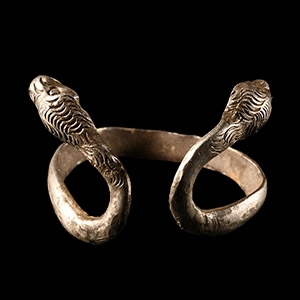
Egyptian Silver Double-Headed Snake Ring
Roman Period, 30 B.C.-323 A.D.Sold for (Inc. bp): £1,040
With bezel formed as two addorsed snake-head finials. 2.81 grams, 19.75 mm overall, 16.44 mm internal diameter (approximate size British L, USA 5 3/4, Europe 11.24, Japan 10)
Ex German art market, 2000s. Acquired from an EU collector living in London. From the collection of Surrey, UK, gentleman. -
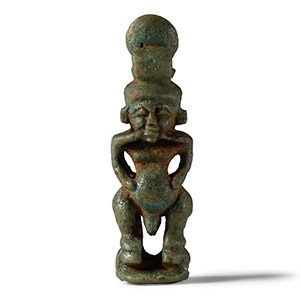
Egyptian Janiform Pataikos and Ra-Horakhty Faience Amulet
Late Period-Ptolemaic Period, 664-30 B.C.Estimate: £1,500 - 2,000 (+bp*)
Opening Bid: £800
Modelled in the round, Pataikos depicted nude with his arms resting on his rounded belly, large genitals and a suspension loop on his head; the nude Ra-Horakhty depicted falcon-headed, wearing a sun disc and a tripartite wig, his hand resting on his waist; each standing on stylised crocodiles(?) on a rounded base. 13.4 grams, 60.5 mm
Ex AH collection, London, UK, 1980s. Accompanied by a previous catalogue information slip.
Pataikos amulets were used for protection against negative forces and dangerous animals such as snakes, crocodiles, and scorpions. These amulets also symbolised rejuvenation and were often embellished with solar imagery, as seen in this example which features the sun disc headgear and Ra-Horakhty. -
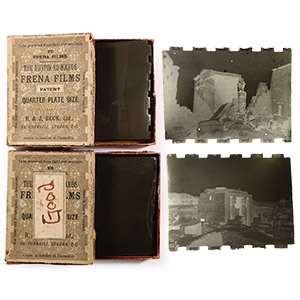
Historic Collection of Thirty-Six Original Slide Images of Egypt Including Archaeological Sites
Circa 1897 A.D.Sold for (Inc. bp): £260
Group of photographic negatives in 'quarter plate size', in two old cardboard lidded boxes, one stamped 'D.W.Collings'; archaeological expedition to Egypt. 168 grams total, 11.6 cm
From the private collection of Dudley Collings, from his travels in Egypt in the late 19th century.
