
Loading, please wait...
LOT 0469
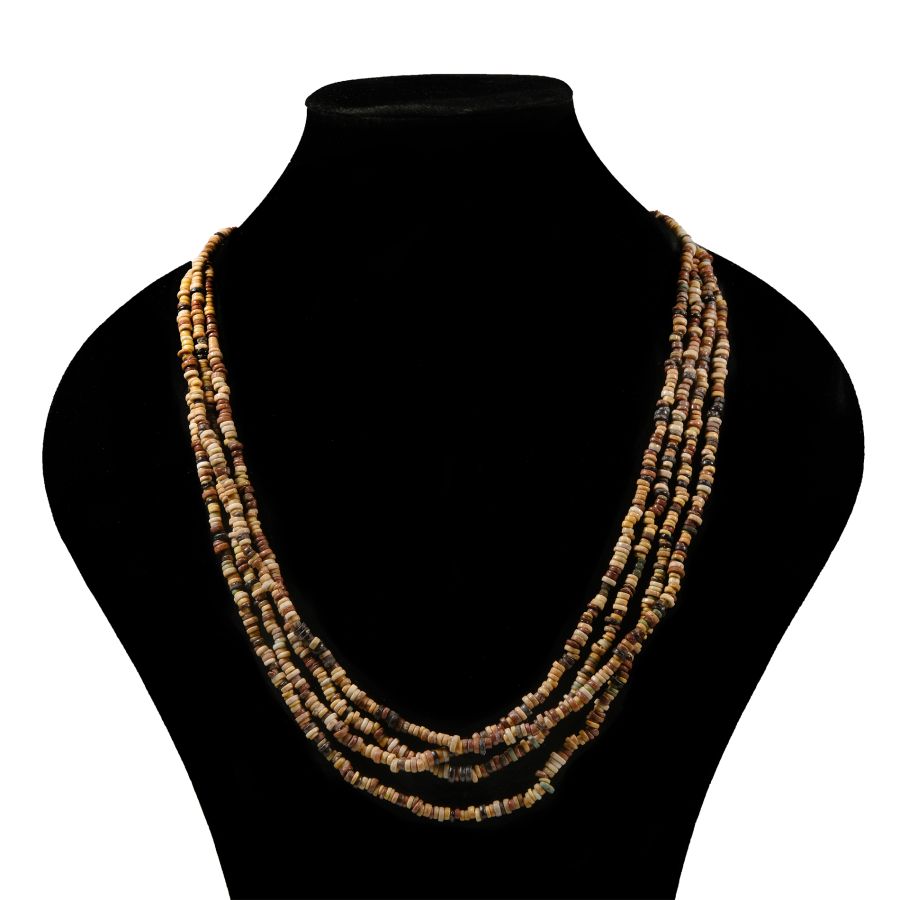
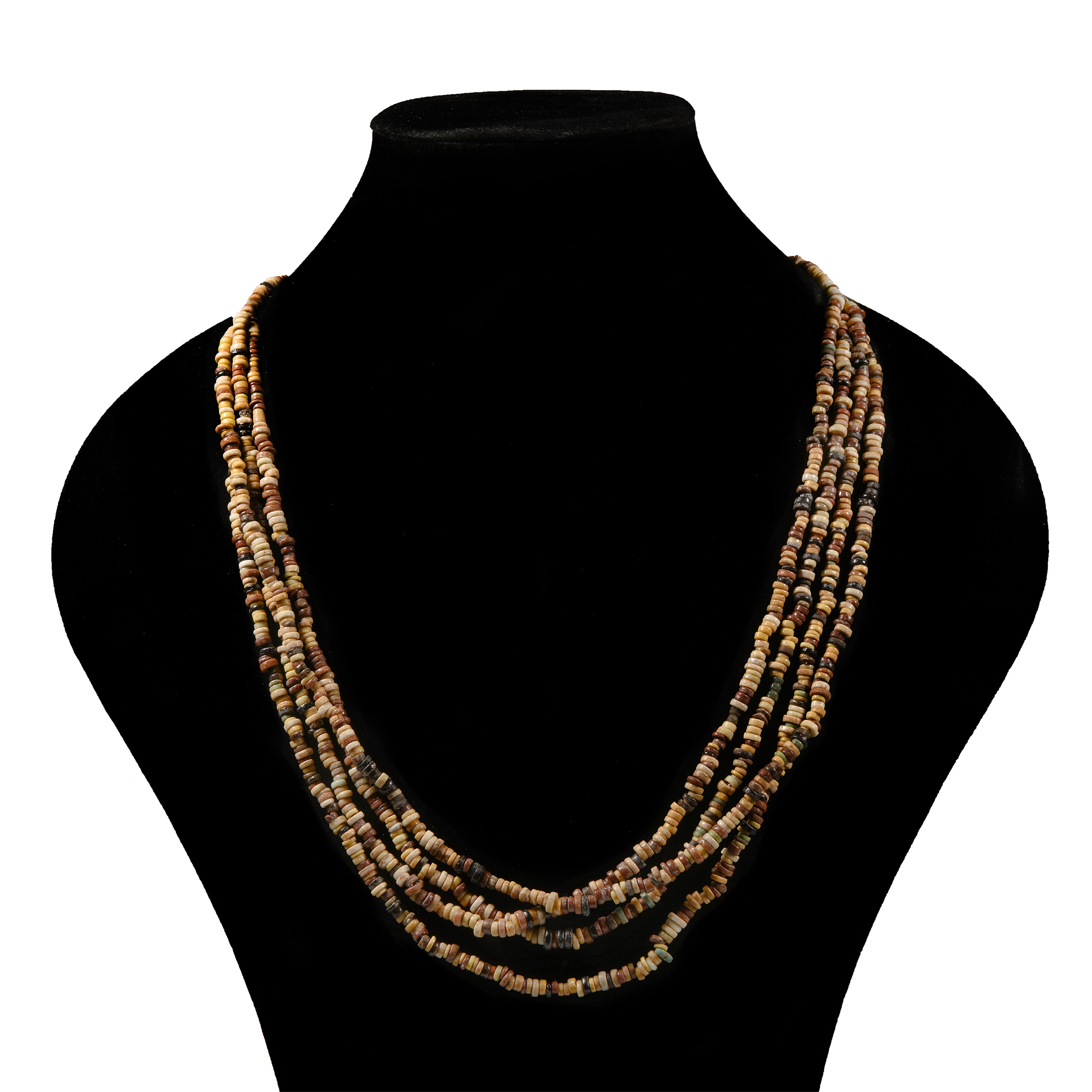
Egyptian Multi-Stranded Faience Mummy Bead Necklace
LATE PERIOD, 664-525 B.C.
28 3/8 in. (31 grams, 72 cm long).
Composed of polychrome beads in shades of brown annular shapes; modern clasp. [No Reserve]
ProvenanceAcquired before 1979.
From the private collection of Mr F. A., South Kensington, London, UK; thence by descent 2014.
Cf. similar specimens in faience at the Worcester Art Gallery, inventory no.1925.539.
FootnotesFor thousands of years, artisans in Egypt created vibrant ceramics to echo the beauty of rare jewels. These ornaments were created with almost every material, colour and texture imaginable and they come from across Egypt and beyond: vibrant blue lapis lazuli from Afghanistan, glossy black obsidian from Turkey, and aqua-green turquoise from the Sinai. They were worn in life and, after death, they served as precious ornamentation for mummies.
CONDITIONTimeLine Auctions follows a vetting process to ensure the authenticity and legality of all items, reinforcing our commitment to integrity and responsible trading. Each antiquity, antique, and coin lot undergoes thorough examination by a vetting committee of at least ten external specialists, professional trade association members, scientists, and archaeologists: Our Vetting Process
AUCTIONS:
TimeLine is a leading auction house specialising in antiquities, ancient art, collectables, natural history, coins, medals, and books. Our auctions offer museums, collectors, historians, and enthusiasts the opportunity to acquire unique and historically significant pieces.
-
.jpg)
Egyptian Faience Bead Necklace String with Thoth Amulet
Late Period, 664-332 B.C.Sold for (Inc. bp): £585
Restrung using mainly annular and tubular beads; the central feature a large amulet of Thoth in ibis-form wearing a short kilt and advancing on a rectangular plinth. 19 grams, 46 cm
From the vendor's grandfather's collection, formed in the 1950s; thence by family descent circa 1974. -
.jpg)
Egyptian Faience Scarab with Hieroglyphs
Late Period, 664-332 B.C.Estimate: £800 - 1,000 (‡+bp*)
Opening Bid: £400
Naturalistic detailing to the blue stained body and legs with section of openwork between the front and back legs; hieroglyphs on base giving the good luck message 'When Amun is behind you, do not fear'; pierced for suspension. 1.72 grams, 15 mm
Ex collection of Emil Saad, Paris-Alexandria. -
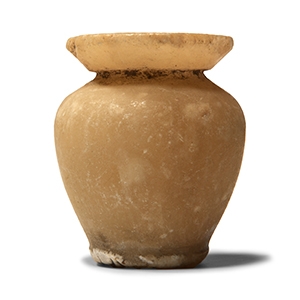
Egyptian Alabaster Kohl Pot
New Kingdom, 1550-1069 B.C.Sold for (Inc. bp): £234
The miniature piriform body with everted neck and rim, shallow integral foot; chipped. 128 grams, 56 mm
Acquired in Europe before 1993.
