
Loading, please wait...
LOT 0452
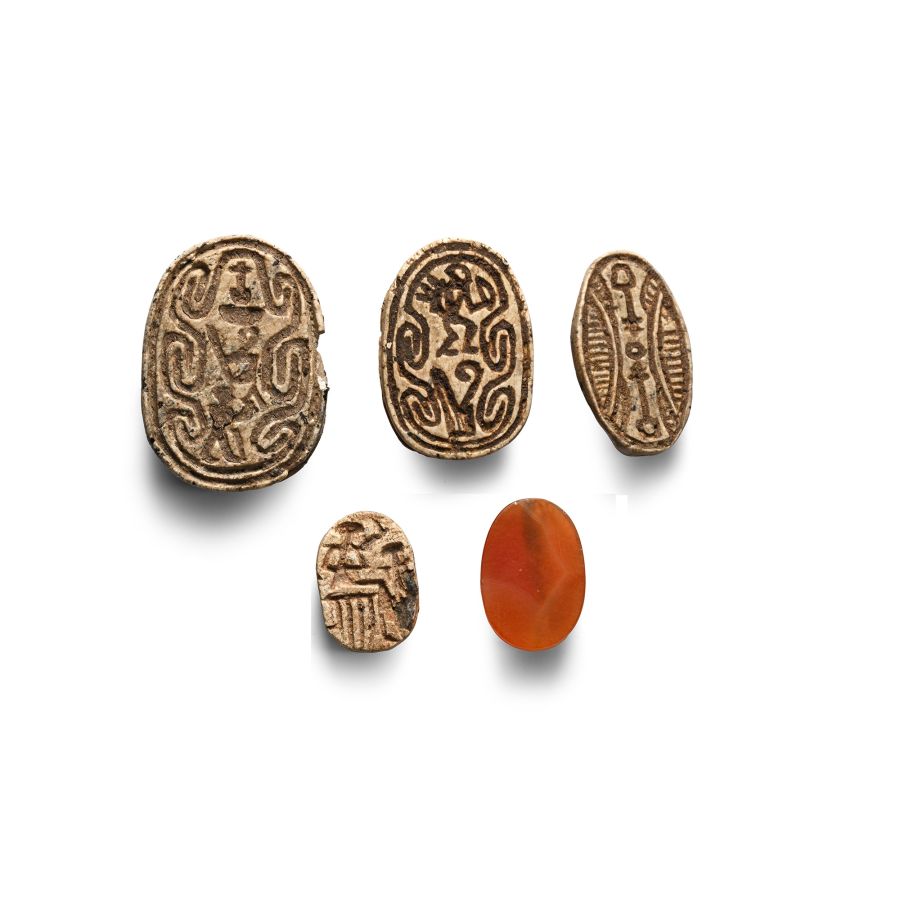
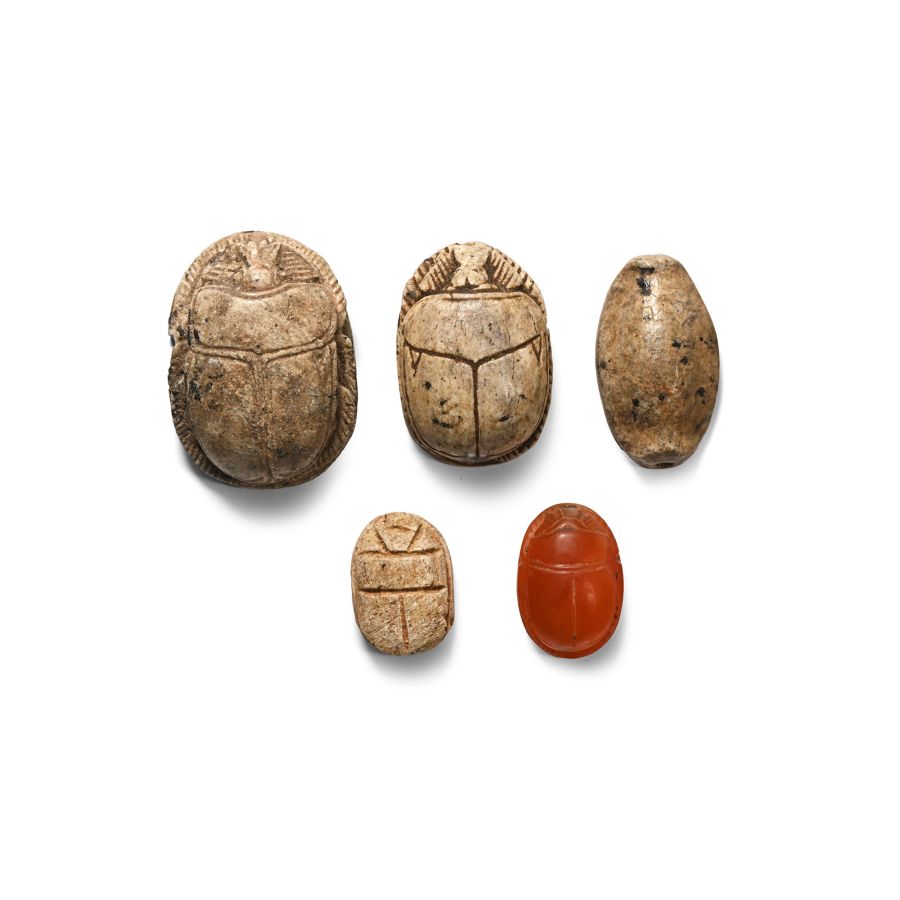
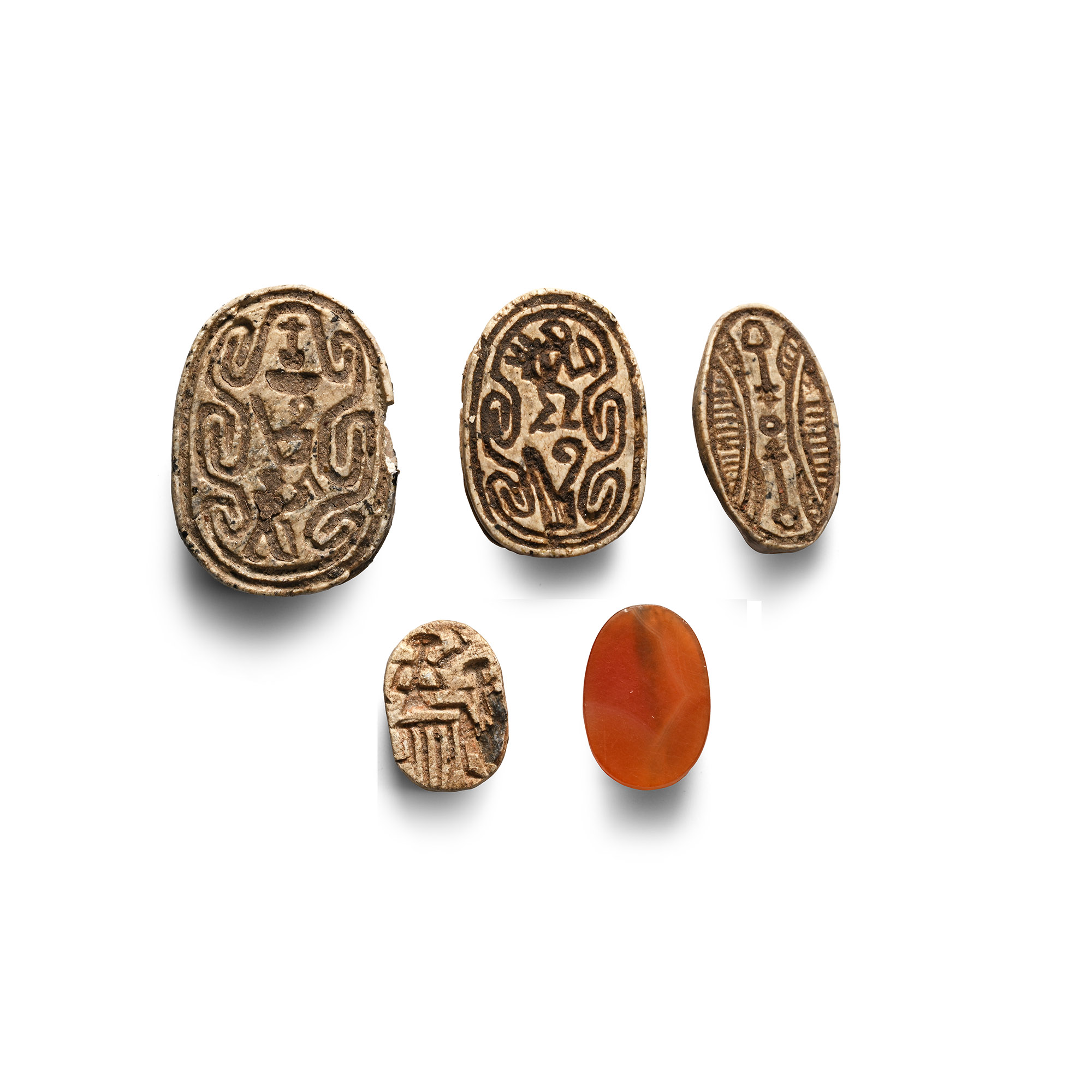
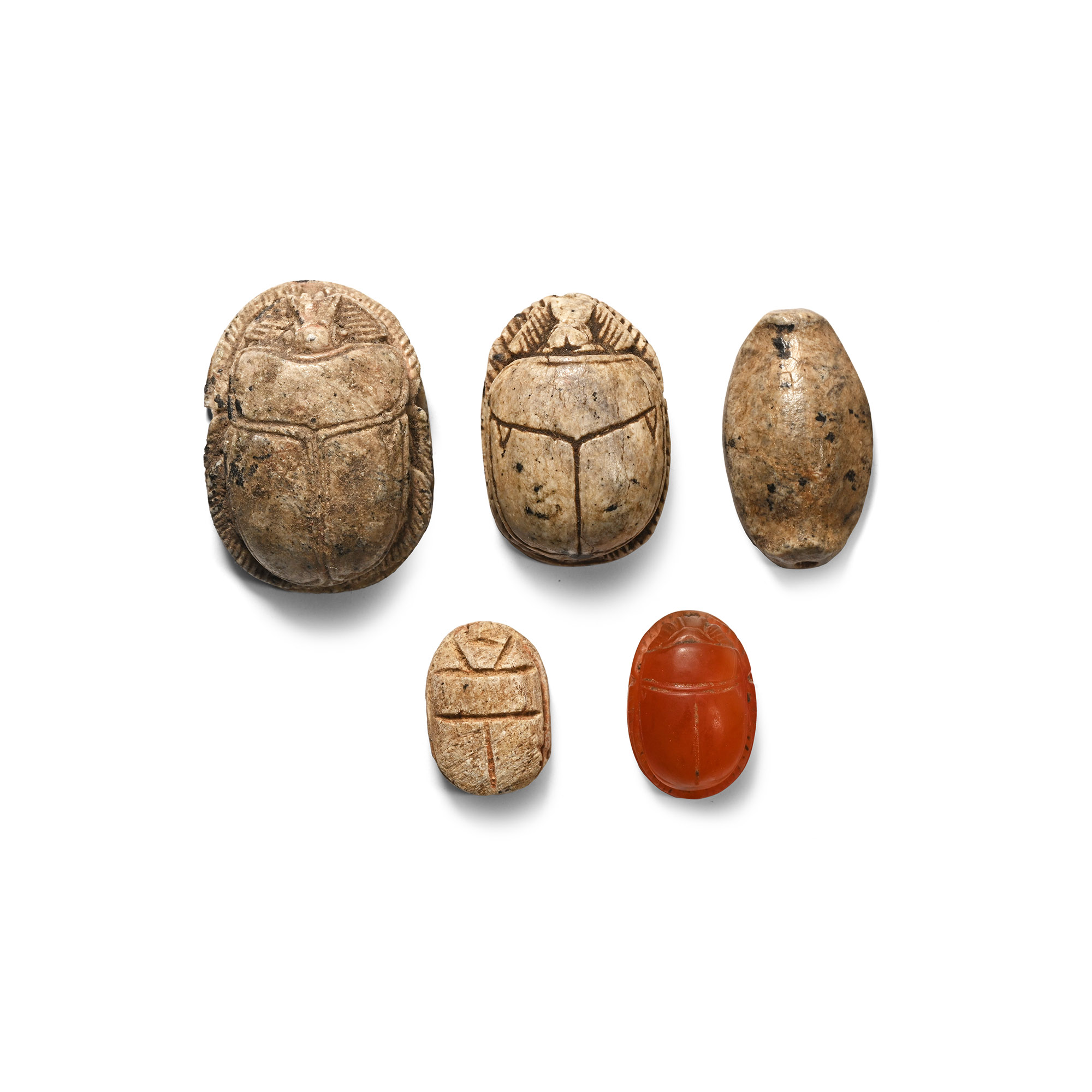
Egyptian Mixed Scarab Collection
MOSTLY LATE PERIOD, 664-332 B.C.
5/8 - 1 1/8 in. (22.75 grams total, 15-28 mm).
Comprising: three faience scarabs with detailed bodies and hieroglyphs on the underside; one carnelian scarab with plain base; one scaraboid with hieroglyphs to the underside. [5]
ProvenanceFrom the collection of a gentleman, acquired on the London art market in the 1990s.
This lot is accompanied by an illustrated lot declaration signed by the Head of the Antiquities Department, Dr Raffaele D'Amato.
TimeLine Auctions follows a vetting process to ensure the authenticity and legality of all items, reinforcing our commitment to integrity and responsible trading. Each antiquity, antique, and coin lot undergoes thorough examination by a vetting committee of at least ten external specialists, professional trade association members, scientists, and archaeologists: Our Vetting Process
AUCTIONS:
TimeLine is a leading auction house specialising in antiquities, ancient art, collectables, natural history, coins, medals, and books. Our auctions offer museums, collectors, historians, and enthusiasts the opportunity to acquire unique and historically significant pieces.
LOT 0452
Egyptian Mixed Scarab Collection
Estimate £500 - 700€580 - 810 (for guidance only)$680 - 950 (for guidance only)
-
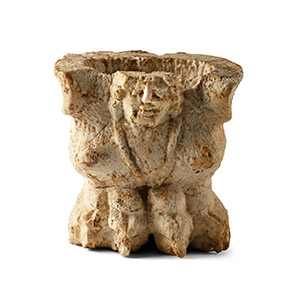
Phoenician Bone Sphinx
5th century B.C.Estimate: £800 - 1,000 (‡+bp*)
Opening Bid: £400
Seated with curving wings flanking the body and stocky body resting on over-sized lion-paws, small female head with rounded facial features and curly hair; hollow inside. 21.2 grams, 35 mm
Ex Dr Leo Mildenberg, Zurich, 1990s. with Galerie Rhéa, Zurich, Switzerland. This lot is accompanied by an illustrated lot declaration signed by the Head of the Antiquities Department, Dr Raffaele D'Amato.
Leo Mildenberg (1913–2001) was a distinguished numismatist and antiquities collector, widely recognised for his deep passion for ancient art, especially animal figures. Born in Germany and later based in Switzerland, Mildenberg built a renowned private collection that reflected his keen eye for craftsmanship and historical significance. His collection spanned cultures and periods, including Egyptian, Near Eastern, Greek, and Roman artefacts, with a particular emphasis on zoomorphic sculptures and votive figures. Portions of Mildenberg’s collection have been exhibited in major museums and featured in auction catalogues that remain important reference sources for scholars and collectors alike. -
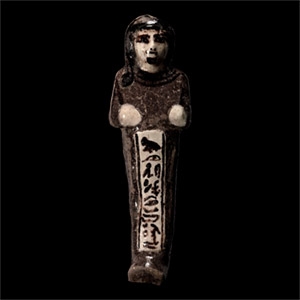
Egyptian Faience Shabti for the Fourth Son of Ramesses II, Prince Khaemwaset
New Kingdom, 19th Dynasty, 1279-1213 B.C.Sold for (Inc. bp): £2,015
The mummiform figure in brownish-black and white faience with black detailing, wearing a round wig featuring a side-lock and a broad collar, the white face displaying eyes, eyebrows, nostrils, and a short beard in black; the arms crossed, and the white-glazed hands holding hoes; a slightly raised white-glazed frontal panel containing a column of hieroglyphic text reads: 'The Osiris, the Sem-Priest, the King's Son, Khaemwaset, True of Voice'. 82.4 grams, 11.8 cm
From the private collection of George Ortiz, Geneva, Switzerland, since before 1981. Received by gift from George Ortiz to the current owner at Mr Ortiz's Geneva home in the summer of 1981. From the private collection of a UK gentleman since the early 1980s. Identified by Professor A.M. Dodson BA, MPhil, PhD, FSA, Department of Anthropology & Archaeology, University of Bristol. This lot has been cleared against the Art Loss Register database, and is accompanied by an illustrated lot declaration signed by the Head of the Antiquities Department, Dr Raffaele D'Amato.
Khaemwaset was the fourth son of Ramesses II, born to Queen Iset-Nofret. In addition to serving as the Sem-priest of Ptah at Memphis from an early age, he held various titles related to the Memphite cult, including High Priest of Ptah. The side-lock featured on all of Khaemwaset's shabtis is associated with his priestly role. Many shabtis of the prince are known, with the largest single group coming from the Serapeum at Saqqara; however, others have been found in numerous other locations. Since Khaemwaset's tomb has yet to be discovered, it appears that most of the known shabtis may have served as votive offerings in the sacred areas of the Memphite necropolis. His faience shabtis come in various colours, including green, blue, white, and black, and range in size from just under 10 cm to 15 cm in height. The distinctive glaze combination of this example, featuring a raised white-glazed panel contrasting with the darker body colour, is also found on some other 19th Dynasty shabtis (Cf. Janes, G., The Shabti Collections 3: Rochdale Arts & Heritage Service, Cheshire, 2011, pp.1-5 for those of Userhat from Sedment). -
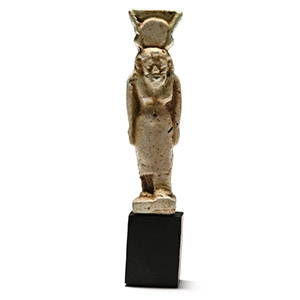
Large Egyptian Faience Isis Amulet
Late Period, 664-332 B.C.Estimate: £250 - 350 (+bp*)
Opening Bid: £125
Pale cream amuletic figure of Isis with crown formed as two horns flanking the sun-disc, and a uraeus at the front, wearing a calf-length robe, with dorsal pillar and rectangular base. 19.21 grams total, 76 mm including stand
Ex P.A. collection, London, UK, 1990s. This lot is accompanied by an illustrated lot declaration signed by the Head of the Antiquities Department, Dr Raffaele D'Amato.
In ancient Egyptian mythology, Isis was the sister-wife of Osiris and the mother of the sky god Horus. She is associated with aspects of fertility and motherhood and is often depicted in various artworks seated in a nursing pose with her son Horus on her lap.
