
Loading, please wait...
LOT 0434
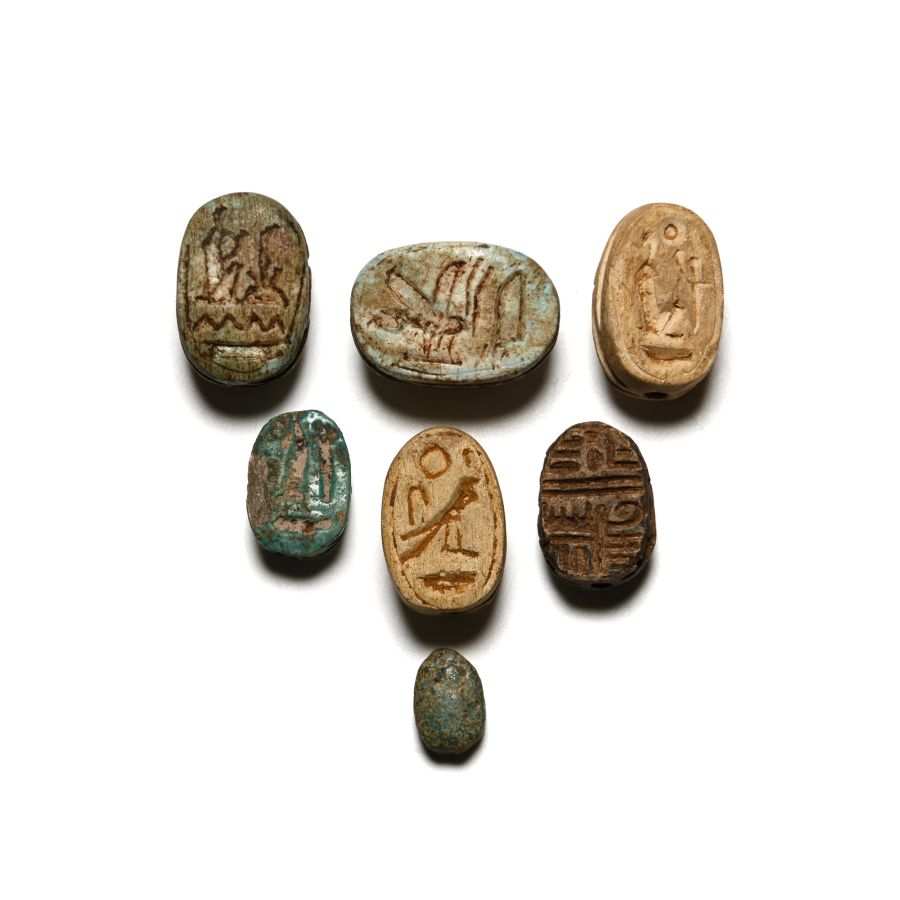
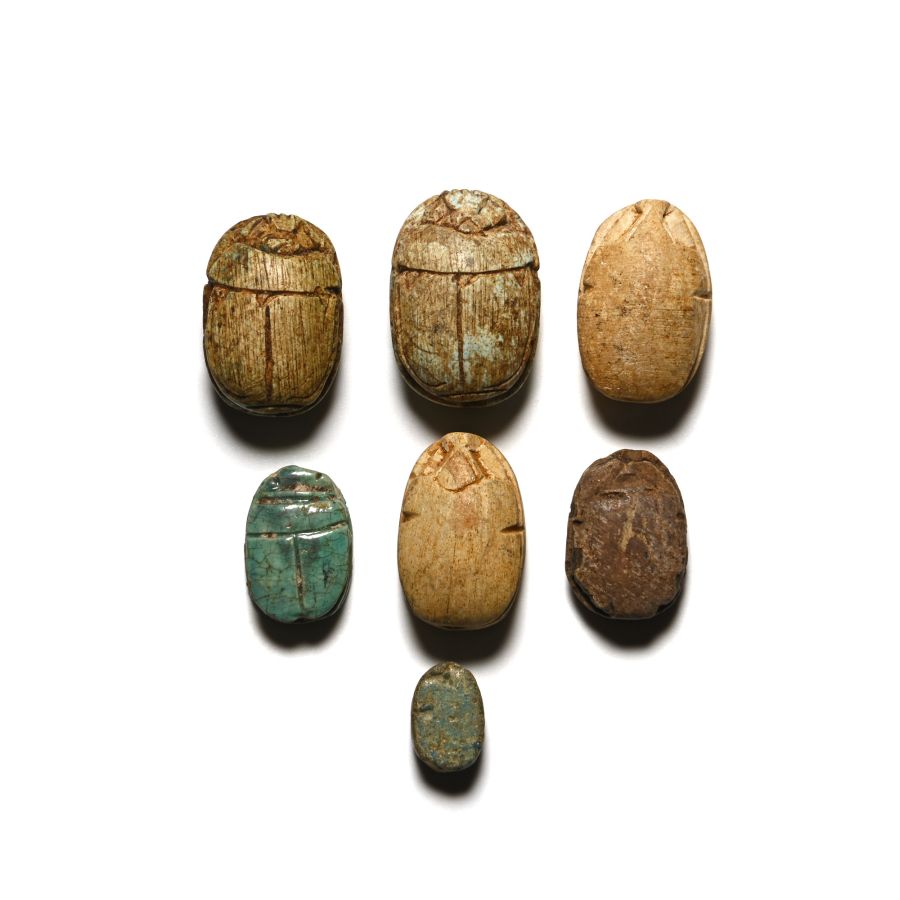
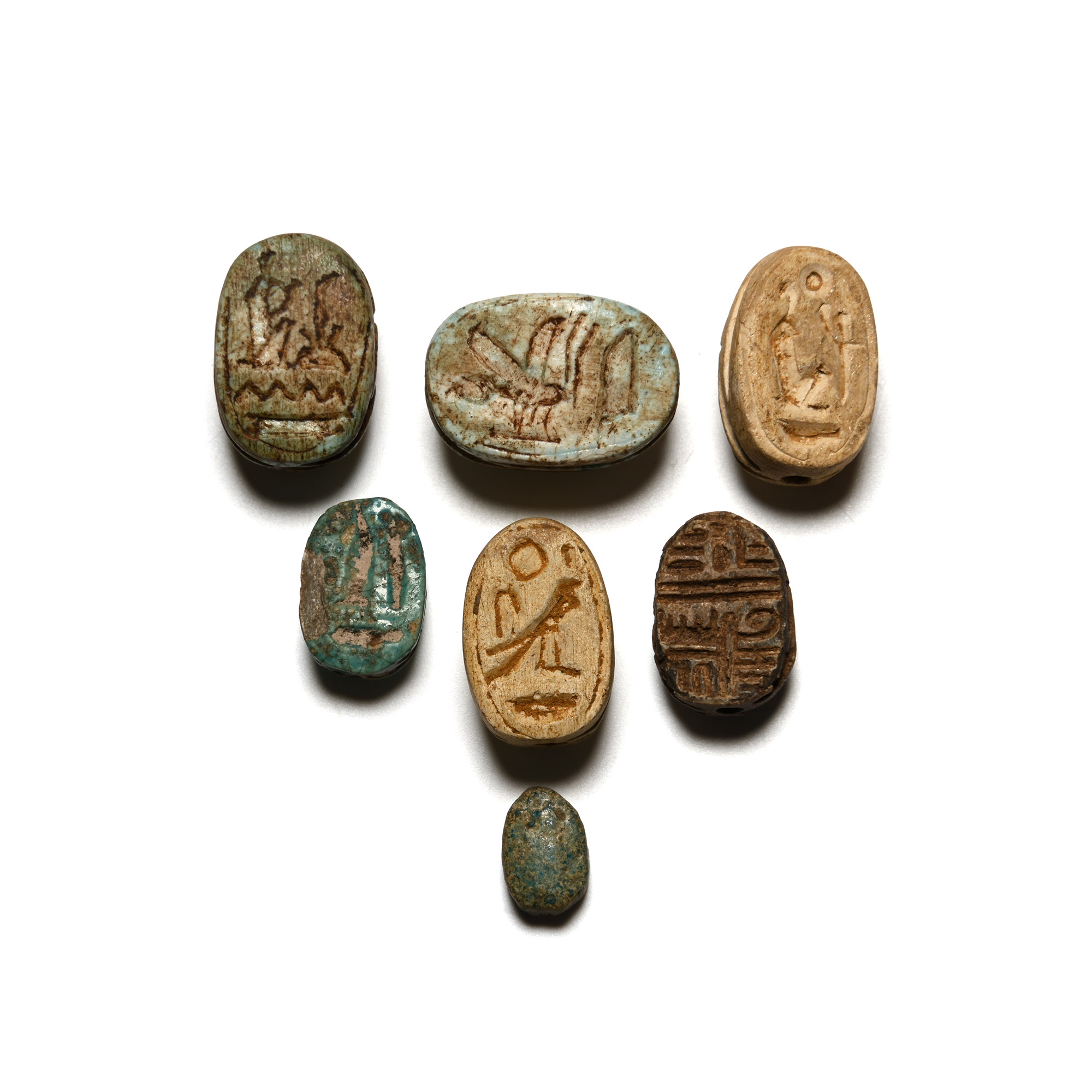
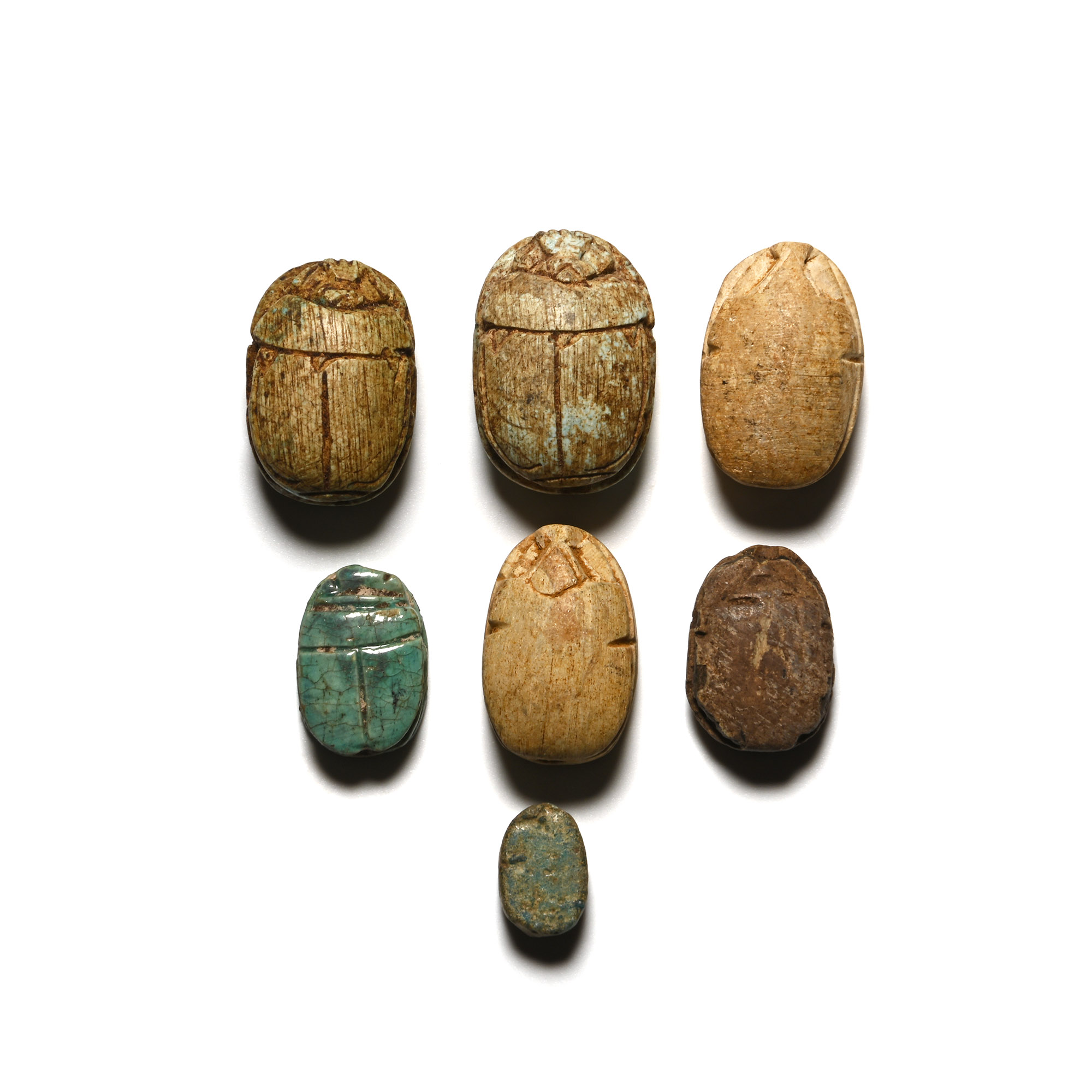
Egyptian Mixed Scarab Collection
2ND-1ST MILLENNIUM B.C.
3/8 - 3/4 in. (17.4 grams total, 10-20 mm).
Comprising (from left to right and top to bottom): 1) a scarab with an oval border containing the seated figure of a seated deity with arm raised in adoration before the sign partially resembling the hieroglyphic sign for a ‘thousand’, with the water and signs below; 2) a scarab with a faint oval border containing the honey bee and reed leaf symbols; 3) a scarab with an oval border containing the throne name of the 19th Dynasty pharaoh, Ramesses II (User-Maat-Re) atop a neb sign; 4) a scarab with indeterminate signs; 5) a scarab with an oval border containing the falcon god Ra-Horakhty standing atop a neb sign; 6) a scarab inscribed with numerous geometric designs that incorporate the name Amun-Re; 7) a plain scaraboid. [7]
ProvenanceFrom the collection of a gentleman, acquired on the London art market in the 1990s.
This lot is accompanied by an illustrated lot declaration signed by the Head of the Antiquities Department, Dr Raffaele D'Amato.
Cf. 2) Petrie, W.M.F., Button and Design Scarabs, London, 1925, pl. XXX, no. 1469, for a partially preserved rectangular seal with the same hieroglyphs; 3) Petrie, W.M.F., Scarabs and Cylinders with Names, London, 1917, pl. XLI, no. 98, for similar; 5) Petrie, W.M.F., Button and Design Scarabs, London, 1925, pl. XIX, nos. 1484 and 1487, for slight variations of this design; 6) Petrie, W.M.F., Scarabs and Cylinders with Names, London, 1917, pl. XIX, no. 1471, for a scarab with a similarly themed motif.
CONDITIONTimeLine Auctions follows a vetting process to ensure the authenticity and legality of all items, reinforcing our commitment to integrity and responsible trading. Each antiquity, antique, and coin lot undergoes thorough examination by a vetting committee of at least ten external specialists, professional trade association members, scientists, and archaeologists: Our Vetting Process
AUCTIONS:
TimeLine is a leading auction house specialising in antiquities, ancient art, collectables, natural history, coins, medals, and books. Our auctions offer museums, collectors, historians, and enthusiasts the opportunity to acquire unique and historically significant pieces.
-
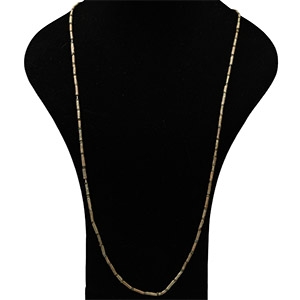
Egyptian Faience Bead Necklace String
Late Period, 664-332 B.C.Sold for (Inc. bp): £33
Composed of light blue tubular beads interspersed with darker coloured annular beads; restrung. 8.7 grams total, 101 cm long
Acquired on the UK art market, circa 1980. Property of an East London, UK, collector. This lot is accompanied by an illustrated lot declaration signed by the Head of the Antiquities Department, Dr Raffaele D'Amato. -
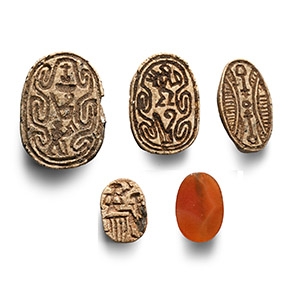
Egyptian Mixed Scarab Collection
Mostly Late Period, 664-332 B.C.Estimate: £500 - 700 (+bp*)
Opening Bid: £250
Comprising: three faience scarabs with detailed bodies and hieroglyphs on the underside; one carnelian scarab with plain base; one scaraboid with hieroglyphs to the underside. 22.75 grams total, 15-28 mm
From the collection of a gentleman, acquired on the London art market in the 1990s. This lot is accompanied by an illustrated lot declaration signed by the Head of the Antiquities Department, Dr Raffaele D'Amato. -
.jpg)
Egyptian Steatite Scarab
1st millennium B.C.Sold for (Inc. bp): £260
With detailed carapace and mouth, hieroglyphs to the underside depicting a pharaoh-headed sphinx, with hes-vase in front and the crowns of Lower and Upper Egypt behind. 0.80 grams, 12 mm
Ex R. Liechti (1934-2010) Geneva, Switzerland, formed between 1950-1990s. This lot is accompanied by an illustrated lot declaration signed by the Head of the Antiquities Department, Dr Raffaele D'Amato.
